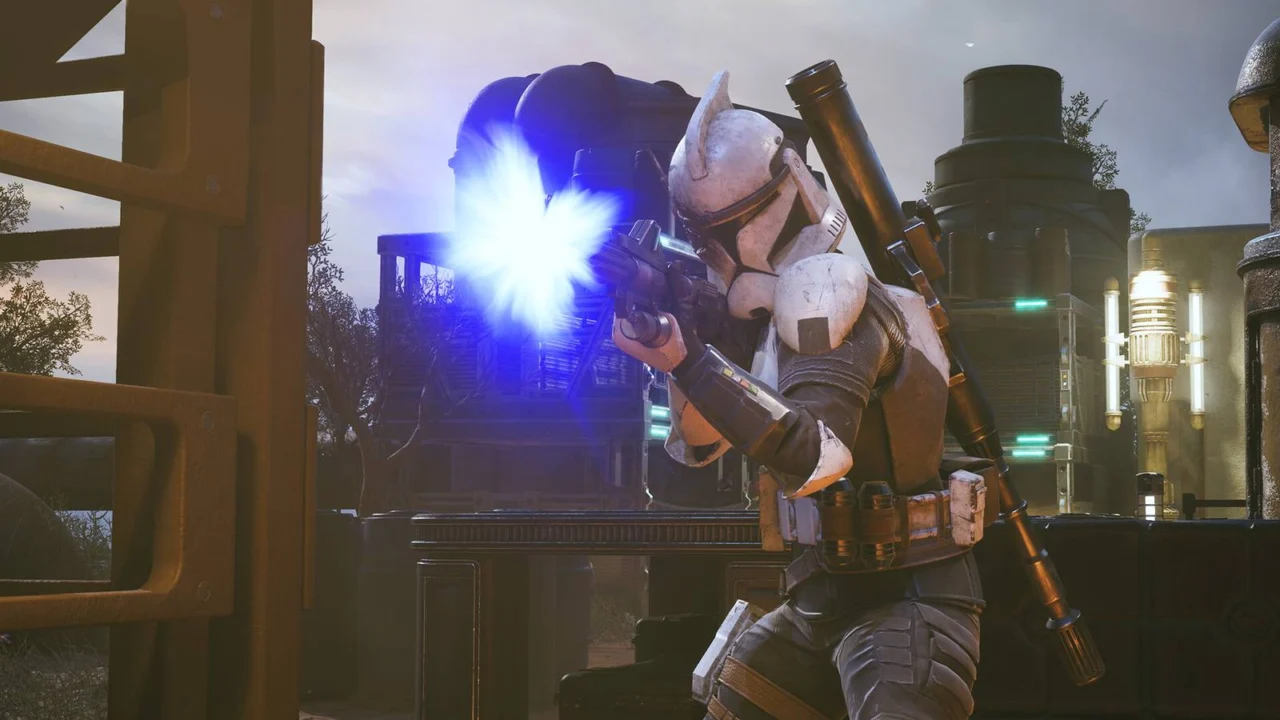
The Future of Star Wars Belongs to Video Games, Not Movies
Word broke recently that Lucasfilm is gearing up for Star Wars – Episode X, a direct continuation of the overarching Skywalker Saga and Rey’s ongoing journey. Simon Kinberg—who collaborated closely with Lucasfilm during the formative stages of Episode VII, co-created Star Wars Rebels alongside Dave Filoni, and helmed several Fox X-Men features before directing Dark Phoenix—is slated to write the script. Jon Watts, the filmmaker behind the recent Spider-Man trilogy and the somewhat uneven Disney+ series Skeleton Crew, will take the director’s chair. Should we feel enthusiastic?
This development arrives at a moment when my enthusiasm for Star Wars is at its highest peak since the breathless week leading up to the premiere of The Force Awakens in 2015. The intervening years have tested my lifelong devotion, which burned brightly throughout the 1980s and ’90s, remained largely undimmed by the polarizing prequel trilogy (I was simply thrilled to be part of the experience), but gradually faded during the Disney era as derivative spin-offs and television projects tangled the established lore and eroded the sense of occasion that once accompanied every theatrical rollout.
Yet, remarkably, my passion has been reignited. The catalyst is Zero Company. Released in late August by Bit Reactor and Respawn Entertainment, this turn-based strategy title has convinced me that Star Wars has finally outgrown the confines of cinema to evolve into something akin to Dungeons & Dragons. A universe this vast, a sandbox this expansive, was inherently designed for interactive play.
Zero Company might be the ideal Star Wars… anything
Set during the height of the Clone Wars, Zero Company follows Hawks—a mercenary whose gender can be customized, brought to life through two distinct vocal performances of equal caliber. Hawks will accept contracts from Gorga the Hutt, the Galactic Republic, or desperate Umbarans alike, provided the payout is sufficient. Your squad consists entirely of hardened guns-for-hire, yet meaningful connections naturally develop through both narrative milestones and gameplay mechanics as you transition between assignments.
Functioning mechanically much like the finest entries in the XCOM franchise while deeply saturated in rich Star Wars lore, Zero Company introduces a terrifying hive-mind threat known as the Coil. As Hawks and their crew navigate this crisis, they cross paths with iconic characters whose appearances never feel like cheap fan service (stepping into the shoes of Anakin Skywalker to master advanced Jedi operational tactics was a particular highlight). The game’s sharp writing enhances an already bleak era by forcing players into difficult, high-stakes dilemmas. Because squadmates can permanently perish and operations can completely derail, every tactical choice carries genuine weight. In terms of making players tangibly feel the harrowing reality of galactic conflict, Zero Company is rivaled only by Andor.
As much as I appreciate Rey, admire the genre-bending ambition of The Mandalorian‘s debut season, and root for upcoming cinematic endeavors—even those helmed by Shawn Levy—few creators have successfully replicated the dynamic chemistry among diverse archetypes that George Lucas achieved with Luke, Leia, and Han in the original film. The dialogue and battlefield support in Zero Company powerfully evoke that golden era. I felt genuine grief when my operative Jae was forced away to manage her mining obligations on Shu-Torun, and constant dread taking Kabbney Uppercut into battle, knowing he had a family waiting at home and faced the constant threat of assimilation by the Coil. While tactical games often encourage treating hired mercenaries as expendable cannon fodder, exceptional voice acting ensured these characters deeply resonated emotionally.
Games make Star Wars’ possibilities endless
Star Wars has been adapted into interactive media almost as long as it has existed on film; Atari 2600’s Star Wars: The Empire Strikes Back debuted a year prior to the theatrical release of Return of the Jedi. For nearly two decades, technological limitations meant video games primarily chased the narrative footsteps of Lucas’ films. Despite countless hours invested in titles like Rebel Assault, Dark Forces, Rogue Squadron, and Battlefront, they often functioned more as cinematic simulators than vehicles for exploring uncharted galactic territories. For me, the true potential of Star Wars in gaming did not fully blossom until the 2003 release of Star Wars: Knights of the Old Republic.
An ambitious role-playing game remains the ultimate test of a fictional world’s depth—revealing how far the lore can stretch and how long audiences wish to inhabit it. Building upon the d20 system mechanics from Wizards of the Coast’s discontinued tabletop roleplaying game, BioWare demonstrated that compelling interactive narratives could thrive well beyond the shadow of the Skywalker bloodline. Players could experience diverse genres within this vast setting without it feeling like mere supplemental lore; this was the universe in its entirety.
Modern titles have continued the spirit of KOTOR, proving through intertwined storytelling and gameplay that fresh, immersive perspectives can successfully enrich the franchise. Respawn’s Jedi series intentionally subverted the “sole survivor” trope embodied by Luke Skywalker; Cal Kestis’ evolution from an untrained Padawan to an underground freedom fighter brought nuance to the superficial iconography of the Inquisitors and the Empire’s clandestine operations outside the cinematic canon. Cal is a complex protagonist burdened by his past, present, and latent trauma, and the emotional devastation at the conclusion of Survivor packs nearly as much impact as the shocking finale of The Empire Strikes Back.
Even traditional simulator experiences have expanded beyond established timelines to challenge players with the grim realities of the Rebel insurgency. The flight combat of Star Wars: Squadrons directly addressed the haunting fallout from the destruction of Alderaan, while Star Wars Outlaws introduced an original protagonist to expose the ruthless underworld of the Outer Rim across expansive open-world environments. Arriving closely on the heels of Zero Company, Star Wars: Galactic Racer honors George Lucas’ foundational fascination with velocity while carving out an entirely fresh narrative on the periphery of the familiar galaxy. Star Wars Episode I: Racer was thrilling upon its 1999 release, but its primary purpose was promoting The Phantom Menace. In contrast, Fuse Games has poured genuine artistry into the machinery of Galactic Racer, earning widespread acclaim as a generational triumph in the racing genre.
Approaching its semicentennial anniversary, Star Wars occupies a peculiar space as a faltering mega-franchise. The Mandalorian and Grogu, clearly engineered to captivate younger audiences who collected Baby Yoda merchandise, underperformed commercially in theaters. Meanwhile, television output appears to be losing momentum: although Dave Filoni’s Ahsoka season 2 is finalized to appease die-hard fans of The Clone Wars and Rebels, few anticipate major creative surprises or longevity beyond this arc. While Shawn Levy’s upcoming Star Wars: Starfighter starring Ryan Gosling holds breakout potential, an IMAX theatrical re-release of the original film planned for the 2027 milestone might overshadow it. Star Wars has never quite achieved the modern global dominance of Marvel, and years into the Disney era, the brand often feels adrift—everywhere except in its video games.
Why shouldn’t Star Wars function as a genuinely transmedia property rather than remaining tethered to a singular medium? Truly multifaceted universes are rare; while Dungeons & Dragons has reached unprecedented popularity—with Baldur’s Gate 3 shattering expectations to become a critical and commercial phenomenon—the 2023 cinematic adaptation Honor Among Thieves ultimately underperformed at the box office despite its considerable charm. Similarly, Magic: The Gathering continues to captivate generations through crossover sets and mainline releases, yet Hasbro has consistently struggled to adapt the property successfully for film or television. Although Star Wars began as a foundational cinematic milestone in speculative fiction, it has long since outgrown those boundaries—its myriad corners now demand dozens of hours of interactive engagement rather than a tidy, linear two-hour runtime.
It remains uncertain whether we will see a follow-up to Zero Company, especially given recent reports regarding internal staffing cuts and legal disputes that cast doubt on BitReactor’s future. Even so, hopeful horizons beckon. Major projects like Jedi 3, the prequel-era Eclipse, and KOTOR’s spiritual successor, Fate of the Old Republic, are actively in development. Against the odds, the future of Star Wars looks exceptionally promising—provided you have a controller in your hands.
Source: Polygon
Related articles
 Call of Duty: Modern Warfare 4 Xbox Player Count 32 Percent Lower Than Black Ops 7
 AI fixes decade-old Unreal Engine bugs to Epic Games acclaim
 10 Free Browser Games That Are Actually Fun to Play
 Analysis Details Performance and Graphics Tricks in Phantom Blade Zero
 Russian Developers Release Platformer Gennady Inspired by Earthworm Jim
 Reports Warn PS6 and Next Xbox Risk Unaffordable Pricing Amid Industry Crisis
 Phantom Blade Zero Setting Adjustments Boost Performance Significantly
 New Pokémon Release Introduces Hundreds of New Eeveelutions