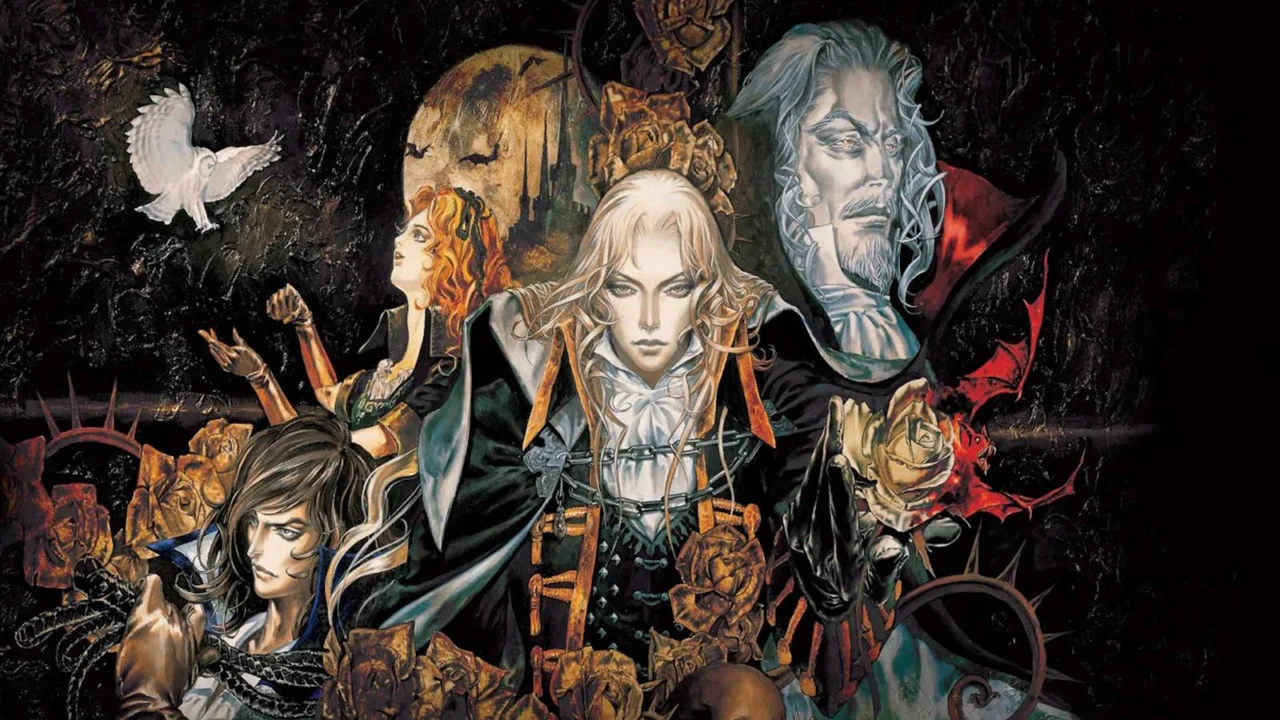
The 8 Best Castlevania Games, Ranked
Few franchises in gaming are as adored as Castlevania, and that holds even after a 13-year drought. The wait ended earlier this week with the release of Castlevania: Belmont’s Curse.
Across the decades, the series has delivered a wide range of experiences, all tied together by a deep mythology rooted in vampire legend. With so many entries to pick from, it’s hard to know where to jump back in if you’ve been away for a while. This ranking of the eight best Castlevania games should give you a solid place to start.
8. Super Castlevania 4

Released: Oct. 31, 1991
Castlevania’s arrival on the Super Nintendo had to make a strong impression on players weighing whether to invest in Nintendo’s new generation of hardware. Konami’s team delivered. Super Castlevania 4 boasts gorgeous environments and a hero who can lash his whip in eight directions, even in mid-jump. He can also swing from distant anchor points or hold the whip up as a defensive barrier. Early Mode 7 rotation effects supply some dazzling set pieces, while layered parallax scrolling gives the static backdrops a sense of life. The journey begins outside the castle walls, so Simon gets to cross its brutal grounds before heading in to face the master of the house. It’s an excellent entry point, and it’s easy to find in the Castlevania Anniversary Collection on Switch, PlayStation 4, PC, and Xbox One.
7. Castlevania: Bloodlines

Released: Mar. 17, 1994
The Super Nintendo wasn’t the only 16-bit console to host a standout Castlevania adventure. Castlevania: Bloodlines took a distinctive route by giving players a hero who fights with a spear, a weapon that opens up alternate paths the second character, who wields a more traditional whip, can’t reach. The pace is quick and relentless, which suited many Genesis releases of the period. Its setting also felt fresher than the other classics, since the story unfolds during World War I. The stages draw on locations around the world, including a trip to the Leaning Tower of Pisa. Add in impressive visual effects that squeeze every bit of power from the Genesis, plus a beautiful score by Michiru Yamane (who later scored Symphony of the Night), and you get a truly special chapter in the series.
6. Castlevania Chronicles

Released: July 23, 1993
Created for the Sharp X68000 and originally titled Akumajo Dracula, Castlevania Chronicles was among the last Castlevania games made in the classic style. It’s a remake of the series’ 1986 debut. The 1993 version brought dramatically better graphics and audio, along with tough-but-fair gameplay that ranks among the most demanding the franchise has produced. A few fresh twists keep things unpredictable even on familiar ground, and it’s the best way to experience that first adventure as its creators envisioned it. When I checked earlier this year, the polished PlayStation port was still sold digitally on the PlayStation Store for the PlayStation 3, as long as you add funds to your wallet using newer hardware. You can also track down a physical copy of that port, which should run perfectly on a PlayStation 3.
5. Castlevania: Rondo of Blood

Released: Oct. 29, 1993
Had more players been able to experience it as intended, Rondo of Blood might be remembered today as the definitive Castlevania. Unfortunately, it stayed locked to the PC Engine CD hardware for years. It didn’t reach North America and Europe until the PSP collection Castlevania: The Dracula X Chronicles in 2007, and a Virtual Console release followed in 2010, nearly 15 years after its debut. In the meantime, the nearest substitute was Dracula X on the Super Nintendo, a largely unsuccessful attempt to shrink the essence of Rondo of Blood onto a cartridge and bring it to a console that hadn’t flopped outside Japan. It kept the same plot, characters, and many enemy sprites, and both games open in a burning town. But the branching stages were gone, replaced by shortened levels that players found frustrating. Some characters from the original weren’t even playable, and the audio quality suffered badly. Rondo of Blood is a vital piece of Castlevania history, and it ends with events that set the stage for Symphony of the Night. If you haven’t played it yet, make time for it soon.
4. Castlevania: Aria of Sorrow

Released: May 6, 2003
Castlevania: Aria of Sorrow arrived a year after Harmony of Dissonance, which was arguably the more visually spectacular of the two. Even so, despite weaker graphics, Aria of Sorrow offered the deeper mechanics. You play as Soma Cruz, who loses consciousness during the century’s first solar eclipse and wakes up inside Dracula’s castle. There, he discovers he can absorb the essence of the monsters he defeats, a handy way to build the strength needed to reach Dracula’s throne room and save a classmate. For such a small piece of hardware, the adventure is remarkably intricate, and it remains great fun. The easiest way to play it, along with other games from the era, is the Castlevania Advance Collection on Switch, PlayStation 4, PC, and Xbox One.
3. Castlevania 3: Dracula’s Curse

Released: Dec. 22, 1989
The 8-bit years turned Castlevania into a powerhouse and helped it last long enough to keep innovating for decades. Still, those early games aren’t always enjoyable to play now. The original could feel cheap and fairly bland even when it was new. Its sequel had an intriguing story and ambitious mechanics, but many players were baffled by its vague, non-linear goals. Then Castlevania 3: Dracula’s Curse perfected the formula. It offered multiple heroes with their own backstories (which Netflix later explored in an animated series) and distinct play styles, along with branching routes through beautiful stages that pushed the NES harder than ever. It’s the best single showcase of what Castlevania could be in that era, and it’s well worth revisiting today.
2. Castlevania: Belmont’s Curse
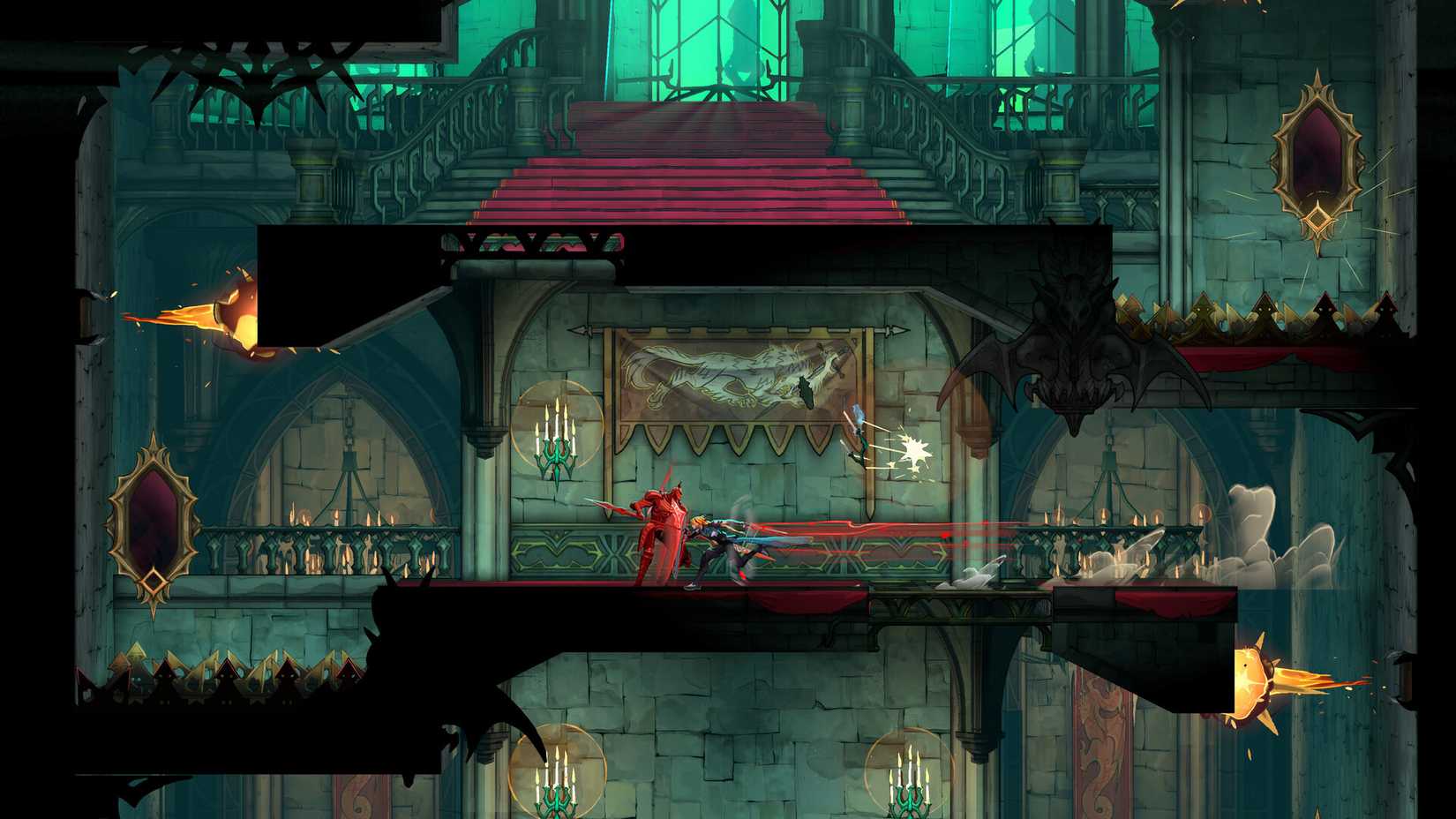
Released: Oct. 15, 2026
Our full Castlevania: Belmont’s Curse review covers the details, but the short version is simple: you should play this game. It honors the series’ legacy while sketching out a possible future that we hope the developers will realize in later releases. The 2.5D visuals lend every area a fresh sense of depth, and they support the rewarding Metroidvania mechanics players have loved since Symphony of the Night changed the franchise forever. Fluid movement in combat, a superb soundtrack that suits the moonlit atmosphere, and a daring new protagonist combine to make this one of the finest entries the series has ever produced.
1. Castlevania: Symphony of the Night

Released: Oct. 2, 1997
Almost 30 years on, nothing has surpassed Castlevania: Symphony of the Night. It’s the game credited with blending Metroid‘s design with the gothic adventure that players associate with Castlevania. Its sprawling castle teems with nightmarish creatures, some familiar and many brand new. Stripped of his mighty weapons, Alucard roams the halls determined to defeat his terrifying father once and for all. But as players soon found out, there’s far more to the adventure than the castle they see under the moonlight. One of gaming’s most delightful surprises came when players saw the world from a new angle, thanks to a pair of holy spectacles. That change of perspective opened an unfamiliar path and revealed that they were not even halfway through. It was the game that kept on giving, and it still hasn’t stopped.
Source: Polygon
Related articles
 New Resident Evil Film Nears $400 Million at Global Box Office as Director Discusses Sequel Plans
 Austin Wintory Reveals Early Music Sketches He Wrote for Mass Effect 5
 Vincent D’Onofrio Denies Rumors of Kingpin’s Return After “Daredevil: Born Again” Finale
 Sandra Hüller Played a Role in Avengers: Doomsday
 GTA 6’s Rumored Lucia Actor Breaks Silence With Rare Live Appearance
 Warhammer Team Showcases Golden Demon 2026 Miniature Painting Winners at SPIEL Essen
 Delicious in Dungeon Season 2 Character Illustrations Shown
 Report: Sucker Punch, Developer of Ghost of Yōtei, Hit by Layoffs