
Suzanne Ciani
Lloyd Williams
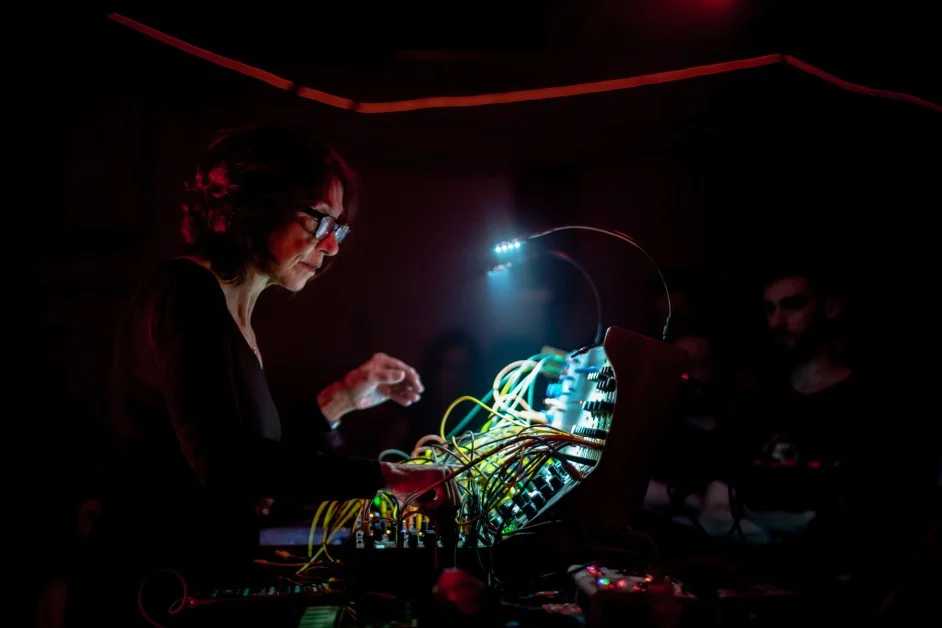
Suzanne Ciani Karel Chladek
Suzanne Ciani is performing her first ever concert in Scotland this weekend at Glasgow’s Sonica Festival, a longstanding art and experimental music festival. Ahead of the performance, Ciani spoke with Billboard over Zoom from her home in Northern California about her life in technology and career.
Ciani was present at the beginning of electronic music and helped develop the technology that became the basis of a global genre. Born in Ohio, she earned a master’s degree in composition at UC Berkeley, where she met synthesizer designer Don Buchla and became one of the first people to master the Buchla modular analog synthesizer.
In 1974, she founded Ciani/Musica, developing sounds for brands including AT&T, General Electric, and Coca-Cola. She created the soda’s “pop & pour” sound logo and the Columbia Pictures intro score. She has released more than 25 studio and live albums and received five Grammy nominations in the new age category. Now 80 years old, she is experiencing a late career renaissance through live modular synthesizer performances that have brought her into the dance and electronic festival circuit, alongside friendships with Floating Points and collaborator Kaitlyn Aurelia Smith.
In early November, Ciani will return to the United States to play Atomika, a new science and music festival taking place in the desert outside Roswell, New Mexico.
1. Where are you in the world right now, and what’s the setting like?
I am home for a change because I spend a lot of time traveling. Home right now is temporary because I am in the process of selling my house after 34 years, a house I never thought I would leave because it was so exquisitely beautiful. But I just wanted a new chapter. I wrote many albums there. I had a beautiful life there, and now I am ready for something else. It is healthy. It is stimulating. The basis of technology is change. It is built in.
2. What is the first album or piece of music that you bought for yourself, and what was the medium?
Actually my mother bought it, and it was a Rachmaninoff Piano Concerto and a Grieg Piano Concerto. It was romantic classical music. My mother had gone to a fire sale and come home with this stack of LPs, and I would just sit and listen to them morning, noon, and night, swooning at the emotion of the music.
3. What did your parents do for a living when you were a kid?
My dad was an orthopedic surgeon. My mom was a mom. She had six kids and was the consummate homemaker. She could sew anything. She could build anything. She had tools in her jewelry box.
4. What did they think of what you do for a living?
My dad was Italian. He had five daughters and one son, and his idea about women was that they were supposed to get married, have children, and take care of a man, so he wasn’t that excited about my independence. I had a period where I was living in New York City and making a lot of money, and he came to visit. I had my Mercedes convertible, and to me it just seemed normal. I didn’t think of it as a statement of any kind. He said, “All you care about is money” and just deeply took it as a comment on the direction of my life. I hadn’t seen myself in that light, because I didn’t feel that way. I didn’t care about money. I did have it, but I didn’t care about it. That situation made me focus a bit more on how I projected my values and about what my lifestyle was communicating. I mean, this is complicated. You’d need a shrink to really understand this.
5. This next question feels clunky in response to what you just said: what was the first non-gear thing that you bought for yourself when you started making money as an artist?
The car. I love machines, and to me, a car was a machine. It was right up my alley. The Mercedes was a beautiful machine. I knew nothing about buying cars. I simply went into a car dealer, paid full price, and drove it away. I kept it in a garage across the street. It does sound a little pretentious, but all I did was drive to the Hamptons. I immediately got a speeding ticket because I had no idea how fast I was going. You didn’t feel speed in it.
6. If you had to recommend one album for someone looking to get into electronic music, what album would you give them?
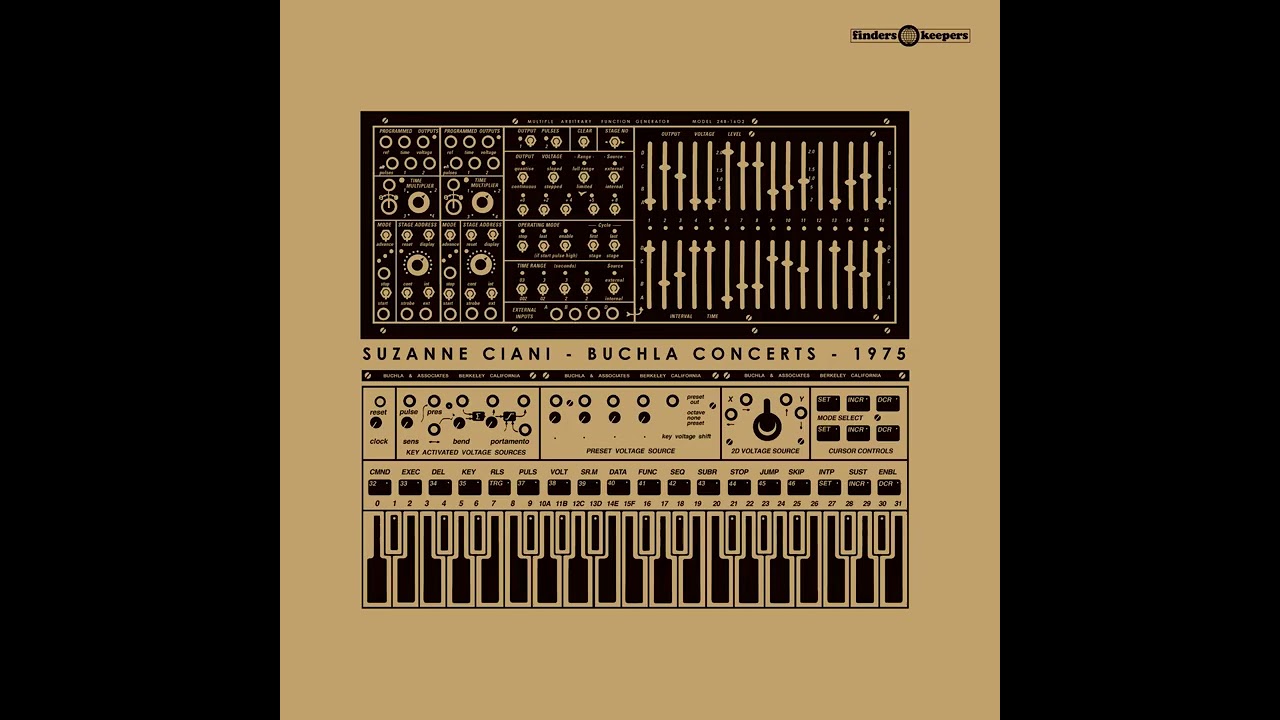
I want to say my album. I think the Buchla Concerts 1975, even though it was really just a document. It wasn’t a finely recorded album. It came from a cassette tape during a live quadraphonic concert, but I’m so grateful that it documented the live aspect. What I’m interested in is the live performance. That’s where I came from. I’ve also made a lot of studio albums, but my founding love of electronic music was as a performance instrument.
7. When all of these instruments, these machines, were being created and you got your hands on them, did you know you were at the dawn of something?
I was so excited about it. My mistake was that I thought the whole world was excited too. I went out into the world with this exciting machine and ran into a wall. Nobody knew what it was, or where the sound was coming from. So the backlash of that excitement was loneliness. I was frustrated that nobody understood what was happening. I had no audience then. Now I have an audience. The kids know what’s going on. They have the machines. Nobody had them back then.
8. How did you manage that loneliness you felt?
I became a teacher. I became extremely patient. I said to myself, “You’re going to have to be responsible for this gap, and so when people ask a question, take your time, answer it. Doesn’t matter how many times you’ve answered it. Be genuinely empathic with their desire to understand, don’t lash out and say, ‘What’s wrong with you?’” I developed this kind of teaching persona that I still have today.
Another thing I did was my first album, Seven Waves, which was a combination of classical and electronic. I grew up with romantic, operatic music in my Italian family, and my Italian heritage was about emotion and melody. So when I did Seven Waves, it was this synthesis of the electronic and my classical background that people understood.
9. Do you think about your legacy and, if so, do you think this teaching aspect is part of it?
Absolutely… But a lot of my understanding of what I’ve done, or who I am, or what the legacy is, is brought to me from outside myself. I was just in it. So when people say, “She designed electronic sound and put it into television,” for me, that’s a complicated little world.
10. Yes, you were one of the first women composers in major advertising and made music for brands like Coca-Cola, AT&T and General Electric. How was it complicated?
Because we come to television with a certain prejudice that it’s some populist, cheesy thing. It wasn’t that. It was a frontier. People at record labels were looking backwards. They had their music, they had their successes, and they wanted more of that. People in advertising wanted something new. They didn’t even need to understand what it was. It was, “Just do whatever you want, as long as it’s new.” And that was technology. In technology, you woke up every day, and there was something new, and it stimulated you.
11. Was that exciting?
It was hand in hand with the evolution of technology. Dishwashers were using chips. Elevators were using chips. There were new chips that did voices, that you could put into games. There were new ways of making images. It was the start.
12. What was your community like in that era?
I built a big studio, and it was filled with kids that wanted to get into this. I had a team, and I can’t remember the names of the instruments, but everyone had their specialties, so when it came to producing something, we really had a lot of firepower in all different directions. It became a beta testing, so we worked with Yamaha and Roland and all the big companies.
Suzanne Ciani
Lloyd Williams
13. You’ve been doing this for a long time. What keeps it interesting to you?
You have to understand that I’ve been reborn into my imagined world. For years in the ’70s, I thought what I’m having now, this experience of a shared understanding of analog modular electronic music, I thought that was going to happen back then. It didn’t. There are a lot of reasons for that. Some of them being the technology, the entering of large companies into the manufacturing of these instruments, the adoption by pop music of the instruments so that the keyboard was more typical than not. So I didn’t do it for a long time. When I moved from New York City, I closed my big studio and moved to this cabin on the ocean with my piano. This was in 1992.
14. What brought you out of the cabin and back into the studio?
In my small town of Bolinas we had these community dinners, where everyone would bring something. You’d bring your own plate, your own cup, and you’d go to somebody’s house and have dinner. A very small town. One night I’m having dinner, and I’m sitting on the floor after and I meet a young girl, and we’re talking about what we do. She says, “I play the buchla.” The likelihood of hearing this any place was like, infinitesimal. And that was Kaitlyn Aurelia Smith. She said let’s do an album, and we went to my studio on the water and did this improvisational recording live.

15. What are the most significant moments of your career so far?
Well, lately the significant moments have been meeting my new audience, the kids. I have this double life. I belong to a tennis club, and I play tennis with my buddies, and they come up to me sometimes and say “The strangest thing happened. I was talking to my grandson and mentioned your name, and he went crazy.” It’s like, “Oh yeah.” I have a relationship with their children and their grandchildren that they don’t have, because they don’t know what their kids are into.
16. What is the best musical performance you’ve seen recently?
I went to a Rosalía concert, and she was adorable. After the concert, she had infinite time for her fans. She stood up in her car through the sunroof and was waving to everybody.
17. Do you pay attention to dance music? If so, what’s your take on the state of things?
I play at a lot of festivals, and they do have a lot of dance music, and I think it’s wonderful. It’s fun. It’s very loud. It’s too loud maybe, because you have to protect your ears. Do you know Floating Points? He’s a buddy, and he has the most amazing record collection and really knows every single album that he has. I’ve been with him when he’s been DJing, and I really do get the sense of this creative force behind the music, the shaping of the arc of it, bringing it up and down. It’s nothing that I listen to on my own, but I can appreciate it when I run into it.
18. Who’s been your greatest mentor, and what’s the best advice they gave you?
My mentor, when I met her, she was 80 years old. She was a photographer named Ilse Bing. I was in New York. I was like 25, and had nobody to share my professional life with. I collected photography, and I met her through a photographer. She was in technology. Photography is a technological art form. She did her chemicals. She did her printing, and she taught me how to play, not to be too serious, and also to love my work.
19. How so?
Instead of feeling guilty about working or separating work from my life, she showed me that my work was, in fact, life. A good part of my life. She’d say, “Tell me about your work,” and nobody had ever asked me about my work. That mattered. So she gave me a perspective on my career. Plus, she was 80. She had gone through all these stages of her career, and I’m still modeling that. Her life still has meaning to me, because now I’m 80.
20. What’s one piece of advice you’d give to your younger self?
I guess it’s just to take a deep breath and go outside and look at a tree.
Source: Billboard
 Victoria Monét, Drake, and Noah Kahan Featured in New Music Release Poll for the Week
 Anne Hathaway Says Rihanna Inspired Her Maternity Style
 Miranda Lambert Says She and Carrie Underwood Deserve Recognition for Surviving Male-Dominated Era of Country Music
 Benson Boone Recalls Bathroom Encounter With Fan
 HorsegiirL Discusses Healing and Identity in Interview
 Noah Kahan Releases Hunger Games Song Draw You Out
 Hilary Duff Releases New Song “CATastrophe” for The Cat in the Hat Movie
 Keisuke Kuwata Discusses ‘Akane-banashi’ Themes, Japanese-Western Fusion, and 50-Year Career in Billboard Japan Monthly Interview