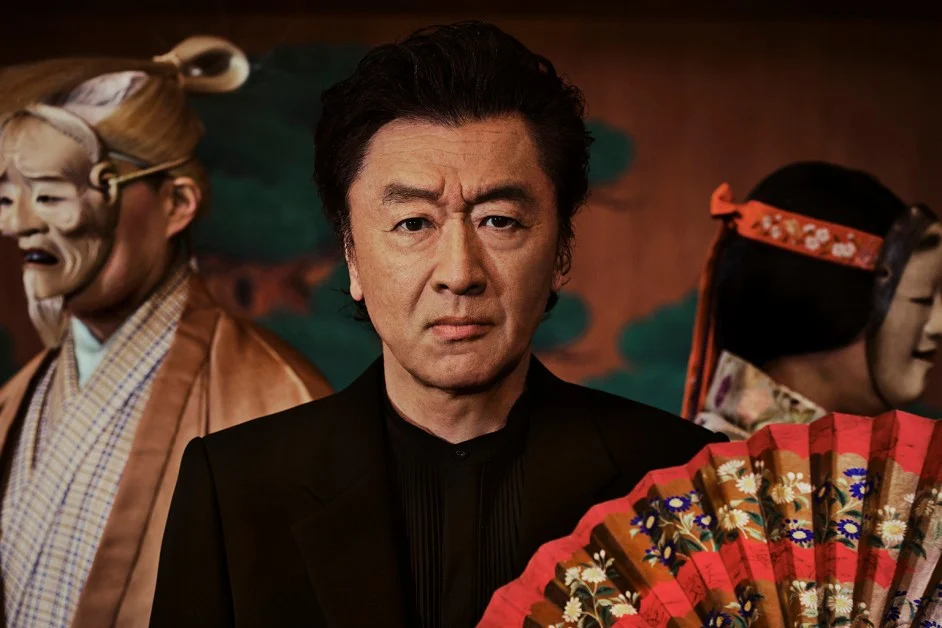
Keisuke Kuwata Discusses ‘Akane-banashi’ Themes, Japanese-Western Fusion, and 50-Year Career in Billboard Japan Monthly Interview
Keisuke Kuwata Courtesy Photo
Keisuke Kuwata released his new single “Hitotarashi” on June 24. As the vocalist of Southern All Stars — Japan’s pop/rock band celebrating its 48th anniversary this year — Kuwata has remained a force in Japanese music since the band’s 1978 debut single “Katte ni Sinbad.”
“Hitotarashi” serves as the opener for the anime series Akane-banashi, which is set in the world of rakugo (traditional Japanese comic storytelling). This marks the first time Kuwata has written a song specifically for an anime title. Billboard Japan spoke with the 70-year-old artist about the project.
This is your first-ever anime theme written from the ground up. How did the project come together?
My staff first told me the production wanted me specifically, so I read the manga it was based on. The story is set in the world of rakugo, one of Japan’s traditional performing arts, so maybe they felt some kind of kinship with me, having done music for so long, because they made such a passionate offer. I’m not deeply versed in rakugo, but I’m a fan and go see it now and then, so given the connection, I took it on. But then they asked me to do both the opening and ending themes, and I thought, “Wait, is that normal for anime?” [Laughs] That’s when the pressure really hit. My staff put together research on who’d done theme songs for anime adaptations in recent years and what BPMs they used, that kind of thing. Once they’d gone to that much trouble, I gradually started getting into it, and little by little I got a feel for the temperature of it, so to speak, the drive an opening needs, the overall mood in my own way.
What thoughts went into the title, “Hitotarashi”?
The verb “tarasu” (to beguile) contains the kanji character for “mad” alongside the speech radical. I think song and dance entertainment like ours, and rakugo too, have always in some sense belonged to people who exist outside society’s usual order. By nature, the people who preside over the performing arts aren’t supposed to have a place within ordinary social life, and now on top of that we have all these compliance standards. But deep down, I think everyone secretly feels, “We do need people like that, don’t we?” And maybe the heroine, Akane, is someone who instinctively carries that same feeling. Whether you’re a rakugo performer or a musician, grabbing the audience’s heart by putting your own identity, your true feelings, your venom into your craft — that’s what you’d call the art of beguiling. Even now, in the Reiwa era, I felt that word captured something essential about how Japanese people have always related to performance at a deep level. I think anime like Akane-banashi, which young people support today, carries on that same thread — the idea that deep down, people are drawn to something a little dangerous. Something that’s fading, but still fundamental.
So the spirit of rakugo and the spirit of rock overlap somewhere?
There are the common people, and there’s the art, and one of the biggest reasons art exists is to poke fun at and needle the powers that be. Things like the blues and capoeira as a martial art were made by people who were oppressed, built up by those who were confined as a form of resistance, and that’s where their strength and beauty come from. The common people of the Edo era did the same thing, embedded their own ideas and ironies into things, which turned into ukiyo-e prints or transformed into song, and that’s how they pursued outlets for their frustrations and found their pleasures. I think that same thread runs through rakugo today, and through rock too.
Could you tell us about your adoration for Western music and about fusing Japanese and Western influences?
Back when I was a student thinking about getting into music, I used to fantasize about studying English and living in L.A. or New York. I never actually did any of that before reaching the NEW 70’s, but that longing for something Western and overseas never really left me. There used to be a TV host named Tony Tani long ago. He’d hold an abacus and click it with his fingers — cha-cha-cha-cha — while improvising phrases with amateur guests on the spot. Looking back, that was nothing but rap. [Laughs]
Things like Japanese-style spaghetti Napolitan, or hamburger steak, or omurice known as “yoshoku,” reinterpreted Western food — Japanese people, myself included, have always loved that sort of thing at heart. We can’t become the real Beatles, we can’t make authentic Italian food, but we love and live for the processed culture, like Napolitan with a little soy sauce added, tailored to Japanese taste.
Meanwhile, there’s a ramen shop near my house that makes a Japanese-style dashi broth, and lately foreign visitors line up outside it. It’s a bit like how Europeans discovered the value of ukiyo-e. I’d love it if our music could go the same way. [Laughs]
What’s driven you through a career approaching 50 years?
I think the happiest part has been that I’ve been able to do this without really being conscious of keeping it going for a long time. With Southern All Stars, (Yuko) Hara-san has been there with me, also as a life partner, and whenever something came up, I could ask her and talk it over with her. My motto is, “I don’t really know, so I’ll leave it to you.” [Laughs]
At the same time, you seem to pay close attention to younger musicians and to what kind of music is reaching people today.
My staff are young, so in this increasingly diverse world, I get a sense from them of what’s trending, what’s about to catch on. If I’d spent these nearly 50 years with the same veteran manager the whole way through, things would probably look a bit different. In that sense, having people around me who keep that turnover going has mattered more than anything.
So it’s not just what wells up from within — the information you pick up from those around you becomes inspiration and motivation too?
Yes. Honestly, there’s more I don’t understand about things like what’s happening among young people these days. But when you look at Japan’s population by generation [tracing an inverted pyramid with his hand] it’s mostly older people at the top, and the younger you go, the smaller that slice gets. Within that kind of demographic structure, there’s the question of how to speak to the middle-aged-and-up audience, and how to read what’s actually resonating with younger listeners. I think that’s the part my staff are always keeping an ear out for.
—This interview by Takayuki Okamoto first appeared on Billboard Japan
Source: Billboard
Related articles
 Noah Kahan Releases Hunger Games Song Draw You Out
 Hilary Duff Releases New Song “CATastrophe” for The Cat in the Hat Movie
 Stella Lefty Reacts to Saturday Night Live Sketch Parodying Debate Over Her Songwriting Credits
 American Authors Adapt ‘Best Day of My Life’ for Kids Project Bogoo’s Best Day
 Abadi Al Johar: Five Decades Along the Road of Saudi Music
 SZA Co-Signs Hayley Williams’ Live ‘Love Galore’ Cover
 Lady Gaga Apologizes Over Haus Labs Bronzer Controversy
 Lola Young Says It Feels Like Hard Work Just to Breathe After Years of Vaping