
Horsegiirl
Alex Lockett
horsegiirL Jil Kuhl
HorsegiirL opens for Robyn tonight (Oct. 2) at the Kia Forum in Los Angeles, but if she feels nervous or eager to reach the venue, she shows no sign of it.
Instead, the German producer projects a grounded calm when we meet at noon on a sunny patio in downtown Los Angeles. Here, a jackhammer pulverizing nearby concrete creates a sound that contrasts with her vibe and her recent June debut album, Nature Is Healing.
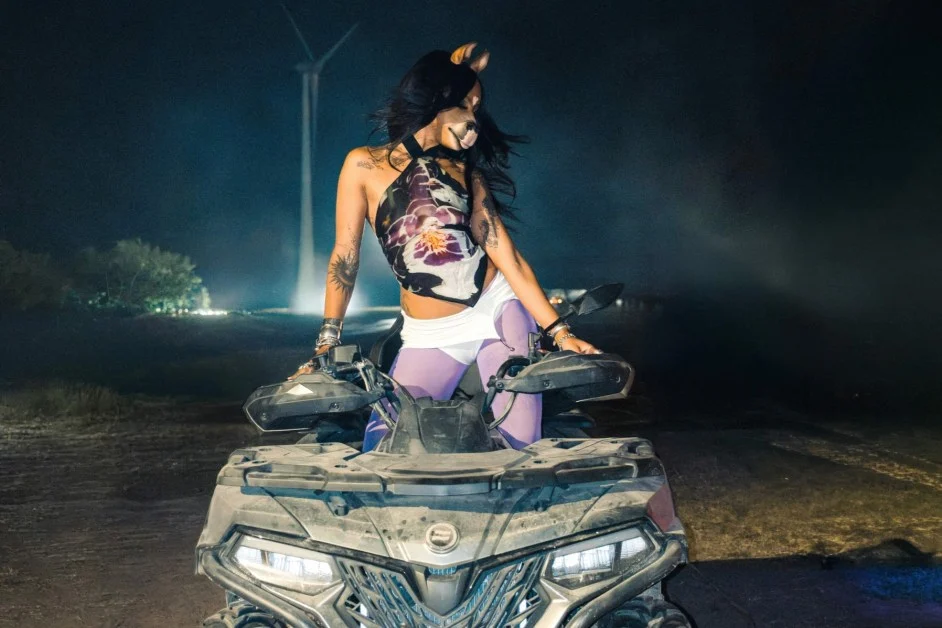
Celestial, sincere, and often unhinged—including a cameo from The Doctor on the track “An Apple a Day”—the album established horsegiirL as a notable dance act with pop sensibilities. These elements appear in her music structures and her fantastical world-building as a stylish equine named Stella Stallion living in a natural wonderland that resembles a mix between Lisa Frank and Planet Earth. This persona forms an artistic universe with internal logic and a hyperpop, pop, and hardcore dance soundtrack that horsegiirL developed through the Berlin rave scene, which she broke out of with her 2023 single “My Barn, My Rules.”
Planet horsegiirL has its own gravitational pull. Ahead of this story, a folder of images arrived featuring Stella Stallion alongside pop peers Sabrina Carpenter, Grimes, Cobrah, Zara Larsson, Kim Petras, and North West, alongside shots with actors Adam Scott and Lisa Rinna. In April, she made cameos during the Coachella sets of English rock act Wet Leg and British dance-pop artist PinkPantheress, following her own 2025 Coachella debut.
“A major shift was when I played Coachella last year,” Stallion says of her breakthrough. “I’d played Portola the year prior and that was already a big moment, and I think those two festivals plus what came after was a slow and steady growth.” She notes that her U.S. audience is now her largest worldwide.
Many of those fans will catch horsegiirL on her North American headlining tour, which launched Sept. 19 in Denver and runs through mid-November before moving to Europe. Her routine for staying healthy on the road involves exercise, abstaining from alcohol, and up to 10 hours of sleep per night. “I don’t care if people judge me for it, because I need the sleep,” she says.
The tour arrives near the end of a year that began, as horsegiirL recalls, with her first genuine sense of belonging in the U.S. music scene. “It was during Grammy weekend,” she says. “There was this Spotify event I went to where it was like, ‘Wow! I don’t feel like an imposter all of a sudden. I have this invite because I’m allowed to be here.’” Still, when asked if she wants Nature Is Healing to earn a Grammy nomination, she states she is “not very much of an awards kind of girl,” adding, “I don’t really think a Grammy says a lot about the quality of someone’s work.”
On Oct. 30, horsegiirL will release Hardcore Healing, an EP integrating the rave, happy hardcore, and gabber sounds that populate her live shows and her childhood in the German countryside, where she grew up surrounded by nature with a geologist mother. The project features collaborations with Parisian gabber artist aamourocean, frequent PinkPantheress collaborator Count Baldor, and horsegiirL’s frequent collaborators Free Jimi and Luvhunter. The lead single, “c*ntry girl rock,” released this week, is a collaboration with producer Dylan Brady that combines hardcore and country.
Here, Stallion discusses healing, the pop path, and equine identity.
You just started your first North American headlining tour. What’s the show like?
The show is very theatrical. I’m dancing, I’m singing, and I have moments behind the decks, so it’s really a new chapter and a great mixture. I feel both like old horsegiirL and this new pop girl path I’m on. With Nature is Healing, because it has so many downtempo and vocal heavy tracks, to do the album justice and tour it right, I needed to change the show as well, because it’s not really just a DJ album. It’s also really exciting to not be alone on stage, to have dancers with me, because DJing can be isolating sometimes, especially on big festival stages.
Is that pop girl path something you’ve intentionally been trying to cultivate, or has it just kind of happened?
I was always a bit of a pop girl, because all of my tracks, even from the very early ones like “Harvest Heartbreak,” always had a very classic pop structure in the sense that it’s verse, pre-chorus, chorus. It’s quite hooky. It maybe has pop culture themes, like star signs and whatever. I always leaned into that, but always combined it with quite a fast BPM, which immediately makes it maybe less radio friendly. But it wasn’t a conscious thing for Nature Is Healing. It was just that I had a lot to say, and I couldn’t have fit it into a strictly electronic club record.
Are there elements of the pop path that you’re especially enjoying?
What I really like about pop artists and pop girls specifically is that they can have different eras. I was always fascinated that a lot of pop musicians will reinvent themselves and explore sounds and don’t need to stick to one genre, per se. That is one of the big things I love about pop music. I listen to so many different kinds of music that I always found it very hard to stick to one genre when it comes to my own music. It felt quite restrictive, and I think in pop, people want artists to showcase different interests and inspirations. I really like that about pop. And then the over the top-ness, the theatrics of pop, I find that super cool and interesting and fun.
I wonder if that over the top-ness and theatricality lends itself especially well to how you present yourself to the world, given that you are a horse.
Horses are very over the top. I think that’s why I probably would not want to be like, a minimal techno DJ.
Is there a sort of philosophy behind the way you present yourself?
I think the reason why I’ve been embraced so much, especially in a queer context, is because a lot of people have experienced the confinement of societal boxes. I think everyone yearns for the freedom to just express who you truly are, instead of being prejudged.
Also when you asked me about pop stardom, something I always found really scary is fame to that level, where you cannot leave the house and you cannot ever go back to a normal life where you can actually live and experience things like a normal person. I can only imagine how that feels, and I don’t know if I would ever want to trade my privacy for that.
Does being a horse give you a kind of freedom that a human artist might not have?
Because I’m a horse, I feel like people can also project what they want onto me, whereas a lot of human artists come with a past, they come with class, race, gender, all of these things that in a way immediately determine, or determine to a bigger degree, how they’re placed within the music space and who will even give them a chance and listen to them.
On the music side as well, because I grew up in Germany, I do think a huge part of me is always rebelling against being put into this box for brown horses. Whenever I would tell someone I make music, it’d be like “Oh, do you rap?” or “Do you do R&B?” Hardcore and gabber were very much open spaces, but they’re predominantly white, but it’s also what I grew up with, so I’m reclaiming that a bit.
Horsegiirl
Alex Lockett
Right, so the title of Hardcore Healing is obviously clever given that the project features sounds like gabber and happy hardcore. What ideas are you exploring with the project?
There’s an idea of healing sometimes, especially in Western contexts — and also the understanding of Eastern practices like meditation and yoga that are always supposed to look very calm, as if healing and having a healing practice only needs to look one way — where you arrive at this calm state of just like, constant floating. I don’t feel like that’s the whole process of healing. I feel like healing can also be raging and moving quick, instead of just calmness. I think that’s just as important. I find it very healing to go into a club space and move with a lot of bodies around me and not just this like, super self-focused, self-work, self-individualist idea of healing.
Tell me about making it.
We went to the countryside and locked ourselves in this house for a week and a half and just made a bunch of music. It’s nice to work with people you know. Like, I really enjoy the process a lot more when there’s a friendship established and it’s not this business-esque way of going into a bunch of writing sessions.
Take me through a typical day in the countryside.
Wake up at 10, have breakfast, then start making music ’til we get really hungry around four. Go forage for food, which wasn’t always easy because the next supermarket was like, a 40-minute drive away, then work ’til midnight, then make a fire and roast things on the fire, and then go to bed at three.
How does Hardcore Healing relate to Nature Is Healing?
Nature Is Healing caters to a bit more downtempo, less club sound, and I felt like I wanted to still do something this year that’s more back to my club roots. A little less vocal heavy, faster BPM, still euphoric, still kind of in line sonically, but reinterpreting some of the sounds that I used on Nature Is Healing in a more club setting.
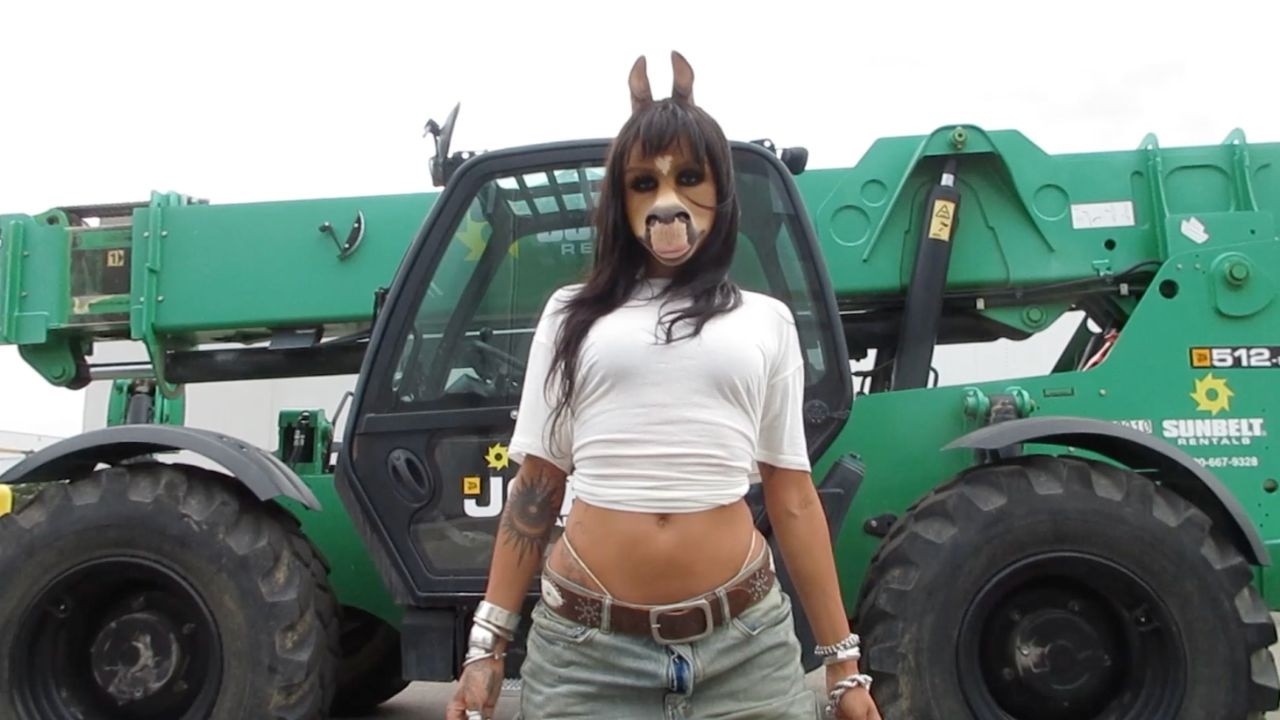
In your recent NME cover story you talked about hardcore and gabber being genres popular among working-class people in Germany, and I wonder if that’s how you were thinking of country music too, in terms of how you fused the two genres on “c*ntry girl rock.”
One hundred percent. I feel like there’s a lot of city girl music and not enough country girl music, and I really think the fusion of hardcore and country has to happen. I’m just getting the ball rolling, starting to get that genre fusion out there with country girls.
I don’t know if I’ve ever heard anything like this song.
In Germany, a lot of country people listen to hardstyle and jumpstyle and stuff, and there’s a German version of country called Schlager. So there’s already this duality, especially if you’re going to a country Octoberfest kind of thing — not the actual Munich one but just a small town one — that there will be country played during the day, and then it kind of goes into harder stuff at night. I can see that working for the U.S. too.
Given all these factors — pop, hardcore, country, healing, nature, club music, etc. — how do you describe the world in which you exist right now? Like, what is the world you’re bringing to life on stage?
I think it’s still quite chaotic, in a weird way. It’s like, nature, chaos, rave. The challenge going into this tour was how I could still provide a really high-energy show without losing fans that come to really dance and shake a–, but also, how can I have these serene moments of singing and really emotional moments? So yeah, nature chaos rave.
Source: Billboard
 Noah Kahan Releases Hunger Games Song Draw You Out
 Hilary Duff Releases New Song “CATastrophe” for The Cat in the Hat Movie
 Keisuke Kuwata Discusses ‘Akane-banashi’ Themes, Japanese-Western Fusion, and 50-Year Career in Billboard Japan Monthly Interview
 Stella Lefty Reacts to Saturday Night Live Sketch Parodying Debate Over Her Songwriting Credits
 American Authors Adapt ‘Best Day of My Life’ for Kids Project Bogoo’s Best Day
 Abadi Al Johar: Five Decades Along the Road of Saudi Music
 SZA Co-Signs Hayley Williams’ Live ‘Love Galore’ Cover
 Lady Gaga Apologizes Over Haus Labs Bronzer Controversy