Stargate Is Now Streaming for Free on YouTube
There is something refreshing about the simplicity of a great 1990s adventure movie. Personal favorites are often the ones that do not take themselves too seriously. These films do not build an interconnected universe, explain every piece of mythology, or spend half the runtime teasing a future installment. The best kinds of nineties adventure films feature a cool idea, a charismatic hero, some weird ancient mysteries, and a sense that the characters are entering a completely unrecognizable world.
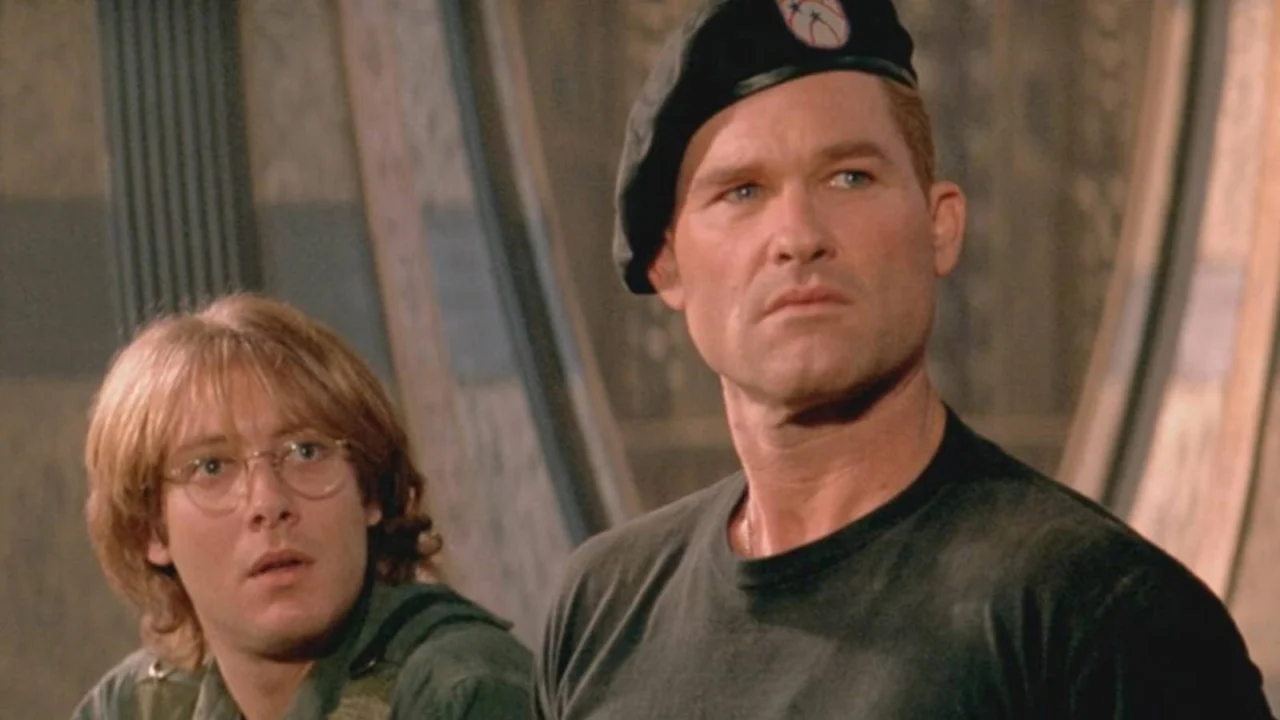
Roland Emmerich directed Stargate, a 1994 action-adventure movie with a sci-fi twist. The story drops Egyptologist Daniel Jackson, played by James Spader, and Special Forces Colonel Jack O’Neil, played by Kurt Russell, into an otherworldly Egypt after unlocking a portal that allows access across the universe. The basic setup makes the story feel like a lost-civilization adventure before it becomes a traditional alien-invasion story. Ancient gods, mysterious hieroglyphics, buried secrets, enormous temples, and an entire civilization living under the thumb of a supposed god fill the screen.

Emmerich’s execution of Stargate stands out because it predates the destructive spectacle that later defined his career. Coming just two years after Universal Soldier, Stargate catches Emmerich in a more patient directing style. Instead of relying on the apocalyptic set pieces of Independence Day or The Day After Tomorrow, his direction prioritizes world-building, atmospheric tension, and the quiet awe of sci-fi exploration. The result is a sharper film that lets a high-concept premise breathe naturally, mimicking the gradual unfolding of the mystery of the Stargate before its characters even enter the desert landscape.
Emmerich makes the alien world feel enormous, partly because the movie was shot in Yuma, Arizona. The director recalled having as many as 1,500 extras for some scenes. James Spader later described the experience as a spectacle in itself, with enormous sets, thousands of extras, and even a full-blown sandstorm captured during filming.
Viewers can still see the seams. Some computer-generated imagery has aged poorly, particularly when compared with the practical sets and miniatures surrounding it. A few supporting characters are little more than military grunts, and the movie occasionally feels like it is rushing through a much larger mythology than it has time to explore. The scale sells it all, however. Emmerich knows when to let the camera linger on a gigantic set or an approaching army, holding the shot just long enough to sell the scope.
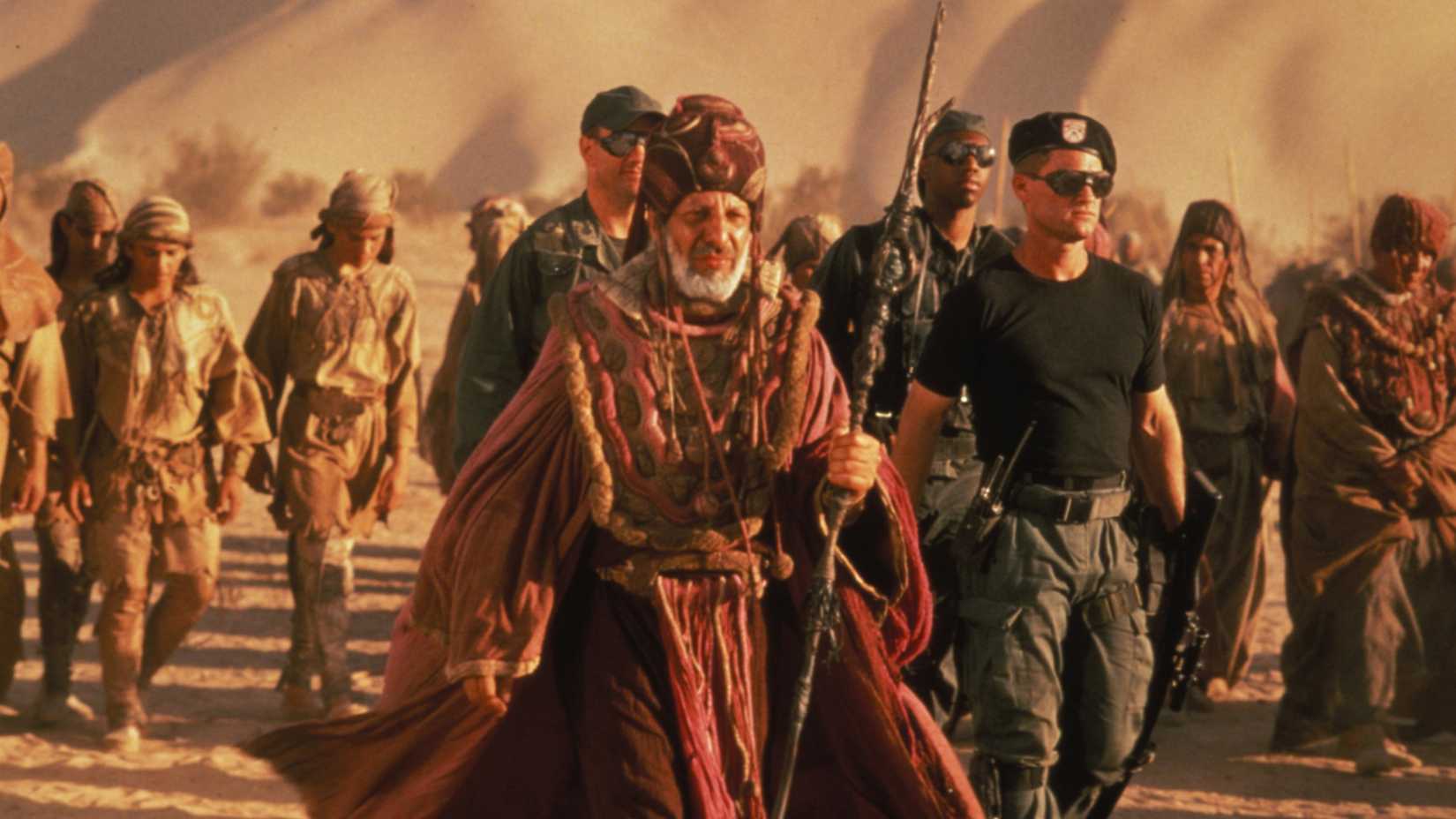
Kurt Russell is another major reason Stargate feels like a proper action-adventure. Colonel O’Neil is basically Russell’s attempt to play the most emotionally repressed action hero imaginable, but enough personality exists underneath the stoicism to keep him interesting. Russell himself said what attracted him was Emmerich’s clear vision and the filmmaker’s enthusiasm for making a genuine spectacle.
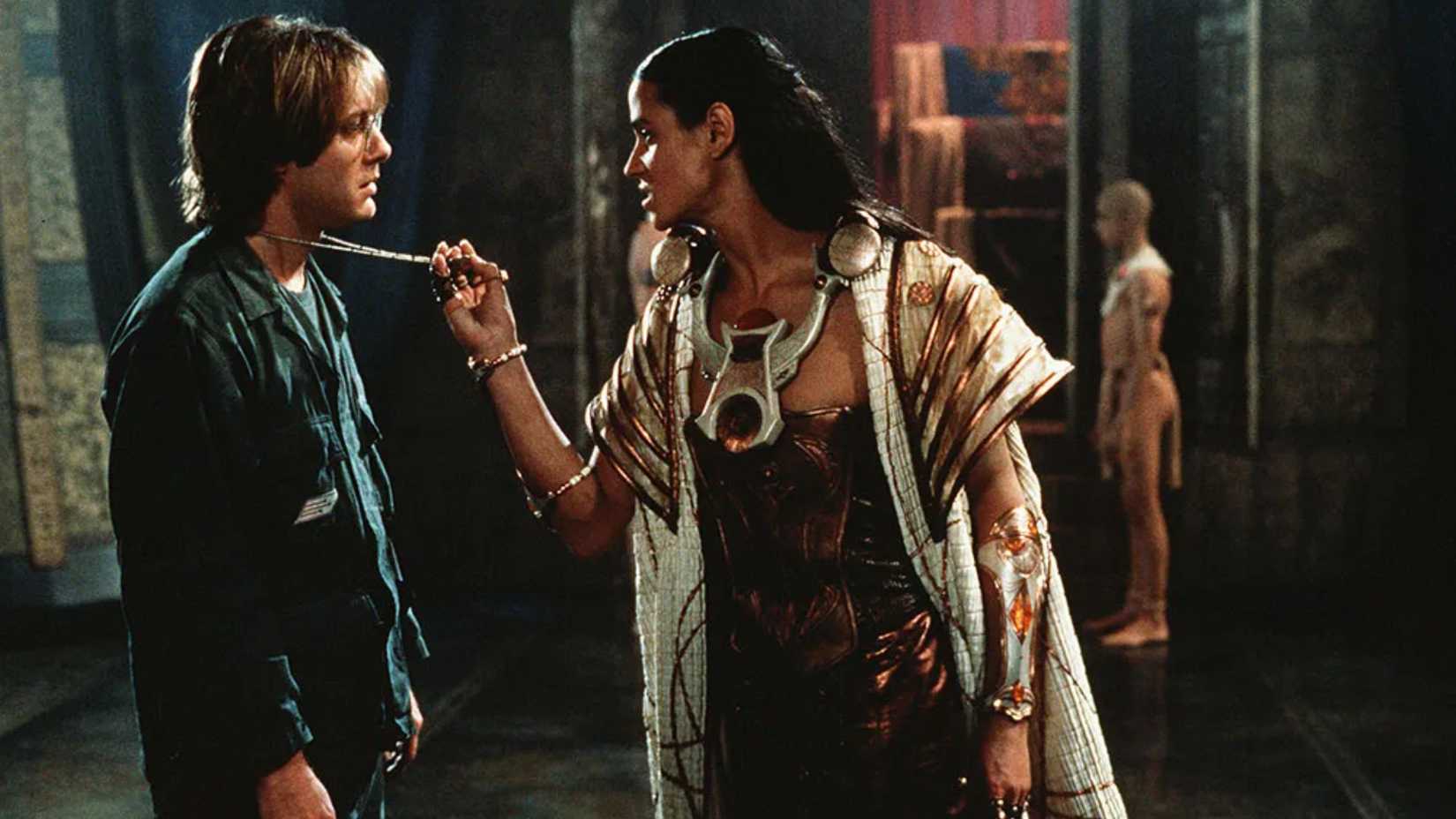
James Spader’s Daniel Jackson is the perfect opposite. He is fascinated by everything O’Neil finds threatening, and Spader gives the character a nervous energy that grounds the film’s sci-fi spectacle in genuine human curiosity. Emmerich later described their acting methods as diametrically opposed. Spader built his character intellectually, whereas Russell relied on raw emotion, and this inherent friction is exactly why their on-screen relationship works.
David Arnold’s musical compositions also give the film an undeniable sense of gravity. Though Arnold was a relatively unknown composer when Emmerich and Dean Devlin heard his work on The Young Americans, they granted him unusual creative freedom. The result is a towering soundtrack that lends an almost mythic importance to everything on screen. The central theme alone possesses the grand, instantly recognizable quality expected from something like Star Wars or The Lord of the Rings.
Stargate SG-1 later turned the film’s central premise into a television engine, driven by the endlessly repeatable promise of stepping onto a new world each week. The flagship series dramatically expanded the mythology, while Stargate Atlantis leaned harder into pure exploration, cementing the show as the definitive version of the universe for some fans.
Emmerich’s film deserves appreciation on its own merits and recognition for its lingering influence. Disney’s Atlantis: The Lost Empire, released seven years later, shares striking DNA with the 1994 movie, ranging from the nerdy academic leading a military expedition to the discovery of a forgotten civilization. While not a direct copy, Atlantis writer Tab Murphy visited the Stargate set and knew the filmmakers. He later admitted those similarities might have seeped into his subconscious, even though both films drew from the same well of classic adventure tropes.
Sitting at the exact intersection of sci-fi, fantasy, military thriller, and historical pulp is what makes Stargate a blast. It wears its flaws on its sleeve, including dated visual effects, paper-thin characters, and a lingering sense that it is simply chapter one of a cinematic franchise that never materialized. Over three decades later, those rough edges hardly matter. Sometimes a movie does not have to be the best version of itself to be a great time, and Stargate proves that.
Stargate is streaming on YouTube
Source: Polygon
Related articles
 Dragon Quest Creators Announce 4X Strategy Game Conquista
 Saber Interactive to Add Dinosaurs to Stuntman: Hollywood
 CD Projekt RED Adds New Music to The Witcher 3 After 11 Years
 Nintendo Releases Special Guide for Elden Ring Beginners
 CDPR to Reveal Unexpected Side of Dandelion in The Witcher 3 Expansion
 Marvel Tokon Producer Admits PC Version Failure and Calls Player Retention Extremely Difficult
 My Bloody Valentine Returns to Free Streaming on Pluto TV
 Ice Wall Season 2 Receives Full Trailer and Poster