Retrospective Highlights Iconic Calvin and Hobbes Comic Strip Panel
Bill Watterson’s Calvin and Hobbes ran in daily newspapers for a decade, blending humor, heart, philosophy, and adventure through the lives of a six-year-old boy and his stuffed tiger. Watterson gave his simple character designs expressive vitality while packing lush environmental detail into panels less than two inches tall.
Selecting the single greatest panel from the entire run requires an image that captures every core strength of Watterson’s work. The ideal panel must feature both Calvin and Hobbes alone. Strips centered on Calvin bothering his teacher or sharing sweet moments with his mother have plenty of merit, but the bond between the boy and his tiger remains the foundation of the comic.
A standout panel also needs the right balance of tone. Slapstick moments where Hobbes pounces Calvin deliver great comedy, while storylines like Calvin caring for an injured baby raccoon provide heavy emotion. Calvin also regularly drifted into solo daydreams as Spaceman Spiff. A definitive panel needs to merge humor with the expansive philosophical musings Calvin carried into his backyard explorations. Watterson frequently used forest settings to celebrate the natural world, pairing intricate line work on trees with minimalist character art.
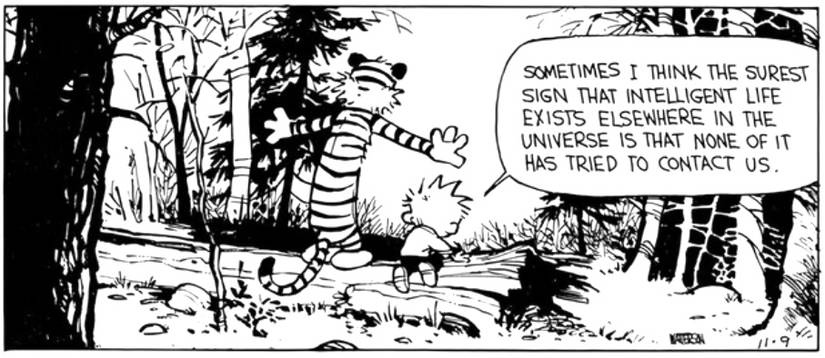
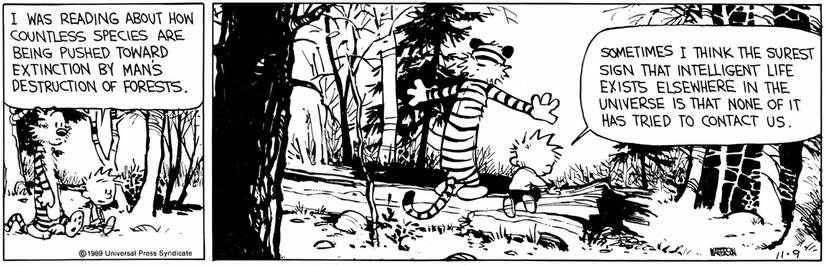
The panel published on November 9, 1994 brings all these elements together. Calvin and Hobbes sit side by side in the woods with their backs turned to the reader as Calvin delivers a classic observation:
“Sometimes I think the surest sign that intelligent life exists elsewhere in the universe is that none of it has tried to contact us.”
The dialogue delivers sharp humor alongside gentle cynicism about humanity. Showing the duo from behind highlights their companionship without needing facial expressions, while the detailed forest provides a sense of outdoor adventure. The scene functions completely on its own without needing the surrounding panels for context.
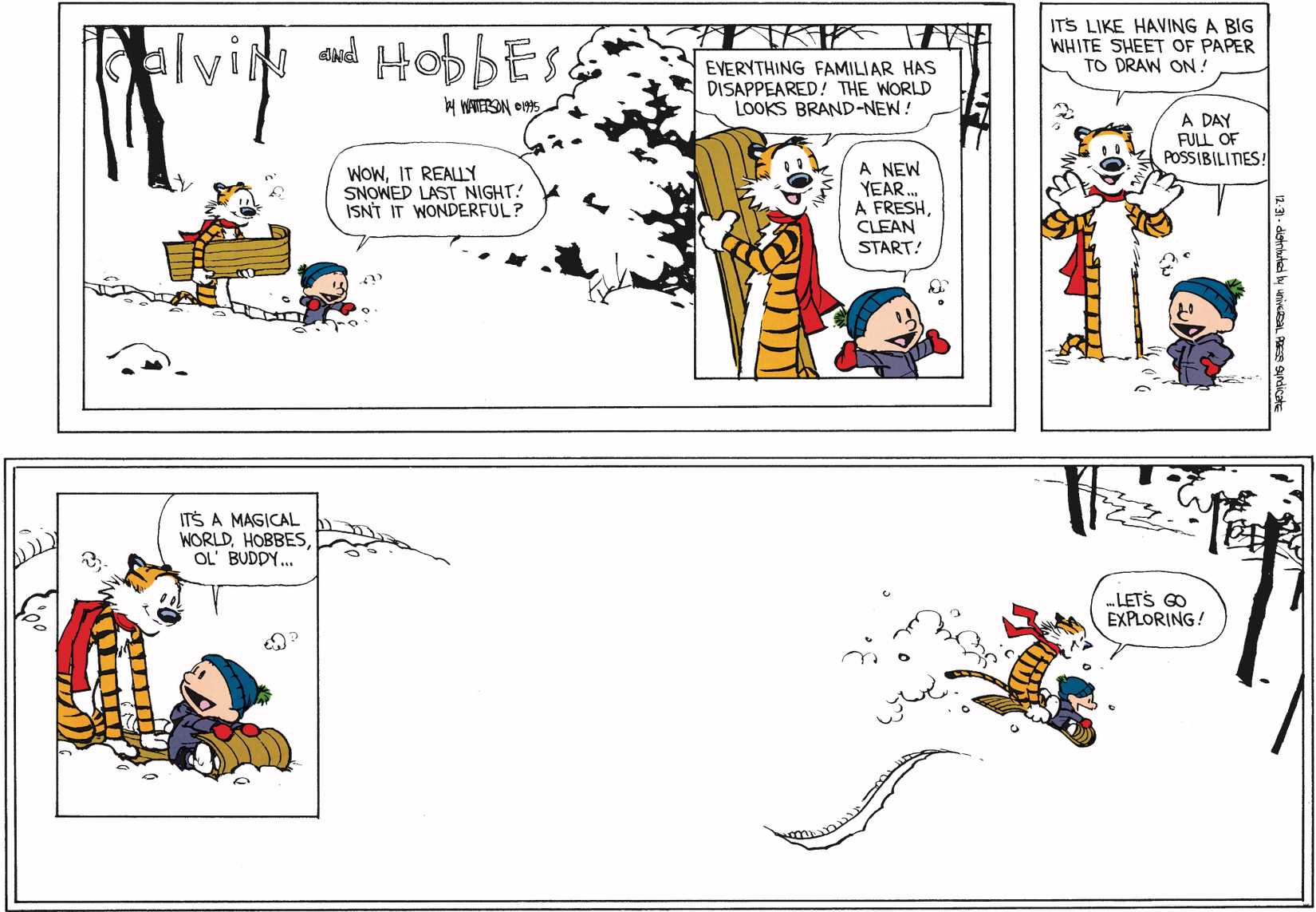
The final panel of the entire series, which shows Calvin and Hobbes sledding into an empty snowy landscape, stands as another strong contender. Watterson’s open white space in that farewell strip suggests endless possibilities. That conclusion benefits heavily from the emotional weight of being the final goodbye, but it lacks the sharp comedy that defined the daily run. The November 1994 forest panel captures the humor, perspective, and artistry that made the comic exceptional.

 Microsoft Reportedly Developing Technology to Convert Discs Into Digital Xbox Games
 Three Major Xbox Games Cannot Be Converted to Digital Versions
 Analysts Predict Strong Sales for New The Witcher 3 DLC
 Christopher Judge Explains Why He Did Not Return as Kratos in God of War Series
 Journalists Preview First 30 Minutes of New Resident Evil Game
 Sony Threatens Players With Legal Action Amid Disc Protests
 Gamers Find Way to Beat Modern Warfare 4 Developer Records
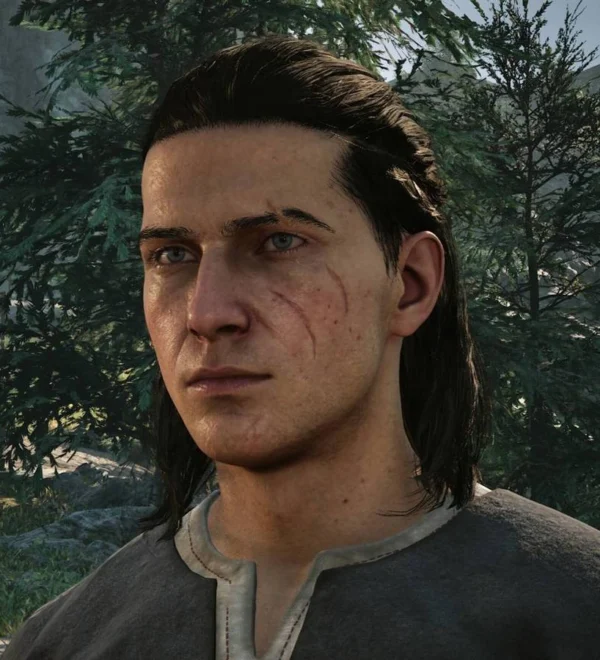 ‘Someone Needs A Lesson’ Quest Walkthrough in The Blood of Dawnwalker