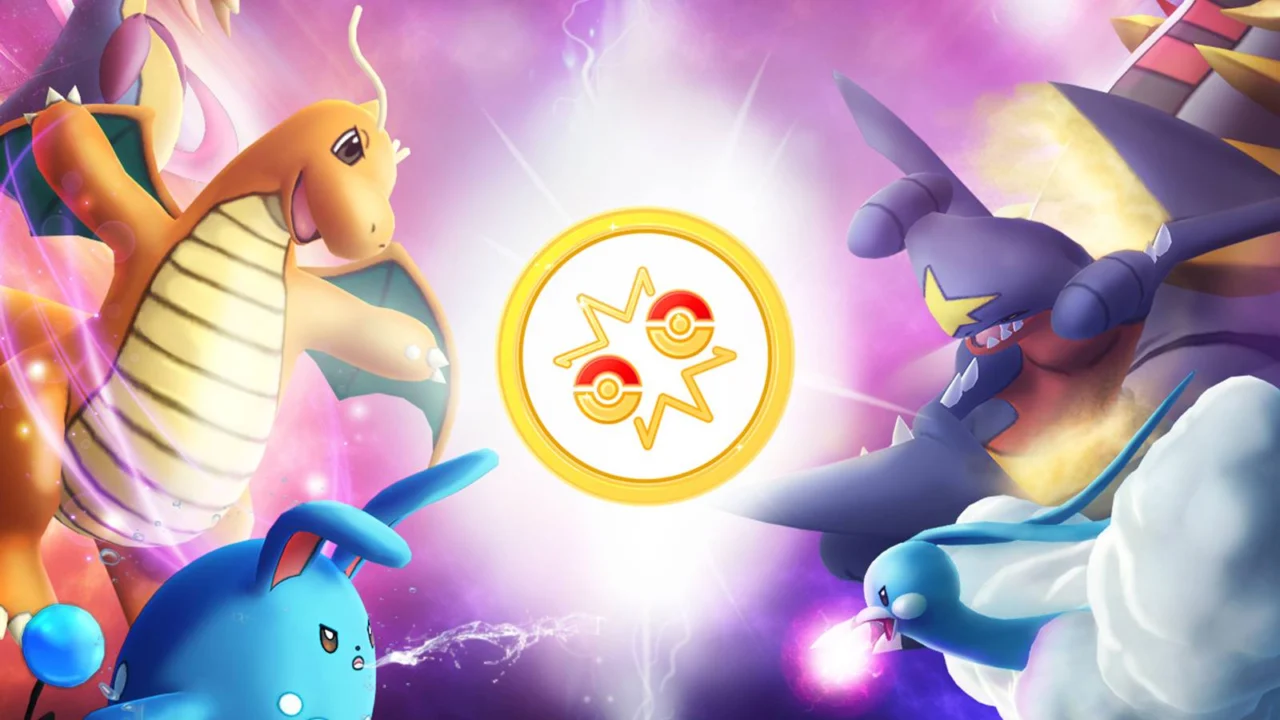
Pokémon Go Developers Announce Major Overhaul to Resolve PvP Issues
While a vast number of Pokémon Go enthusiasts treat the game as a tool for physical activity and local exploration, a dedicated core of the community is driven by the thrill of competition. Since its debut in early 2020, the Go Battle League (GBL) has served as the official arena for high-stakes online Trainer Battles, turning the mobile hit into a legitimate competitive platform.
However, even developer Niantic concedes that the GBL has been plagued by technical friction. Competitive matches have frequently suffered from inconsistency, and savvy players have often found ways to manipulate the underlying mechanics of online play to secure an unfair advantage.
Looking toward 2026, Niantic is finally initiating a fundamental transformation. The studio has announced a comprehensive “rebuilding of the core battle system,” an initiative designed to reinforce the technical foundations of every combat mode. The objective is to ensure that outcomes consistently reflect a player’s tactical prowess while preserving the rapid, fluid feedback loop that fans expect.
“In the past, certain interactions were heavily dictated by the precise moment inputs reached the server within a specific turn,” Niantic explained in a recent technical update. Disparities in hardware performance or network stability often skewed how actions were processed. The overhauled architecture, however, prioritizes turn-based resolution at a structural level. This change is intended to neutralize the impact of minor latency and device variance. While internet quality remains a factor in any online environment, standard fluctuations should no longer alter the results of identical strategic choices.
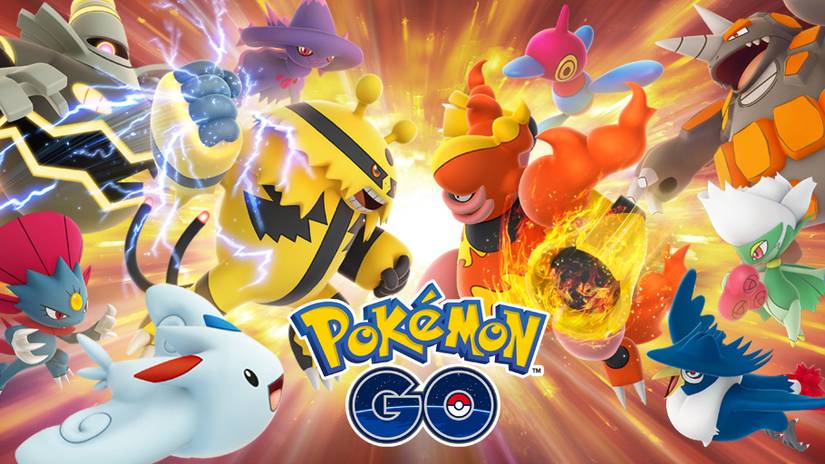
Several pivotal adjustments are arriving as part of this GBL refresh. Notably, damage will now be calculated and applied at the end of each turn, eliminating the fragmented resolution patterns previously caused by network jitter. Furthermore, Pokémon swapping will now be prioritized, resolving before incoming damage is processed. This update also brings much-needed uniformity to swapping mechanics, whether a player is making a strategic “quick swap” or a forced replacement after a Pokémon faints.
At its heart, the project is a total ground-up restoration. “We rebuilt the entire framework to eradicate those persistent inconsistencies,” Ben Li, a staff server engineer at Niantic, told Polygon in a recent interview.
“Our internal benchmarks show a system that is significantly more stable and predictable,” Li noted. “For the casual player base, this translates to an experience that simply functions the way they assume it should.”
The overhaul has been a massive undertaking, with Niantic refining the general battle architecture for nearly two years and focusing specifically on PvP for the last ten months. For Li, fixing the Go Battle League was more than just a professional assignment; it was a personal mission.
“Before I joined Niantic, I was incredibly active in the PvP scene,” Li shared. “I was competing in several grassroots tournaments a week and held a high rank. That gave me a front-row seat to the frustrations regular players face, as well as the technical flaws that drive high-level competitors crazy. When I was hired, my first priority was asking to work on the battle systems. I knew I could improve them. You could say it’s been a ‘long con’ to get to this point,” he added with a laugh.
Li’s background as a veteran player allows him to address the community’s most specific pain points. One such issue is the “Damage Registration Error” (DRE), a frustrating bug where fast attacks fail to register if a charged move is triggered on the same turn, often leading to a player losing a match they should have won. By aligning all actions to a rigid, synchronized timeline of turns, Niantic’s new engine effectively solves this problem.
“Lining up the game logic with the players’ mental model—where turns are defined segments of time rather than a dynamic server-side calculation—brings the experience closer to how the community always expected it to work,” Li explained.
To ensure a smooth transition, Niantic is adopting a phased rollout. The new system will first appear in QR-code battles and friendly matches rather than the competitive GBL. This cautious approach is intended to protect the integrity of the professional circuit, specifically avoiding any disruption for competitors at major events like the 2026 Seattle Pokémon Regional Championships.
By carefully managing which players are on the legacy system versus the updated one, Niantic can monitor health metrics without impacting high-stakes tournaments. However, Li admits that even with these massive strides, the work is never truly finished. To assist with future fixes, the team has developed sophisticated diagnostic tools that allow them to replay matches with frame-by-frame precision.
“As a fan of StarCraft, I appreciate games that allow you to replay exactly what occurred,” Li said. “From an engineering perspective, that’s the real achievement here—being able to pinpoint an exact timestamp and see the internal state of a match. It allows us to isolate and resolve bugs at a much faster pace. That’s what excites me most as a developer.”
Source: Polygon
Related articles
 Jenna Ortega Wants to Step Away From TV Series After Wednesday and Explains Why
 Two New Trailers Released for Mamoru Oshii’s Armored Trooper Votoms: Die Graue Hexe Ahead of Nov. 20 Premiere
 Lawrence Makoare, Who Played Lurtz in The Lord of the Rings, Says He Is Joining The Hunt for Gollum
 GTA IV Gets Experimental Android Port
 High Plains Drifter, Clint Eastwood’s Western, Now Streaming Free on YouTube
 New Edition of Battlestar Galactica: The Board Game in Development, With Cylons Returning
 Matt Damon’s Contagion Climbs Streaming Charts on HBO Max
 Hulu Confirms Prison Break Revival Is Coming to Streaming