
How Witch Hat Atelier Solves the Biggest Problem in Magic Anime

In Witch Hat Atelier, our protagonist Coco begins her journey under the assumption that she resides in a typical high-fantasy realm, where magic is an innate birthright reserved for a select few. The narrative quickly dismantles this notion: in reality, spellcasting is a learned discipline, accessible to anyone who masters the precision of ink, runes, and sigils. After inadvertently triggering the power within a forbidden grimoire, Coco is launched into a new life as an apprentice. While the premise is compelling, the series distinguishes itself from other magical anime through its meticulous, almost surgical attention to the mechanics of its world.
Many fantasy series frame magic as a mystical inheritance—a bloodline trait or an enigmatic force granted only to the chosen. Even acclaimed works like Frieren: Beyond Journey’s End prefer to leave their power systems shrouded in mystery. In that world, Frieren possesses nearly limitless mana due to her elven longevity, but this creates a disconnect; it becomes difficult to gauge how her human apprentice, Fern, bridges that gap, or how their ally Stark can fell a dragon with a single swing. In such stories, power scaling often leans into mythological vibes rather than consistent internal logic.
This is not a failing, but rather a deliberate aesthetic choice. Many iconic stories, such as The Lord of the Rings, prioritize atmosphere and emotional resonance over rigid rules. However, this recurring trope in anime often renders magic as an abstract, destiny-driven force rather than a tangible skill that the audience can truly grasp.
Witch Hat Atelier pursues an egalitarian, craftsman-focused approach. Magic here is not divine; it is a refined art form. Every spell requires intentional, flawless design. Even a slight deviation in a symbol’s length can result in a dangerous, uncontrolled outburst of flame. Witnessing the characters train feels less like watching heroes unlock destiny and more like observing students at an academy of arts and sciences. The truth is simple: with enough dedication to the craft, anyone can perform magic, despite the efforts of the elite to keep that knowledge under lock and key.
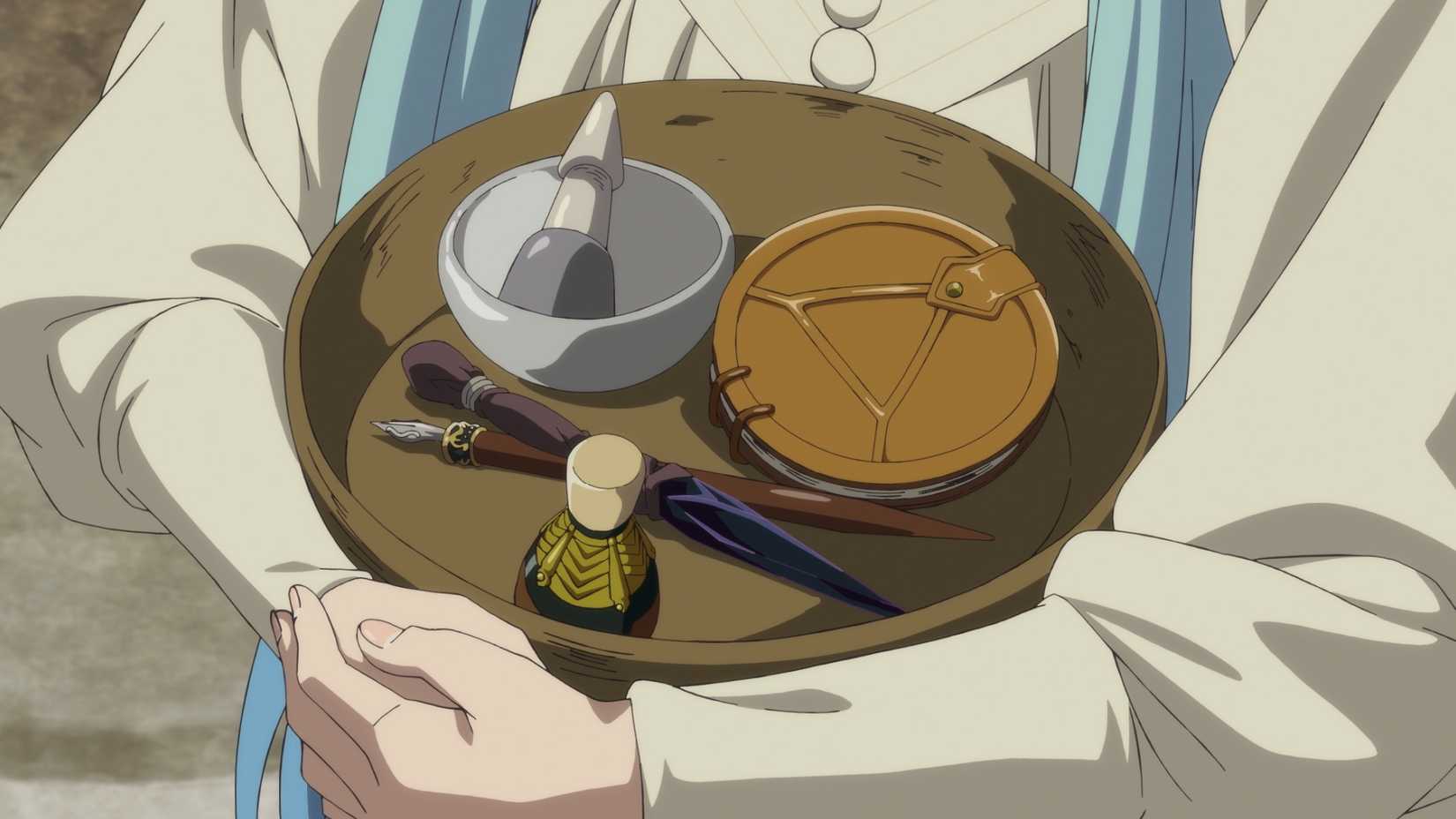
Witches are not defined by noble lineage or vast mana reserves, but by their rigorous study of the craft. This foundational change shifts the entire genre. While other fantasy settings treat magic as an aristocracy—where you are either born into power or destined to remain a commoner—Witch Hat Atelier reveals that exclusivity is a manufactured construct. Knowledge is intentionally hoarded to maintain power. If magic is forbidden, it is because it is dangerous, not because it is inherently reserved for the “special.”
This imparts a grounded clarity to the series that is rare in the medium. The magic system is as intellectually satisfying as it is visually breathtaking. Because the rules are consistent, we understand exactly why characters succeed or fail. We learn alongside Coco, who manages to excel not through mysterious plot armor, but through resourcefulness, sharp intellect, and unwavering dedication to her studies.
Fantasy does not always require rigid systems to resonate; Frieren remains a masterpiece due to its ethereal, folkloric charm. However, after an era of anime defined by vague power-ups and nebulous mana debates, Witch Hat Atelier feels revolutionary. It posits that magic should be an understandable, teachable skill, while simultaneously serving as a beautiful reminder that the pen is infinitely more powerful than either the sword or the wand.
Source: Polygon
Related articles
 Last Chance to Claim Free Epic Games Store Game Today
 Three New Games Join Xbox Game Pass on Launch Day
 Physical Edition of Phantom Blade Zero Appears Unlikely for PS5
 Hacked PS5 Consoles Banned by Sony, Owners Warned of Risks
 Wuthering Waves Developers Propose Solution to Large Game File Sizes
 Former PlayStation Chief Criticizes Future of Disc-Based Games
 PS6 and Xbox Project Helix Face Memory Shortage Through 2028
 Xbox Lacks Exclusive GTA 6 Streaming Rights and PC Skips Cloud Version