Friday the 13th Prequel Series Crystal Lake Will Feature Expanded Jason Lore
Brad Caleb Kane has the hardest job on television this fall: turning Friday the 13th, a franchise built for decades on Jason Voorhees’ violent rampages, into a sustainable series for A24 and Peacock. When I point out that it feels like a near-impossible challenge, he does not miss a beat.
I’m here for it. I’m not afraid. Going in with a full heart, man. I’m happy to do it.

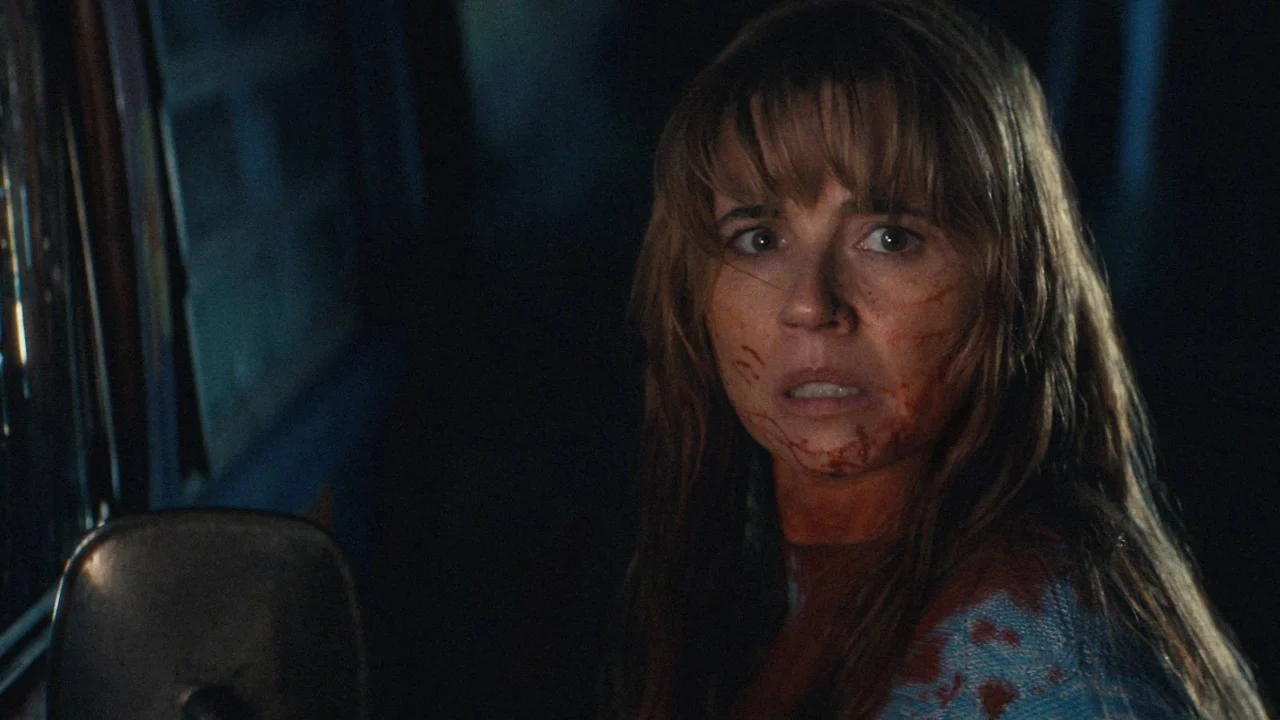
Crystal Lake finds Pam Voorhees (Linda Cardellini) about a decade before the events of the original Friday the 13th, wrecked by the drowning death of her young son, Jason. But there is more to Pam’s present and past than any fan of the series might guess. Kane’s version of Crystal Lake is a little corner of America sinking into a paranoid, deeply unsettled era where every twist is compounded by Pam’s grief over Jason.
Sound heavy? Don’t worry: The kills are sick. And there are lots of them.
In time for Polygon’s 2026 Fall Preview, I jumped on the phone with Kane to learn how his entire life has been leading to this moment, and where there was room to expand on the visceral, often over-the-top pleasures of Friday the 13th in the TV space. With the show out Oct. 15, no spoilers — just a few drips of blood in the water.
Polygon: A handful of people worked on this concept before you, but they bounced, and you’re taking it across the finish line? What did others struggle with? What made yours click?
Brad Caleb Kane: This sounds strange, but nothing was hard for me creating Crystal Lake from a conceptual level because I’ve lived with these properties for so long. Seeing them in theaters as a little kid in their first runs… it was part of my creative development. I remember watching each movie in theaters with a thousand-strong crowd in the early ’80s. I remember the flicker of the projector light cutting through a thick haze of pot smoke while people were yelling at the screen. I remember people jumping out of their seats at the end of every movie, bemoaning that “This was bullshit!” and “That was bullshit!” because people build their whole personalities around genre, as I did.
They feel a sense of ownership for them, and I always felt a sense of ownership for this property. So it really wasn’t hard to sit down and conceive what I would wanna see as a Friday the 13th prequel, as a Friday the 13th show. And in doing that and building it out, I could only hope that it would appeal to a wide array of Friday the 13th fans: Friday the 13th fans who were discovering the movies for the first time, people like me who were kids when they saw them but grew up and their tastes evolved, even though they watch these movies and look back on them with fondness and nostalgia and love every aspect of them, but maybe yearn for a little more there there now with the property, like I might.
I also wanted to create a property that appeals to a wider group of people. As much as I grew up with these movies, my wife did not, and I want it to be something that I could watch with her. Not necessarily take the gore or the edge or what makes it Friday the 13th off of it. Keep all that stuff, but widen the appeal to some degree by maybe adding deeper layers of character and motivation and backstory. You can’t be all things to all people, but hopefully I was able to integrate enough of those elements that it’ll feel satisfying as a complete piece.
I imagine the pleasure for many fans of the series is the blunt-force carnage. Adding depth to a slasher feels like a tall order. Where did you see room to say more?
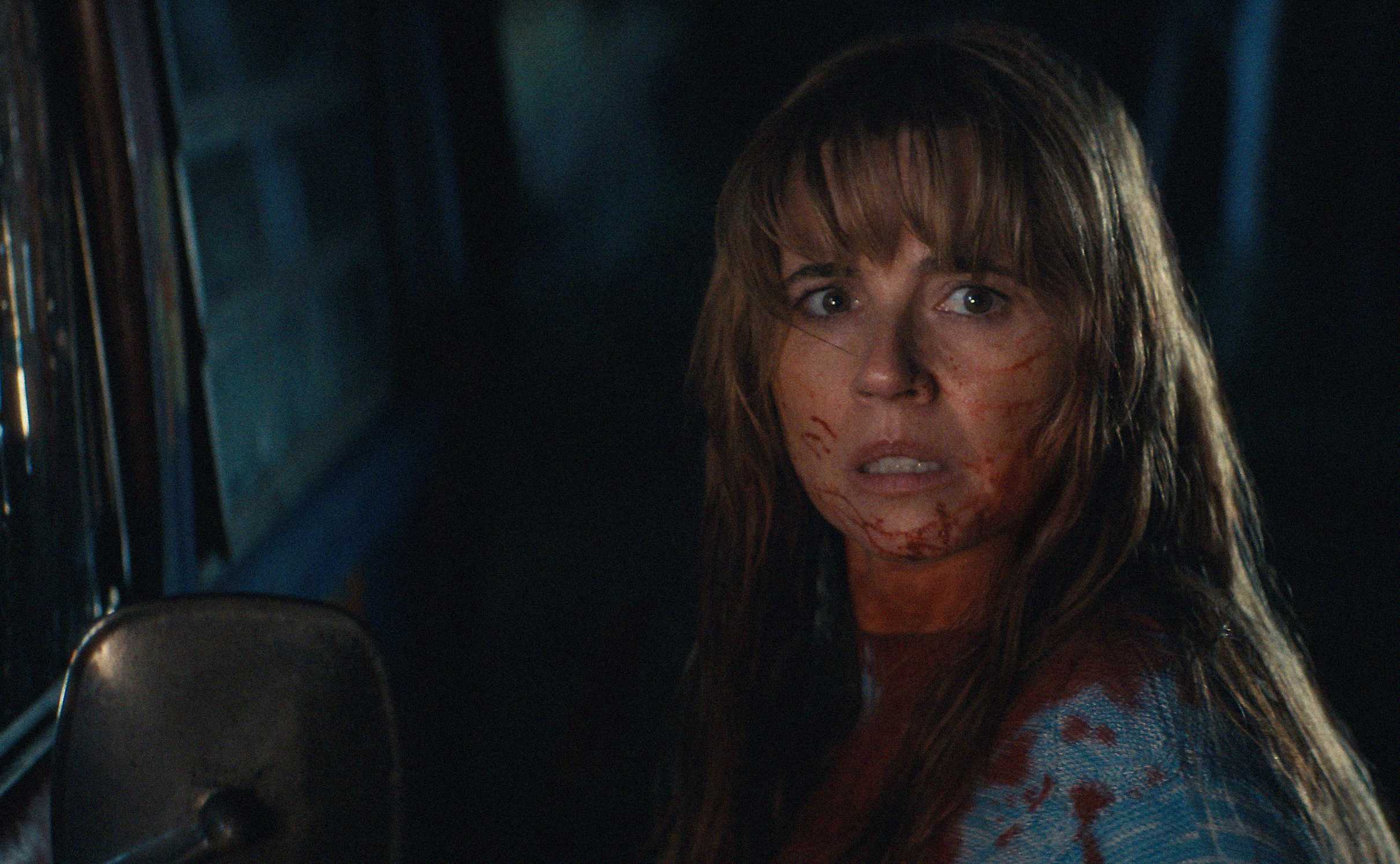
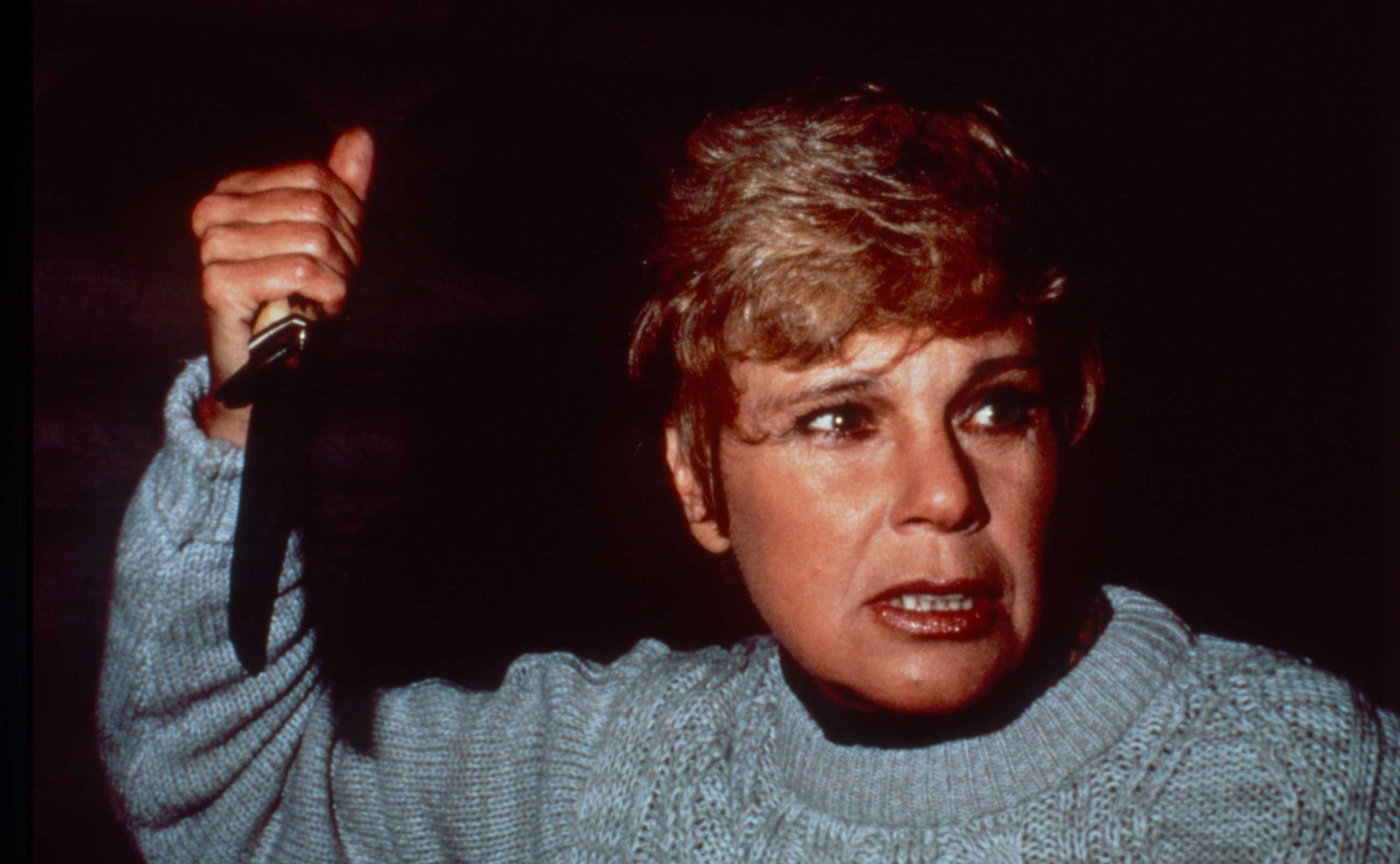
I don’t think the movies were deep in their conception — they were built as reactionary entertainments to a certain decade before — but there are contradictions intrinsic in them. The Friday the 13th movies are both exploitative, which is an aspect we love about them, and kind of feminist in their ways. There’s the perverse thrill of illicit sex, drugs, and blood, but the movies are also where we got the concept of the final girl, right? The lone surviving female who’s strong enough and brilliant enough to turn the tables on her male assailant.
The movies were release valves in a time when the country was in a funny place. The early and mid ’70s… the country was in a weird place. This was a time when the old narratives were falling apart about trusting your government and trusting institutions. There were economic problems. There was the whole late ’70s malaise thing. And people wanted thrills and escapism. Obviously Jaws was the first thing to really cut through the morass and give the people what they wanted, to some degree. That was a great catharsis. But then you had Halloween, which gave people an even deeper catharsis, and then came Friday the 13th out of those movies. People just wanted this — I don’t know if we even knew why we wanted it. We just wanted the illicit thrills.
People sort of look at the movies from a moralistic point of view as exploitative, a little misogynistic. Then you have to ask yourself: Why is such a big part of the fan base women? Because at its core, there is a lot more there there than we give these movies credit for. So I think exploring what those things are that we come to these movies for and what they actually do for us is really where the intersection between exploitation and film and culture hit.
Talk about the time period and setting — you’re following the timeline leading into the 1980 original, but it’s also not arbitrary.
Brad Caleb Kane: The very beginning of the pilot is set in ’71. Then the rest of the series, or at least most of the rest of the series, is set in 1972. There is an episode that goes to another time period. But most of the season takes place in 1972, which would be seven or eight years before the events of the first movie.
In conceiving and writing and prepping the show, I wanted to think of it as a mixtape, a loving collage of all the cultural touchstones of the time that these particular movies came from and ultimately influenced. And when you look at that time, especially ’71, ’72, the years leading up to the first movie, the ’70s in general, it’s the beginning of a new time in America when all of the old ways of living and constructs were falling apart and people’s eyes were opening. It’s post-Vietnam. It’s coming into Watergate, realizing that you can’t trust government, can’t trust institutions.
And so what are we now that we’re not just good, God-fearing, chicken-in-every-pot Americans? The ’70s really become about growth and transformation, a little bit like the battle between that old self. I’m getting deep now, so forgive me, tell me to stop if I’m getting too deep! But this time period was the battle between the old self and the new as new fights emerge, fights for dominance. What you see in the season is Pam transforming. I don’t wanna say too much. What you see in the season is a young camper named Grace transforming. I won’t talk about who else transforms, but again, the country was transforming. The town of Crystal Lake is transforming. That led to the Me Decade obsession with the self, the idea of self-realization, self-reliance. And I wanted to explore all of those things within the context of the slasher franchise, and specifically Friday the 13th.
I hope that’s not too heady for the fans, but I think the fans are smart and they can take it!
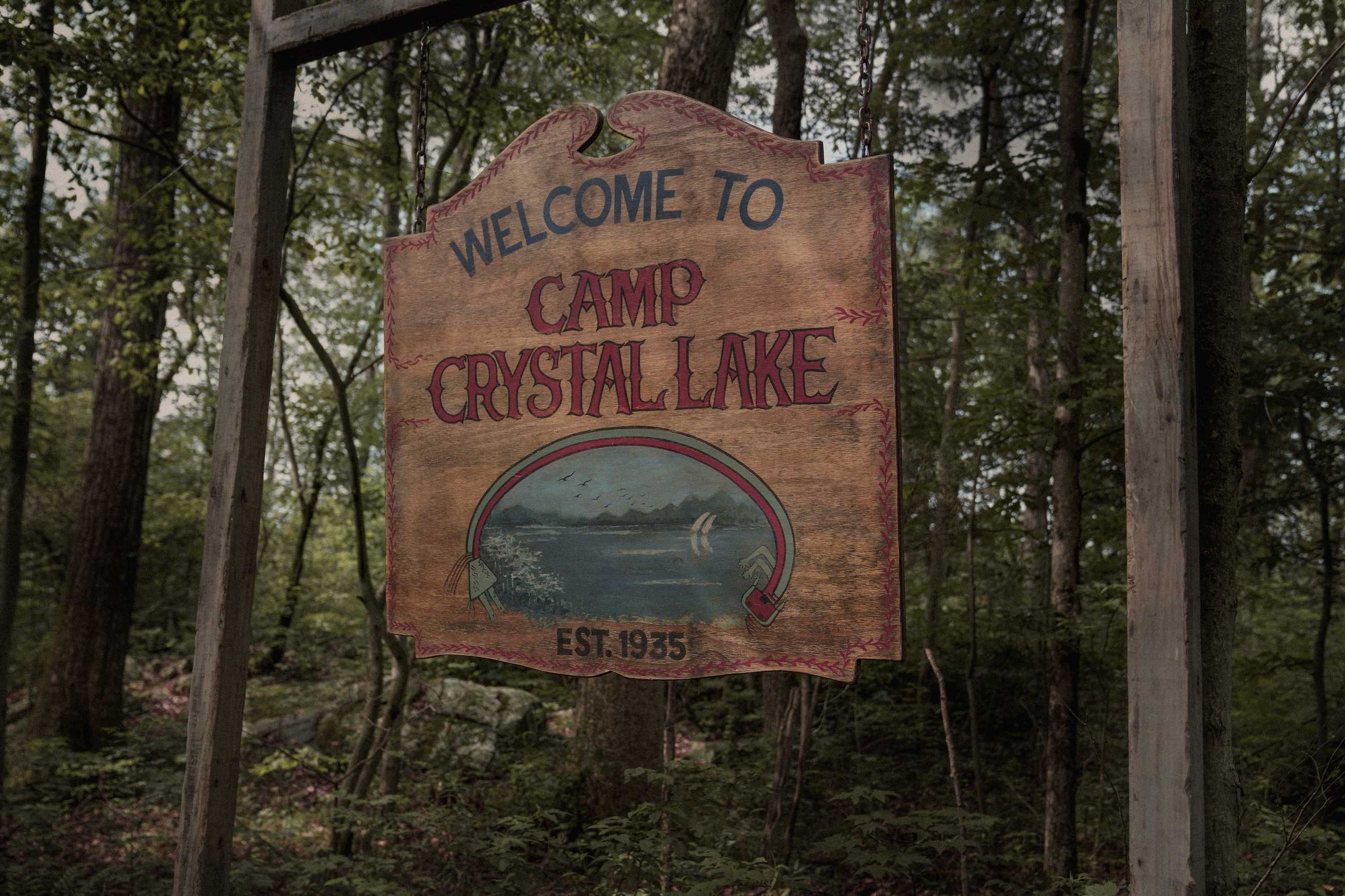
I think you’re absolutely right, but we should make clear the show is not esoteric or up its own ass. You put a head on its shoulders, then you lop off that head. There’s some gory stuff in the early episodes.
In terms of grisly stuff, I did not wanna skimp on… I won’t call them cheap thrills because every kill, every cut, every hack and every slash comes from a deep emotional and psychological place as a result of the story that unfolds in the season. But we don’t skimp on the blood. When it hits and when it happens, hopefully it hits the audience because they’ve come to either empathize or fear for the characters in our story.
We do see Jason in this show, but not in his traditional form that some may expect.
No, not Jason in the hockey mask show, but the expectations that fans might have… they’ll see more than they think they will. So no hockey mask, because we don’t go up through the events of Part Three, but that doesn’t mean we don’t go into mask territory. And that doesn’t mean we don’t see Jason, and potentially very clearly. So I’ll just leave that right there.
Source: Polygon
Related articles
 Sony Passed on PHYSINT, Leaving Hideo Kojima’s New Game to Xbox
 Two Warhammer 40,000 Books Announced: Crucible of Fire and Raptors: War and Shadow
 Sony Faces Fan Backlash Following Cancellation of PHYSINT
 NVIDIA Confirms DLSS 4.5 Support for The Witcher 3
 Dungeon Brawls Launches on Steam with Four-Player Co-op
 Valheim Receives Positive Reviews After Five Years in Early Access
 Spider-Noir Creator Reveals Season 2 Plans After Prime Video Cancellation
 Bethesda Veteran Explains Why Studio Should Not Have Developed Starfield