Cairn Creator Says It “Belongs” Alongside Death Stranding in the “History of Grand Adventure Games”
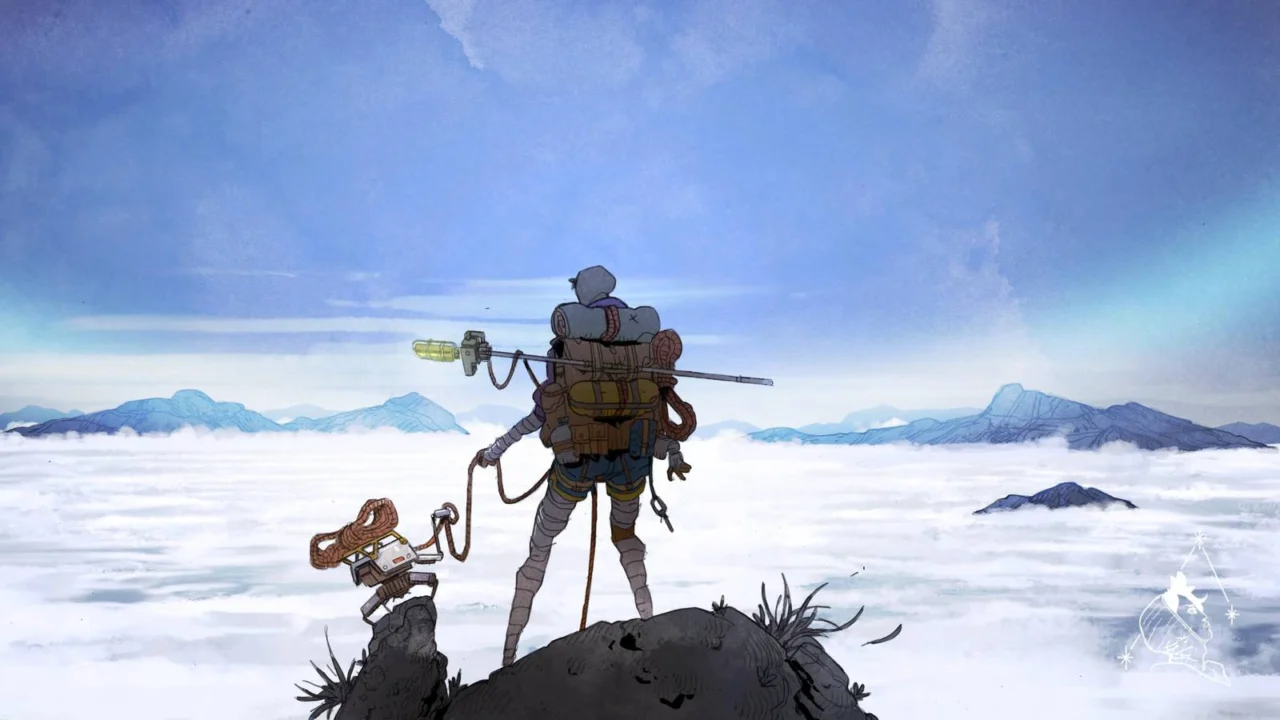
At first glance, Cairn might seem easy to categorize. The latest game from French studio The Game Bakers pairs expressive, graphic visuals with detailed climbing mechanics, following mountaineer Aava as she attempts to conquer Mount Kami, a peak few believe can be climbed. But a quick look at the Steam page can’t convey the game’s full depth. Players discover it by negotiating a stubborn stretch of rock, reaching for a safe handhold, meeting unexpected companions during a pause in the ascent, or surviving a fall thanks to a carefully placed piton. Beneath its climbing challenge, Cairn is a game about physical strain, determination, and the psychology of pursuing the seemingly impossible.
Audrey Leprince, co-founder of The Game Bakers and producer of Cairn, says the team never set out to make a climbing simulator. Instead, the studio wanted to create an action-adventure game about survival, obsession, sacrifice, and the forces that compel people to attempt extraordinary things. With the new DLC, On the Trail: Deep Water, now available, Leprince spoke with Polygon about the game’s evolution and how she and creative director Emeric Thoa shaped it into something more ambitious than a conventional sports game.
Editor’s note: This interview has been edited and condensed for clarity.
Building a game around climbing
Polygon: What was the original idea behind Cairn? What did you want the game to become?
Audrey Leprince: The starting point was simple: We wanted to make a game about climbing a mountain. It was about one person making a solitary attempt to ascend an impossible peak. At that stage, we had no other ideas for the game.
Polygon: So the physical experience came first?
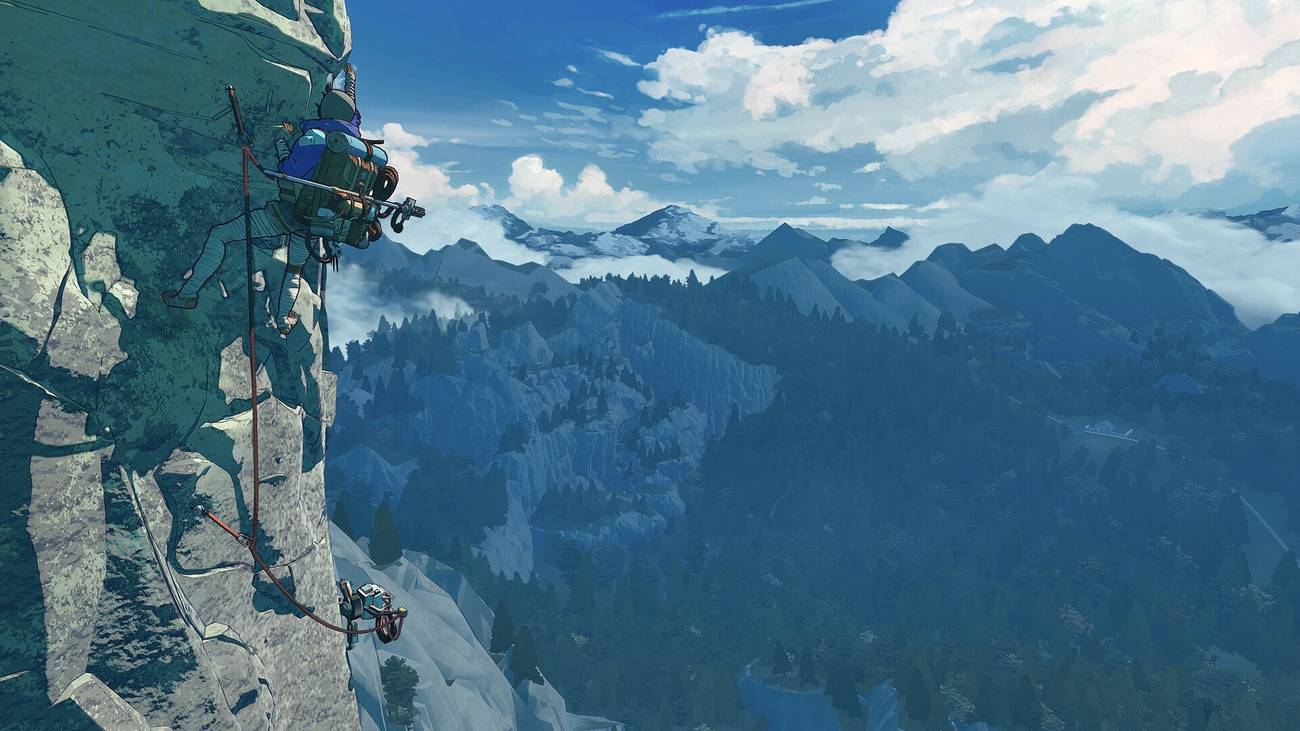
Leprince: Yes. After working on Haven, Emeric Thoa, the game’s creative director, felt there was an opportunity to make something driven by gameplay. He imagined a straightforward, intuitive climbing system: give players a controller, let them move a stick and press a button, and they would be able to climb naturally.
We spent a long time prototyping that idea. It took considerable work to find out whether the climbing could support a complete game and remain engaging over time. The other elements came later.
Polygon: Games such as The Legend of Zelda: Breath of the Wild feature plenty of climbing, but they aren’t built around the mechanics of climbing itself. Why do you think games like Cairn are relatively rare?
Leprince: There are two main reasons. First, building a physics-driven game that lets players climb in a convincing way is extremely difficult. These systems are prone to bugs, which is one reason some climbing games lean into deliberately goofy physics rather than aiming for realism. It’s a challenge to make climbing feel believable, look good, and remain easy to control all at once.
The other reason is that making a game focused almost entirely on climbing can seem like an unusual proposition. When we first described the idea, people would ask whether there would be boss fights or some other activity in between. They assumed climbing alone couldn’t carry a whole game.
Realism in service of the experience
Polygon: How did you decide where to use realistic physics and where to bend reality for the sake of the game?
Leprince: We never intended to create a scientifically precise climbing simulator. We wanted to capture the feeling and fantasy of ascending a mountain. The systems needed enough realism to make the experience convincing, but realism was never supposed to limit what we could do to make the game compelling.
Developing the physics was a major technical challenge. We brought in engineers with strong mathematical backgrounds, which added new expertise to the team. At the same time, we gave ourselves permission to depart from reality where it helped. For example, Aava has a climbing robot that carries pitons and belays her. We were willing to make whatever choices served the game’s immersion and enjoyment, rather than pursuing realism for its own sake.
Polygon: Would you describe Cairn as an action game?
Leprince: We call it an action-adventure game. It’s easy to describe it as a climbing game, but we see it as part of the tradition of sweeping adventure games, such as Death Stranding. Climbing is what you do, but the game is also about exploring, discovering, surviving, and experiencing an epic story in the mountains.
How the climb became a story
Polygon: The story feels as though it develops alongside the ascent, even though the project began with a focus on climbing. How did you find the narrative?
Leprince: We wanted to convey what it feels like to climb a high-altitude mountain. That meant going beyond the act of climbing a wall or training in a gym. We needed to show the full range of emotions and experiences associated with mountaineering.
A climb like this demands discipline, sacrifice, and determination. It forces people to make difficult choices about training and dangerous expeditions, as well as the relationships and everyday life they leave behind. We wanted the story to help players reflect on those decisions and feel their weight.
Polygon: How do storytelling and game mechanics work together in Cairn?
Leprince: The game is a strong example of story and gameplay sharing the same goal. It’s unusual for a player’s objective and a character’s objective to align so completely. In Cairn, the story asks you to climb the mountain, and that is exactly what you do.
There isn’t a separate plot sending you off to do something unrelated. You climb, meet people along the way, and consider why Aava is making the ascent. That focus helps players feel immersed in the experience, without the distraction of an unrelated objective.
Polygon: Did you think of the people Aava meets as part of the mountain’s design, or as a parallel to the challenges she faces on the climb?
Leprince: We knew from early on that Aava’s ascent would be difficult, that she would be alone on the mountain, and that she would have to give things up to pursue her goal. We also understood the broad shape of her emotional journey, including the moments when she would face difficult choices.
My father was a mountaineer when I was growing up. He would travel to the Himalayas and spend weekends climbing in the Alps. I was one of the people left at home, and for a long time I wondered why someone would choose such a harsh and dangerous pursuit. It’s cold, painful, and risky, and people can lose their lives. On one of my father’s expeditions, half the group died on the mountain. My mother also fell while climbing and broke every bone in her body. And yet people return to the mountains. We wanted to explore what could be so powerful about the experience that it makes people accept those risks.
Polygon: Was there a point when you felt the different parts of the game had finally come together?
Leprince: There are many possible moments because players can approach the mountain from different directions. Each person can follow a different route, encounter different situations, and discover different stories. We’ve heard from players about scenes that affected them personally.
For me, one especially important moment comes after the Wind Palace. You face a long, challenging wall, and I’m sure many players have struggled to get past it. Once you make it through, you understand the experience as a whole: the highs and lows of mountaineering, and everything the game has put you through. That’s where it all clicks for me.
Survival on the mountain
Polygon: Systems such as collecting supplies and managing limited backpack space aren’t required for a climbing game. Why did you include them?
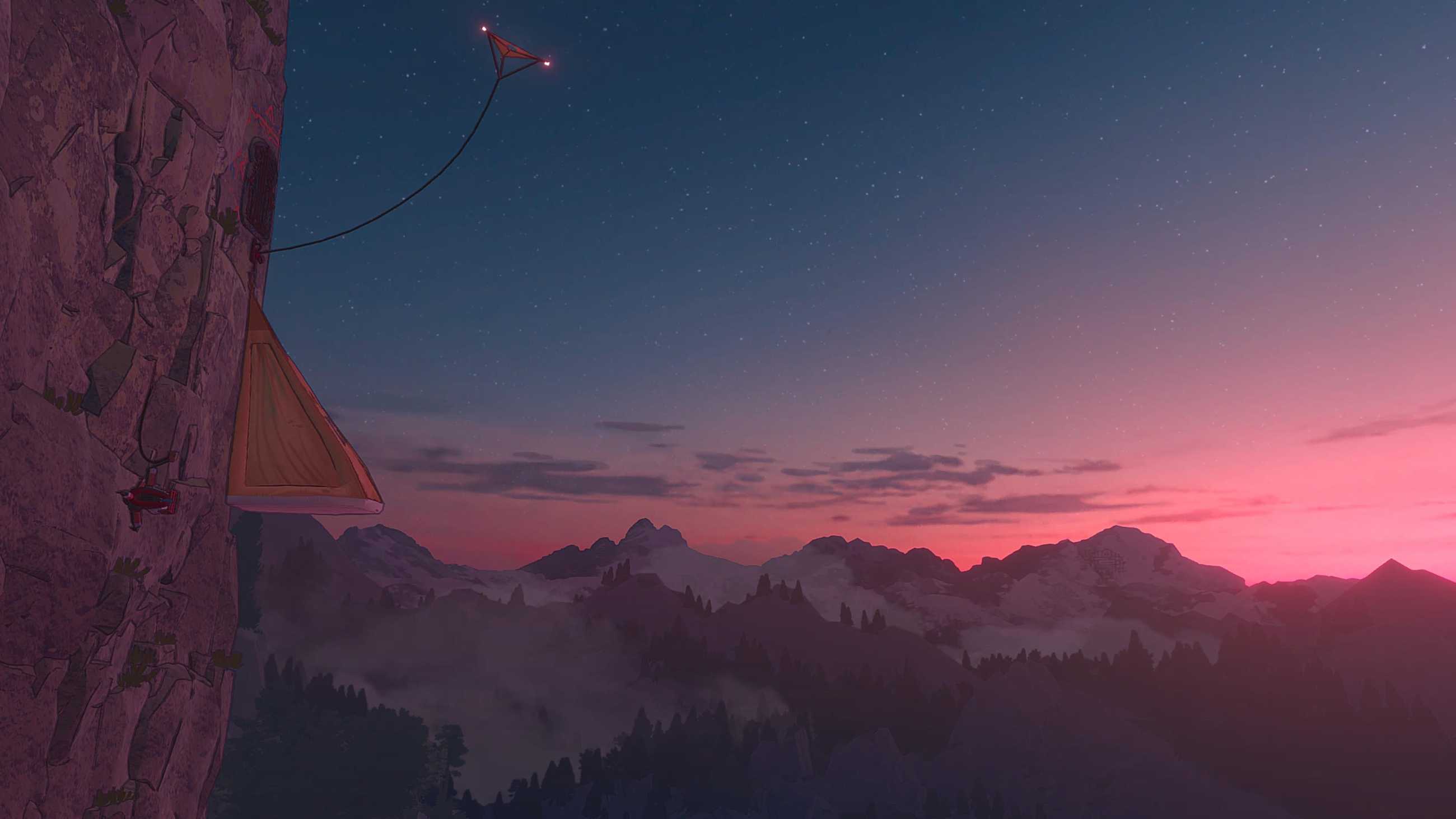
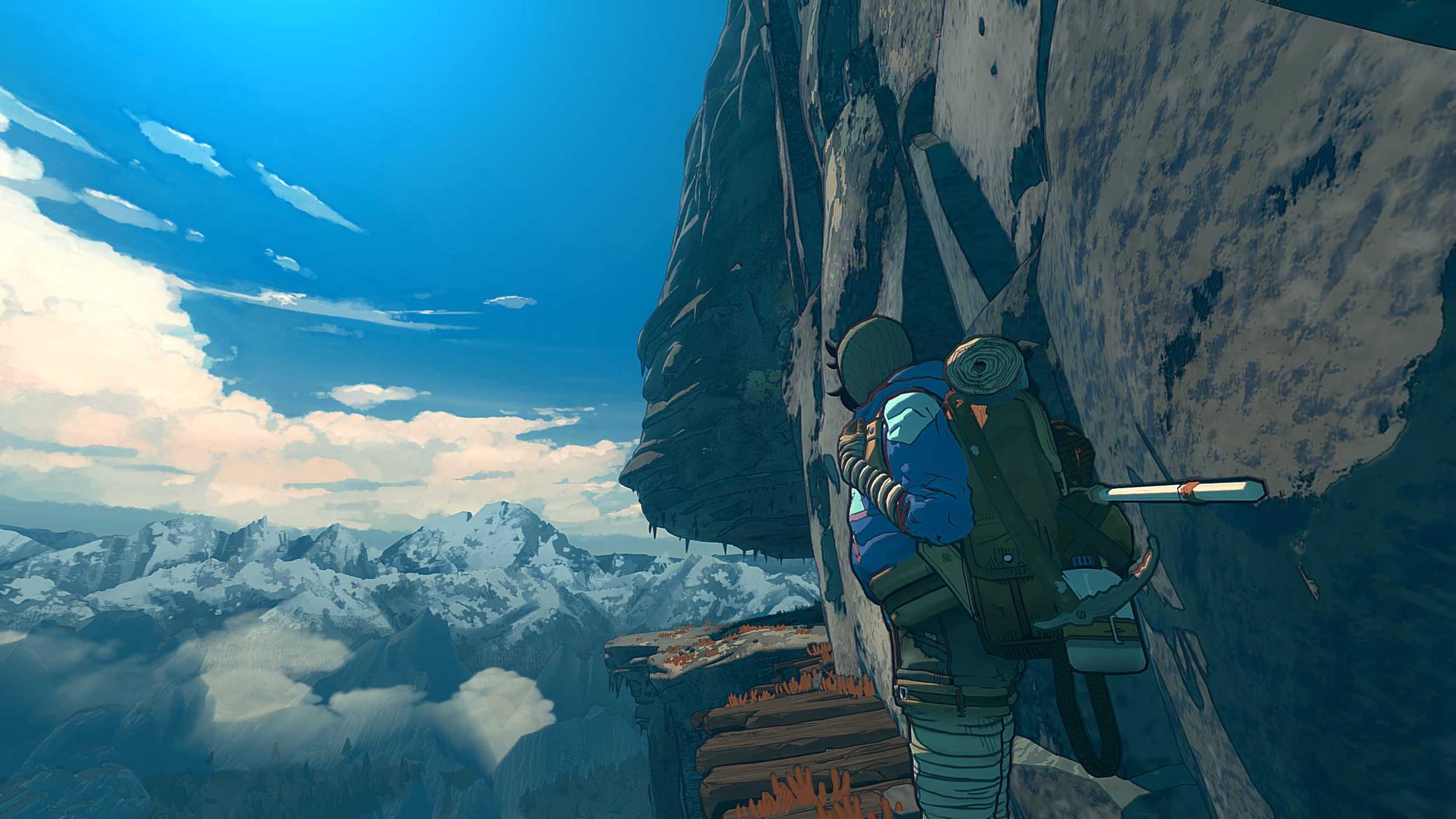
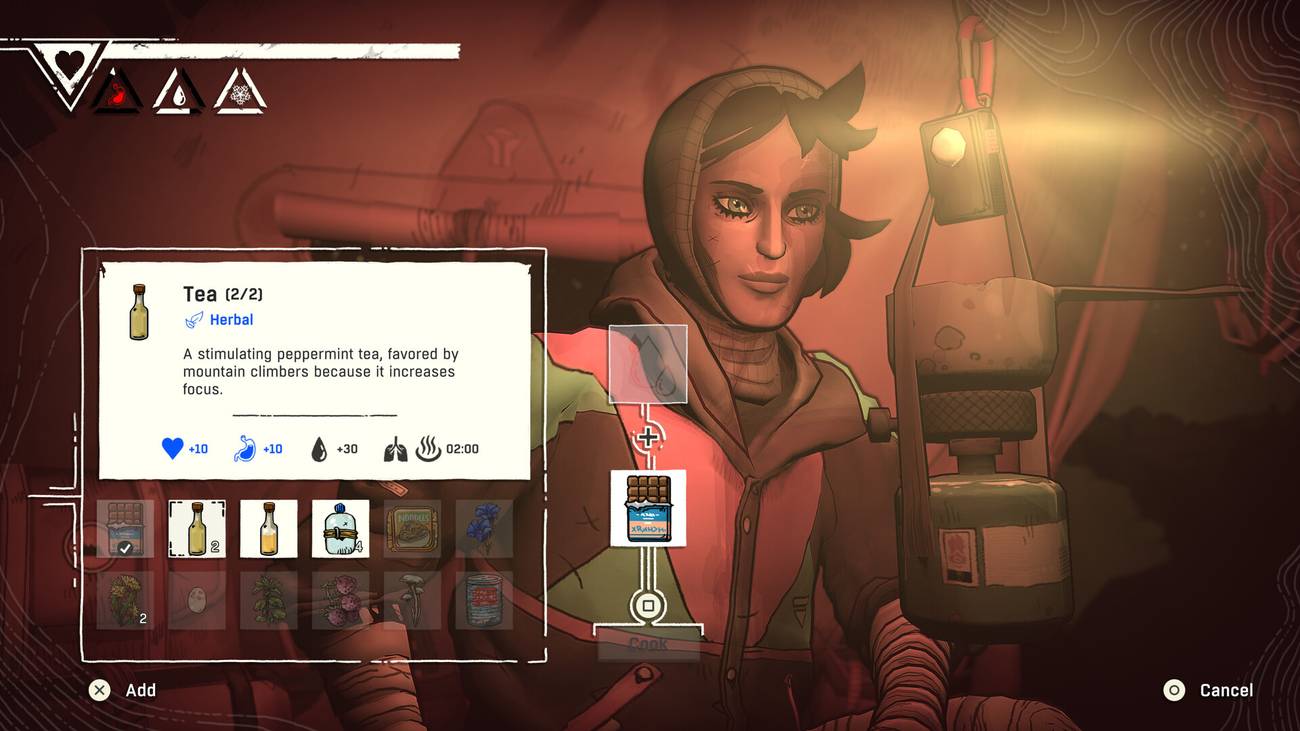
Leprince: Because Cairn is more than a climbing game. It’s an adventure about mountaineering and the experience of attempting a huge summit. The survival mechanics support that experience: setting up camp, managing health, treating injured fingers, gathering food and other resources, and deciding what to carry.
You can’t convincingly imagine yourself on a major expedition without a backpack, food, or the need to recover. All these systems complement one another. We were careful not to add mechanics without a reason, but managing supplies and taping Aava’s fingers helped make her physical struggle tangible. Each system contributes to the larger experience.
Polygon: The soundtrack is striking. Does music shape how players experience the climb, almost like choreography?
Leprince: We believe strongly in music’s ability to create emotion. In Cairn, one approach is to use music during major moments. When you first reach the ridge and see Mount Kami, for example, the game’s credits appear. The summit is another powerful sequence. In moments like these, the music intensifies what has just happened.
We also have Aava hum and sing. You hear her voice, including in the music, which helps keep you connected to her. That works alongside stretches of silence. The ascent needs quiet, with room for the sound of breathing, exertion, calls, and the physical details of climbing. Music and silence take turns, building toward emotional peaks as the journey unfolds.
Related articles
 Classic StarCraft and Brood War Ported to Android in Unofficial Version With Local Multiplayer
 First Teaser Released for Rainy Day Serenade Anime About a Journey 120 Years Into the Past
 Enthusiast Ports Gothic Classic to Android, Breaking Its Exclusivity Barrier
 A Nintendo indie game outsold Marvel’s Wolverine, while PlayStation clearly expected more
 Journalists Say RTX 30 GPUs Can Do More Than NVIDIA Claimed
 Classic Wood Elf Miniatures for Warhammer: The Old World to Return Through Made to Order-vesm
 Digital Foundry Finds Strange Castlevania Issue as PS5 Pro Performs Worse Than Base PS5
 Peanuts’ Pencil Pal Makes Her Official Debut 68 Years After First Appearance