
Beyond the Galaxy: An Exclusive Interview with the George Lucas Who Never Created Star Wars

While the Star Wars phenomenon propelled George Lucas to global stardom and a multi-billion dollar fortune, there was a fleeting moment in history where he seemed destined for obscurity. In the early ’70s, Lucas appeared to be just another misunderstood auteur who vanished from the cinematic landscape after a single, experimental debut. To explore this “what if” scenario, we ventured into a parallel dimension to sit down with the man who almost never was.
In the spring of 1971, Warner Bros. debuted a bleak, avant-garde science fiction feature directed by a 27-year-old film school graduate. It is highly likely you have never encountered this film (THX 1138) or its creator, George Lucas—and there are several reasons why history forgot them.
THX 1138 proved to be a commercial catastrophe, garnering polarized reviews before fading into the shadows of cinema history. Lucas, who had initially gained momentum through experimental shorts at USC, found himself effectively blacklisted by Hollywood. His downfall was precipitated by his decision to abscond with the original film reels to protect his vision from studio interference. Even then, executives managed to excise four minutes of footage once his producer, Francis Ford Coppola, eventually recovered the prints.

Yet, for the few who have unearthed THX 1138—perhaps by scouring the bottom tier of a bargain streaming service or navigating a legally ambiguous torrent site—the revelation is immediate: George Lucas possesses the mind of a genius. Despite its shoestring budget, the film is a monumental feat of atmosphere, presenting a chilling dystopia that pays homage to Orwell and Huxley while maintaining a uniquely visceral identity.
The tragedy that Lucas never directed another film feels like a profound loss to the medium. He has remained silent for over five decades, ever since relinquishing his role on Apocalypse Now. However, after persistent effort, he finally granted an audience to mark the 55th anniversary of his only film—on the condition that I visit him at his office in Modesto, California.
 Image: Warner Bros./Everett Collection
“I was tasked with constructing a futuristic reality without the luxury of sets or digital wizardry,” Lucas remarks when the conversation turns to his debut.
He accepts my praise with a quiet stoicism, dismissing queries about his creative lineage. When asked if Aldous Huxley’s Brave New World served as a blueprint, he is candid: “Every modern dystopia borrows a certain amount of DNA from Huxley; it’s unavoidable.”
Regarding his legendary clashes with the studio and the ‘heist’ of his own film, he offers a cryptic smirk. “They weren’t particularly fond of that maneuver,” he says, declining to elaborate. His relationship with Coppola remains severed, and when the topic of his former peer’s divisive epic Megalopolis arises, he simply waves it away: “Let’s move on.”

We are sitting in the cluttered rear office of the L.M. Morris Stationery Store, a quiet family business Lucas inherited after his unceremonious exit from the movie business. The space is a shrine to unrealized imagination. Vintage posters for Flash Gordon and James Cameron’s Spider-Man hang alongside hand-sculpted alien figurines and prototype starships.
Lucas catches me admiring a small figurine—a warrior in simple garb clutching a glowing cerulean blade.
“That’s Luke Starkiller,” he says, his eyes lighting up. “The central figure of a grand myth.”
For the next hour, Lucas becomes animated, speaking of “Jedi” knights and quoting Joseph Campbell’s theories on the monomyth.
“The narrative is primordial,” he explains. “We retell these tales every few generations because human nature is cyclical. We are prone to the same pitfalls of power and corruption. We convince ourselves we’re doing good even as we lose our way.”
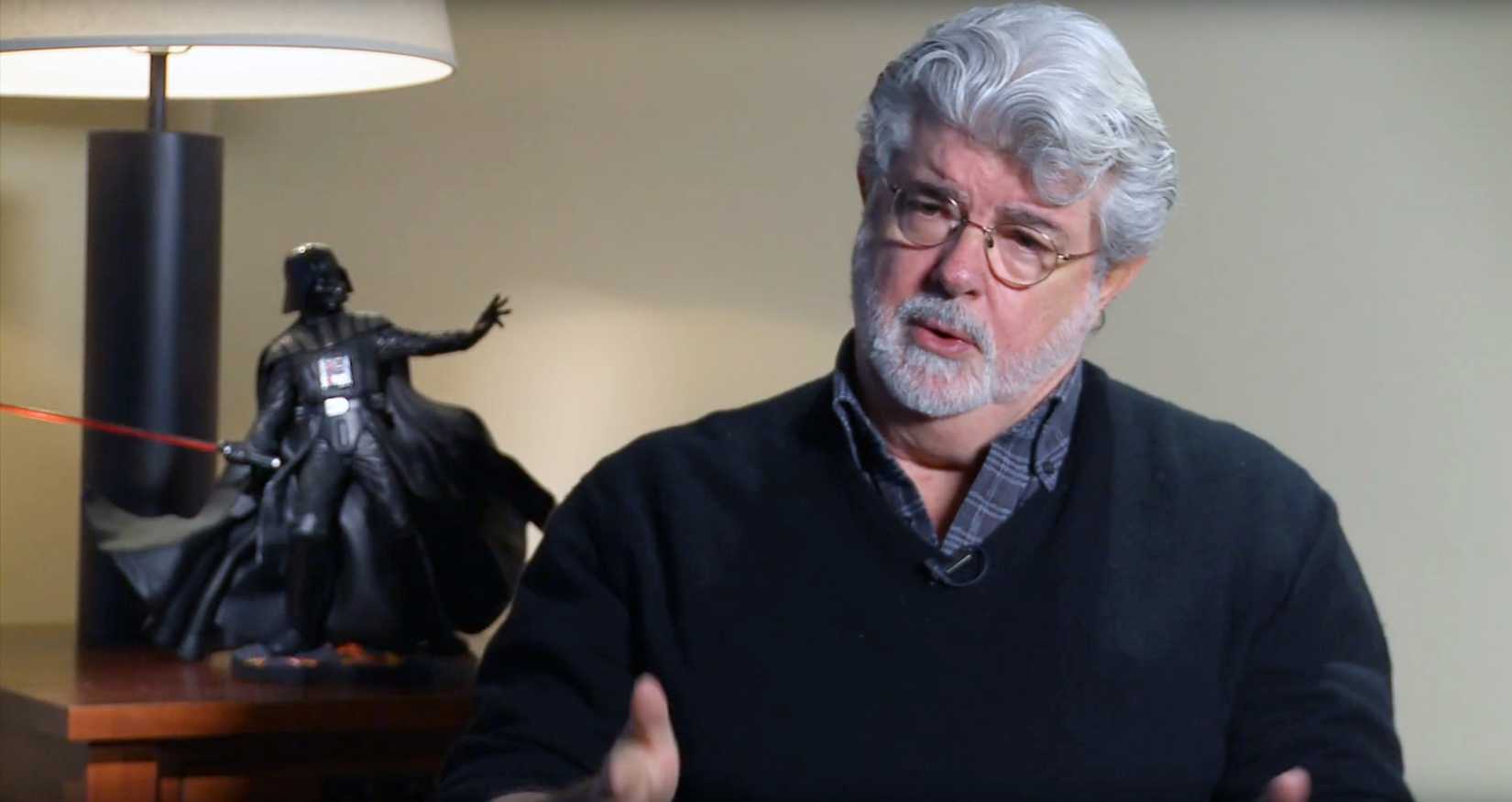 Image: Laddie Movie/Everett Collection
It becomes clear why he invited me here. For decades, Lucas has been refining a sprawling opus titled “Star Wars.” It’s a concept born from a childhood spent watching Flash Gordon serials, yet refined into something deeper. His few remaining industry contacts have urged him to move on, but he is unwavering.
“Star Wars isn’t merely a film,” he insists. “It’s a comprehensive universe teeming with history and lore. I see it in my dreams.”
 Image: TriStar Pictures/Everett Collection
In his vision, Star Wars is a cultural pillar that could have rivaled the Sherlock Holmes Cinematic Universe that dominates today’s box office. For Lucas, it is more than entertainment; it’s a secular religion with its own code of ethics and an untapped commercial engine that could have revolutionized his life.
“I’d never surrender the merchandising rights,” he says of characters that currently exist only in his mind. Yet, he simultaneously laments the commodification of art. “This wasn’t built for the masses. Most people would think the whole idea is absurd.”
 Image: Warner Bros./Everett Collection
The political undertones of his unmade epic are as sharp as those in THX 1138. Lucas describes a conflict between a tyrannical empire and a decentralized rebellion—a mirror to American foreign policy. He even draws a bold comparison between the modern political climate and his fictional villain, a withered sorcerer-emperor.
 Image: Silver Screen Collection/Getty Images
Star Wars may never manifest as anything more than a dream in a Modesto stationery shop. Lucas acknowledges that his bridges to Hollywood were burned long ago. Yet, he still hopes that the legend of Luke Starkiller might one day find a way into the world.
“The world needs new hero stories,” he muses. “If I can’t tell them, perhaps my notes will inspire the next person who can.”
Ultimately, Lucas seems at peace with his legacy as a one-film auteur.
“I stand by THX 1138,” he concludes. “My path took an unexpected turn, but I can say one thing with certainty: I never compromised my integrity.”
Source: Polygon
Related articles
 Uncharted 2 Turns 17 as Players Recall Naughty Dog’s Acclaimed Sequel
 House of the Dragon Star Reveals When Final Season Filming Begins
 Vision and Ultron Return as Vision Quest Premieres on Disney+
 Clayface Stuns Critics With Its Brutality
 Rockstar Co-Founder Says GTA III Cover Art Was Created Two Days Before Release
 Battlefield 6 Developers Sell Class Progress and Ranks in New Edition
 Does Street Fighter Have a Post-Credits Scene
 Modders Add Seamless Co-op and Multiplayer to Bloodborne on PC