
Annapurna’s New Griefcore Game Subverts Hallmark Channel Tropes with Real Soul
It would be easy to approach Forever Ago—a major collaborative release from Annapurna and Third Shift—with a measure of cynicism. Another melancholy indie narrative centering on grief? Take a number. It risks feeling like just another derivative entry following in the footsteps of titles like Spiritfarer. On the surface, it presents as a familiar narrative-driven adventure following an elderly protagonist named Alfred as he navigates life after the passing of his wife, Audrey. Left behind is a posthumous itinerary, a final scavenger hunt designed to evoke fond memories while gently guiding him toward acceptance. To the casual observer, it seems engineered solely for emotional impact.
However, spending time with an early-game demo reveals a much deeper layer. It quickly becomes apparent that Alfred has little appetite for simple reminiscence, proving that Forever Ago resists easy categorization.
The journey commences at a roadside motel where Alfred wakes to find himself untethered from routine. Consulting the journal left by his late wife, he confronts a series of planned stops meant to trace their former adventures: locating a specific blossom that once thrived nearby, ordering their cherished snack, securing a favored booth at a local diner, and playing their definitive song on the jukebox.
Yet, those particular flowers are entirely absent, replaced instead by a drift of fractured petals strewn across the desolate asphalt. Gathering these remnants sparks fragile, fleeting memories of years gone by.
Subsequent stops offer little sanctuary. Upon reaching the local diner, Alfred finds the space thoroughly modernized and alien to his memories. The classic booths have been redesigned, and the jukebox is entirely non-functional—kept merely as retro decoration, according to an indifferent, youthful staff member. Compounding the disappointment, the exact booth he and Audrey once claimed as their own is now locked behind a privileged heritage membership tier.
Alfred has little inclination to dine there; in truth, he is reluctant to complete any of these requested stops. Bound by deep affection yet trapped in an emotional void by Audrey’s passing, he wanders as a ghost of his former self. Third Shift deserves praise for treating nostalgia with such psychological depth. While leveraging the past is a well-worn narrative device, psychological research consistently highlights nostalgia’s capacity to alleviate anxiety and depression. Alfred craves that therapeutic warmth just as much as he needs to forge ahead. Instead, he reaches for ghosts, only to watch an unyielding, profit-driven modernity strip away every tangible trace of yesterday. Left entirely adrift, he exemplifies how recovery is rarely a linear or straightforward endeavor.
This contextual depth makes the broader scope of Alfred’s upcoming pilgrimage all the more compelling. As his travels take him beyond the motel, he inadvertently intersects with the lives of strangers while mentally revisiting the milestones of his marriage. Here again, the studio avoids cheap sentimentality. Alfred’s path toward re-engaging with humanity and finding solace in his memories is handled with remarkable empathy and grace, heightening anticipation for where his emotional odyssey will ultimately lead.
Forever Ago arrives among a crowded slate of autumn releases, officially launching on October 8 for Nintendo Switch 2, PlayStation 5, Windows PC, and Xbox Series X.
Exclusive interviews, hands-on previews, and everything you need to fill up your calendar
Source: Polygon
Related articles
 Genshin Impact Developers Sue AI Company Over Voice Copying
 First Details on Diablo V Emerge With Reports of New Classes and Mechanics
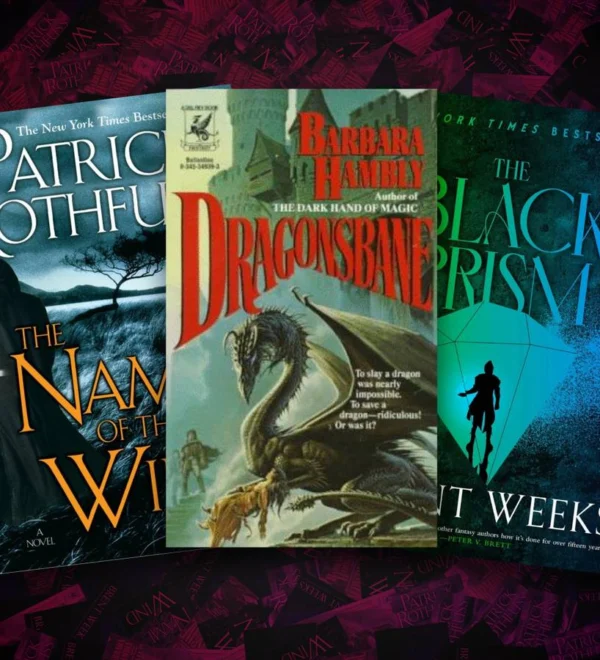 Brandon Sanderson Recommends 10 Near-Perfect Fantasy Books
 Paradox Releases New DLC and Makes Surviving Mars: Relaunched Temporarily Free
 Caribbean Legend: Age of Pirates Update 1.2 Adds Story DLC and Improvements
 Zenless Zone Zero 3.3 Introduces Phoenix and Severian in First Look
 New Open-World StarCraft Shooter Announced Along with First Trailer
 Vermilion Mask Director Explains Why the New Anime Adopts an Old-School Style