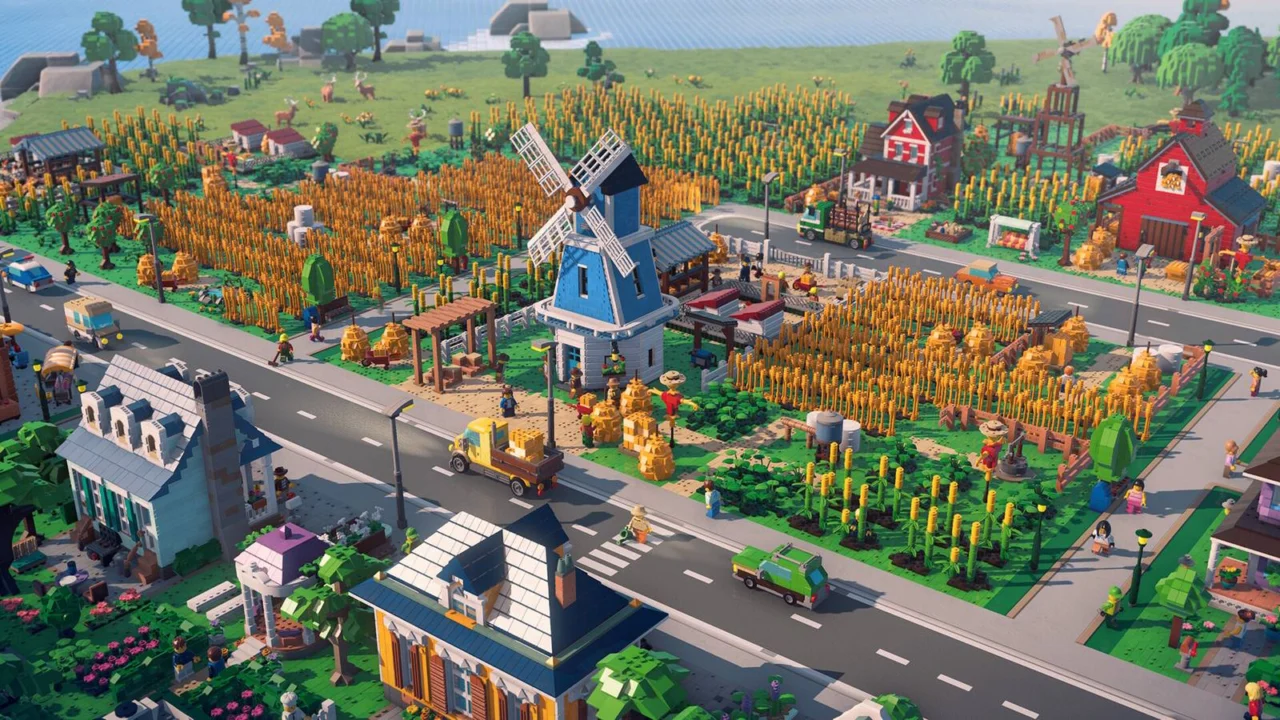
After Seven Hours, Lego Skylines Is Truly the Ultimate Twist on Cities: Skylines
Hot on the heels of Paradox and Iceflake Studio’s announcement of Lego Skylines, we had the opportunity to spend several hours hands-on with a preview build of the upcoming urban simulator. Our session featured both early-game and late-game scenarios, providing a comprehensive look at the campaign structure, the mechanics of intricate simulations, and the depth of the game’s customization tools. Despite a few lingering balance quirks in the late-game economy, the scaled-down architecture and heightened emphasis on aesthetic detail make Lego Skylines a uniquely compelling spinoff.
Iceflake previously noted that Lego Skylines would feature a substantial campaign mode, and our early scenario dropped us right at the genesis of a master builder’s journey. We were placed on an isolated island alongside a family seeking rustic tranquility, only to find themselves utterly isolated. Our initial mandate was simple: construct a modest dwelling, refine its exterior aesthetics, and establish nearby retail and employment opportunities to kickstart local civilization.
For veterans of Cities: Skylines or similar franchise entries, this setup immediately highlights how the game differentiates itself. Micro-level household needs take absolute precedence over sweeping commercial and industrial zones. While macro-level town planning eventually comes into play, the daily requirements of your citizenry dictate the foundational layout. The campaign gently guides you forward through bespoke requests from residents and local leaders, offering an organic shape to your burgeoning settlement. It serves as a remarkably smooth on-ramp for newcomers, avoiding the sudden, overwhelming plunge typical of traditional city-building sims.
Every household operates with an evolving hierarchy of fundamental requirements—such as securing stable employment—that progress naturally as your population matures. Families with children necessitate educational facilities like daycares, while senior citizens require tailored accommodations. In broad strokes, this ecosystem functions similarly to its predecessors.
Where Lego Skylines truly sets itself apart—and where its creative potential shines brightest—is the introduction of an “appeal” metric for residential buildings. Fulfilling these appeal criteria relies entirely on decorative props grouped into distinct thematic categories, including cozy, natural, formal, and industrial styles. Players can utilize floral beds and serene ponds for nature builds, garden ornaments for cozy spaces, or statues and benches for formal plazas.
Initially, our approach involved haphazardly placing requested items purely to chase stat boosts, resulting in an aesthetically chaotic patchwork neighborhood. However, experimenting with deliberate placement, prop rotation, and thematic zoning quickly unlocked surprisingly sophisticated urban designs—with a little inspiration drawn from the advanced save files provided. Beyond synchronized yards and communal spaces, players can choose from multiple distinct architectural archetypes for every plot size. Whether you prefer classic Tudor aesthetics, Victorian-inspired “Bricktorian” suburbs, coastal beach houses, modern condominiums, or rustic cabins, each category offers a wealth of visual variations.
Recommended For You
Individual property plots also support bespoke prop customization. While these items currently have minimal impact on core citizen needs and feature a somewhat restricted selection, they represent an ideal canvas for the future modding community.
Beneath the heavy focus on exterior decorating, robust simulation systems remain fully intact. Essential utilities—power, water, waste management, and education—must be strategically maintained, with multiple infrastructure options available. Familiar upgrade paths allow service buildings to expand their operational radius at the expense of higher maintenance costs or increased pollution. Municipal policies, taxation structures, and fiscal budgeting tools are also present, though we barely scratched the surface during our preview.
Some simulation balancing elements, however, felt distinctly uneven. In a late-game metropolis boasting a population of 2,000 citizens—reflecting a much tighter scale than mainline entries—refuse stubbornly piled up despite a dozen waste management facilities and numerous schools operating simultaneously. Similarly, higher education enrollment figures felt unusually low despite clear community demand. These are minor teething troubles, thankfully, that standard tuning can easily resolve prior to launch.
Leisure and happiness metrics operate on an engaging progression loop. Constructing basic recreational facilities, such as mini-golf courses or pocket sports venues, gradually unlocks access to grander attractions like full-scale stadiums. These major venues host dynamic events that significantly boost civic morale while serving as stunning visual centerpieces. Clever placement allows players to curate organic districts—such as pairing music venues with bohemian art installations downtown or framing upscale eateries with refined theatres in elite uptown zones.
Industrial supply chains receive a streamlined overhaul as well. Unlike the granular material combinations required by the Industries DLC in Cities: Skylines, production here is simplified into color-coded commodities essential for local commercial profitability. Aesthetically, this concise approach is deeply satisfying; establishing a functional four-farm agricultural district required only a fraction of the sprawling footprint demanded by traditional city builders.
While our hands-on time with Lego Skylines was relatively brief, the clear vision presented by Iceflake Studios has left us eager for a deeper dive. Enthusiasts will simply need to exercise patience, as an official release date has not yet been announced.
Mario Kart, Bowser’s Castle, and more will finally be available in minifigure form
Source: Polygon
Related articles
 The Witcher 3 and Cyberpunk 2077 Surpass 100 Million Combined Sales
 Ninja Gaiden III, Ikari Warriors, and R.C. Pro-Am II Join Nintendo Switch Online Classics Library
 Mario Kart 8 Deluxe Just Received A Switch 2 Update, Adding Local 8-Player And More
 Robert Pattinson Explains Why Filming The Batman Sequel Is Harder for Him
 Report: GTA VI Will Not Allow Free Character Switching Between Jason and Lucia
 LEGO Harry Potter Collection Coming to Nintendo Switch 2
 Second Season of ‘Ao Ashi’ Set for Release Four Years After Season One
 First Details Revealed for New Star Trek Film