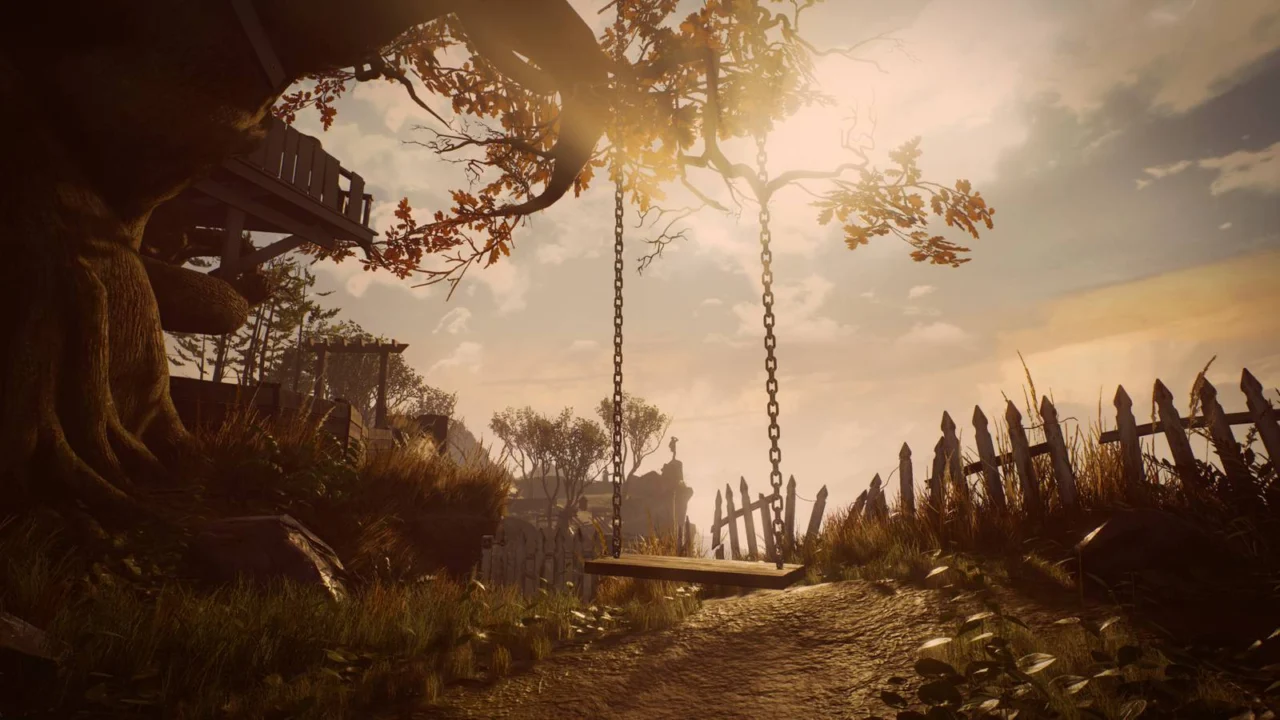
7 Years Later, What Remains of Edith Finch Still Has the Most Haunting Quote in Gaming
There is a profound resonance in video games that invite players to pause and reflect on existence. Exercising direct agency over a character’s journey creates an intimate dynamic entirely distinct from passively observing a narrative unfold on a cinematic screen. When that interactive experience centers on loss and the pivotal choices that shape a lifetime, that weight of control becomes deeply tangible.
Much like Firewatch before it, What Remains of Edith Finch delivers a narrative-driven, first-person odyssey that lingers in the mind long after the credits fade. Its poignant writing, in particular, proves remarkably indelible.
The narrative follows seventeen-year-old Edith Finch as she traverses the sprawling corridors of her eccentric family estate. As the final surviving heir, Edith steps inside the ancestral home after a seven-year absence to piece together her family’s complex history. Behind the threshold of each locked door lie preserved memories, though unearthing them often feels akin to pressing against an emotional bruise. The game posits that sorrow is rarely linear, nor does it conform to predictable boundaries.
Throughout the journey, Edith recounts the tragic fates of her relatives. As players navigate these shrine-like chambers, interactive objects trigger intimate vignettes voiced by the departed family members themselves. Time seems suspended during these sequences, lending the exploration an arresting gravity that explains why the game’s treatment of grief remains so intensely memorable.
Dawn, Edith’s mother, attempted to shield her daughter from the past by permanently sealing the bedrooms of those who had passed away. Conversely, her great-grandmother, Edie, firmly believed that maintaining active memorials was essential to honoring the lives that came before.
This thematic depth—which earned the title a coveted spot among Polygon’s finest video game quotes—ensures the story remains relevant years later. In her personal reflections bridging the individual vignettes, Edith contemplates the fleeting nature of existence while speaking to an unborn son she will never hold.
“If we lived forever, maybe we’d have time to understand things,” she reflects.
Death is inevitable, but it should not be feared
If mortality forms the structural foundation of this household, tragedy acts as its wallpaper. As Edith retraces the familiar yet haunting pathways of her youth, she confronts the shadow of her doomed lineage. Though her relatives are long gone, their palpable energy remains trapped behind barricaded doors, each leading toward a sorrowful climax. Utilizing a network of hidden crawlspaces and secret passages to navigate these rooms, players experience a masterclass in atmospheric exploration.
Ultimately, the Finch legacy imparts a stark lesson: while everyone must eventually face their end, the intricate moments defining a lived experience deserve to be cherished rather than dismissed. The sealed rooms symbolize suppressed trauma; leaving each space untouched while relying solely on clandestine passageways mirrors the act of locking away one’s grief instead of confronting it. The game treats bereavement not merely as an emotion, but as an active, shaping force that defines a family’s history.
Crucially, certain sequences require the player to actively participate in a character’s demise. Foreseeing the tragic outcome yet lacking the agency to prevent it forces the player onward in service of the narrative. This mechanical helplessness closely mirrors Edith’s own emotional pilgrimage through her family tree. Refusing to let her own story be locked away by insurmountable sorrow, she insists on bearing witness to every complex truth.
Yet, the core message transcends mere melancholy. Edith emphasizes that existence is beautifully eccentric, and that sorrow should not dictate its entire value. Grief does not require a permanent fix, but neither should it be ignored.
“It’s a lot to ask, but I don’t want you to be sad that I’m gone. I want you to be amazed that any of us ever had a chance to be here at all,” Edith concludes.
Source: Polygon
Related articles
 Microsoft Announces September Xbox Game Pass Lineup Featuring Call of Duty
 Witch Hat Atelier Manga Is One-Third Finished and Could Run for 12 Seasons
 GTA VI Trailer Outpaces Netflix Films in Popularity Across 87 Countries
 An Unexpected Pokémon Card Is Set to Shatter Sales Records Against All Odds
 The Blood of Dawnwalker Tops Steam Sales Charts
 CD Projekt Red Details Unreal Engine 5 Plans for The Witcher IV
 Nintendo Releases Major Update for Mario Kart 8 Deluxe on Switch 2
 The Witcher 3 and Cyberpunk 2077 Surpass 100 Million Combined Sales