3 Games Where Your Choices Truly Matter
The marketing surrounding Rebel Wolves’ The Blood of Dawnwalker and its sprawling web of consequences sparked a broader philosophical question: What does true player agency actually look like in modern video games? Conventionally, we measure the worth of branching narratives by the sheer magnitude of their outcomes—massive, earth-shattering shifts in the plot or hundreds of disparate conclusions. Look at how much discourse surrounding Baldur’s Gate 3 centers on its final cinematic payoffs, or conversely, how players tend to overlook the nuanced, granular ripples of the Mass Effect trilogy in favor of debating the restrictive climax of Mass Effect 3.
Grand-scale narrative forks are undeniably compelling. They deliver immediate gratification, fostering a profound illusion of stewardship over characters and worlds we grow to care about. Much like video game romance systems, however, this template has grown somewhat formulaic and predictable. To shake things up, this curated list explores three titles that approach branching storytelling through unconventional, far bolder lenses.
3
Zero Parades: For Dead Spies
Zero Parades: For Dead Spies stands out as a rare interactive experience where your choices dictate not merely the trajectory of the plot, but the psychological contours of your active behavior. The protagonist, Hershel, is an operative—or rather, a former one. Following a catastrophic sequence of events, she wakes up decommissioned and disoriented in a room with an unresponsive stranger, utterly devoid of memories regarding how she arrived. A high-stakes conspiracy is unraveling across the fictional, dreary port town of Portofiro, and your assignment is to unravel it while grasping at any lingering threads of redemption. Provided you survive, that is.
Much like its thematic predecessor Disco Elysium, Zero Parades utilizes traditional CRPG mechanics like rhetoric and persuasion, but subverts expectations by repurposing them beyond mere lockpicking or deception. Investing points into specialized mental or social faculties grants you access to conversational skill checks that completely recontextualize unfolding events. While other games relegate minor lore drops to the status of a disappointing consolation prize, the exquisite prose here ensures that every discovered nuance feels as rewarding as stumbling into an entirely new storyline.
On the flip side, you might easily spiral down psychological rabbit holes—such as forging an unlikely, drunken alliance with a stressed corporate executive over shared, morbid fantasies of a deity trampling you underfoot. While undeniably entertaining, indulgence has its limits; maxing out your delusion meter triggers an abrupt, fatal collapse. The exact same mechanical vulnerability applies to fatigue and psychological strain. Much like real life, self-destruction is a very active variable.
Navigating these extreme psychological states while balancing more pragmatic decisions forms the core heartbeat of Zero Parades. Regardless of your actions, the narrative operates on a strict “yes, and” improv philosophy. Even when you make catastrophic, potentially lethal errors, the game nearly always carves out a path forward—it simply diverges wildly from your original projections. This design traps you in a perpetual state of disorientation; you constantly feel unequipped to make the “correct” choice, forcing you to improvise blindly. In doing so, you inhabit Hershel’s psyche on a visceral, empathetic level that few other titles—not even the brilliant Disco Elysium—have managed to achieve.
2
Slay the Princess
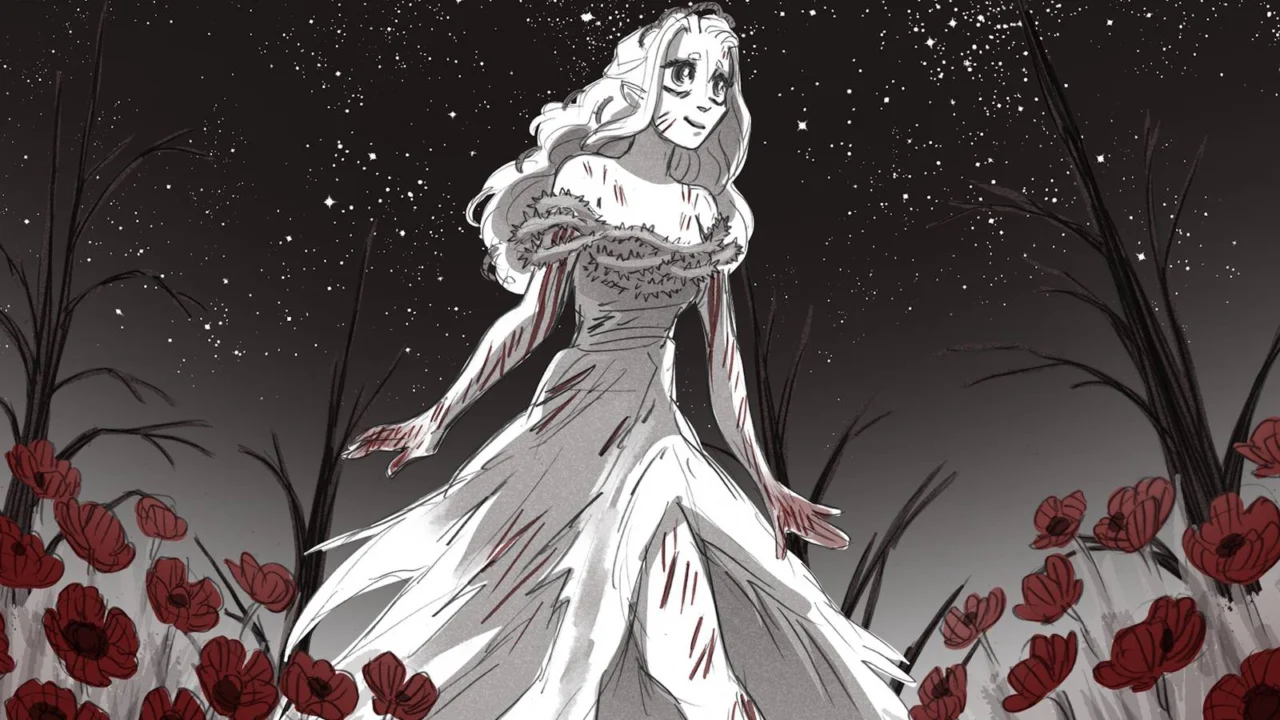
The developers at Black Tabby Games thrive on deconstructing choice-driven conventions. While hard at work on their massive epic Scarlet Hollow, they took a detour into something deliberately contained and experimental with Slay the Princess. You assume the role of a lone hero handed a straightforward directive: enter a secluded woodland cabin, descend into the cellar, and dispatch the imprisoned princess. According to the omnipresent narrator, she represents an existential threat—a cosmic entity masquerading as a helpless maiden. From that singular premise, your subsequent decisions ripple outward in astonishing, unpredictable ways. Even flatly refusing to step inside the cabin serves as a viable choice, instantly birthing an entirely unique narrative vector.
When gamers discuss meaningful agency, discussions inevitably bottleneck around ending quantities. It is the logical conclusion of tallying up consequence. Yet, this metric frequently ignores the qualitative shifts happening *during* a playthrough. Slay the Princess brilliantly bridges both philosophies. While its sprawling branches eventually consolidate into a finite set of conclusions, the final destination is only a fraction of the experience. Every path—even those culminating in identical endpoints—recontextualizes the scenario, exposing hidden facets of your character, the enigmatic captive, and their volatile dynamic.
You make decisions guided entirely by raw intuition and the lingering trauma of previous encounters. For instance, if the princess brutally murders you during your initial loop, you approach her subsequent protestations of innocence with deep, earned skepticism. This psychological feedback loop instills every narrative fork with an intense, haunting flavor unique to Slay the Princess—an immersion unattainable in games where you merely anticipate a binary life-or-death tally.
Black Tabby’s horror-infused visual novel hybrid, Scarlet Hollow, is equally deserving of your time. Though technically unfinished across its five remarkably substantial acts, its stellar writing, distinct artistic identity, inventive approach to romance, and exceptional prose make it a mandatory experience for fans of the genre.
Recommended For You
1
The Hundred Line: Last Defense Academy
You rarely make actual decisions in Last Defense Academy, but when you do, they fundamentally detonate the game space. Sometimes quite literally. The setup strands a cohort of teenagers inside an eccentric academy after a swarm of deceptively cute monstrosities devastates Tokyo. An enigmatic phantom assumes the dual role of headmaster and military commander, trading traditional coursework for blood magic that imbues the students with superhuman combat abilities. And that status quo establishes itself within the opening half-hour.
For upwards of 30 hours, the game funnels you down a strictly linear corridor devoid of structural forks, culminating in a seemingly definitive conclusion. Then, the timeline loops back to the beginning—only this time, agency is unlocked. This mechanic introduces itself with theatrical flair, signaling the sheer gravity of your newfound influence: a single revised action abruptly shears the overarching narrative, instantly re-engineering the survival arcs and interpersonal trajectories of everyone trapped on campus. Rarely does this transformation lean toward a happy outcome.
Developer Too Kyo Games seemingly took standard expectations surrounding choice-based RPGs and pushed them to delightfully absurd extremes. Last Defense Academy boasts 100 distinct endings, none of which claim canonical status. Absurdist punchlines—housed within a dedicated comedic storyline branch—carry just as much narrative weight as the deeply traumatic, apocalyptic conclusions, even if some running jokes occasionally overstay their welcome. Traditional benchmarks like survival, mortality, and bittersweet resolutions dissolve entirely, replaced by a constant, frantic wonder: *What unhinged scenario could possibly happen next?* You pull the levers, yet surrender all predictability over where the machinery takes you.
Imbuing a solitary choice with such seismic power while simultaneously stripping away granular player control is a radically defiant move in interactive design. The endeavor reportedly pushed Too Kyo Games to the brink of financial insolvency, suggesting that projects of this sheer scale might not be financially sustainable. Even so, this brazen subversion of player-developer dynamics is nothing short of brilliant—and easily cements it as one of our standout titles from last year.
It has been spoken
Source: Polygon
Related articles
 Silent Hill Creator Pyramid Head Designer Sacrifices Personal Life for Work
 52 Minutes of Exodus Gameplay Show Walkthrough of Bear Boss Mission
 The Blood of Dawnwalker Developers Reveal Launch Sales and Promo Art
 Rumored StarCraft Shooter in Development, Not Destiny-Style Game
 Fable Developers Built Character Generator Manually After Failing to Create Quality Tool
 Developers Issue Fix for NVIDIA GPU Flickering Bug
 Market Analysts Surprised by CD Projekt RED Report Showing New Revenue Source
 GTA Cheat Codes Taught a Generation How Much Fun It Is to Break a Video Game