
10 Years On, the Creators of Enter the Gungeon Reflect on a Genre in Existential Crisis
Ten years feels modest. While the term “decade” carries a certain weight, it rarely feels like sufficient justification for a band to launch a nostalgic tour for their most iconic album. It’s barely enough time for the long-term cultural impact of a creative work to truly settle. Yet, in the volatile landscape of video games—where genres are born, reinvented, and dismantled overnight—a decade is an eternity. In gaming terms, ten years might as well be fifty.
Consider the recent milestone reached by Enter the Gungeon, which quietly celebrated its tenth anniversary earlier this month. The passage of time feels surreal; I can still vividly picture playing Dodge Roll’s bullet-hell roguelike on my PlayStation 4 in an apartment I could map out from memory. Yet, during our video interview reflecting on ten years of sentient ammunition, the developers noted that the era of the game’s inception feels like a lifetime ago.
“If you think of it as a child, it almost doesn’t need you anymore,” remarked composer Adam Kidd Drucker, who produces music under the moniker Doseone.
Drucker’s observation is poignant, particularly in an industry that ages at an accelerated pace. When Enter the Gungeon launched in 2016, it entered a market that now feels almost unrecognizable. It is difficult to recall a time when a roguelike featuring a dodge-roll mechanic was a groundbreaking concept. Over the last decade, the genre has morphed into a complex Ship of Theseus, reassembled time and again through layers of stat-altering relics and passive upgrades. While its creators remember the development process with sharp clarity, they are acutely aware that the genre they helped define has since transformed into something entirely new.
Before Dodge Roll became a reality, its core members were part of EA Mythic, the studio famous for Dark Age of Camelot. Three of the eventual creators of Enter the Gungeon, including studio co-founder Dave Crooks, worked together there in the early 2010s. Crooks shared that he and his colleagues were yearning to produce something unburdened by the “trappings of EA.” Fate intervened in 2014 when EA shuttered the studio’s Fairfax office following the release of Dungeon Keeper Mobile. While the closure was a jarring end to a legendary studio, it provided the catalyst Crooks and his team needed to pursue their own vision.
The challenge was defining that vision. Crooks had the title long before the mechanics were solidified, but his focus quickly gravitated toward the roguelike genre. It was gaining significant traction in the indie sphere, largely due to breakout successes like The Binding of Isaac. While that game was a clear influence, Crooks also dove into the genre’s namesake, Rogue, fueled by his interest in Pokémon Mystery Dungeon.
“I played Rogue Legacy and I really didn’t appreciate how constant grinding could eventually trivialize the challenge,” Crooks explained. “A cornerstone of our design for Gungeon was to soften the edges of the Rogue formula, but I never wanted players to reach a point where a run felt like it was stripped of merit. I wanted every death to feel telegraphed, allowing the player to look back and think, ‘If I had only done this differently.’”
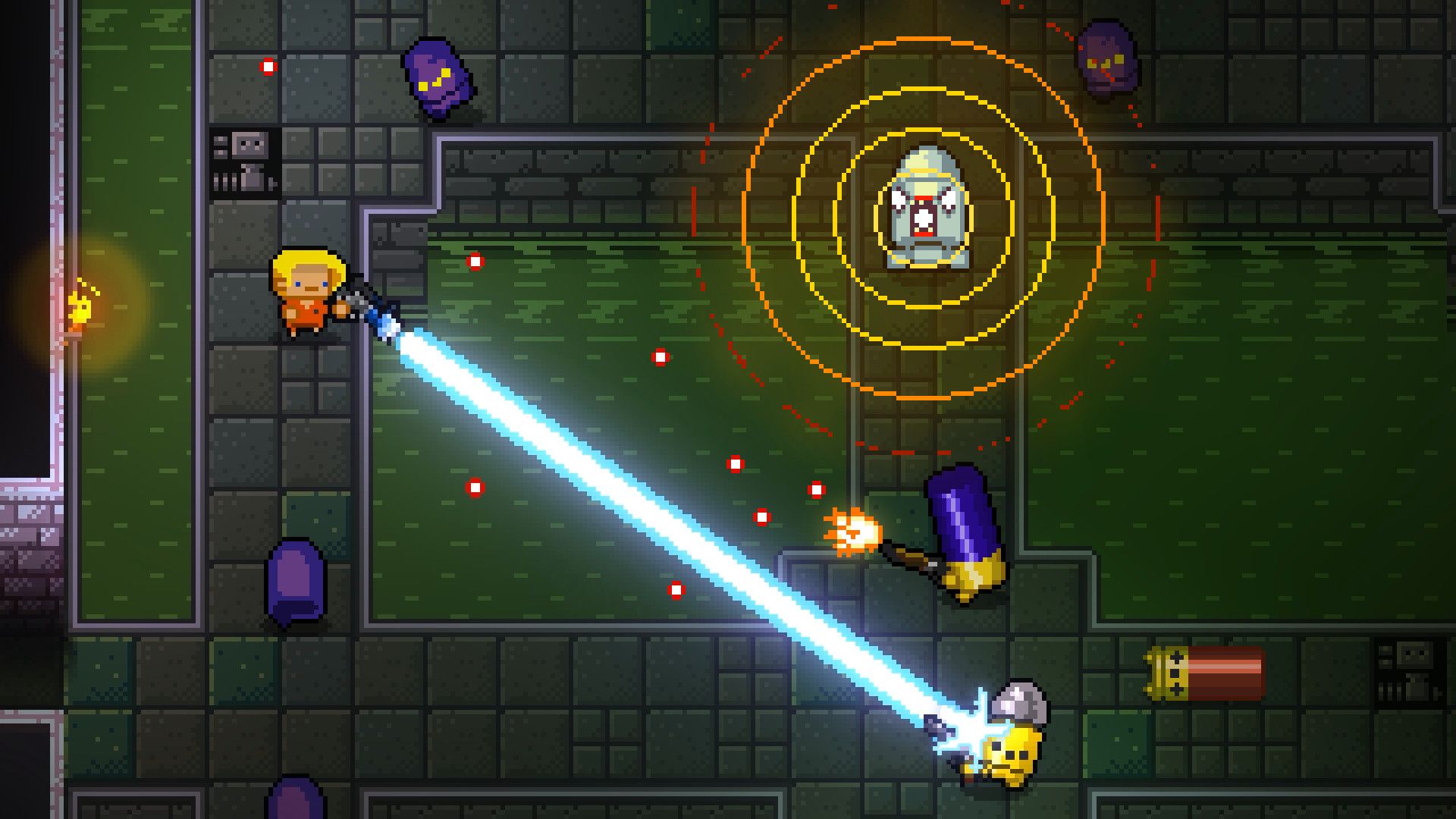
Thus, the frantic development cycle of Enter the Gungeon commenced. The core concept coalesced rapidly; the team produced a functional prototype in just five weeks to debut at E3—an expo they crashed without a single scheduled appointment. The game bridged the gap between the structured progression of The Binding of Isaac and the frantic bullet-hell chaos of Ikaruga, with the dodge-roll mechanic serving as a nod to the philosophical influence of FromSoftware’s Souls series.
“One of the unsung strengths of the Souls games is their incredible enemy variety,” Crooks noted. “Even when revisiting the same areas, you’re constantly encountering something fresh. When Nioh launched, I was shocked to see how few enemy types it offered, often relying on simple palette swaps. I couldn’t imagine approaching a genre that demands repetition with such limited assets.”
For Dodge Roll, “density of discovery” became the guiding principle. The goal was to pack the game with unique weapons, diverse enemies, and complex interactions that ensured no two runs felt identical. Finding the right tone was a delicate balance, particularly with the music. Drucker, who met Crooks at a Giant Bomb party, aimed for a soundtrack that was high-energy and propulsive, yet never fatiguing—a tough feat when players are expected to restart dozens of times.
“When I entered the indie space, there was an abundance of what I called ‘melodic abuse,’” Drucker recalled. “I’d describe it like a cartoon scene with an octopus frantically banging on nine pianos simultaneously. I just knew we couldn’t do ‘jazz stuff.’”
Ironically, playing Enter the Gungeon feels remarkably like a jazz improvisation. Each run is a spontaneous performance, requiring you to adapt to your current loadout to navigate a symphony of projectiles. Achieving this was no small feat; the developers adopted a “yes, and” approach to game design. If they included a Cheese Wheel weapon as a nod to Pac-Man, it couldn’t just be a visual reference—it had to actually allow players to play Pac-Man, complete with ghosts and pellets.
We can’t do jazz stuff.
Every eccentric addition had to integrate seamlessly with the existing items and characters, a testing nightmare made more difficult by the fact that the team lacked a specialized, automated build machine.
When asked about the developmental hurdles, Crooks didn’t hesitate: “Every single one of them.”
“We built this game incredibly quickly,” he added. “It was roughly 20 months of development. When I revisit the game today and see how much depth is packed into it, even at launch, I genuinely don’t know how we managed it.”
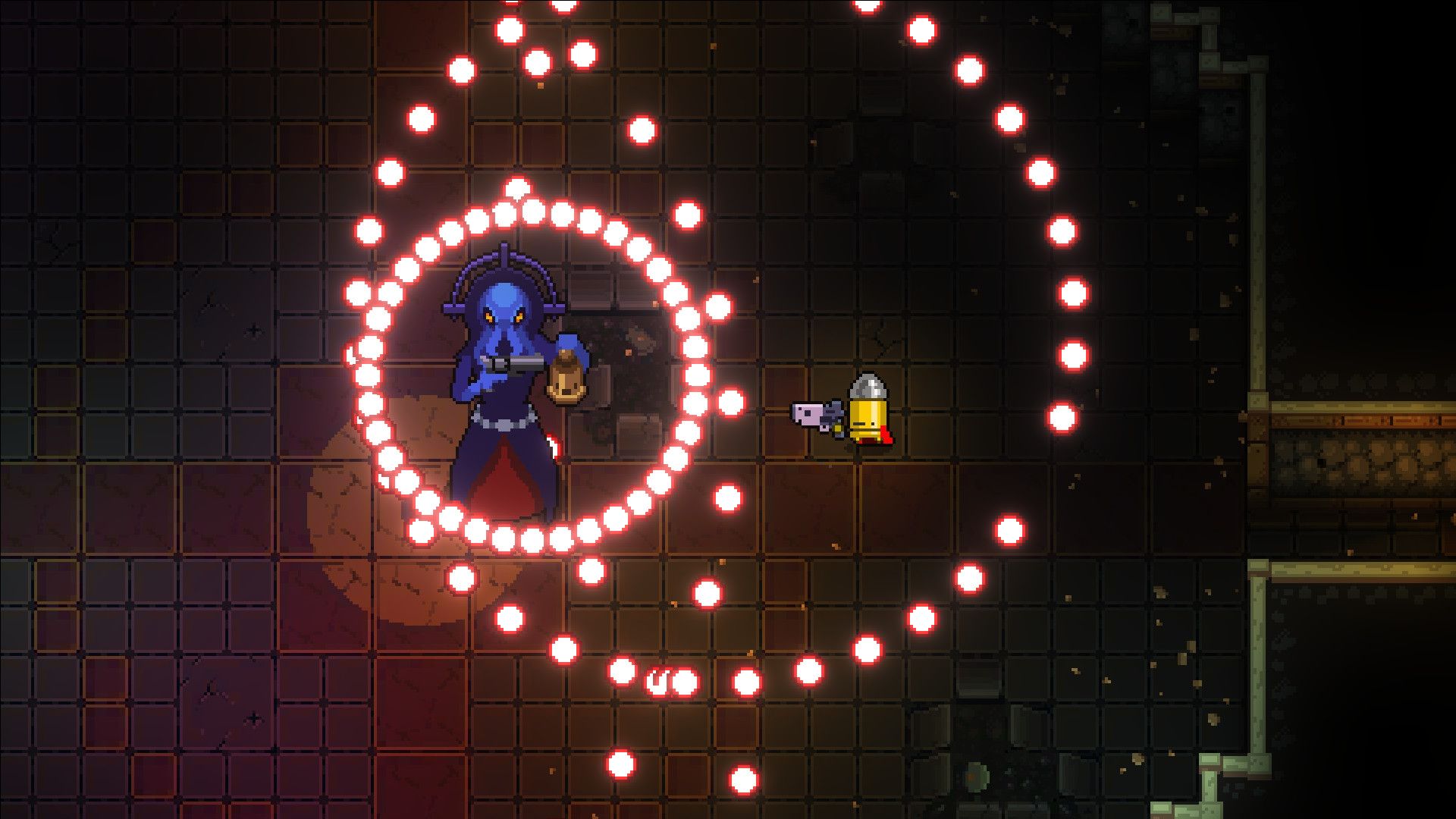
Regardless of how they pulled it off, Enter the Gungeon was a massive success upon its 2016 release. Crooks had hoped for a modest, life-changing $50,000; the game instead surpassed 14 million units sold over the last decade. Its reach extended far beyond the usual indie circles, even finding its way into the personal playlists of hip-hop artists who bonded over the game with their children.
Crooks and Drucker remain humble about their impact. While Crooks has noticed other games adopting certain UI elements from Gungeon, he is hesitant to claim credit for any industry trends. If the game left a legacy, he hopes it’s in the standard of boss design.
“I care deeply about making bosses memorable,” Crooks said. “I’m a product of the Zelda and Metal Gear Solid school, where a game is defined by its bosses. I feel like I’ve seen more of that intensity in the genre lately. When I play games like Returnal, the flow and management of bullet patterns feel so reminiscent of Gungeon that I’d like to believe we contributed to that evolution.”
Pinpointing exactly where Gungeon’s influence ends and the industry’s natural mutation begins is difficult. The genre has shifted repeatedly since 2016—Hades overhauled the narrative framework of the roguelike, and Balatro subverted the core mechanics entirely. In this fast-moving space, a dodge-roll mechanic is no longer the radical innovation it once was.
“What even defines a roguelike anymore?” Crooks questioned. “It’s rare to find games that truly evoke that original Rogue experience. I see new titles advertised as ‘roguelikes’ where developers explicitly state that death isn’t the end—which is the antithesis of the genre’s original definition.”
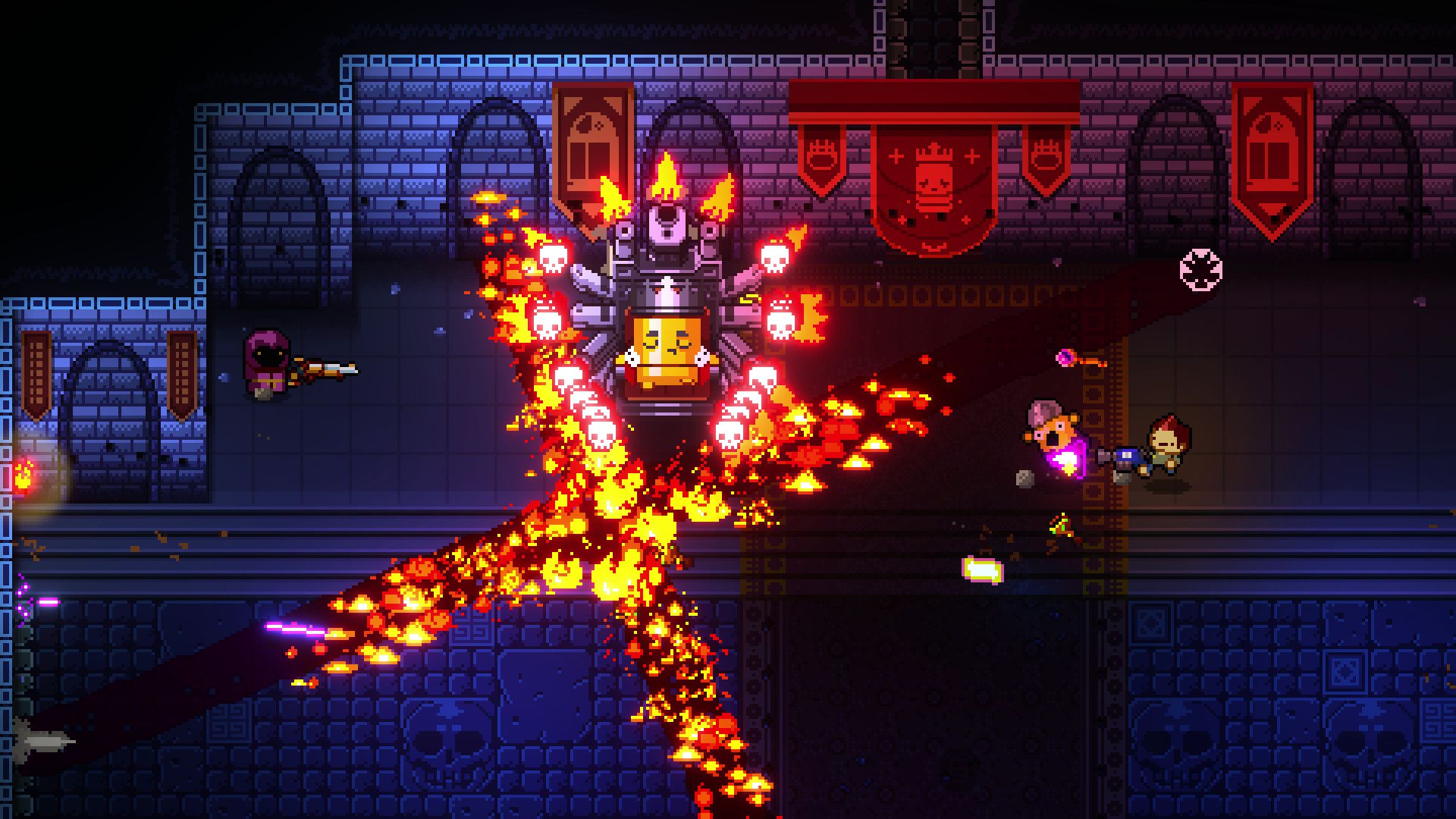
Our conversation shifted toward the current state of the roguelike. While both developers admire singular, creative takes on the format, there was a palpable sense of weariness regarding how the genre has been commodified. Crooks noted a distinct shift in design philosophy over the last ten years.
“The most glaring trend is the screen that offers three random choices every 45 seconds,” Crooks said. “There was a time when interrupting the player’s flow would have been considered poor design. Now, that ‘serotonin blast’ of constant choice is central. It’s starting to feel more like a slot machine than a skill-based experience.”
This sentiment resonates in the wake of hits like Balatro and Vampire Survivors, which lean heavily into the psychological hooks of gambling. While these games are undeniably fun, they represent a drift away from the strategic rigor of the genre’s roots.
There are very few people that will be in the circle of hell where you made money off of joy and fucking people enjoying something.
“Especially after Vampire Survivors and Balatro, things have become a bit… well, I hate to say it, but ‘cash-grabby,’” Crooks admitted. “The mechanics are closer to slot machines than Rogue. It’s an effective way to manipulate player dopamine, and it’s arguably easier to design for, but it’s a departure from the soul of the genre.”
“The term has lost its meaning,” Drucker added. “It’s like ‘platformer.’ It used to imply the presence of platforms; now, I’m not sure what it implies anymore.”
Despite their critical outlook on the state of the industry, it clearly stems from a place of genuine affection for the craft. As they prepare to release Enter the Gungeon 2, they remain focused on the core purpose of their work. For Drucker, the value lies in the experience provided to the player.
“Video games are one of the last true bastions of joy,” Drucker reflected. “In a world filled with exploitation, there are very few places where you can make a living by simply bringing people happiness. That’s what we set out to do.”
Source: Polygon
Related articles
 Insider Claims Resident Evil Code Veronica Will Get Separate Ways-Style DLC
 Developers Fall Into Debt Amid Rising Popularity of “Teach Your Sister How to Drive” Simulator Demo
 Arc Raiders Creator Admits Fan Divide Risk Over Requested Game Modes
 Modder Working on RTX Remaster of Call of Duty: World at War Releases First Screenshots
 Digital Foundry Releases Optimized PC Settings Guide for The Witcher 3 Remaster
 Archive Materials Suggest Wing Commander 3 Remaster May Be in Development After 32 Years
 Hacker leaks gameplay of nude Lucia from GTA VI, but players focus on other details
 New 90% Positive Steam Roguelike Is a Faithful PSP-Era Comeback