New 90% Positive Steam Roguelike Is a Faithful PSP-Era Comeback
Years ago, Sony stood out as one of the industry’s most wonderfully eclectic publishers. Although that might sound surprising today given their laser focus on cinematic narratives, platforms like the PlayStation Portable once served as a breeding ground for delightfully eccentric first-party titles that defied replication. No game embodies this spirit quite like Patapon, an inspired rhythm-action adventure centered around marching, one-eyed creatures. It was a brilliantly singular concept—precisely the kind of daring project you would struggle to find among major publishers in 2026.
While that same creative fearlessness may have faded at PlayStation Studios, its pulse beats on in Ratatan, a musical roguelike leaving early access on Oct. 15 for Nintendo Switch 2, PlayStation 5, Windows PC, and Xbox Series X. Crafted as a spiritual successor by several of the original creators, Ratatan aims to carry the torch forward and usher the rhythm genre into a modern era. As developer Ratata Arts discovers, however, bridging the gap is no simple feat; the game ultimately stumbles as a roguelike, struggling to fully revitalize its classic inspiration. Yet, despite its structural shortcomings, Ratatan radiates an undeniable nostalgic warmth that evokes a deep longing for a bygone era of gaming.
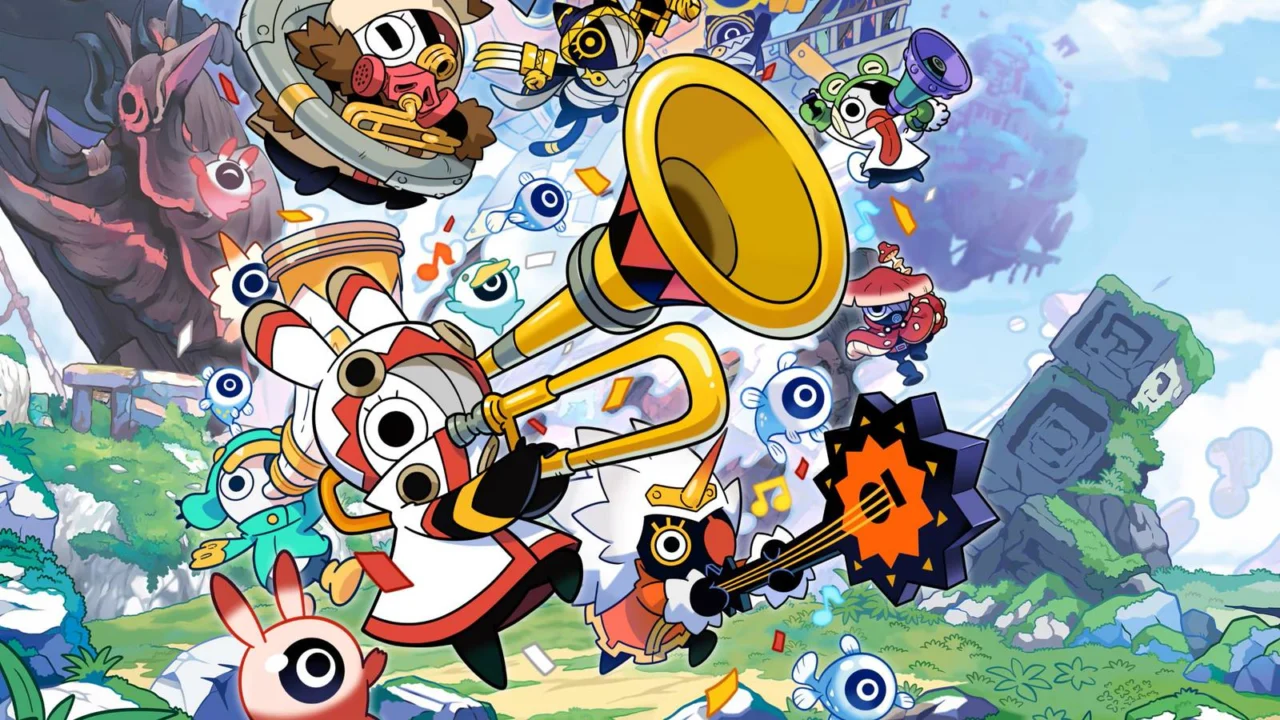
At first glance, Ratatan is essentially Patapon in everything but its moniker—and even then, the resemblance is striking. Players assume the mantle of a miniature hero known as a Ratatan, serving as the musical conductor for a legion of Coburns, a tribe of whimsical, single-eyed companions. Your mission is to guide these troupes across 2D landscapes overrun by hostile monsters, shouting out rhythmic commands to obliterate adversaries on your quest to meet a mystical Goddess. Every foundational element of the original series remains intact, right down to the upbeat, infectious soundtrack.
Aesthetically speaking, Ratatan is an absolute triumph. It presents itself as a vibrant, feel-good cartoon brimming with an irresistible charm that makes it nearly impossible not to tap your feet along with the lively melodies. It is genuinely endearing, radiating the pure affection of developers who poured their hearts into creating Patapon and are thrilled to recapture that magic once more.
Nearly two decades after the release of the original 2007 Patapon, the rhythm mechanics still manage to feel remarkably fresh, even if they remain somewhat surface-level. You issue commands to your Coburns by executing quick two- or three-button sequences in strict synchronization with the beat. Tap the Y button thrice, and they surge forward in a march; press A three times, and they halt to launch an assault. Beyond these core directives, players can trigger mana-draining special maneuvers, deploy protective barriers, and leap to evade incoming hazards. While the limited button combinations and timing variations prevent the system from feeling deeply intricate, it succeeds in drawing you into a trance-like state of flow as you groove to the rhythm. Over time, I grew to genuinely appreciate how it introduces spatial positioning to the traditional Patapon blueprint, rewarding strategic movement to keep your Coburns out of harm’s way.
Although this serves as a stellar foundation, Ratata Arts falters when attempting to propel the Patapon concept forward. Ratatan adopts a roguelite framework, tasking players with leading their troops through a handful of distinct biomes while gathering run-specific upgrades. Build customization largely revolves around infusing your Coburns’ attacks with elemental attributes—such as poison or shock—and tweaking critical hit multipliers. Unfortunately, none of these enhancements fundamentally alter your playstyle. Individual runs also feel stagnant, forcing you through identical worlds and recurring boss encounters with virtually zero meaningful variation.
To mask this monotony, Ratatan incorporates light RPG progression. You collect countless weapons throughout each expedition, which can be broken down to upgrade specialized gear. Permanent progression perks also grant incremental advantages with each subsequent run, expanding your starting army of Coburns. While these progression loops are essential for motivating players to push through “just one more run,” the roguelike structure quickly starts to feel like a vehicle designed to stretch a remarkably thin amount of content. Even though I have yet to reach the end of a complete run, it is painfully obvious that progression boils down to repetitive grinding until your stats are high enough to breeze through the final boss.
Get Polygon’s Wishlister newsletter
A weekly cheat sheet to what you’ll eventually love to play. No buying, no
commitment — just saving for later.
Free. Unsubscribe anytime.
I completely understand why Ratata Arts opted for this particular framework. Roguelikes remain immensely popular, offering a practical avenue to capture modern audiences who might otherwise be immune to a pitch rooted purely in nostalgia. It also serves as a clever tactic for an independent studio to manage development scope while ensuring there is a respectable amount of content on offer. Even so, it feels as though greater ambitions were within reach. The final build of Ratatan I played feels nearly indistinguishable from the demo I experienced prior to its early access launch a year ago. It is disappointing to realize that a full year of community feedback didn’t translate into more substantial growth, especially given the overwhelming success of the game’s crowdfunding campaign. Dedicated Patapon fans were eager to march alongside Ratatan, but the runway ultimately proved far too short.
Despite the final release falling short in terms of depth, I still find myself launching Ratatan far more often than anticipated. It possesses an infectious, endearing energy, driven by lively animations and catchy earworms that linger in my mind long after I’ve put the controller down. My enjoyment stems less from blind devotion to Patapon and more from a profound fondness for the uniquely inventive era of game development that birthed it. Ratatan might be a flawed throwback, but it represents the kind of creative endeavor I wish major studios were still willing to champion. The gaming landscape is undeniably richer when creators are given the resources to bring their weird, wonderful passion projects to life.
Towa and the Guardians of the Sacred Tree is the rare Hades clone that tries something different
A little change makes a huge difference
Source: Polygon
Related articles
 Modders Release Gameplay Trailer for Cyberpunk 2077 Cooperative Modification
 Insider Claims Resident Evil Code Veronica Will Get Separate Ways-Style DLC
 Developers Fall Into Debt Amid Rising Popularity of “Teach Your Sister How to Drive” Simulator Demo
 Arc Raiders Creator Admits Fan Divide Risk Over Requested Game Modes
 Modder Working on RTX Remaster of Call of Duty: World at War Releases First Screenshots
 Digital Foundry Releases Optimized PC Settings Guide for The Witcher 3 Remaster
 Archive Materials Suggest Wing Commander 3 Remaster May Be in Development After 32 Years
 Hacker leaks gameplay of nude Lucia from GTA VI, but players focus on other details