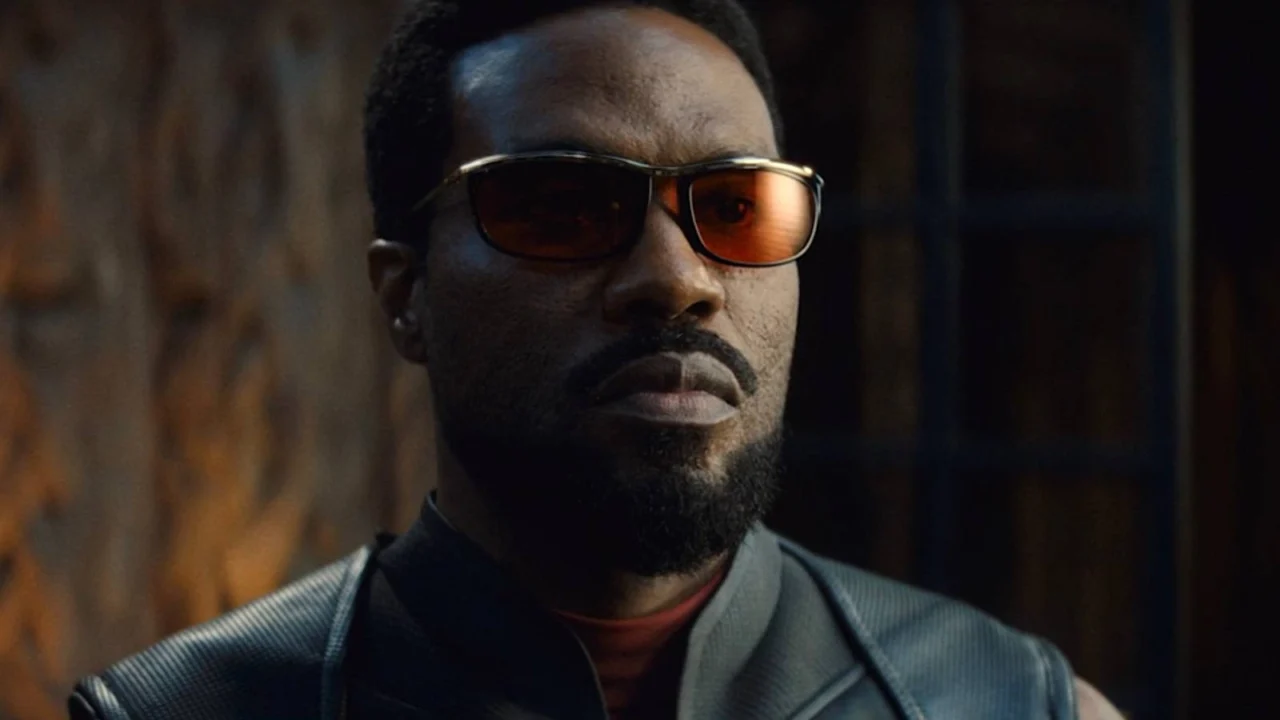
Wonder Man’s Narrative Focus Transcends Its Greatest Unanswered Question

On January 27, Marvel Studios unveiled the complete eight-episode run of Wonder Man on Disney Plus. While the surprise drop was a gift for binge-watchers, it may have been a disservice to the craft of the series itself. Creators Destin Daniel Cretton and Andrew Guest clearly polished the show for a serialized, weekly experience—one where the simmering tension and quirky detours could be dissected by the fandom. Instead, the “all-at-once” release encourages viewers to race toward the finish line, potentially overlooking the nuanced world-building that makes this one of the MCU’s most refreshing entries.
The finale, however, is a masterclass in tonal shifting. It begins as a patient, introspective character study before pivoting into the high-octane spectacle Marvel enthusiasts crave. Though Disney marketed Wonder Man as a standalone miniseries, the closing moments lean heavily into the franchise’s traditional “to be continued” spirit. It is a conclusion that resolves Simon Williams’ emotional arc while simultaneously throwing a gauntlet down for the future of the MCU.
Below, we break down the pivotal finale: what it reveals about Simon’s journey, the unanswered enigmas haunting the narrative, and why the show’s biggest mystery might actually be irrelevant.
[Warning: Significant spoilers for the Wonder Man finale follow.]
The core of Wonder Man follows Simon Williams (Yahya Abdul-Mateen II), a struggling actor whose burgeoning telekinetic abilities are inextricably linked to his performance anxiety. His journey is complicated by an unlikely bond with Trevor Slattery (Ben Kingsley), the disgraced thespian who once masqueraded as the Mandarin. Unbeknownst to Simon, Trevor was initially coerced into spying on him by Agent Cleary of the Department of Damage Control—a bureaucrat looking to fill a high-security super-prison to justify his own budget.
The betrayal initially fractures their bond, causing Simon’s powers to erupt and devastate a film set. However, the season culminates in a profound act of redemption. Trevor assumes his “terrorist” persona one last time, taking the fall for the destruction to spare Simon’s career. The finale sees Simon finally mastering his abilities to orchestrate a daring prison break, rescuing Trevor as the duo disappears into the unknown.
The Road Ahead for Simon and Trevor

The final frames leave us with significant logistical questions. How did Simon transition from accidental outbursts to effortlessly dismantling a high-tech cell? More importantly, where can two of the world’s most recognizable faces hide? By liberating Trevor, Simon has effectively committed professional suicide; no insurance company in Hollywood would touch a self-identified “terrorist” with god-like powers.
Yet, this ambiguity feels intentional. By prioritizing his friend over fame, Simon completes his transformation. His sudden mastery of his powers suggests that his previous struggles were entirely psychological—a result of fear and repression. Once he achieved the validation he craved (the lead role and his brother’s approval), he found he no longer needed the spotlight. If Simon ever returns to the MCU, it will likely be as a genuine hero seeking a pardon, but for now, his story feels poetically complete.
The Mystery of the Origin

Interestingly, the show bypasses the typical “origin story” tropes. We never learn if Simon is a mutant or the product of a specific experiment. This lack of exposition aligns with the “Marvel Spotlight” branding, which focuses on character-driven narratives over dense continuity. While comic fans might wonder if his brother Eric will eventually become the Grim Reaper, the series remains focused on the present, treating Simon’s gifts as a natural, albeit inconvenient, part of his identity.
The Unsolved Subplot: Kathy Friedman

One oddity in the writing is the sudden disappearance of Kathy Friedman (Lauren Weedman). After spending an entire episode establishing her as a formidable New York Times reporter capable of dismantling Simon’s life, she effectively vanishes in the finale. While she served as a catalyst for Simon’s anxiety, her “inspirational” profile of him remains an unfired Chekhov’s gun. It’s possible the creators simply wanted to show that Simon had outgrown his need for public validation, but her absence in the wake of the soundstage disaster feels like a narrative loose end.
The Fate of Josh Gad

Perhaps the most bizarre mystery involves Josh Gad. Playing a heightened version of himself, Gad is portrayed as a genuine “mensch” who befriends DeMarr Davis (Doorman). When Gad accidentally vanishes into DeMarr’s interdimensional portal during a stunt, the show leaves his fate entirely unresolved. In the comics, Doorman is connected to the Darkforce Dimension—the same energy source utilized by heroes like Cloak. Whether Gad is serenading eldritch horrors in another realm or waiting for a rescue remains a mystery that perfectly encapsulates the show’s eccentric charm.
Source: Polygon
Related articles
 Asmongold Assigns Blame for BioWare Closure, and Some Players Agree
 New Resident Evil Film Nears $400 Million at Global Box Office as Director Discusses Sequel Plans
 Austin Wintory Reveals Early Music Sketches He Wrote for Mass Effect 5
 Vincent D’Onofrio Denies Rumors of Kingpin’s Return After “Daredevil: Born Again” Finale
 Sandra Hüller Played a Role in Avengers: Doomsday
 GTA 6’s Rumored Lucia Actor Breaks Silence With Rare Live Appearance
 Warhammer Team Showcases Golden Demon 2026 Miniature Painting Winners at SPIEL Essen
 Delicious in Dungeon Season 2 Character Illustrations Shown