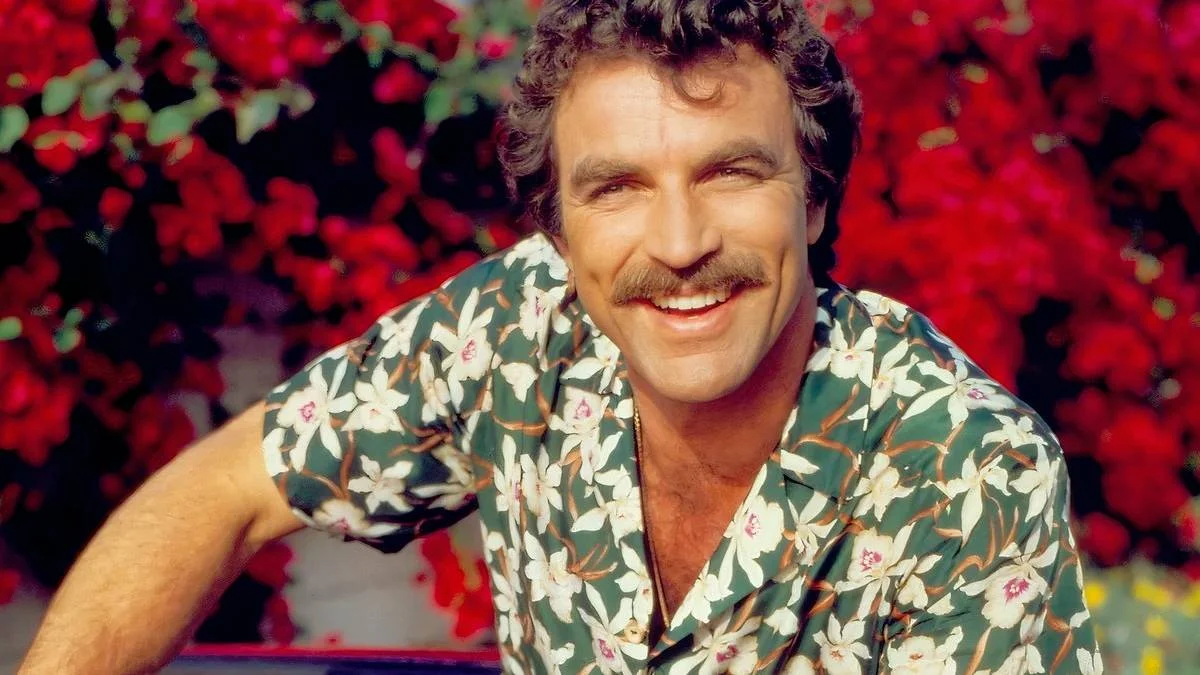
Why Magnum P I Remains a Defining Action Series Decades After Its Premiere
There are worse ways to spend your life than being Thomas Sullivan Magnum.
You live rent-free on a sprawling Hawaiian estate owned by famous novelist Robin Masters, drive his Ferrari whenever you can wrestle the keys away from the perpetually disapproving Jonathan Higgins, and occasionally make some money as a private investigator. When a case requires transportation, you convince your buddy T.C. to fly you around in his helicopter, usually for free. When you are hungry or thirsty, there is always a tab waiting to be expanded at the club managed by your other buddy, Rick.
And when none of that is happening, there is always the beach. Magnum, P.I. was one hell of an escapist fantasy.
It did not hurt that the show was filmed in Hawaii. More than 40 years later, even without the benefit of 4K, Magnum, P.I. still looks absolutely gorgeous. Add Tom Selleck, Hawaiian shirts, and a Detroit Tigers cap, and it is easy to understand why the show’s imagery has endured.
There was also plenty of comedy baked into that fantasy. For all of Selleck’s leading-man charisma, Magnum was frequently the butt of the joke: perpetually broke, regularly outsmarted by Higgins, and forever convinced he could talk his way into anything. Even Magnum seemed to understand the absurdity, occasionally breaking the fourth wall with a perfectly timed glance at the camera.
Over eight seasons, everyone from Frank Sinatra and Carol Burnett to a pre-Cheers Ted Danson and a young Sharon Stone passed through Magnum’s Hawaii. All of which makes Magnum, P.I. sound exactly like the show its pop-culture reputation suggests: a breezy piece of 1980s television about a charming guy with an incredible mustache living a Peter Pan existence in paradise.
It was that show. It was also so much more.
Magnum, P.I. understood male friendship
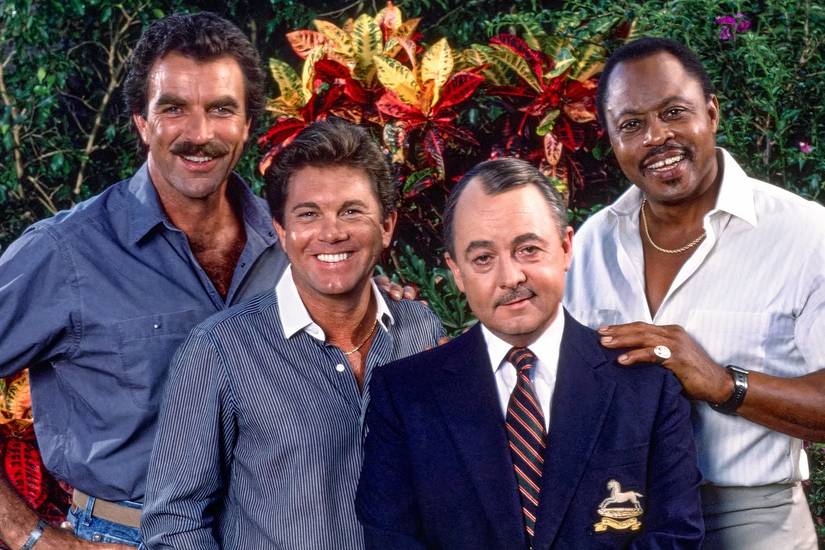
The most important relationships on Magnum, P.I. weren’t romantic ones. They were the friendships between Magnum, Theodore “T.C.” Calvin (Roger E. Mosley), Orville “Rick” Wright (Larry Manetti), and eventually, Higgins (John Hillerman).
Rick and T.C. weren’t simply sidekicks who got roped into Magnum’s latest case. They had served with him in Vietnam, survived together, and remained part of one another’s lives after coming home. That history gave their endless bickering an intimacy that felt earned. Magnum could ask too much of them, and frequently did, but when something truly mattered, they showed up.
Higgins was initially the outsider. A former British Army sergeant major running Robin Masters’ estate, he was perfectly designed to clash with Magnum. Higgins believed in rules, discipline, and order. Their battle remained one of the show’s best sources of comedy, but their relationship didn’t remain static. Irritation gradually gave way to mutual admiration and respect. By the end, Higgins wasn’t simply the guy Magnum was trying to outsmart. He was family.
Selleck, Hillerman, Mosley, and Manetti made those relationships feel genuine, and the show allowed four adult men to deeply care about one another without constantly explaining it. They argued, insulted one another, and drove each other nuts, but their affection was never really in doubt.
Season 4’s “Home From the Sea” exemplifies that bond. When Magnum is stranded alone in the Pacific, Rick, T.C., and Higgins ultimately come together to save him, a reminder that when one of these men is in trouble, the others will be there. That kind of chosen family between men wasn’t exactly common on television in the 1980s. It’s not all that common now.
Magnum, P.I. took veterans seriously
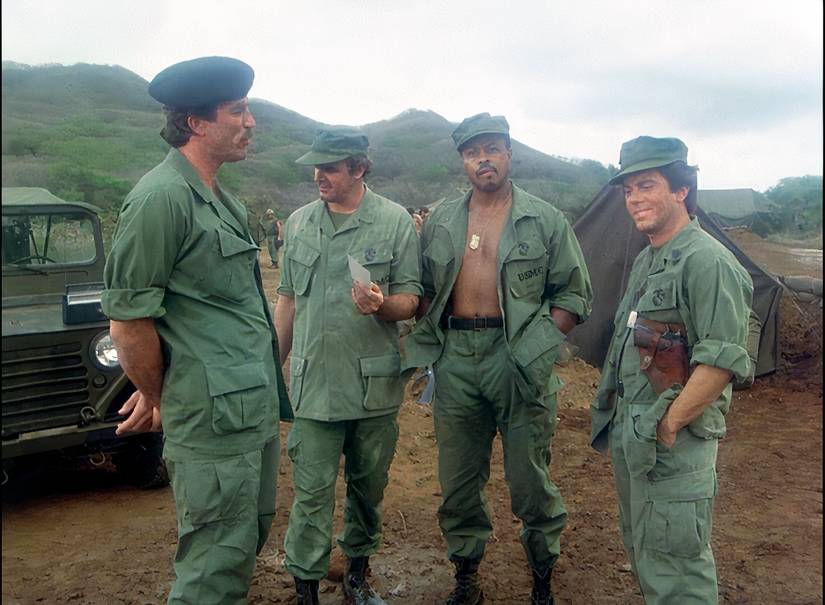
There’s a reason the friendship between Magnum, Rick, and T.C. carried so much weight: They went to war together.
Before arriving at Robin’s Nest, Magnum was a Naval Academy graduate, decorated Vietnam veteran, and Naval Intelligence officer. That history wasn’t simply character trivia. Vietnam followed these men home.
Magnum, P.I. premiered in 1980, when American pop culture was still wrestling with how to talk about the Vietnam War and the people who fought in it. Post-traumatic stress disorder was formally recognized as a diagnosis that same year. Yet Magnum repeatedly explored the psychological scars veterans carried, sometimes with a seriousness that could be startling considering how light the series could be elsewhere.
The Season 3 two-parter “Did You See the Sunrise?” exemplifies both that trauma and the lengths brothers in arms will go for one another. When the Soviet operative who tortured Magnum and T.C. as POWs resurfaces and exploits T.C.’s trauma, Magnum will do just about anything to protect his friend, revealing just how much of Vietnam he’s still carrying with him.
That part of Magnum has always meant something different to me because I originally watched the show with my dad, a two-tour Vietnam veteran. The camaraderie between Thomas, Rick, and T.C. resonated with him. As a kid, I didn’t understand everything the show was saying about veterans or why those relationships might feel familiar to him. Watching it now, it’s impossible for me not to see it.
It also makes Magnum’s Peter Pan existence more interesting. This isn’t a man who never grew up. In many ways, he’d been forced to grow up too quickly. He’d been to war, lost friends, and carried responsibilities heavier than his life in Hawaii would suggest. Suddenly, paradise doesn’t look quite so frivolous.
The Magnum P.I. reboot recreated the fantasy but missed the point
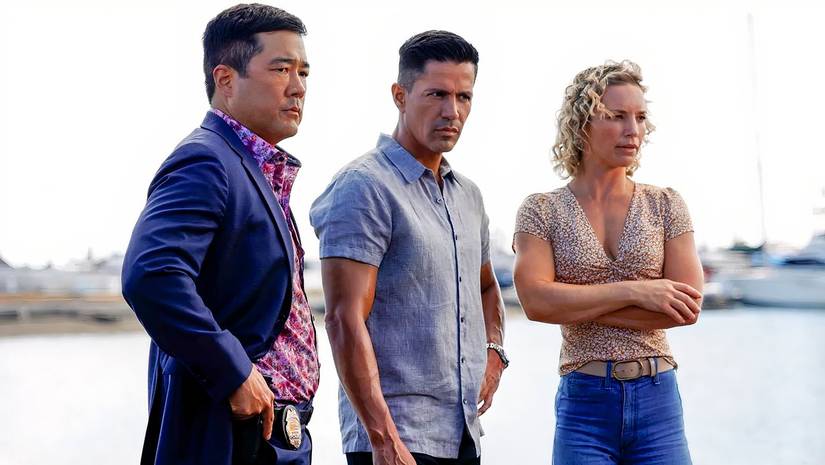
The 2018 CBS reboot had all the recognizable ingredients, from Hawaii to the familiar characters. What it couldn’t replicate was the combination of humor, melancholy, friendship, and gravitas underneath them.
I wasn’t particularly kind to the reboot when I reviewed its premiere for The Colorado Springs Gazette in 2018. Actually, that’s putting it mildly. I gave it an F and wrote, “Magnum P.I. is a derivative, unimaginative mess that’s an insult to its source material.”
The reboot eventually lasted five seasons, so clearly plenty of viewers disagreed with me. Fair enough. But revisiting the original reinforces what bothered me at the time.
The original Magnum, P.I. could be extremely funny and then turn around and hit you with something genuinely painful. More importantly, it allowed its characters and their relationships to evolve. Magnum and Higgins weren’t the same men to each other at the end of eight seasons that they were at the beginning. Neither were Magnum, Rick, and T.C., even if the bonds connecting them went back much further.
Sometimes escapism really is enough, and few television shows have ever made escaping look better. But underneath all that Hawaiian sunshine was a series about veterans trying to build lives after war and four men who gradually became a family.
More than 40 years later, Magnum, P.I. is still an incredibly fun place to escape to. It’s everything waiting beneath the surface that makes it worth staying.
Source: Polygon
Related articles
 Modder Restores Cut Assassin’s Creed Black Flag Resynced Scene Connecting Franchise Games
 Risk of Rain 2 Halloween DLC Enters Steam Top Sellers With Very Positive Reviews
 CDPR Releases The Witcher 3: Wild Hunt Update 5.01
 Ghost of Yotei Runs at 3.4 Frames Per Minute in PC Port
 Modder Adds Co-op and AI Partner to Resident Evil 2 Remake
 The Last of Us and Uncharted 4 Creator Admits Fear of GTA VI Release
 Ben Affleck Recalls Being Harassed by Children in Online Video Games Over Skin Prices
 Modder Recreates Battlefield 2 After 21 Years with Modern System Support