
The obscure 1996 anime behind Magic’s wildest TMNT deep cut is still a masterpiece
The latest Magic: The Gathering expansion centered on the Teenage Mutant Ninja Turtles is packed with deep-cut references, ranging from a two-headed pizza mutant inspired by a discarded toy concept to a card featuring an obscure weather-control device that appeared in only a single episode of the 1987 cartoon. However, the most fascinating addition is a special variant of the Leonardo, Cutting Edge card. It showcases the Turtles’ leader in a transformation seen only in the 1996 direct-to-video anime rarity, Mutant Turtles: Superman Legend.
On the card, the katana-wielding strategist stands resolute, brandishing his blade in one hand while clutching a glowing purple crystal in the other. His combat suit is marked by a prominent “T” emblem, and his mask features upward-sweeping points reminiscent of the X-Men’s Wolverine. This aesthetic might baffle even seasoned shell-heads; to understand its origin, we must look back thirty years to a period when the franchise was navigating its most turbulent era.

By 1996, the global TMNT phenomenon was losing its flavor. Following the disappointing performance of the third live-action film in 1993, sequel plans were scrapped. The creative partnership between co-creators Kevin Eastman and Peter Laird had soured under the pressure of their merchandising empire, and the iconic 1987 animated series was finally limping toward its conclusion after ten seasons.
With toy sales plummeting, Playmates Toys attempted to revitalize the brand through animation, echoing the strategy that launched the original show. They pivoted to the Japanese market, collaborating with Bee Media and Tsuburaya Productions to produce two half-hour OVAs (Original Video Animations). These episodes were designed specifically to market two distinct 1995 toy lines.
The first episode focused on the “Supermutants” line, which provides the inspiration for the Leonardo variant in Magic: The Gathering. In this iteration, the brothers were reimagined as sleek, anime-style superheroes. Their traditional bandanas were replaced by stylized, pointed cowls, and their chests bore a signature “T.” Even their mentor, Splinter, received a more muscular physique, while Shredder and his lackeys were redesigned to look significantly more formidable.

The narrative explains that by utilizing “Mutastones,” the team could evolve from their classic look into “Super Turtles.” While the introductory sequence claims this form lasts only three minutes, the episode itself plays fast and loose with that timeline. The heroes face off against a kaiju-esque “Devil Shredder,” while Bebop and Rocksteady use their own stones to undergo super-mutations. Krang retains his 1987 appearance but instigates the conflict by releasing a malicious fairy known as Dark Mu. She eventually transforms Shredder into the towering “Dark Devil Shredder,” who is ultimately defeated when Donatello cleverley collapses a skyscraper onto him.
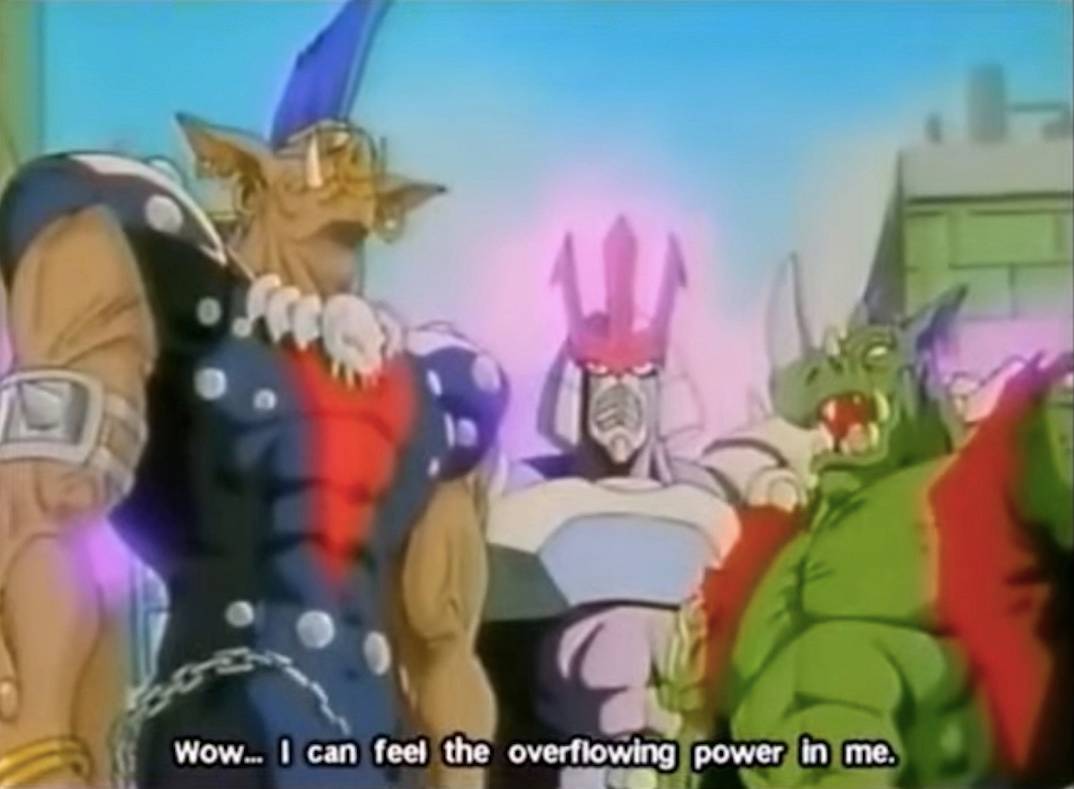
The true threat is Dark Mu, who attempts to incinerate the Earth from space. To counter her, the Turtles combine their powers to become “Saint Mutation,” a singular, winged, pearlescent entity. This fusion can only be sustained for 100 seconds—a limit the show actually respects. They aren’t the only ones doing the heavy lifting, however, as a benevolent fairy named Crys Mu sacrifices her life to ensure the villain’s destruction. These mystical companions are unique to this OVA and its accompanying manga adaptation.

The second episode sees the team traveling to Japan, where they uncover a different set of stones that grant them elaborate metallic armor themed after spirit animals. Leonardo adopts the dragon, Raphael the phoenix, and Donatello the bear, while Michelangelo is somewhat comically relegated to beetle-inspired plate.
The most shocking aspect of the TMNT anime is that, despite its convoluted lore and transparent commercial origins, it’s genuinely entertaining. Much of the Turtles’ “weird” history—like the infamous We Wish You a Turtle Christmas—is loved only for its staggering incompetence. I went into these episodes expecting a disaster, but I found myself impressed by the creativity on display.
The character designs are striking, successfully blending the TMNT identity with a 90s anime aesthetic. The animation, while budget-conscious, is expressive and dynamic, often feeling more fluid than the later seasons of the original American series.
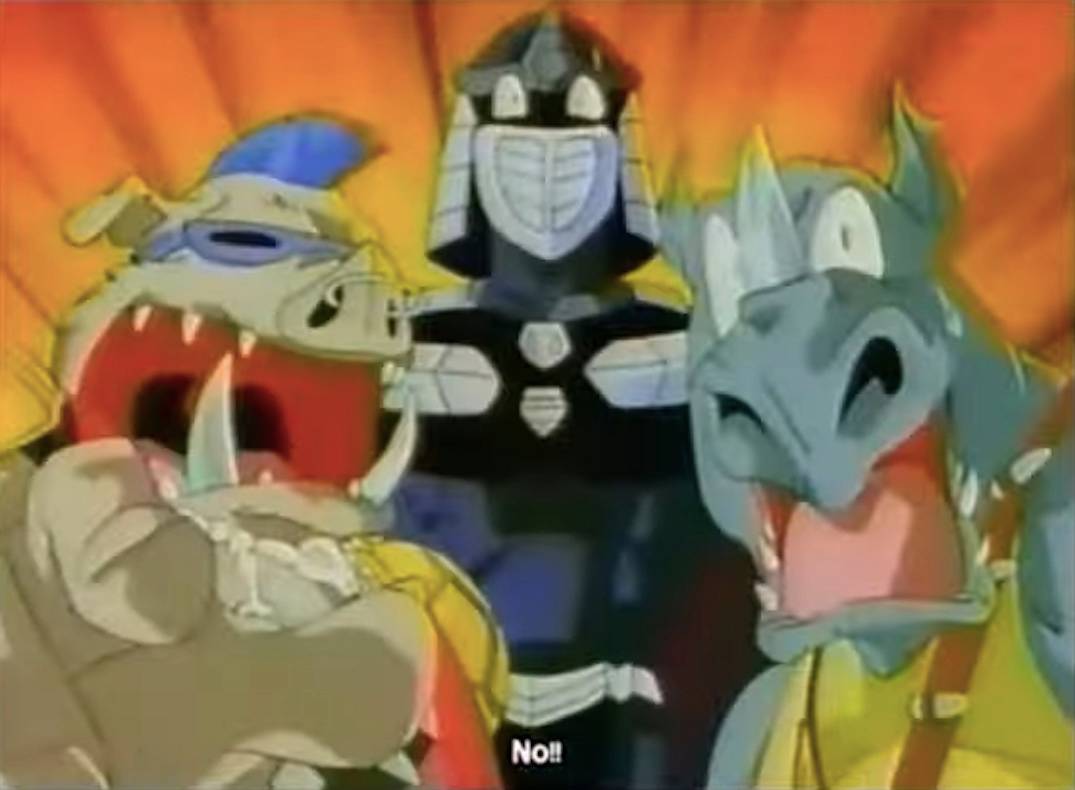
The journey to Japan also provides a rare moment of introspection for Splinter as he reconnects with his ancestral ninja roots. Interestingly, online fansubs of these episodes feature surprisingly abrasive language. Seeing Shredder call Donatello a “bastard” or hearing the Turtles drop the occasional “damn” adds an unintended layer of grit to the experience.
Despite the foul-mouthed heroes and the presence of cosmic fairies, Mutant Turtles: Superman Legend is far from the franchise’s low point. You only need to witness Leonardo singing carols in a baffling Rastafarian accent in the Christmas special to know how much worse things could get. If Magic: The Gathering ever tries to turn that into a card, we’ll know they’ve truly run out of ideas.
Source: Polygon
Related articles
 FromSoftware Releases Elden Ring Update With Security Improvements and Bug Fixes
 The Blood of Dawnwalker Developers Repeated a Gothic 3 Mistake, but Problem Mobs Will Soon Be Nerfed
 EA Closing Legendary RPG Developer BioWare as Part of Fresh Layoffs
 Dark Souls II Dataminer Finds Large Coliseum and Underground Level With Tower
 Final Fantasy VII Revelation Will Let Players Select Hard Mode From the Start, Director Naoki Hamaguchi Says
 BeamNG.drive: Hotfixes for v0.40 Released
 Phantom Blade Zero Developers Aren’t Afraid of Critics, Reviews Will Appear Before Release
 Groom Moved to Tears at His Wedding Over RTX 5090 Gift