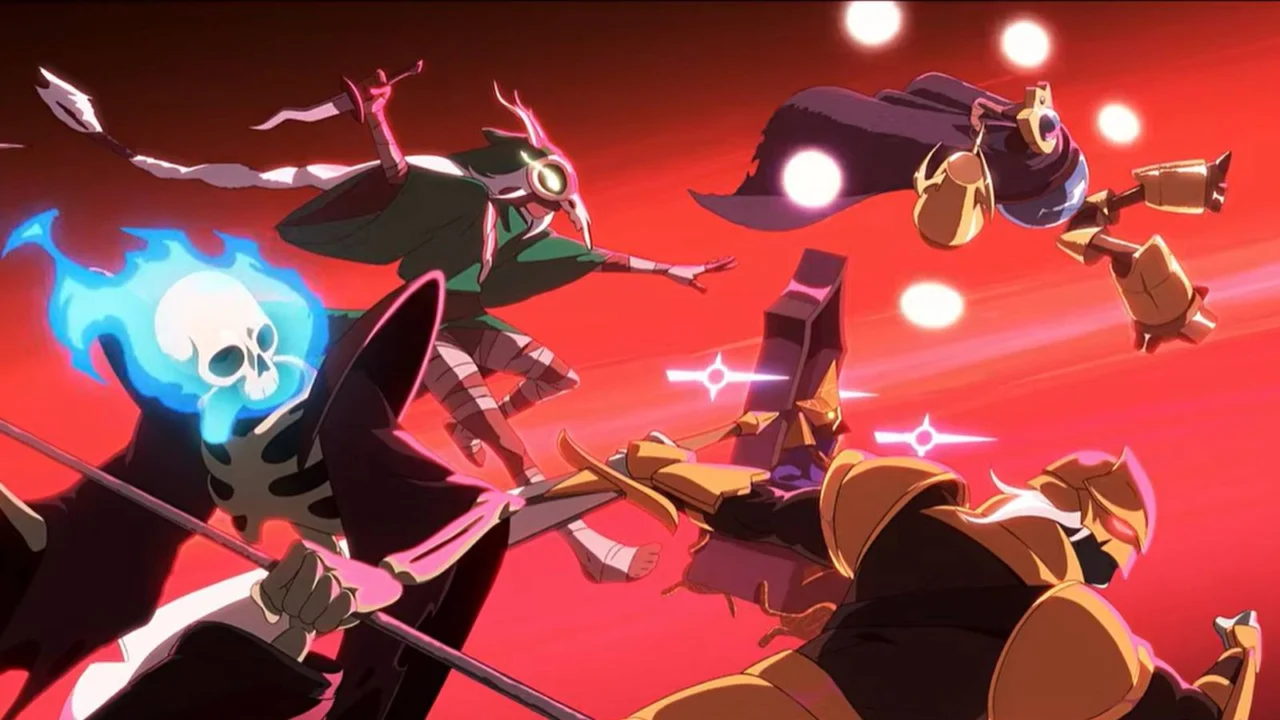
Stop Dismissing Slay the Spire 2 as DLC: It’s a True Sequel in Every Way
I harbored a desperate hope that Slay the Spire 2 would excel. By “excel,” I specifically meant it needed to mirror the original’s brilliance while introducing just enough novelty to convince my peers that my gaming habits weren’t merely a symptom of a chronic, single-track obsession. I wanted a reason to descend back into the spire without admitting I never truly left.
The good news is that Slay the Spire 2 is exceptional. The bad news? No one is going to believe I’ve moved on to anything else. If some critics find themselves frustrated by the lack of a radical, genre-shattering departure from the first game’s DNA, their grievances are understandable. However, for those of us who found perfection in the original, this continuity is a blessing.
Like the tens of thousands of Steam reviewers who bestowed “overwhelmingly positive” accolades upon its predecessor, I was once consumed by Mega Crit’s 2019 masterpiece. I spent countless hours calculating damage outputs, navigating treacherous paths, and tailoring builds only to have my aspirations crushed by the Corrupt Heart. Eventually, I stepped away to “touch grass”—which is really just code for falling down the Balatro rabbit hole.
When Mega Crit announced a direct sequel—and later revealed they were rebuilding the entire project in Godot after being caught in the crossfire of Unity’s pricing scandals—my excitement was tempered by curiosity. How do you iterate on a formula that already feels complete? The solution, it seems, is a meticulous expansion in every conceivable direction. The Early Access version, which arrived on March 5, brings back the iconic Ironclad, Silent, and Defect, while introducing two fascinating newcomers: The Regent, who manages a unique secondary resource, and the Necrobinder, who commands a spectral skeletal hand in battle. The core loop remains as intoxicating as ever: charting a course through elite monsters, rest sites, and merchant stalls, all while meticulously sculpting a deck that can withstand the spire’s most grotesque denizens.

Playing Slay the Spire 2 feels remarkably satisfying, like returning to a familiar home that has been tastefully renovated. Between the fresh relics, new card types, and “Ancients” that provide pre-act boons, Mega Crit has opted to refine and subvert existing mechanics rather than discard them. Legacy cards feel revitalized through new energy-management systems and keywords like “Sly,” which triggers abilities upon being discarded, adding a new layer of tactical depth to deck manipulation.
My initial seventeen hours have been dominated by the Necrobinder. Using the skeletal companion, Ostry, as both a frontline defender and an offensive tool while weaving in “Doom” cards to erode enemy health has been an absolute highlight. Yet, I’ve also found myself returning to The Silent, discovering that my old reliable poison strategies require significant recalibration against the sequel’s more varied enemy pool. While veterans may breeze through the early tiers—I secured a victory on my first run with The Defect by experimenting with the new Glass orbs—the game’s classic “bad draw” moments eventually humble everyone.
Mega Crit’s “evolution over revolution” philosophy mirrors the design ethos seen in titles like Silksong: the idea that even a near-perfect experience can be elevated through nuance and careful iteration. Some online commentators have reductively labeled it as “glorified DLC,” but that ignores the transformative impact of the underlying changes. Even the new cooperative mode—inspired by the recent board game adaptation—feels like a substantial addition. There is a profound reason Mega Crit chose a full sequel over an expansion, and it extends far beyond financial incentives.

Visually, Slay the Spire 2 is a revelation. It doesn’t lean into the sterile “AAA” aesthetic, but the jump to a new engine has allowed Mega Crit to essentially remaster their own vision. The art is more vibrant, the animations are significantly more fluid, and the world feels steeped in a richer narrative. There is a tangible sense of progression tracked via a new timeline, adding stakes to each hero’s ascent. Even in its current Early Access state, the game feels nearly complete; the only real tell-tale signs of its unfinished nature are the charmingly crude MS Paint drawings standing in for missing key art. It’s a glimpse into the creative process that only makes me more eager for the final release.
Whether Slay the Spire 2 will eventually render the original obsolete remains to be seen. Regardless, the first game stands as a protected legacy, while this sequel establishes a new gold standard for the genre. By combining the polish of a remaster with the depth of an expansion and the novelty of a sequel, Mega Crit has created something irresistible. I’m back in the Spire’s clutches, and frankly, I don’t want to leave. See you in half a decade.
Source: Polygon
Related articles
 Dan Houser Says His GTA: Vice City Writing Was “Awful,” Credits Ray Liotta With Making It Sound Good
 Call of Duty: Modern Warfare 4 Campaign Gets a Surprisingly Positive Early Response
 PlayStation 6 Memory Cost Reportedly Already Exceeds PS5 Console Price, Insider Claims
 Fake GTA VI Disc Editions Appear as Chinese Sellers Notice Demand for Full Physical Versions
 Steam Beta Update Speeds Up Startup Again, Fixes Vulkan Game Hangs on Linux and NCAA Football 27 Input Bug
 Demon’s Souls Runs at 60 FPS on PC in KyTyPS5 Emulator Tests, While God of War Ragnarok Still Blinds Players
 Game of Thrones Prequel The Mad King Set to Return in 2027
 Digital Foundry Analyzes GTA VI Trailer as Rockstar Appears to Fix 18-Year-Old Engine Graphics Bug