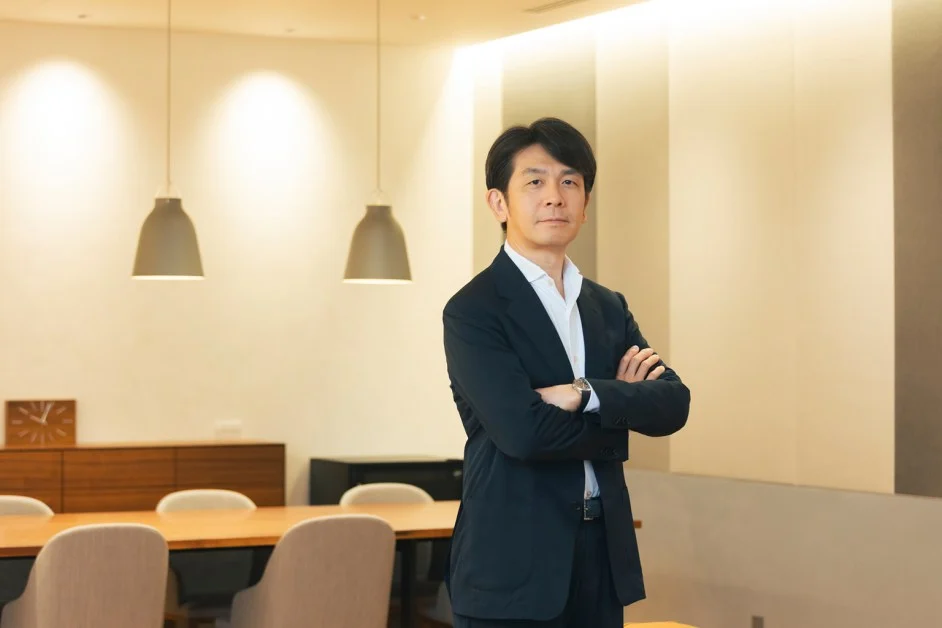
Sony Music Japan President Atsuhiro Iwakami Discusses Bringing Domestic Entertainment to a Global Audience
Atsuhiro Iwakami Shota Tsutsuura
Sony Music Entertainment (Japan) President and Representative Director Atsuhiro Iwakami discussed the strategy required for Japanese content to achieve international success, drawing on his career in anime and game production that began in 1997.
Aniplex predecessor SPE Visual Works entered the anime sector in 1997, aiming to prioritize music within anime and link the two mediums. The company changed its name to Aniplex in 2003. The TV anime Rurouni Kenshin, spearheaded by first president Ryuzo Shirakawa, and its theme song “Sobakasu” by JUDY AND MARY, exemplify that initial achievement. Iwakami has since collaborated with artists across titles such as Kimetsu no Yaiba, Bakemonogatari, and Sword Art Online.
Iwakami assumed the role of Aniplex president in 2016 and became an executive officer of Sony Music Entertainment (Japan) in 2019, maintaining regular contact with executives including Sony Music Labels president Manabu Tsujino and Sony Music Solutions president Hidehiko Otani. Aniplex manages the visual and character domain alongside live-action production, while Sony Creative Products oversees the PEANUTS licensing business. Sony Music Solutions handles manufacturing, distribution, live events, fan clubs, and Zepp venues.
The group collaborates daily with Sony Music Entertainment in the US, and The Orchard (US) launched its Japan operation as an in-house venture of Sony Music Entertainment (Japan) in partnership with The Orchard (US). For Kimetsu no Yaiba, Aniplex worked alongside Sony Pictures Entertainment and Crunchyroll to manage worldwide distribution.
The Ministry of Economy, Trade and Industry established a target to expand the overseas content market to 20 trillion yen by 2033, prompting industry discussions regarding the contribution of music. Iwakami noted that two core responsibilities involve creating quality content and distributing it globally through live performances, social media, and online marketing via public-private and industry collaboration.
Regarding streaming hits, Iwakami noted that contemporary consumers have less time and attention due to vast quantities of entertainment and smartphone information, making it more challenging to convert single-song listeners into long-term fans compared to past decades.
Regional strategies depend entirely on the specific artist, song, or work rather than prioritizing one market. While East Asia shares cultural values, Western markets often embrace Japanese content from a different cultural perspective, alongside organic phenomena like the popularity of city pop.
The second edition of MUSIC AWARDS JAPAN recently took place. Iwakami attended the 98th Academy Awards, where Kokuho received a nomination for Best Makeup and Hairstyling.
Japan’s domestic population of over 120 million has historically allowed artists to sustain viable careers domestically without immediate global ambitions. However, declining population figures and international success stories from acts such as YOASOBI, King Gnu, and Masayoshi Takanaka—who recently performed a live set in London—are gradually shifting industry mindsets toward international expansion step by step.
–This interview by Naoko Takashima first appeared on Billboard Japan
Source: Billboard
Related articles
 Carly Rae Jepsen Hints She Named Her Baby After a Heated Rivalry Character and Wants to Pen Song for Season 2
 Shuta Shinoda Discusses Turning Japanese Stereotypes Into an Advantage in London in Unbound Japan Interview
 Justin Timberlake Marks 20th Anniversary of FutureSex/LoveSounds
 Former AGT Contestant DeShundre Vinson Facing First-Degree Murder Charge in Nephew’s Death
 John Legend Announces Pharrell-Produced Album Muse Led by New Song Daylight
 BLACKPINK’s JISOO to star as four different cinematic characters in conceptual fashion campaign
 Ginger and Baby Spice Reveal Secret Former Spice Girl in Coffee Brand Ad
 Fans Choose JISOO’s ‘Click’ as This Week’s Favorite New Music