Silent Hill: Townfall Review: Genuinely Terrifying Before Turning Terribly Dull
What truly constitutes the essence of the Silent Hill franchise? Is it the deceptively quiet, mist-shrouded municipality where unspeakable terrors linger just beyond perception? Is it the gritty survival mechanics combined with cryptic riddles? Or is it the haunting wail of an air raid siren paired with Pyramid Head dragging his blood-soaked blade across the pavement?
At its core, the most definitive answer is that these psychological horror journeys are deliberately crafted to tackle profound themes: unpardonable transgressions, traumatic childhoods, and systemic misogyny. Unlike many of its contemporaries, Silent Hill has perpetually distinguished itself through heavy undertones and intricate symbolism, ensuring every adversary harbors a dual purpose.
The newest installment, Silent Hill: Townfall, ticks all these expected boxes. Its setting—a moody Scottish coastal hamlet—is rendered with such palpable authenticity that you can practically taste the sea spray. Its monstrous inhabitants serve as clever metaphors designed to inflict deeper psychological scars. And, naturally, an atmospheric fog rolls in off the open water to shroud deeply troubling acts.
Nevertheless, Townfall occasionally stumbles over another vital pillar of the franchise: its evocative presentation. At their absolute finest, these titles leverage surreal aesthetics to plunge players into self-manifested underworlds of corroded iron and visceral flesh. Initially, the Otherworld presents itself as a disjointed, feverish delusion; yet, by peeling back its layers, players unearth stark truths like raw tissue beneath a scab. The omnipresent mist isn’t merely a technical trick to obscure foes and elevate tension—it actively conceals the bigger picture. Truly exceptional Silent Hill experiences unfold like masterfully constructed detective mysteries.
While Silent Hill: Townfall introduces ambitious concepts, its execution frequently lacks impact. It misses much of the enigmatic atmosphere that historically defined the series—those inexplicable moments that defy pure logic, such as caged tormented bodies, disembodied shrieks echoing in the dark, or the industrial dissonance of Akira Yamaoka’s legendary compositions. In Townfall, piecing together macabre occurrences feels less like acting as a driven occult investigator fueled by morbid curiosity, and more like passively reading instructions spelled out in plain text. Whether due to uninspired stealth mechanics or overly transparent metaphors, the horror elements occasionally feel far too heavy-handed.
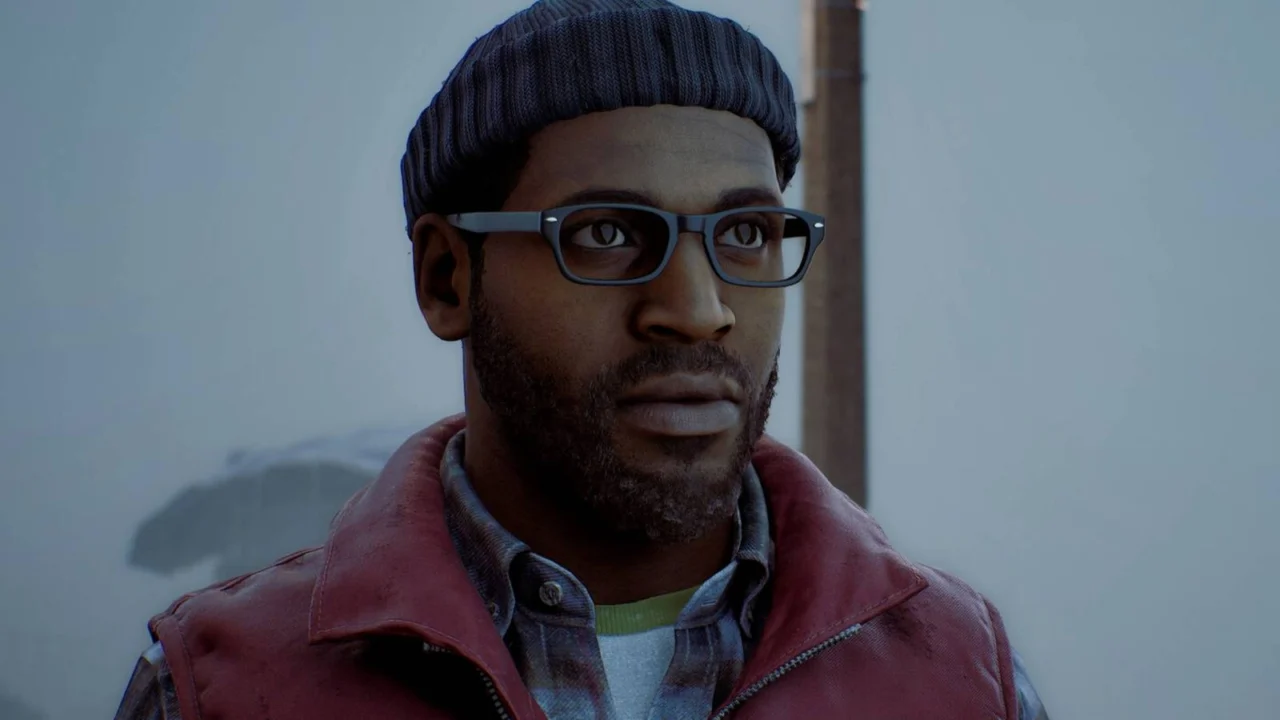
The narrative commences as protagonist Simon Ordell hauls himself out of the icy waters of St. Amelia’s harbor. Disoriented and groggy, an intravenous line remains trailing from his arm, tethered to an anomalous dark fluid. Wandering into the town square, Simon stumbles upon a freshly erected monument commemorating an ambiguous tragedy. “A CRIME ON OUR COMMUNITY,” proclaims a nearby placard. When a disembodied voice establishes contact through a portable CRT device, Simon embarks on a quest to locate an individual named Richard, who promises absolute clarity.
A familiar trip into hell
Regarding how players uncover these hidden truths, Townfall adopts a progression framework closely mirroring previous franchise entries. You explore compact yet moderately open sectors of St. Amelia, hunting down keys, access codes, and specialized instruments necessary to venture further. Generally speaking, the vast majority of conundrums are robustly engineered, demanding genuine critical thinking alongside a trusty notepad. While a few late-game trials lean frustratingly toward the obscure—such as a particularly punishing pictogram challenge—this approach is vastly preferable to holding the player’s hand via modern interface markers and neon paint splatters. This structural familiarity aside, Townfall introduces one monumental shift: it marks the franchise’s inaugural foray into a first-person perspective.
Developer Screen Burn Interactive capitalizes brilliantly on this viewpoint, immersing the player with an unsettling intimacy that forces them to confront St. Amelia’s nightmares at point-blank range. The municipality exudes immense character, ranging from distinct regional architecture to discarded flyers that anchor the setting in a specific time and era. Furthermore, the crisp audio design instills genuine paranoia over the sound of your own footsteps, while Pilotpriest’s unnerving score sustains a continuous undercurrent of dread. And then, naturally, the abominations emerge.
Showing too much of the monster
As evidenced by the IV line making him look fresh out of a hospital ward, Simon is remarkably frail. Especially during early sections, detection by a grotesque entity practically spells certain doom. Consequently, stealth becomes a survival necessity for a large portion of the journey. While players can utilize glass bottles as distractions, wooden boards for defensive countermeasures, and the occasional scarce bullet, these resources diminish at an alarming rate.
Initially, crossing paths with these prowling fiends delivers dynamic terror, prompting you to peer nervously around corners while using Simon’s portable CRT monitor to track their twitching silhouettes through solid structures. These creatures display terrifying speed and persistence, hunting you across alleys and into abandoned buildings. During one harrowing chase, I bolted into an empty residence, barely managing to seal myself inside a wardrobe before the beast kicked down the entryway and systematically cleared the rooms one by one. Regrettably, this initial enchantment fades over time, as repeated encounters with predictable horrors dilute the overall suspense.
Eventually, the mechanics reveal themselves as you are compelled to memorize predictable adversary patrol routes, much like maneuvering around unobservant guards in a tactical stealth game. What starts as terrifying slowly transitions into a mechanical chore, turning down-right tedious as you wait for sluggish adversaries to clear pathways. While memorable frights exist and individual introductions to fresh monstrosities consistently shock, the experience eventually settles into a routine cadence. Matters worsen when specific segments inject an unpredictable, relentless pursuer immune to rules, triggering severe exasperation as this immortal entity slaughters Simon with a single blow. Horror entertainment routinely evokes powerful feelings, yet few titles have generated this specific brand of frustration.
Finding answers in the fog
Fortunately, the broader atmosphere and narrative of Silent Hill: Townfall fare significantly better than its interactive segments. The plot confronts compelling subject matter, probing corporate corruption and remnants of imperialist exploitation as an industrial conglomerate displaces local identity. The scenic horizon warps grotesquely, with metallic conduits stretching toward a crimson firmament. Subconscious echoes of systemic crises manifest through overworked nursing staff and bureaucratic apathy toward widespread suffering. This oppressive pressure peaks when Simon is abruptly sucked into St. Amelia’s unique interpretation of the Otherworld, composed entirely of brutalist concrete slabs and frigid steel.
While Townfall proves vastly smarter and more cohesive than several lackluster entries released during the barren years following Team Silent’s dissolution, it occasionally leans overly rational, bordering on academic. The overarching messages are broadcasted with zero subtlety. At one stage, a resident scapegoated for industrial casualties literally does battle with physical adversaries designated as “Widows.” Conversely, while entities like the Nurses and Lying Figures from Silent Hill 2 have been analyzed extensively, they invite countless open-ended interpretations—a quality that extends even to Pyramid Head.
Contrasted with the recent Silent Hill f, which conveyed its poignant messages through subtle visual cues and botanical motifs pointing toward metaphorical demise, you never need to exert much mental effort to decipher Townfall’s underlying thesis; it practically resides in the title.
Although the narrative features a handful of satisfying plot twists, genuine astonishment remains rare—whether concerning the true nature of these ambiguous horrors or the mechanical progression of events. While exploring the remaining four conclusions I missed (out of five total options) might have injected extra narrative resonance, the finale I experienced offered adequate closure, leaving me disinclined to hunt down alternative outcomes.
Ultimately, Silent Hill: Townfall remains a fascinating anomaly. On one hand, Screen Burn Interactive and director Jon McKellan clearly grasp the fundamentals that make the property compelling, wisely steering clear of recycling legacy villains purely for cheap nostalgia. It stands as a competent horror experience that, at its peak, manufactures authentic suspense through grounded perspectives and wonderfully realized environments.
Yet, by laying its thematic cards completely face up, Silent Hill: Townfall misses out on the mounting, suffocating dread found in masterpieces like Silent Hill 2, where shattering realizations struck with the force of an iron bar against bone. Townfall comprehends the lineage of this universe, yet struggles to fully express that understanding through the surreal, grotesque dialect of personal purgatories, fleshy monstrosities, and rusted machinery. Perhaps benchmarking this title against towering pillars of horror history is unfair, but that remains the inescapable burden carried by anything bearing the Silent Hill moniker.
Silent Hill: Townfall launches Sept. 24 for PlayStation and Windows PC. The game was reviewed on PlayStation 5 utilizing an early access code supplied by Konami. Additional details regarding Polygon’s editorial ethics guidelines can be located here.
And why technical limitations pave the way for superior scares
Source: Polygon
Related articles
 CD Projekt Red Shows New Skill Tree for The Witcher 3 with Increased Player Freedom
 Samson Graphics Impress on Consoles with 60 FPS on Xbox Series X
 Remedy to Showcase Advanced Graphics in Control Resonant on PS5 Pro
 Over 85 Percent of Japanese Game Developers Use Generative AI
 Marathon Director Calls Rumor of Destiny Merger Fake
 Why Crimson Desert Does Not Use Unreal Engine 5
 Polygon Explains Carol Ferris Character in Upcoming Lanterns Series
 Jim Caviezel to Star in New Action-Thriller Ghost Soldier