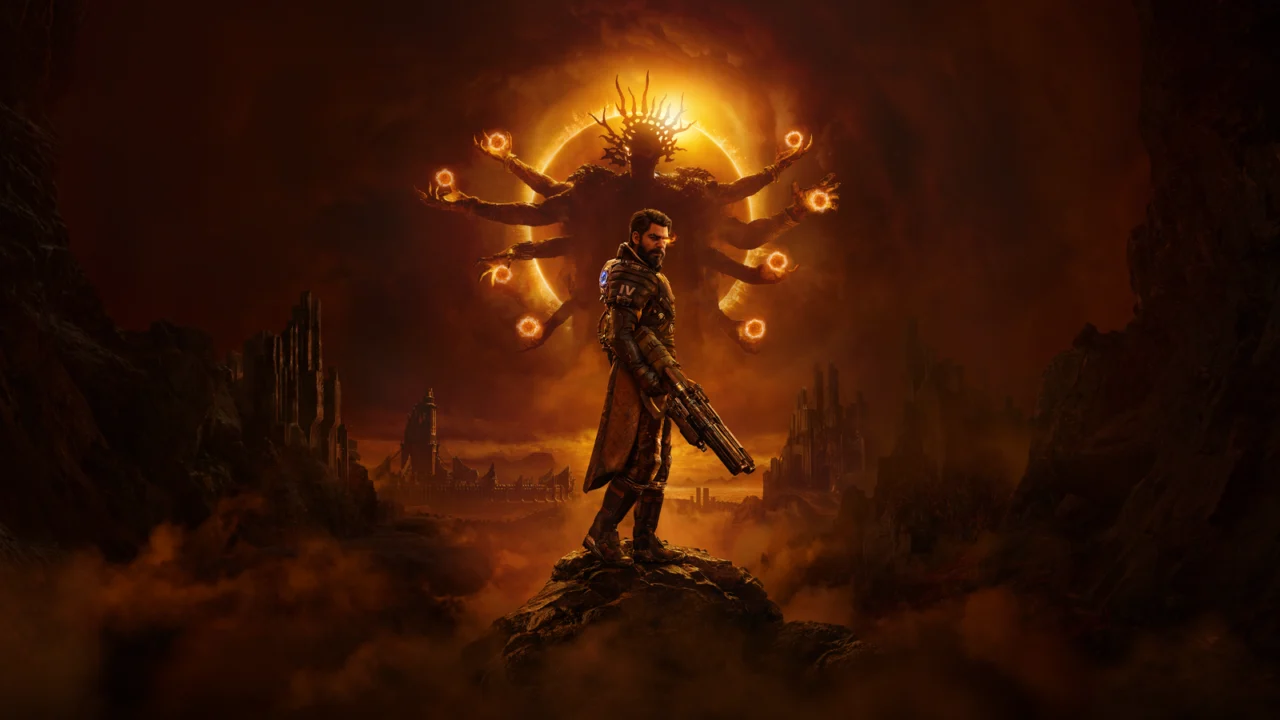
Saros Overcorrects Difficulty on Near-Perfect PS5 Hit
Arjun Devraj is locked in a struggle that defies brute strength. As the beleaguered protagonist of Saros—the latest science-fiction shooter from Returnal creator Housemarque—he finds himself trapped in a harrowing, cyclical nightmare. On a planet where psychological decay sets in faster than physical injury, Devraj faces hordes of hostile creatures and rogue machines. Failure isn’t just possible; it is an absolute certainty, as relentless as the laws of physics. The true test lies in what he carries forward when he inevitably rises from the wreckage.
This oscillation between defeat and rebirth is the heartbeat of the roguelike genre, though Saros occasionally struggles to capture the magic of that format. At its best, the roguelike experience empowers players through steady improvement and lessons learned from past mistakes—a deeply human endeavor. While this theme mirrors Devraj’s own internal struggle, Saros prioritizes numerical progression over genuine mastery, often reducing an intimate, character-driven journey into a sterile numbers game.
The setting, a desolate world named Carcosa, is ravaged by eclipses that induce madness. The plot follows Soltari, a massive corporation seeking to strip-mine the planet for a rare resource called Lucenite. When their expedition vanishes, a rescue team—including Devraj, voiced with gravitas by Rahul Kohli—is dispatched to investigate. What begins as a search-and-rescue mission rapidly descends into a desperate fight for survival against a landscape teeming with nightmare entities.
While Saros is a distinct intellectual property, it feels like a spiritual companion to Returnal, trading that game’s cool blues for a scorching, sun-bleached palette. Housemarque refines its formula here: it remains a high-octane, third-person ballet where players weave through complex patterns of projectiles. The meta-narrative remains deeply personal, using sci-fi tropes as a veneer for the protagonist’s internal trauma. Much like its predecessor, the gameplay emphasizes adaptation, with every run requiring you to optimize your loadout and refine your strategy.
This iteration, however, is a double-edged sword. Narratively, the game occasionally feels like a standard sci-fi drama that struggles to find its own voice. Kohli provides a stellar performance, effectively conveying Devraj’s bottled-up rage and anxiety, but the supporting cast feels largely disposable, making downtime at base camp feel hollow.
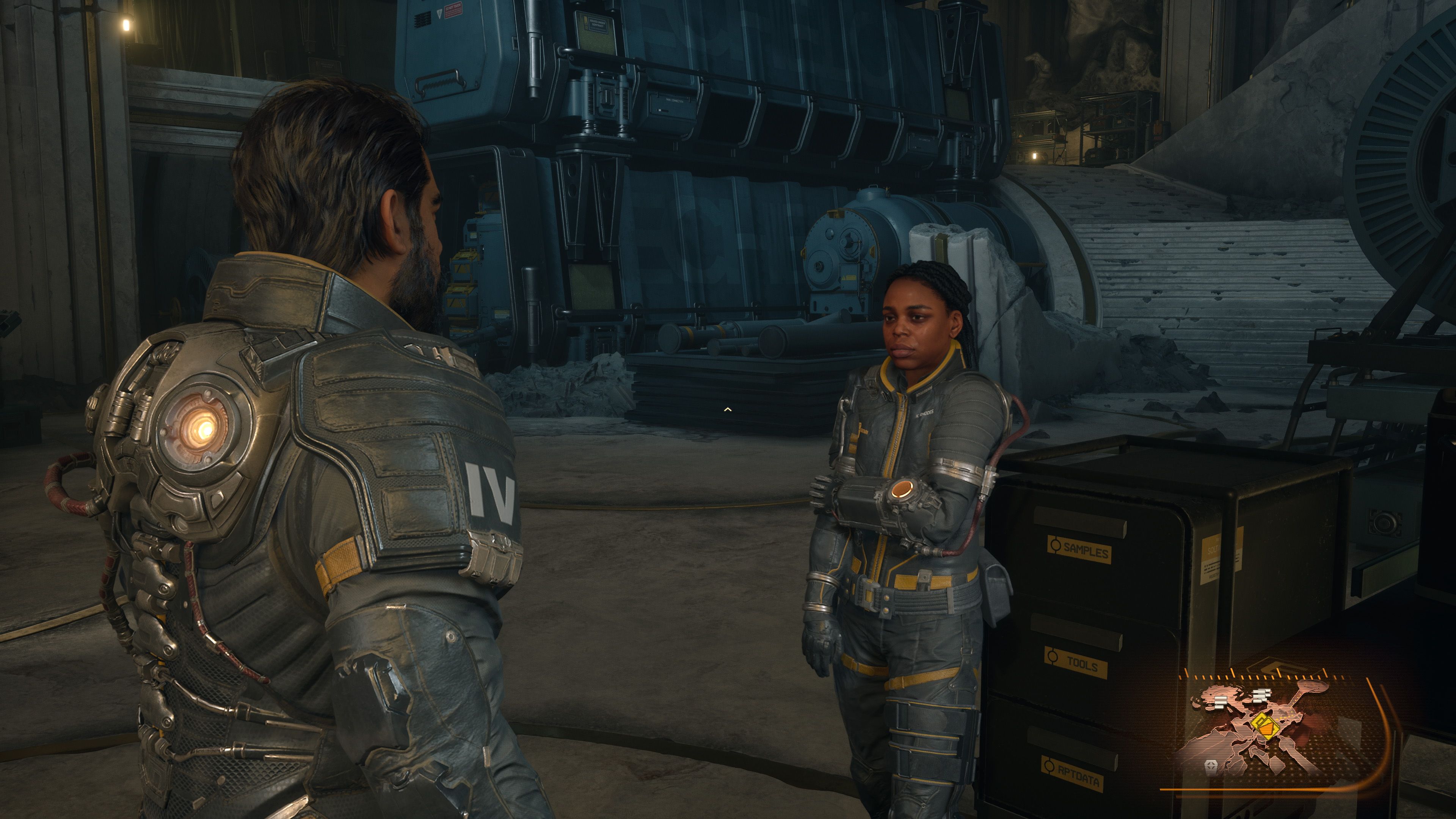 Image: Housemarque/Sony Interactive Entertainment
Structure-wise, Saros misses the mark set by Returnal. While Returnal used its loop to mirror a literal cycle of trauma, Saros leans on Hindu concepts of saṃsāra to justify its mechanics, which feels less organic to the plot. Because the metaphorical weight doesn’t land until the final acts, the game leans too heavily on generic sci-fi beats during the middle chapters.
Where the game shines is in its mechanical polish. Housemarque remains a master of tactile, high-intensity action. The weapon variety is excellent, and the implementation of the DualSense controller is peerless. From the tension in the adaptive triggers to the nuanced haptic feedback that makes every impact felt, the game is a masterclass in hardware utilization—a true showcase for the PlayStation 5’s capabilities.
Visually, the game is a triumph. The particle effects are staggering, and the world design manages to make a desolate, sun-scorched planet feel vibrant and hostile. Every combat encounter is a gorgeous, high-stakes fireworks display that highlights the studio’s arcade-centric DNA.
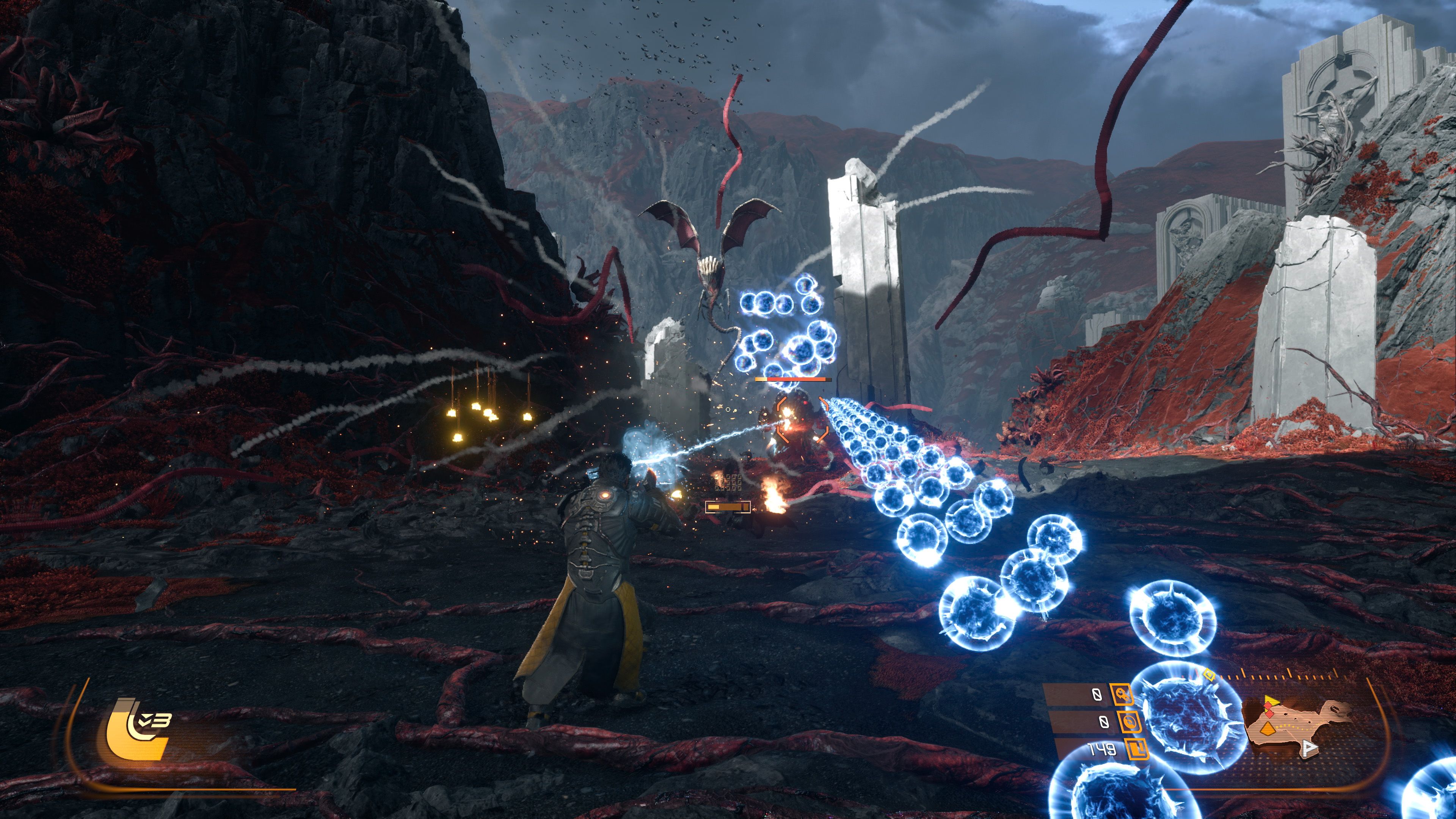 Image: Housemarque/Sony Interactive Entertainment
The combat flow is rhythmic, blending aggressive shooting with defensive maneuvers. However, the game occasionally introduces too many crutches. Between shield-based absorption, parries, and melee counters, the combat becomes heavily telegraphed. Every shootout begins to feel like a simplified game of “Simon Says,” where color-coded hazards dictate your defensive strategy.
Survival in Saros isn’t about mastering enemy patterns or perfecting movement; it is about grinding for enough upgrades to brute-force your way through.
Housemarque seems to have overcorrected for the intense difficulty of Returnal. The introduction of a massive meta-progression skill tree means that death is rarely a setback. You spend Lucenite to permanently boost your stats, meaning that with enough “runs,” you can effectively out-level any boss. The roguelike spirit is further diluted by a lack of truly synergistic items, leading to a gameplay loop where you simply chase the highest damage numbers rather than experimenting with complex builds.
The “Carcosan Modifiers” system—intended to offer a balance of risk and reward—is similarly imbalanced. By taking on negligible downsides, you can easily stack powerful buffs that render you nearly invincible by the game’s conclusion. While this creates a power fantasy that allows you to appreciate the game’s visual spectacle, it strips away the tension that defines the genre.
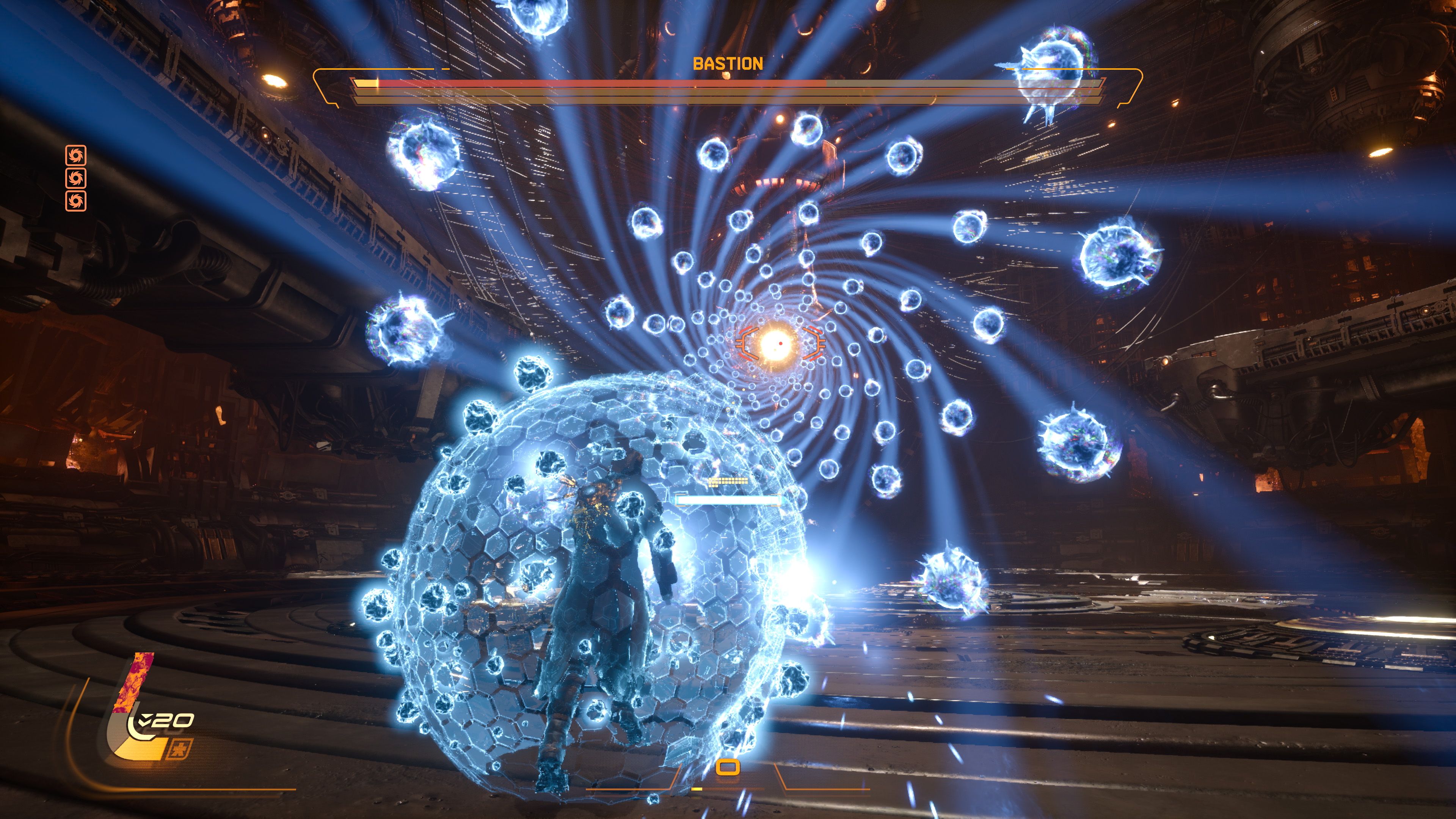 Image: Housemarque/Sony Interactive Entertainment
Ultimately, Saros is a visually stunning, mechanically tight shooter that excels as a spectacle but falters as a roguelike. While the temptation to “power up” is understandable, it unfortunately leaves the narrative and the character arc of Devraj feeling hollow. By the time the credits rolled, I wasn’t a survivor who had overcome the odds through grit and wisdom; I was a god-like figure who had simply out-stat-ed the challenge. It’s a beautifully crafted experience, but one that perhaps lacks the courage to let its player struggle.
Saros launches April 30 on PlayStation 5. The game was reviewed on a PlayStation 5 Pro with a code provided by the publisher.
Related
Is Saros quietly a reference to this 19th-century book?
The King in Yellow lurks within the shadows of Carcosa.
Source: Polygon
Related articles
 Sony Patents System Allowing Viewers to Control Games During Streams
 EU Investigates Ubisoft and Activision Over Video Game Microtransactions
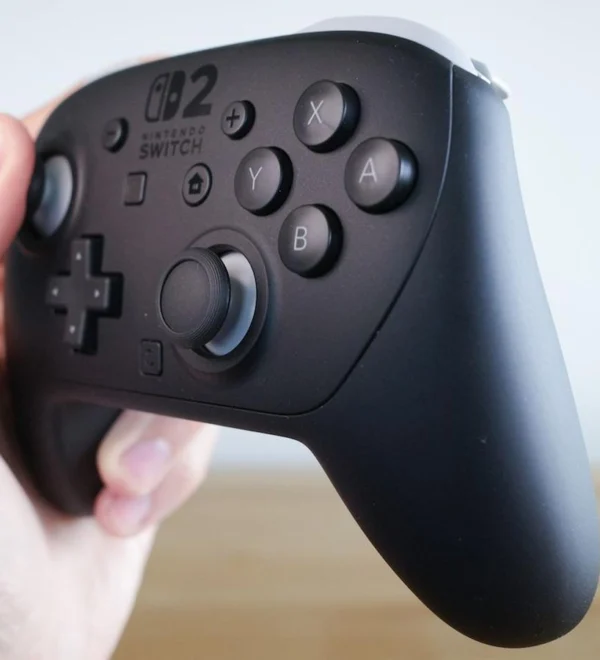 Rumor: Switch 2 May Feature Replaceable Batteries Outside Europe
 Trump Administration Criticizes Xbox After Mass Layoffs and Tightens Rules for Foreigners
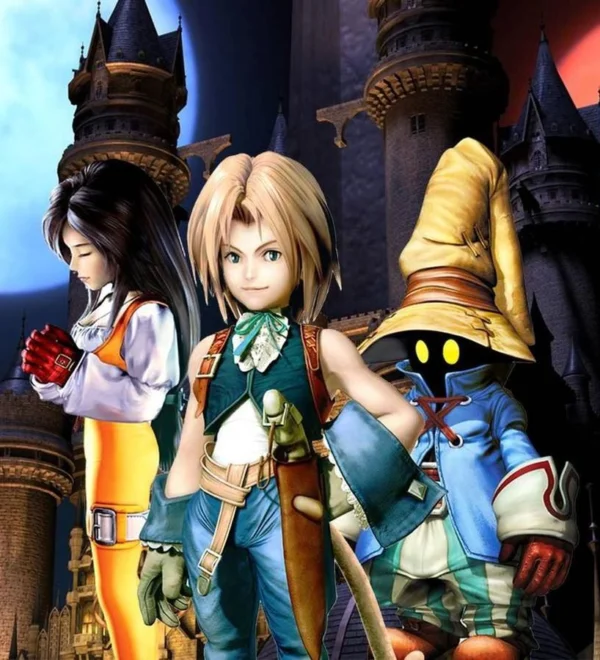 Final Fantasy IX: Reclusion Announced as Non-Video Game Project
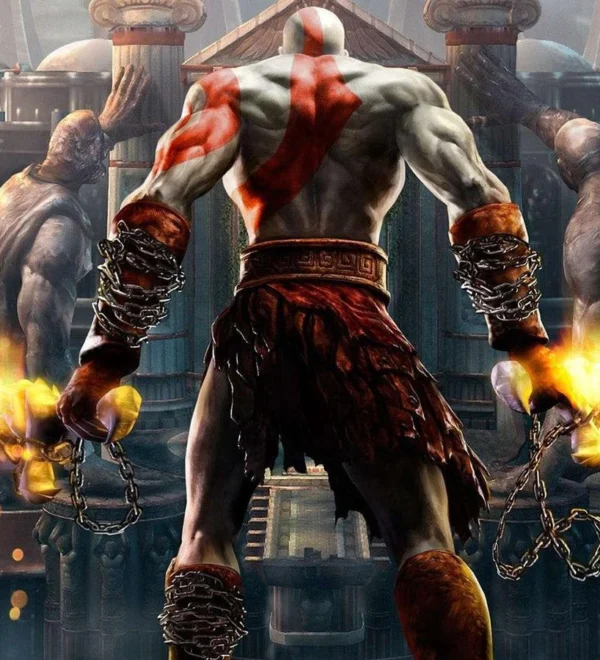 Sony Removes God of War III Remastered from Store Following Error
 Stephen King to Release Final Book in The Talisman Trilogy
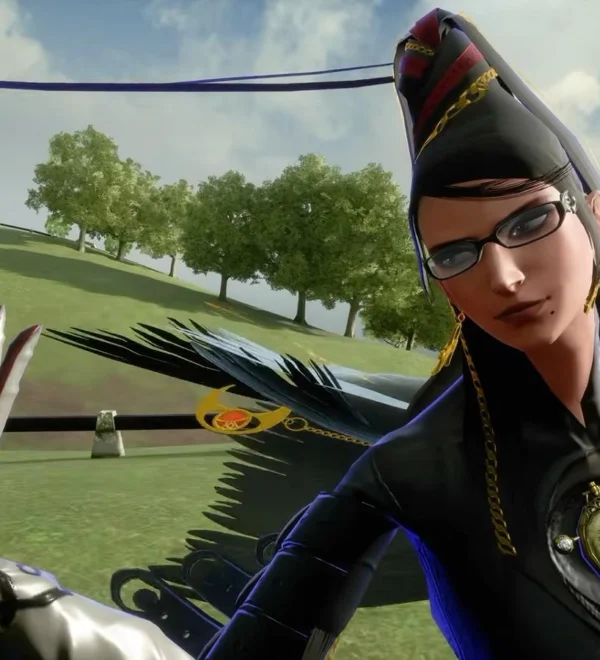 Sonic Racing: CrossWorlds Reportedly to Feature Bayonetta, Evangelion, and Final Fantasy VII Remake Characters