Sam Reid on ‘The Vampire Lestat’ Finale and His Fictional Rock Star Being Outperformed on the Billboard Charts

Sophie Giraud/AMC
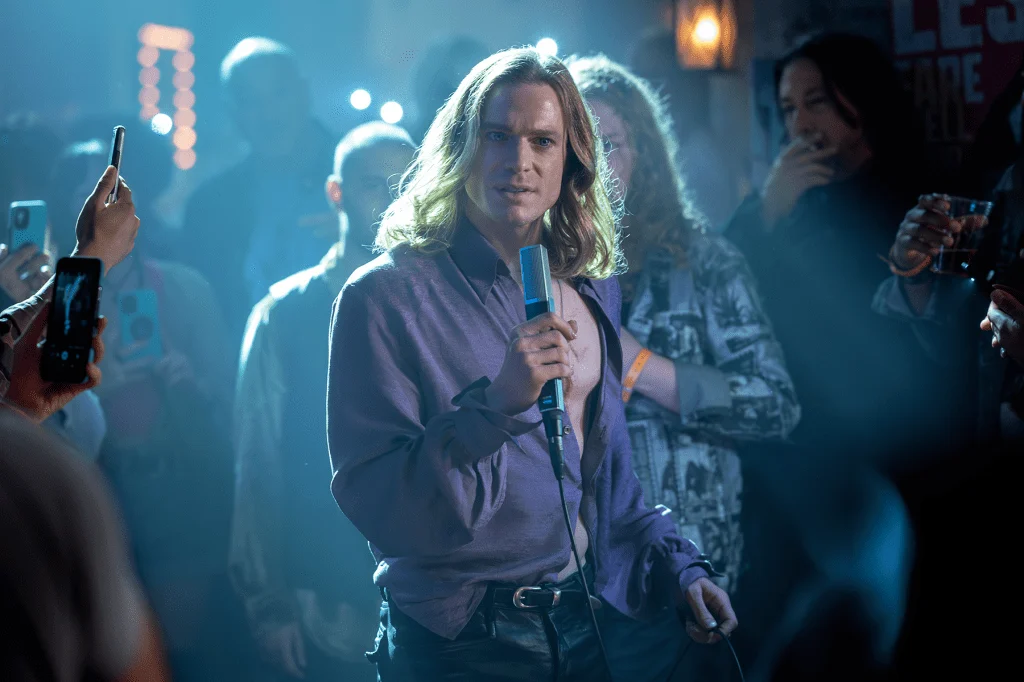
In the climactic finale of AMC’s The Vampire Lestat, the titular protagonist confronts the harsh reality of his existence—including a humiliating struggle to dominate the music charts.
Despite his status as an immortal icon, bringing Anne Rice’s legendary rock-star vampire to life proved to be a Herculean task for showrunner Rolin Jones, composer Daniel Hart, and actor Sam Reid. In this reimagining, Lestat’s massive fan base is reduced to a niche cult, and his debut album suffers a commercial defeat, soundly bested by contemporary rivals.
Reid’s performance goes beyond simple mimicry. While he drew inspiration from glam rock luminaries, he was careful to avoid mere imitation. “I gravitated toward the aesthetic of glam rock,” Reid explains during a call from Sydney, “but I was wary of the character feeling like a hollow period piece. I wanted to maintain a sense of the timelessly strange.”
To capture the physicality of an immortal entity, Reid looked to the animal kingdom. “Lestat possesses a distinct ‘big cat’ energy,” he laughs. “It’s that predatory grace, dialed up to the extreme.”
The finale strips away the veneer of the ‘Brat Prince,’ as the character faces scathing reviews from the likes of Pitchfork and Stereogum. Rejection from both the critical establishment and the charts forces a deep introspection. “He struggles to succeed in any venture, even in the act of sharing his own narrative,” says Reid. “He is essentially grappling with his own irrelevance.”
The Artistic Process
Reid emphasizes that his preparation wasn’t about rigid technicality. “Lestat is, by nature, an exhibitionist,” he notes. “I focused on the character’s internal life rather than choreographing rock-star mannerisms. I wanted that alien, otherworldly quality to remain front and center, even when he’s attempting to be raw.”
Discussing his research, Reid mentions the documentary Montage of Heck. “Initially, the comparison to Kurt Cobain felt jarring, but viewing it through Lestat’s lens was transformative. It highlighted the tragedy of a figure who is immensely influential yet fundamentally misunderstood.”
When asked about the character’s musings on gender, Reid clarifies: “It’s not necessarily a gender crisis. Rather, it’s a recognition of the toxicity he associates with his own masculinity. He’s acknowledging the baggage he carries.”
On Music Criticism and Legacy
The inclusion of negative music reviews serves as a profound narrative device. “Lestat claims to be indifferent to validation, but deep down, he craves it,” Reid observes. “The beauty of his character is his resilience. Even as he faces total failure, he forces himself to stand back up. He asks the ultimate artist’s question: Do you treat a rejection as a final stop, or merely a semicolon?”
Reflecting on the unexpected accuracy of the series’ chart predictions, Reid chuckles at the show’s uncanny foresight regarding modern music consumption. “It’s wild how life imitated art there. Rolin Jones has an oracle-like quality.”
Ultimately, the finale offers a poignant exploration of connection. Even in his final moments, as he hallucinates a performance, Lestat realizes that his bond with Louis transcends his own desperate need for validation. “He’s still trying to perform,” Reid notes. “But at the end of the day, the armor falls away. He learns that he doesn’t need to be the center of the stage to be understood.”
Related articles
 My Chemical Romance Teases Possible New Album During Tour-Closing Show
 Pink Addresses Backlash Over Comments About Macklemore’s Pro-Palestine Stance
 Stray Kids Make Historic Debut at Rock in Rio
 Ocean Way Festival in Santa Monica Canceled Weeks Before Planned Debut
 Zach Bryan Joins Kings of Leon to Perform Collaboration During Nashville Show
 Tatsuya Kitani and Silica Gel Discuss Their Collaboration in a Billboard Japan Monthly Feature Interview
 Travis Kelce Says Marrying Taylor Swift Was More Than He Could Have Ever Dreamed It to Be
 Flavor Flav Shares Personal 9/11 Memory and Honors Heroes on 25th Anniversary