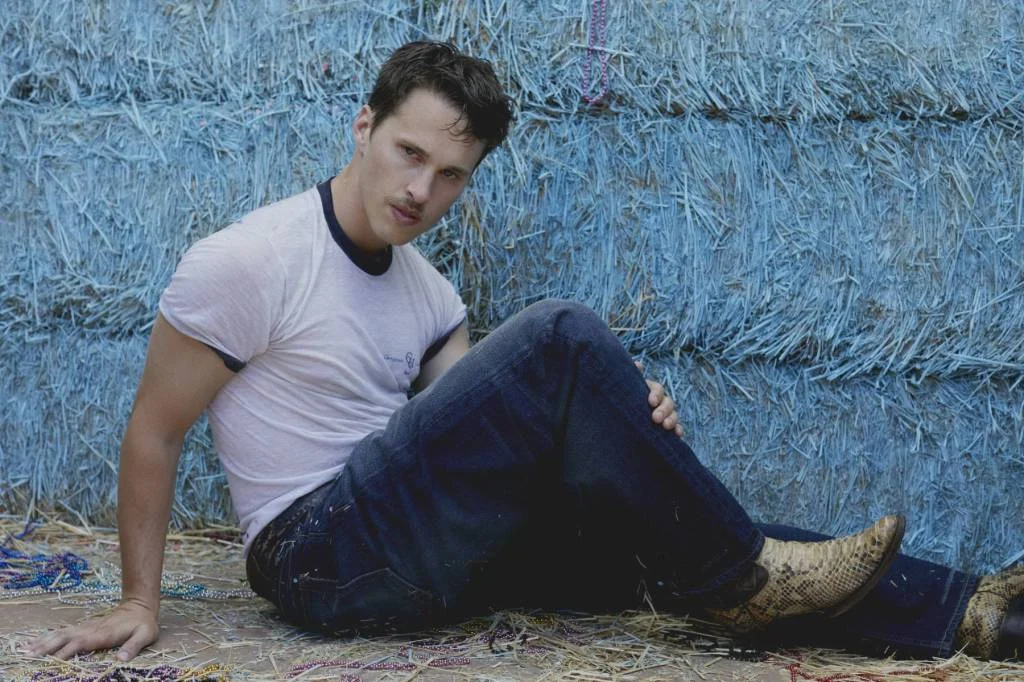
Ryan Beatty Discusses Post-Beyoncé Success and Sharing Love Songs With His Boyfriend: ‘It’s Awkward at First’

Michael Bailey Gates / Courtesy of 2BEntertainment
On a stifling Manhattan afternoon where the subway stations double as saunas and summer humidity hangs heavy in the air, a dedicated crowd gathers outside Nightclub 101. Tucked away in the Lower East Side, this compact venue typically hosts emerging acts playing their very first shows. Tonight, however, the spotlight belongs to singer-songwriter Ryan Beatty—an artist who has long since outgrown the fledgling tier.
For starters, consider his recent accolades: Beatty was an integral part of the creative team that helped Beyoncé secure the Grammy for Album of the Year in 2025, lending his songwriting talents to standout tracks on Cowboy Carter, including the fan-favorite anthem “Bodyguard.” Yet tonight isn’t about that blockbuster collaboration. Beatty is performing an intimate series of global underplay shows to support his fourth studio album, Sweet Fortune, which arrived this past June.

Descending the narrow staircase into 101’s subterranean backroom, Beatty appears remarkably serene despite lingering technical delays. Sporting a weathered denim jacket and classic blue jeans—a subtle nod to the organic country textures found on Sweet Fortune—he projects a youthful energy that defies his impending 31st birthday. Tracks like “Virtuoso,” co-written alongside pop luminary Amy Allen with its steady acoustic strumming, practically beg for a line dance. Yet while the record evokes a gentle rural warmth—its accompanying visuals, including the storm-infused “White Lightning,” were captured in America’s heartland—the foundation of Sweet Fortune was actually laid right here in New York City. “I felt an intense craving to step completely outside my comfort zone,” he reflects, pausing to carefully weigh his phrasing. “Relocating temporarily is a straightforward way to achieve that. While I have cherished spots and friends in New York, I had never composed music here. I was eager to discover what that creative pulse felt like.”
Although the final recordings took shape in Los Angeles, Beatty conceptualized the core of Sweet Fortune during the bitter depths of a Northeast winter, drawing heavy inspiration from the smoky jazz of Chet Baker. “It’s the quintessential cliché of ‘listening to jazz in New York,’ but it genuinely unlocked new sonic dimensions for me,” he explains. He views the finished record as “California drenched in New York aesthetics. I am a California native through and through, and that essence inevitably permeates my writing. This album fundamentally explores distance, so crafting it far away from my familiar sanctuaries allowed me to articulate those themes with sharper clarity.” Beyond geography, however, the album tackles a deeply personal milestone. “I’ve always known my art must reflect my authentic lived experience. Even though I am fiercely protective of my privacy, writing openly about a healthy, thriving relationship—rather than nursing old heartbreak—was entirely uncharted territory for me.”
Music has served as Beatty’s true north since his earliest memories growing up just outside of Fresno, a sun-baked California enclave nestled far between the cultural hubs of San Francisco and Los Angeles. “I always recognized that music was my gravitational pull, and that I would eventually carve out a space for myself within it,” he notes. That initial passion manifested in viral YouTube covers before rapidly accelerating into a whirlwind teen pop career highlighted by Radio Disney airplay and debut singles announced by Ryan Seacrest.
As he has candidly discussed in the past, that early chapter is not one he recalls with fondness. “I often wonder if I had any real autonomy back then. Not that anyone coerced me; I was simply a kid trying to figure out who I was, completely unequipped with the answers. Eventually, I realized I was yearning for something much deeper that my current circumstances simply couldn’t satisfy.” Following years of internal conflict and a frustrating contractual limbo that barred him from releasing music between the ages of 17 and 21, Beatty endured a profoundly isolated period. “Those missing years were exceptionally difficult. It felt like a dark era defined by profound disorientation, fear, and a sense of having no anchor. Ultimately, that hardship forged my true artistic voice, though the journey took time.”
Beyond the creative dissatisfaction of churning out manufactured bubblegum pop, Beatty was privately navigating the complexities of his sexuality while thrust into the relentless machinery of early fame. When he publicly came out via Instagram in 2016, it marked an exhalation of twenty years spent “suffocating in the closet.” Today, he embraces every phase of that evolution. Letting go of the pursuit of superficial celebrity allowed him to hone his artistry, culminating in the release of his celebrated debut album, Boy in Jeans, later that same year—a project that solidified his indie credibility while effortlessly shedding his teen-pop origins, aided by creative alliances with collectives like BROCKHAMPTON. “Every preceding chapter had to happen to pave the way for the next record, and ultimately for Sweet Fortune. It’s a cliché, but it’s entirely true.”
For Beatty, articulating queer experiences has become so intrinsic to his songwriting that he occasionally forgets its broader cultural impact. “It’s not that I take it for granted, but I frequently receive messages from fans saying, ‘Where I come from, I cannot be myself, and living with your art makes these feelings permissible.’ That carries immense weight. Those are the precise moments that remind me why this work matters.” Reflecting on the current cultural and political landscape for LGBTQ+ artists compared to pre-pandemic years, he observes, “It’s fascinating how culture shifts subtly until you suddenly look around and realize the atmosphere has transformed. It’s complex to evaluate in the moment, but looking back, the shifting tides become undeniable.”
The genesis of Sweet Fortune began with its title track, a haunting duet and co-writing venture with close confidant Clairo—who later surprised the venue patrons by joining Beatty on stage. Written about his current partner, the track proved to be a creative watershed. “It gave me the internal permission slip to sing openly about my relationship and my emotional landscape in a way that felt thrilling yet secure. From there, the momentum snowballed,” he shares. “Heartbreak is easy to romanticize and dress up in lyrical metaphors, but chronicling a stable, flourishing partnership proved far more intricate.” Nevertheless, an infectious optimism radiates throughout the record, particularly on the lead single “Secret Language,” which builds toward a triumphant crescendo driven by Beatles-esque horn arrangements.
Naturally, sharing these deeply personal compositions with his boyfriend introduced a fresh wave of vulnerability. “It was awkward initially,” he admits with a laugh. “I didn’t sit him down and announce, ‘I’ve written a piece about us.’ These songs aren’t meant to function as literal diary entries; rather, they capture the intangible atmosphere between us.” Even so, Beatty approaches his craft with uncompromising dedication. “I take my music so seriously that genuinely having fun during the process is rare for me. That might sound overly dramatic, but creation can be a demanding and arduous endeavor.” Whether he is contributing to a masterclass in pop like Beyoncé’s latest era or crafting his own definitive statement on joy with Sweet Fortune, Beatty is finally learning to savor his victories.
“What I am actively trying to master is holding onto the diamonds that land in your palm after enduring rigorous labor.” With that, a knock echoes against the dressing room door. It’s time for the show.
Related articles
 Ms. Rachel Announces First-Ever Album ‘I’m So Happy’
 Laufey Reveals the One Thing She’s Still Terrified of Doing Onstage
 LP Giobbi, Steve Angello, Bob Moses & More to Headline We Belong Here in Central Park
 Pentatonix’s Scott Hoying and Husband Mark Welcome Baby Girl for New Children’s Album ‘Little Birdie’s Big Symphony’
 Ring in 2027 With the Backstreet Boys: Band Adds 3 New Year’s Shows to Las Vegas Sphere Residency
 Watch KATSEYE Learn ‘Skibidi’ and Other Gen Alpha Slang on ‘Celebrity Substitute’
 Harry Styles Surprises Mexican Fans with Churros as Sweet Farewell to Together, Together Residency
 Ariana Grande Shows More Magical ‘Harry Potter’ Impressions, Tackling Even Trickier Characters
Leave a Comment