Resident Evil Requiem: Confronting the Catastrophe Leon Kennedy Survived
The recent 80th anniversary of the atomic devastations in Hiroshima and Nagasaki carries a weight that feels incongruous with modern history. Such profound barbarism seems more akin to a distant, ancient era, yet it remains close enough that tens of thousands of survivors—the “Hibakusha”—walk among us today. These individuals serve as living vessels for the physical and psychological trauma of an unthinkable catastrophe. They are grim reminders of the depths of human cruelty, but also beacons of resilience, proving that hope can endure even when the world is reduced to ash.
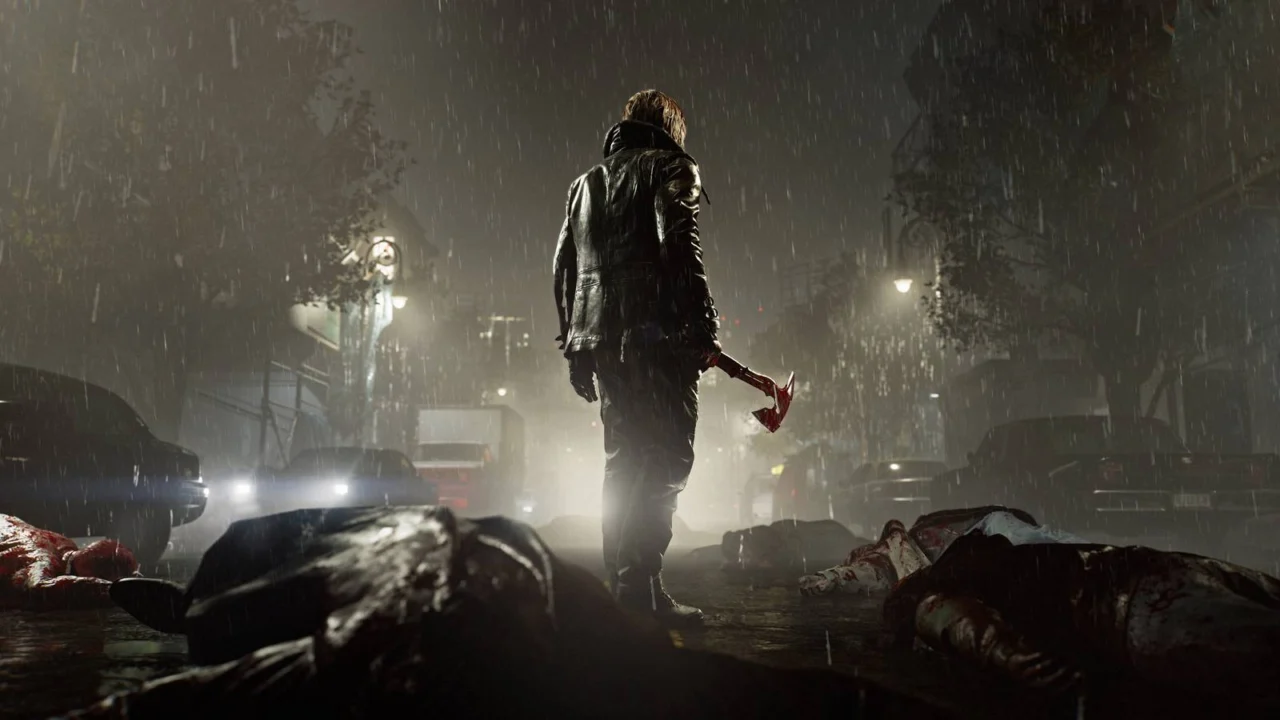
In the digital realm of Capcom’s survival horror universe, Leon S. Kennedy is a parallel figure of endurance. As one of the dual protagonists in Resident Evil Requiem—the latest entry in this storied franchise—Kennedy is a man defined by the inferno. His career began with a literal trial by fire; as a novice officer in Raccoon City, he witnessed a populace eviscerated by bioweapons of American origin. He escaped the city’s boundaries just hours before the U.S. government scrubbed it from the map with a nuclear strike, leaving only a radioactive crater where a community once stood. For decades, Leon never looked back. He never truly processed the grief or honored the thousands of souls vaporized in the blast. That silence finally ends in Resident Evil Requiem.
Requiem is a game saturated with trauma. Beneath its layers of visceral horror, kinetic combat, and trademark B-movie quips, it stands as the most elegiac entry in the series. It isn’t merely a polished piece of fan service for PlayStation-era veterans; it is a thematic challenge to confront history’s darkest chapters rather than consigning them to oblivion. It posits that evil only truly triumphs when the righteous lose the will to remember and resist.
Chronologically, Requiem succeeds 2022’s Resident Evil Village, yet it functions more effectively as a spiritual and narrative successor to the 2019 Resident Evil 2 remake. It inherits that title’s sophisticated puzzle-centric horror, suffocating atmosphere, and gritty, shadow-drenched fidelity. The game picks up an emotional thread left dangling years ago, though it takes a surprising first act to reveal its true intentions.
The experience begins with the disorientation of a reboot. Instead of stepping into the boots of a battle-hardened veteran, players are introduced to Grace Ashcroft. A young FBI agent characterized by a palpable sense of dread, Grace is a departure from the typical, stoic Resident Evil protagonist. We soon discover her fragility stems from witnessing the horrific murder of her mother, Alyssa Ashcroft (a nod to the investigative reporter from Resident Evil Outbreak). While investigating a disturbance at a derelict hotel in Wrenwood, Grace is kidnapped by the sinister Dr. Gideon and imprisoned in a sprawling medical facility.

The opening hours perfectly replicate the “Metroidvania” horror of the original Spencer Mansion. As a vulnerable Grace, players must navigate a labyrinth of locked wings and hidden passages, scavenging for keys while managing scarce resources. It is a masterclass in tension, featuring grotesque, persistent enemies and jump scares that feel earned rather than cheap. Requiem adopts the first-person perspective pioneered in Resident Evil 7 Biohazard, utilizing the intimacy of that viewpoint to amplify Grace’s terror. Her trembling aim and frantic movements make for a genuinely harrowing “haunted house” experience.
Grace’s struggle is deeply personal, with blood serving as a central motif—both as a narrative symbol of her lineage and a gameplay resource used to craft ammunition and healing kits. Her journey is one of internal reconciliation, as she transforms from a victim of her past into a reluctant protector. However, this intimate prologue eventually gives way to a much larger, more haunting narrative when Leon S. Kennedy enters the frame.

Initially, Leon appears as a secondary figure, investigating a thread related to the survivors of the 1998 incident. When he becomes playable, the game undergoes a radical tonal shift. Leon, voiced with weary gravitas by Nick Apostolides, is no longer the rookie we remember. He is a force of nature. While Grace’s sections are defined by desperation, Leon’s segments are a showcase of peak action. He carves through undead hordes with surgical precision, utilizing a vast arsenal and parrying attacks with the cool-headedness of a man who has seen it all. It is the finest action the series has seen since the seminal Resident Evil 4.

The heart of Requiem lies in its daring second act, where Leon returns to the quarantined ruins of Raccoon City. The game pivots to a third-person, semi-open-world structure set amidst the skeletal remains of the metropolis. But this isn’t a triumphant homecoming; it’s a somber trek through a mass grave. The once-vibrant streets are now silent, dust-covered alleys reminiscent of Silent Hill 2. It’s a haunting realization that for the rest of the world, Raccoon City is a secret to be buried, rather than a tragedy to be mourned.
While the franchise has always featured death, it has rarely been about death in a meaningful way. Usually, zombies are just obstacles in a corporate conspiracy plot. Requiem changes that, forcing the player to walk alongside a visibly shaken Kennedy as he finally reckons with the magnitude of the loss he survived. It imbues the series with a newfound gravitas.
The emotional core of Resident Evil Requiem is found within its very name.
The game joins a long tradition of Japanese science fiction that processes post-war trauma. Though Raccoon City is an American setting, the imagery of its destruction has always mirrored the specters of Hiroshima and Nagasaki. The original Resident Evil 3 depicted the city’s end as a flash of blinding white light and a tower of flame—a scene that echoes the real-world testimonies of the Hibakusha. In Requiem, this connection is unavoidable. The ruins of the city skyline and the physical scars Leon carries under his gloves evoke the lingering effects of radiation and the heavy cost of survival.
“I recall my surroundings turning blindingly white, like a million camera flashes at once,” Nagasaki survivor Yasujiro Tanaka recalled to Time in 2017. “Then, pitch darkness.”

Despite these heavy themes, the game remains a Resident Evil title at heart. There are still absurd villains, convoluted lore, and explosive set pieces that strain credulity. Capcom isn’t reinventing the wheel here as they did with RE7; instead, they are providing a necessary coda to the Raccoon City era. By merging classic survival horror with a mature narrative about survivor’s guilt, Requiem allows its characters—and its audience—to finally process decades of fictional grief. Grace and Leon are two sides of the same coin: one dealing with a personal, intimate loss, and the other carrying the weight of a fallen city.

The work of the Hibakusha continues today through groups like Nihon Hidankyo, recently honored with the Nobel Peace Prize. During the ceremony, chair Jørgen Watne Frydnes noted that “memory work can be an act of resistance.” He quoted author Han Kang, suggesting that trauma is not something to be cured, but something to be embraced—a way to keep the memory of the dead alive within the world of the living.
In this context, Resident Evil Requiem is exactly what its title suggests: a mass for the dead. It is a moment of reflection amidst the chaos, urging us to remember the cost of tragedy so that we might prevent it from recurring. It is a powerful reminder that our collective memory is the only weapon capable of outlasting the blast.
Resident Evil Requiem launches Feb. 27 on Nintendo Switch 2, PlayStation 5, PC, and Xbox Series X. Reviewed on PlayStation 5 via a code provided by Capcom. See Polygon’s ethics policy here.
Source: Polygon
Related articles
 Stranger Than Heaven Will Drop Yakuza Series’ Signature Humor for a Realistic Story
 Riders Republic Is Coming to Nintendo Switch 2, and Ubisoft Will Add an Offline Mode
 Avatar: Seven Havens Episode 9 Ending Reveals New Details About the Other Havens
 The Finals Adds Free-for-All Mode and New Abilities
 Need for Speed Carbon Reaches Android as Experimental Fan-Made Port
 Marvel Rivals Developing Large-Scale PvE Battle Pitting 50 Heroes Against Thanos and His Army
 Fan-Made Hades II Port for Android Released, Based on macOS Version
 CD Projekt RED Reveals When Edgerunners 2 Takes Place, Says It Is Not a Cyberpunk 2077 Prequel