Avatar: Seven Havens Episode 9 Ending Reveals New Details About the Other Havens
Despite its title, Avatar: Seven Havens has focused almost entirely on Ellora, the Haven of Wind and Sand. The city sits somewhere in the desert expanses of the post-apocalyptic world. The first six episodes established that the remote Havens are mostly cut off from one another. In Ellora, it’s even illegal to contact another Haven without the council’s permission.
Chancellor Kayoko (Jennifer Sun Bell) does exactly that at the end of episode 6. She sends out an emergency radio transmission: “This is Ellora calling any and all Havens.” Then she adds, “We need you.”
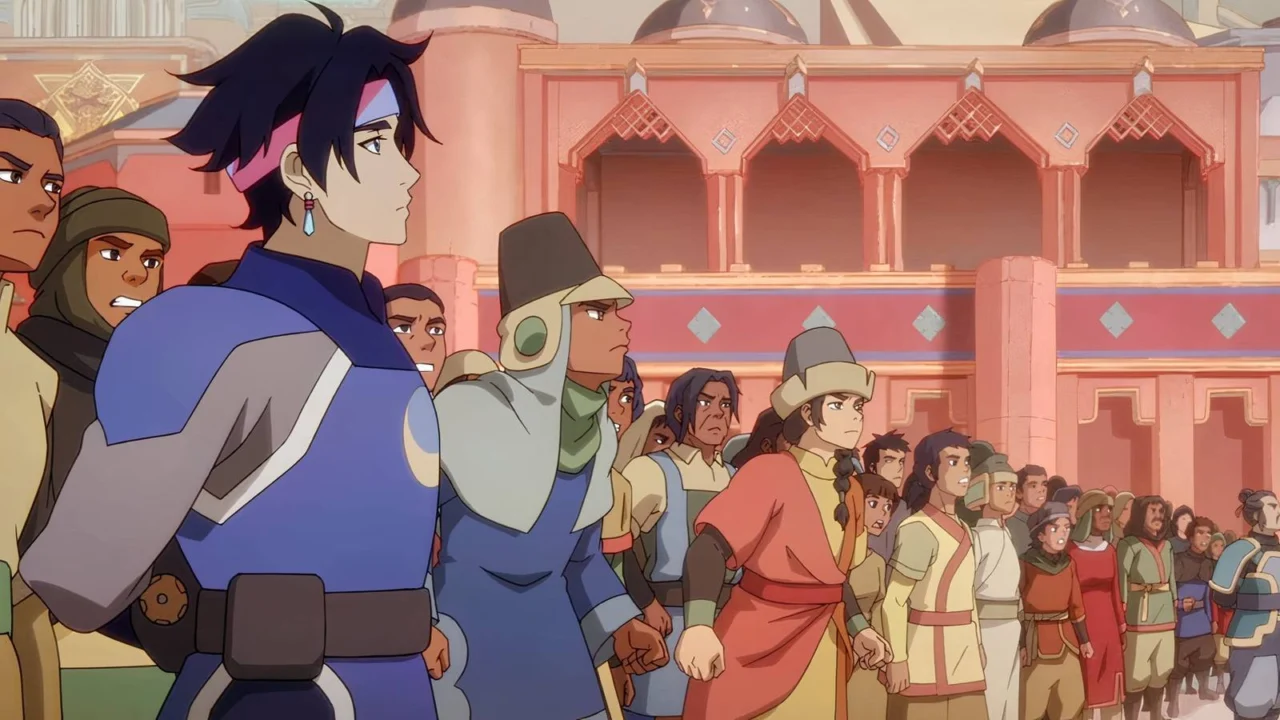
Her plea leads to a two-part summit across episodes 8 and 9. We finally meet survivors from other parts of the world.
Major spoilers follow for Avatar: Seven Havens episodes 7 to 9.
The summit is meant to address the crisis consuming Ellora. Bender birth rates are falling, and the fear-based Affliction is spreading thanks to the red Anomaly crystals growing beneath the city. The Bending Brigade can barely keep order. The visiting delegations reveal that some of Ellora’s problems are shared. Benders are becoming scarce across the world, other Havens struggle to grow enough food, and everyone needs resources their neighbors have.
The gathering nearly produces a historic agreement after Jae (Major Curda) argues that the Havens can no longer survive on their own. Then the Faceless infiltrate the summit. Their true queen turns out to be Agam (Sakina Jaffrey), the kindly baker who catered the event. Episode 9 ends with Nisha exposing herself as the Avatar, another Anomaly manifestation attacking the summit, and Chancellor Kayoko ordering the arrest of anyone who refuses to serve Ellora. The visiting Havens withdraw their support, Karthik is arrested, and Nisha escapes beyond the city walls.
Meanwhile, Pavi draws the Anomaly underground and enters a vision. She walks along a road of light floating in a cosmic void, finds a glowing red symbol shaped like Ellora, and reaches inside it. The camera pans upward to reveal six other colored circles of spiritual energy. The scene recalls the cosmic journeys Aang and Korra took before. It also all but confirms a popular theory that the Havens represent the seven chakras, and perhaps the planet’s chakras itself.
The opening sequence shows the seven Havens as differently colored concentrations of energy. The stage production in the series premiere features seven robed figures in colors that resemble the traditional chakra spectrum. Episode 9 makes the Ellora connection especially clear by tying the city to a red symbol resembling the root chakra.
The exact relationship between the Havens and the chakras remains unclear. So does the identity of the two cities that skipped the summit. Still, the visitors, the new world map, and the Faceless’ plans give us enough to start breaking down the seven Havens of the title. Treat these chakra associations as theories for now. Pavi’s vision strongly hints at what’s coming.
1. Ellora is associated with the red root chakra
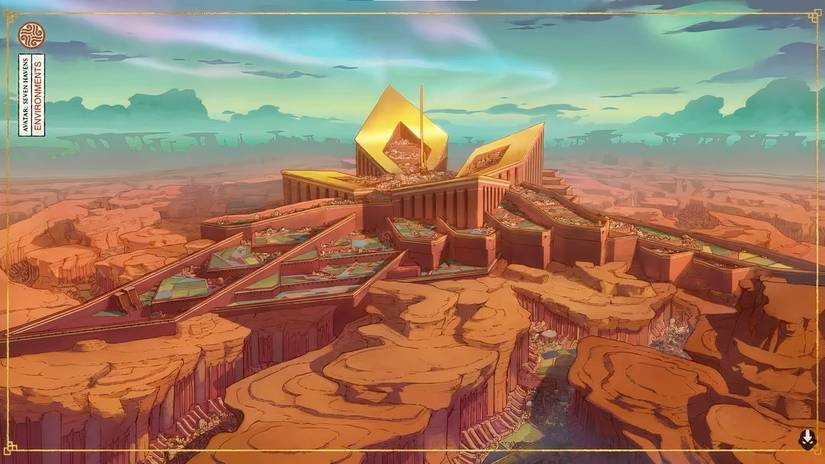
Ellora is the only Haven we can confidently link to a specific chakra. In episode 9, Pavi’s vision takes her to a symbol resembling the root chakra, which is traditionally associated with stability, survival, and a sense of security.
That description reads almost like a cruel joke in Ellora. Storms constantly threaten the city, its population is starving, and its benders are being conscripted into the Bending Brigade. Its government answers disorder with increasingly authoritarian measures. Chancellor Kayoko ends episode 9 by establishing a curfew and ordering the arrest of benders who refuse to serve.
In Avatar: The Last Airbender, Guru Pathik explains that fear blocks the root chakra. Fear is exactly what powers the Anomaly and spreads the Affliction. If Ellora was built around the world’s root chakra, its culture of fear may be spiritually poisoning the land beneath it.
Pavi’s vision indicates that Ellora is the red Haven on the new world map, far to the southeast. Comparing the remaining coastlines to maps from Korra’s era puts it somewhere in the former Earth Kingdom. It may lie in the region identified as Zeizhou Province in the Kyoshi novels.
2. Feather Mountain represents the orange sacral chakra
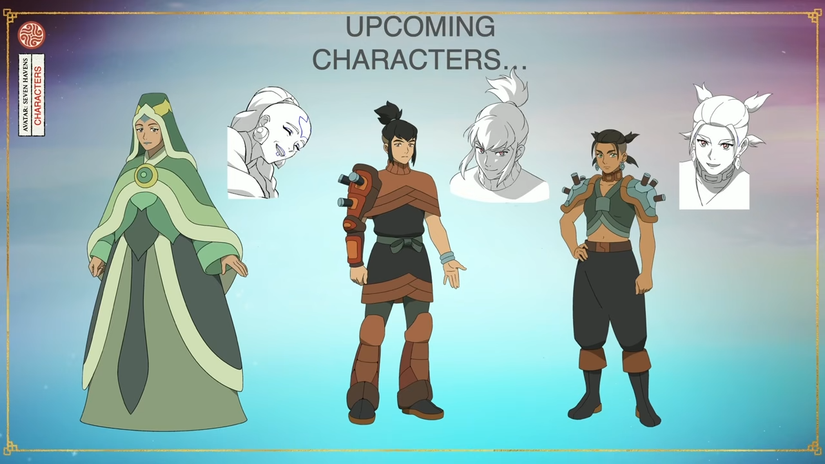
Empress Yesha, a powerful and beloved airbender, represents Feather Mountain at the summit. Her title and dramatic arrival suggest a more openly aristocratic culture than Ellora’s council-led government. Nisha is immediately fascinated by her. Jae and Yesha develop a surprisingly charming rapport.
The name “Feather Mountain” suggests an elevated settlement with strong ties to airbending. On the world map, the orange Haven sits near the eastern coastline of the former Earth Kingdom, roughly east of the Si Wong Desert and Wan Shi Tong’s buried library. That would make it one of Ellora’s nearest neighbors, which helps explain why its delegation arrived so quickly.
If the orange color is deliberate, Feather Mountain would match the sacral chakra. That chakra is traditionally linked to emotion, creativity, pleasure, and personal freedom. Yesha does say her people are compassionate and free to do as they please.
3. New Ba Sing Se is the yellow solar plexus chakra
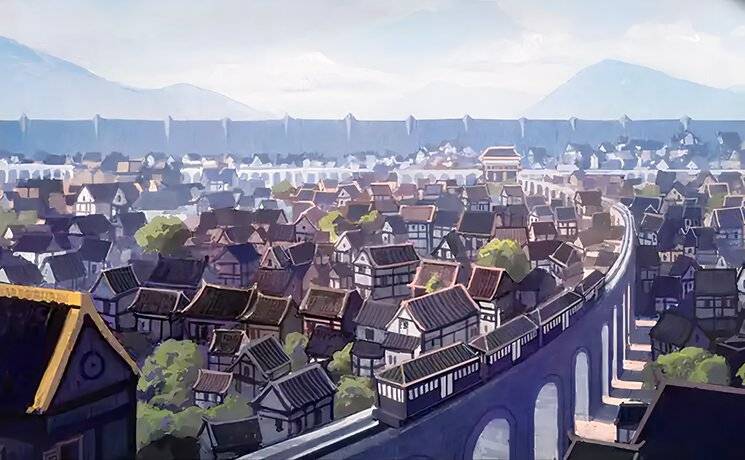
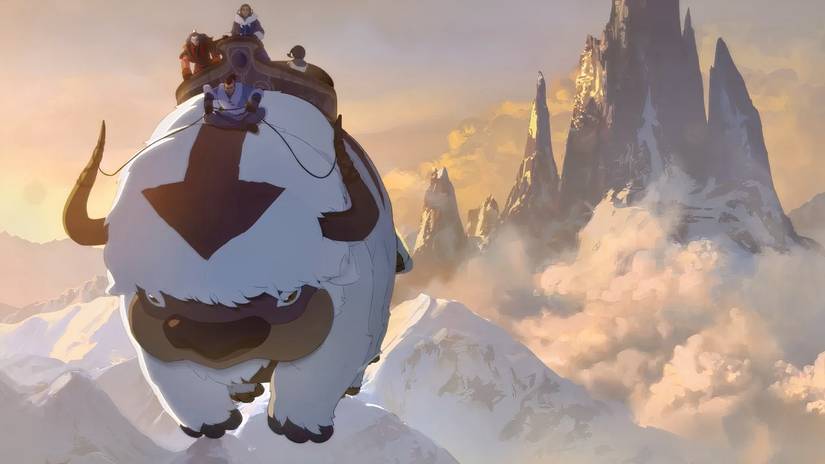
New Ba Sing Se is the easiest Haven to place on the map. It was clearly built atop the former Earth Kingdom capital, in the far northeast of the continent. In episode 8, Nisha comments that its people follow “the old ways,” and their delegation travels to Ellora on sky bison. Their culture seems to have rejected most pre-Cataclysm technology in favor of customs that existed even before Aang’s time.
Ba Sing Se has always been a place where traditions become deeply entrenched, sometimes at the expense of the people living there. New Ba Sing Se likely became even more conservative in response to the Cataclysm.
Yellow is traditionally associated with the solar plexus chakra, which governs willpower, confidence, and personal agency. During Aang’s training, Guru Pathik explained that shame blocks it.
4. Akasha is associated with the throat chakra
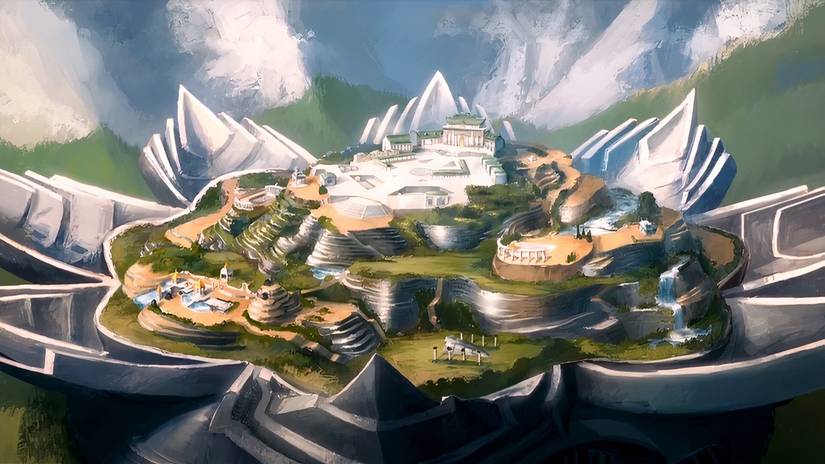
New Ba Sing Se preserves ancient traditions and rides sky bison. Akasha has embraced technology from the old world, meaning Korra’s time period. Its delegates arrive at Ellora on motorcycles.
“Akasha” is also a Sanskrit term for the sky, space, or aether. Aether is the element of the throat chakra, whose color is generally shown as blue or light blue.
That suggests Akasha is one of the blue Havens near the center of the world map. It may be the closest one to Ellora, which would explain why Karthik called them directly by radio. It may have been built near the ruins of Zaofu, Omashu, or another major technological center in the former Earth Kingdom. Zaofu makes the most sense. Under Suyin Beifong, it was already one of the world’s most technologically advanced cities in Korra’s lifetime. Its focus on metalbending, engineering, and infrastructure could have helped survivors preserve technology after the Cataclysm.
The throat chakra governs truth and communication, which makes the possible link especially interesting. Communication between the Havens is tightly restricted, yet Akasha may have some of the only technology capable of reconnecting them.
5. An unnamed Haven may stand near Hei Bai’s Forest

One of the two Havens absent from the summit appears on the map as one of the blue-ish circles, possibly near what looks like Hei Bai’s Forest. Both circles look blue on the world map, but in Pavi’s vision one is clearly green and the other blue.
Hei Bai was the forest spirit Aang met early in Avatar: The Last Airbender. After the Fire Nation burned part of his forest, Hei Bai became enraged and began terrorizing a nearby village. Aang calmed him by showing that the forest would grow back.
A Haven built near that spot would carry enormous spiritual significance. It was one of the first places where Aang acted as a bridge between humans and spirits. Its history also showed how environmental destruction could corrupt an otherwise peaceful spirit. Does that make it the green heart chakra? Either way, a society near an ancient spiritual forest could plausibly understand the Spirit World better than the other Havens. That might also explain why it’s one of the few that didn’t answer the call for the summit.
6. The former Fire Nation probably houses a missing Haven
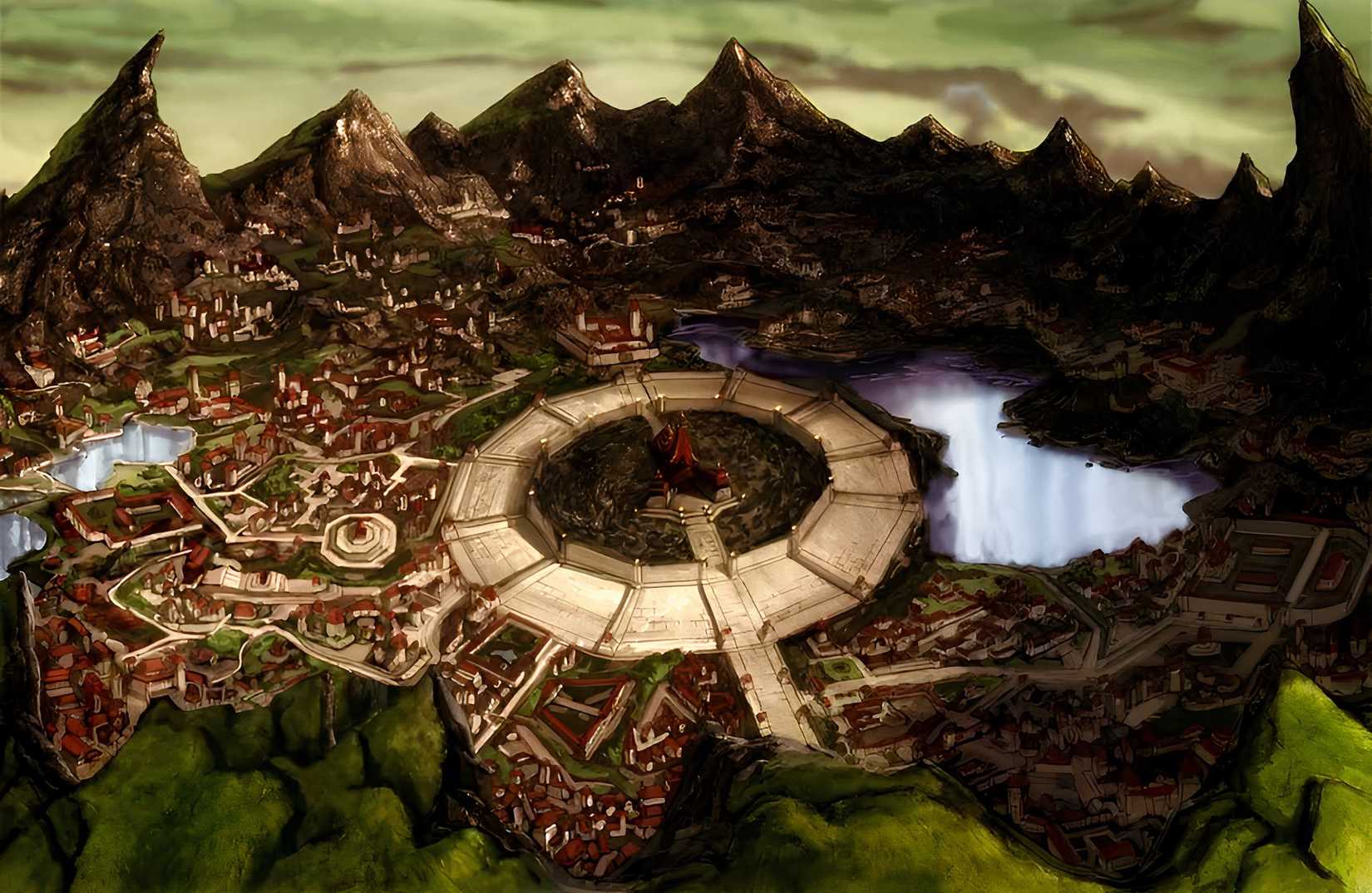
The last unidentified Haven is the only real outlier. The world map places it far to the west, probably in the former Fire Nation or perhaps the Western Air Temple. The other six Havens cluster within or near the former Earth Kingdom, while this one sits across the ocean. Unless it has working aircraft or advanced ships, attending Ellora’s summit on short notice may have been impossible. Like Ba Sing Se, the Fire Nation capital had the infrastructure and sheer size to likely survive an apocalypse. The city itself was built in the caldera of a volcano.
The purple color, and its place as the sixth chakra in Pavi’s vision, make it a strong candidate for the third eye chakra. That chakra is associated with insight and blocked by illusion. It’s unclear how much the Cataclysm reshaped the world. The Fire Nation archipelago may remain isolated and, by default, safer than some of the other Havens. For now, this Haven remains mostly a mystery.
7. Republic Forest is the isolated Haven at what once was Republic City
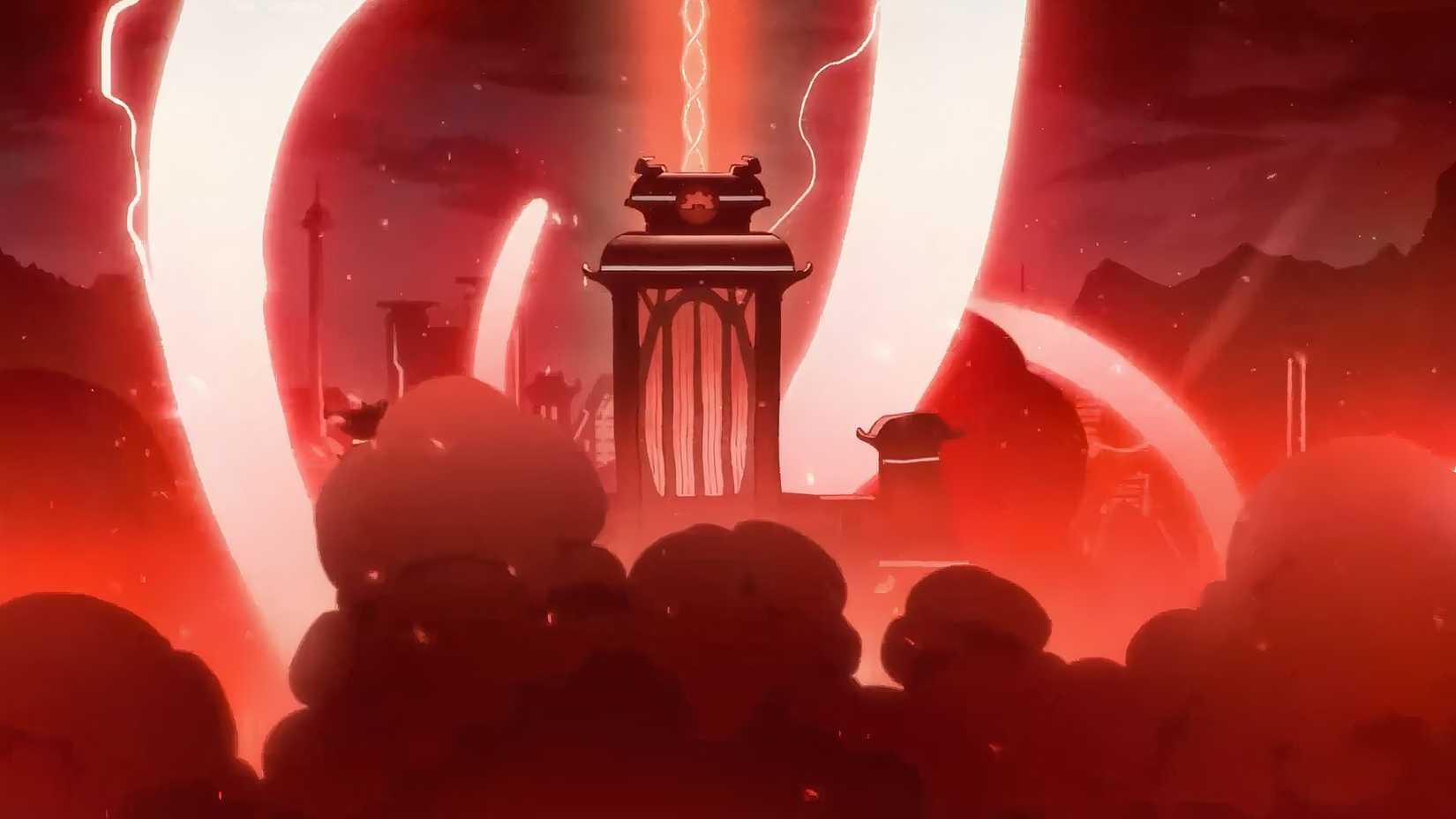
The biggest revelation of the summit may be Republic Forest, a “lost” Haven that cut off communication with the others long ago. Its reputation is apparently terrible. When its name comes up, one delegate immediately calls its people “the worst!”
The Faceless believe Republic Forest offers their best chance at freedom, because rumors say it doesn’t suffer the dangerous storms that plague Ellora. Agam confesses that this is why the Faceless have been stealing grain, animals, and other supplies. They are preparing an expedition across the Harshlands.
The pink or magenta Haven appears in roughly the same spot as Republic City, near the northwestern coast of the former Earth Kingdom. Episode 7 gives us our first direct glimpse of that disaster. Beneath Ellora, Pavi and Nisha discover an old industrial facility with pools of liquid red spiritual energy. Touching the energy sends them into a memory of an older Korra arriving in Republic City, which had built an enormous facility around its spirit portal.
Korra enters the Avatar State and tears apart pipes that seem to carry spiritual energy beneath the city. Fires erupt, vehicles crash, and uncontrolled energy whips through the metropolis. It resembles the moment when Kuvira’s spirit cannon went haywire at the end of Legend of Korra book 4. We still don’t know why Korra attacks the facility, but her actions might cause the Cataclysm.
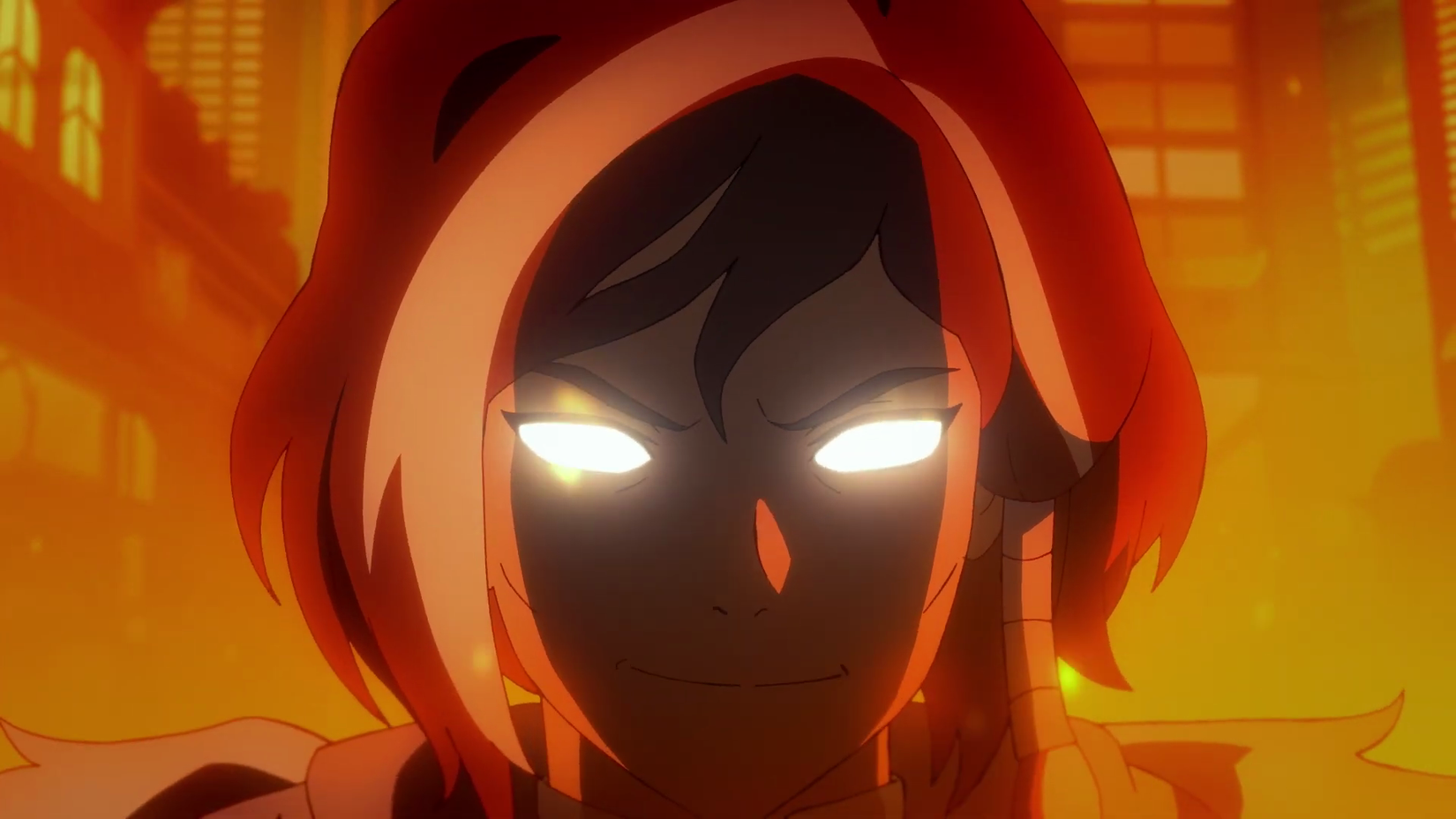
If the Cataclysm began at the Republic City portal, the city could be the eye of a worldwide storm. The name “Republic Forest” also implies that the Spirit Wilds, which began overtaking the city by Korra book 3, have consumed all of it over the last two centuries. In Pavi’s vision, pink sits at the very top, which makes Republic Forest the possible end of their journey. Republic City’s portal once linked the material and Spirit Worlds directly. That makes the crown chakra, associated with cosmic and spiritual connection, a plausible fit.
For now, Republic Forest is the biggest wild card among the Havens. It may be humanity’s safest surviving settlement, a spiritual paradise, or something so dangerous that its people isolated themselves to protect everyone else. Pavi and Nisha’s journey probably ends there, but only after they fix the Anomalies at the other six Havens first, right?
Source: Polygon
Related articles
 Co-Op Horror Game Escape From Playtime Enters Early Access With New Threats
 Stranger Than Heaven Will Drop Yakuza Series’ Signature Humor for a Realistic Story
 Riders Republic Is Coming to Nintendo Switch 2, and Ubisoft Will Add an Offline Mode
 Solo Leveling Characters Whose Storylines Fell Short, Polygon Lists Five
 The Finals Adds Free-for-All Mode and New Abilities
 Need for Speed Carbon Reaches Android as Experimental Fan-Made Port
 Marvel Rivals Developing Large-Scale PvE Battle Pitting 50 Heroes Against Thanos and His Army
 Fan-Made Hades II Port for Android Released, Based on macOS Version