Redefining ‘Kawaii’: ASOBISYSTEM’s Global Vision for Japanese Idol Culture
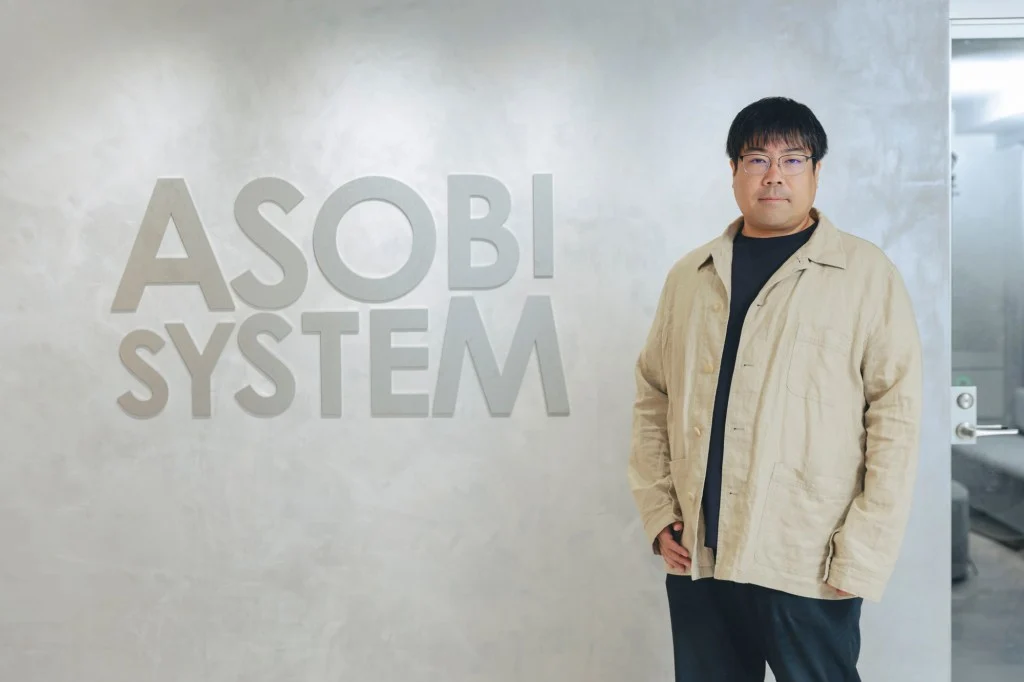
Redefining ‘Kawaii’ on the World Stage: ASOBISYSTEM CEO Yusuke Nakagawa on Agility, Fandom Culture, and Global Longevity

Following a breakthrough performance on a South Korean music program, CUTIE STREET’s infectious single “Can’t we just be cute? -Kawaii Dakejya Damedesuka?-” has transcended international boundaries. Capitalizing on this momentum, talent project KAWAII LAB. announced expansive global auditions across five Asian territories. Ahead of the 20th anniversary of ASOBISYSTEM—the powerhouse agency behind trail-blazing acts such as Kyary Pamyu Pamyu, ATARASHII GAKKO!, FRUITS ZIPPER, and CUTIE STREET—CEO Yusuke Nakagawa discussed the international potential of Japan’s superfan (oshikatsu) culture, his goal-agnostic management philosophy, and the essentials for enduring artistic longevity.
Bridging Borders Through Strategic Localization
CUTIE STREET’s Korean debut performance generated significant momentum, resulting in sold-out shows in Seoul and an immediate return engagement. What was the catalyst behind this cross-border resonance?
Yusuke Nakagawa: Our team at KAWAII LAB. consistently utilizes digital channels to dismantle linguistic barriers—whether by participating in trending K-pop choreography challenges or facilitating cross-promotional dance collaborations with Korean groups. CUTIE STREET’s rapid ascent in South Korea represents the cumulative impact of these deliberate, sustained interactions rather than an overnight fluke.
Nevertheless, the sheer velocity of the reaction post-broadcast was extraordinary. The technical precision of Korean broadcast productions—deploying extensive multi-camera arrays specifically optimized for rapid digital distribution—meant their performance reached an expansive international audience via YouTube almost instantaneously.
The group subsequently unveiled a dedicated Korean version and accompanying music video. How do you balance international localization with the preservation of authentic Japanese pop aesthetics?
Nakagawa: Context dictates the strategy. Initially, we deliberated whether to emulate contemporary K-pop visual tropes. However, observing the public’s enthusiastic response to their appearance on M COUNTDOWN confirmed that audiences were genuinely drawn to the distinct charm of Japanese idol traditions. Consequently, we refined the visual presentation to elevate its production values while preserving its quintessential Japanese aesthetic, ensuring the lyrical translation conveyed nuance accurately.
The Power of Tactical Fluidity Over Rigid Objectives
KAWAII LAB. recently announced the ASIA GLOBAL AUDITION, covering South Korea, China, Thailand, Indonesia, and Vietnam. What form will these upcoming ventures take?
Nakagawa: We purposefully avoid predetermined structures. The outcome might manifest as bespoke regional units, a unified pan-Asian ensemble, or a multinational group featuring Japanese talent. I fundamentally avoid binding creative projects to rigid corporate benchmarks. When organizations define static objectives early on, they often force their talent into narrow parameters, artificially curtailing unforeseen opportunities. Adaptability and continuous refinement produce far superior outcomes.
Does a lack of fixed roadmaps introduce the danger of losing strategic focus?
Nakagawa: Agility is an organization’s greatest asset. In an evolving industry, adaptability is far more valuable than dogmatic adherence to initial plans. When launching new concepts, we establish a core creative foundation while maintaining operational flexibility to pivot whenever culture dictates. For example, witnessing the instant virality of CUTIE STREET’s March performance prompted us to produce and distribute the official Korean edition within two weeks. Speed is paramount in the modern entertainment landscape.
Concurrently, I preserve absolute deference toward the creative autonomy of our artists and production teams. Leadership should facilitate, not suppress, the instincts of the visionaries on the ground.
Cultivating Fandom Dynamics on an International Scale
You have previously discussed exporting Japan’s dedicated oshikatsu (superfan) culture worldwide. What commercial and cultural opportunities does this model offer?
Nakagawa: While oshikatsu as a structured lifestyle is deeply rooted in Japan, analogous behaviors exist globally through VIP access, artist-tier experiences, and specialized merchandising. While mainstream international listeners may not adopt every facet of Japanese idol engagement, devoted subcultural communities unquestionably do. Catering effectively to these passionate, highly engaged demographics is fundamental for global music expansion.
Redefining Career Sustainability and Inclusivity
As ASOBISYSTEM approaches its two-decade milestone, how has your perspective on managing talent evolved?
Nakagawa: While industry trends shift constantly, our primary objective remains unchanged: ensuring our artists genuinely derive fulfillment from their craft. Passion on stage and artistic authenticity resonate universally. Sustained growth happens organically by dedicating ourselves fully to everyday execution rather than arbitrary multi-year quotas.
Flagship artist Kyary Pamyu Pamyu marked her 15th anniversary this year, while ATARASHII GAKKO! celebrated a decade together. What guarantees sustainable, long-term careers in the idol ecosystem?
Nakagawa: Artist management carries an enduring responsibility toward an individual’s career and holistic well-being. So long as an artist desires to create and perform, our obligation is to construct an infrastructure that supports them. As performers transition through different life milestones—such as marriage or parenthood—management frameworks must evolve in tandem.
We reject the premise that personal maturation requires the abandonment of one’s artistic identity. Performers should be empowered to build lifelong, self-determined careers.
Female performers in the pop landscape frequently encounter systemic ageism and reductive focus on their appearance. How is ASOBISYSTEM countering that precedent?
Nakagawa: Groups like FRUITS ZIPPER have developed an extensive, empowered female audience through genuine, unvarnished engagement on social media. They operate with creative agency, expressing their authentic personalities. This transparency is driving a broader paradigm shift, moving the industry toward a standard where artists are celebrated primarily for their distinctive vision and artistic merit.
The Next Era of Borderless Performance
What is your vision for ASOBISYSTEM over the next decade and beyond?
Nakagawa: My ambition is for ASOBISYSTEM to achieve global institutional recognition, establishing an operational reality where staging a concert in Los Angeles, London, or Paris is as streamlined as booking an appearance in Fukuoka. True internationalization means overseas touring becomes second nature.
Achieving international scale requires proactive exposure. Artists build resilience, stage presence, and international appeal solely through live experience and global media engagement. Our mission is to build the pathways that make those opportunities possible.
Original interview conducted by Naoko Takashima for Billboard Japan.
Related articles
 Tennessee Governor Announces Nashville Airport Will Be Renamed After Dolly Parton
 Olivia Rodrigo’s Daisy Chain Fields Festival Brings in $10 Million for Women’s Charities
 Vote: Which New Music Release Is Your Favorite This Week, From Olivia Rodrigo to Alex Warren & JENNIE?
 Madeon Returns with First Remix Since 2012, Delivering a Dazzling Spin on Ninajirachi’s ‘iPod Touch’
 Jeweler Reveals Post Malone’s ‘Immaculate’ 20-Carat Engagement Ring for Fiancée Christy Lee
 Ella Langley Subtly Claps Back After Doja Cat Claims ‘I Don’t Know What That Is’
 KATSEYE’s Megan Addresses Daisy Chain Fields Fest Cancellation After Ankle Injury: ‘Sending All My Love to Olivia’
 New Music Friday Guide: Olivia Rodrigo, Alex Warren, JENNIE, Rod Wave & More