

When Disney finalized its acquisition of 21st Century Fox in 2019, much of the conversation centered on how the transaction would reshape Marvel’s landscape. The deal, however, delivered far more intellectual property than just mutants and superheroes. Now one of Fox’s longest-running sci-fi franchises has been softened to fit Disney’s family-oriented sensibilities. Predator: Badlands sidesteps brutal horror in favor of a more wholesome, space-opera tone — complete with a cuddly creature that clearly channels Baby Yoda.
Director Dan Trachtenberg previously pushed the Predator mythology into darker, bloodier territory with Hulu projects like Prey and the animated Predator: Killer of Killers. For his first theatrical outing in the series, though, he purposefully skirts explicit gore to retain a PG-13 rating: you get neon-green Yautja blood, viscous synth fluids and a few monster interiors, but nothing that leans fully into terror. The film prioritizes eye-catching CGI and action beats over sustained dread or suspense.
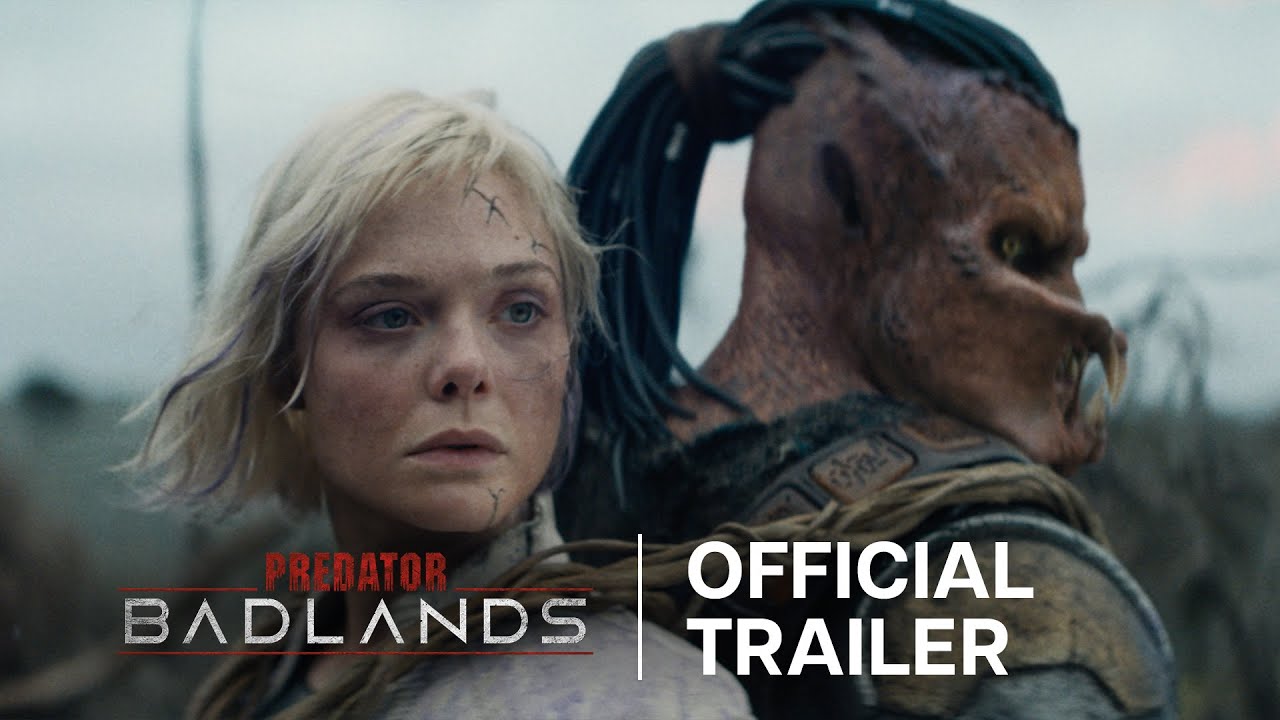
One of the movie’s boldest choices is to flip the franchise’s premise: instead of humans being hunted by an implacable killer, Badlands centers on a sympathetic Yautja named Dek (played by Dimitrius Schuster-Koloamatangi). Dek is an under-sized predator written off as unfit for the harsh social order of his people, who must journey to the fatal wasteland planet Genna and slay a legendary beast called the Kalisk to prove his worth.
On Genna, Dek forms an unlikely alliance with Thia (Elle Fanning), an enthusiastic Weyland-Yutani synth who’s missing her legs. The film also introduces Bud, an armadillo-like, wide-eyed creature whose presence evokes the same protective-awe that made Baby Yoda a cultural phenomenon. Rather than emphasizing terror, Badlands mines humor and warmth from the odd-couple chemistry between a talkative synth and a laconic hunter. Moments of gentle comedy — such as Bud mimicking Dek’s bedtime routine — and Thia’s insistence that leadership means protecting a family give the story an unexpectedly tender center, a sharp contrast to the franchise’s grisly origins.

Tonally, Badlands feels closer to the visually lush, family-focused output of Avatar — another legacy property Disney acquired from Fox — than to the franchise’s original horror roots. It explores familiar motifs: what people will sacrifice for kin, whether by blood or by choice, and the consequences of exploiting a rich natural world. These ideas are presented earnestly but without deep philosophical probing; antagonists are sketched broadly, and the film soon drifts back toward lighter, more whimsical set pieces. A notably silly sequence involving Thia’s detached legs becomes the film’s most elaborately staged action moment, trading grit for campy spectacle.
The movie’s greatest strengths are technical: the creature design and CG work are outstanding. Bud and the Kalisk convey a surprising range of expression, and Genna itself feels like a hazardous ecosystem designed to turn every shot into a potential trap. Background activity constantly reminds you that this planet is lethal — predators and prey are in constant contention, and the environment often plays as big a role in the carnage as any character.
Some of the monstrous set pieces recall designs from other contemporary sci-fi horror, like Alien: Earth, but Badlands treats destruction more like spectacle than extended menace. The result is an odd hybrid: a franchise historically built on stealthy, remorseless violence that has been repackaged into a broadly accessible, family-friendly adventure. It’s not a failure — the film is entertaining and impeccably crafted — but it’s unmistakably Disney-fied, trading much of the original series’ bite for charm and spectacle.
Related reading: How Disney’s Fox purchase reshaped Hollywood · X-Men coverage · Fantastic Four and the MCU
Source: Polygon
 Ryan Reynolds’ “Mayday” receives positive reviews from critics
 Michael Keaton to Direct Western Starring Morgan Freeman
 “Daddy’s Daughters” wedding sequel to be released in 2027
 Halle Berry and Colin Firth to Star in New Rom-Com
 Netflix Begins Filming New Dan Brown Adaptation
 Spider-Noir series canceled after first season
 Actors cast as Dobby and Tom Riddle for Harry Potter season two
 International “Doker” Film Festival Kicks Off in Moscow