Orbitals Is the Best Co-op Game Since It Takes Two and the Best Platformer Since Astro Bot
Dedicated co-operative titles like Orbitals—experiences built exclusively for two players without a solo campaign—remain remarkably scarce. This paradox is especially puzzling given their immense popularity. Swedish developer Hazelight has carved out a remarkably lucrative, virtually uncontested space crafting exceptional two-player adventures. While Hazelight’s projects are mid-sized productions, their commercial impact is astronomical; 2021’s It Takes Two has surpassed an astounding 30 million copies sold. The studio attributes this triumph to an overwhelming consumer appetite contrasted with a severe shortage of quality co-op experiences.
Regardless of your stance on creative director Josef Fares’ overtly sentimental narratives, Hazelight excels in this domain. However, no genre can evolve without healthy competition. Enter Orbitals developer Shapefarm, a Tokyo-based studio established by Marcos Ramos and Jakob Lundgren, a veteran designer formerly with Hazelight.
Shapefarm isn’t attempting to reinvent this specific brand of co-op puzzle-platformer, and Lundgren readily acknowledges that his team operates within the established philosophy of his former employer. Yet, Orbitals manages to elevate the standard. This Nintendo Switch 2 exclusive is visually sharper, remarkably polished, finely focused, and practically overflowing with creative mechanics. Simply put, it is an absolute joy to play.
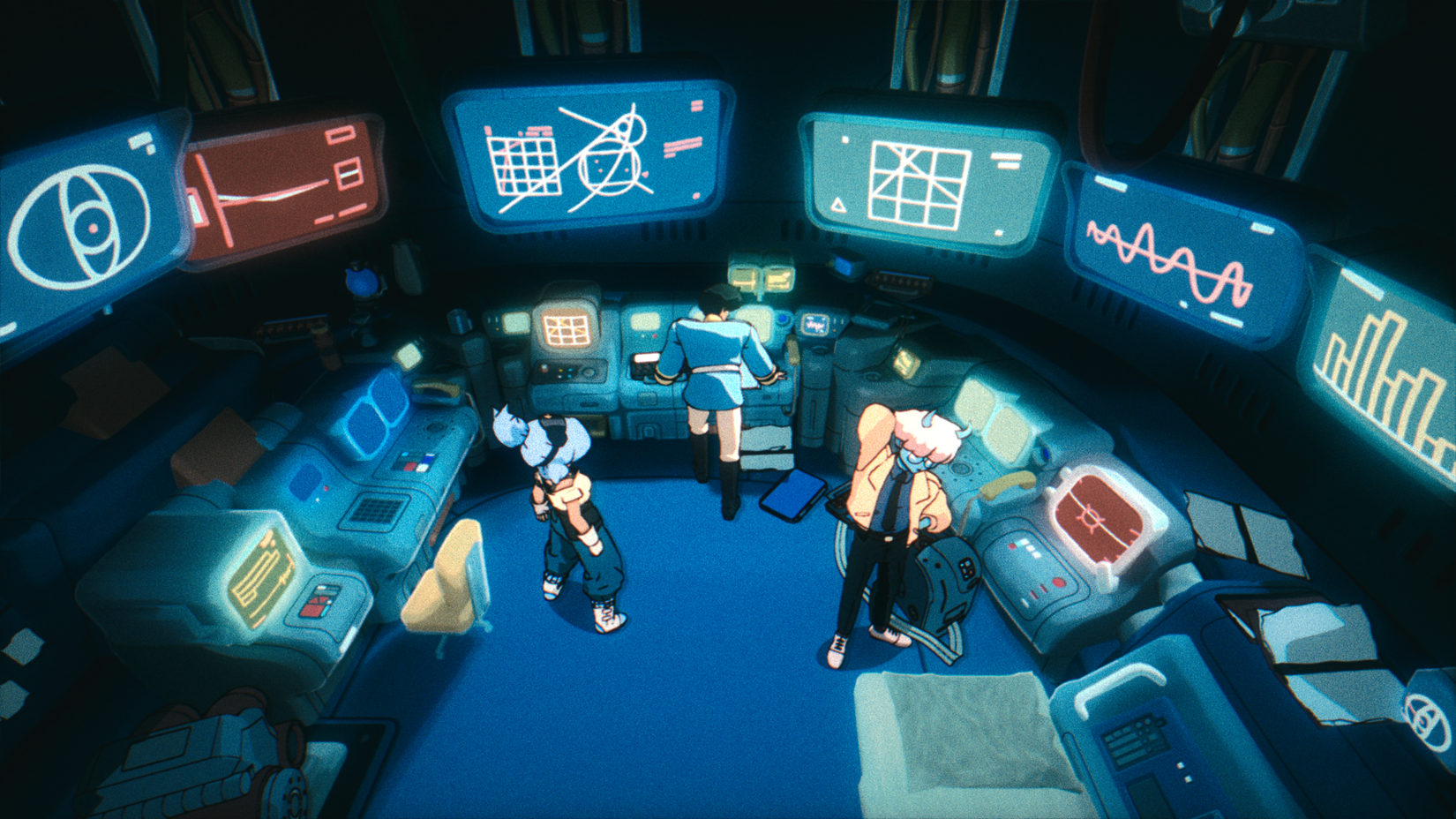 Image: Shapefarm/Kepler Interactive
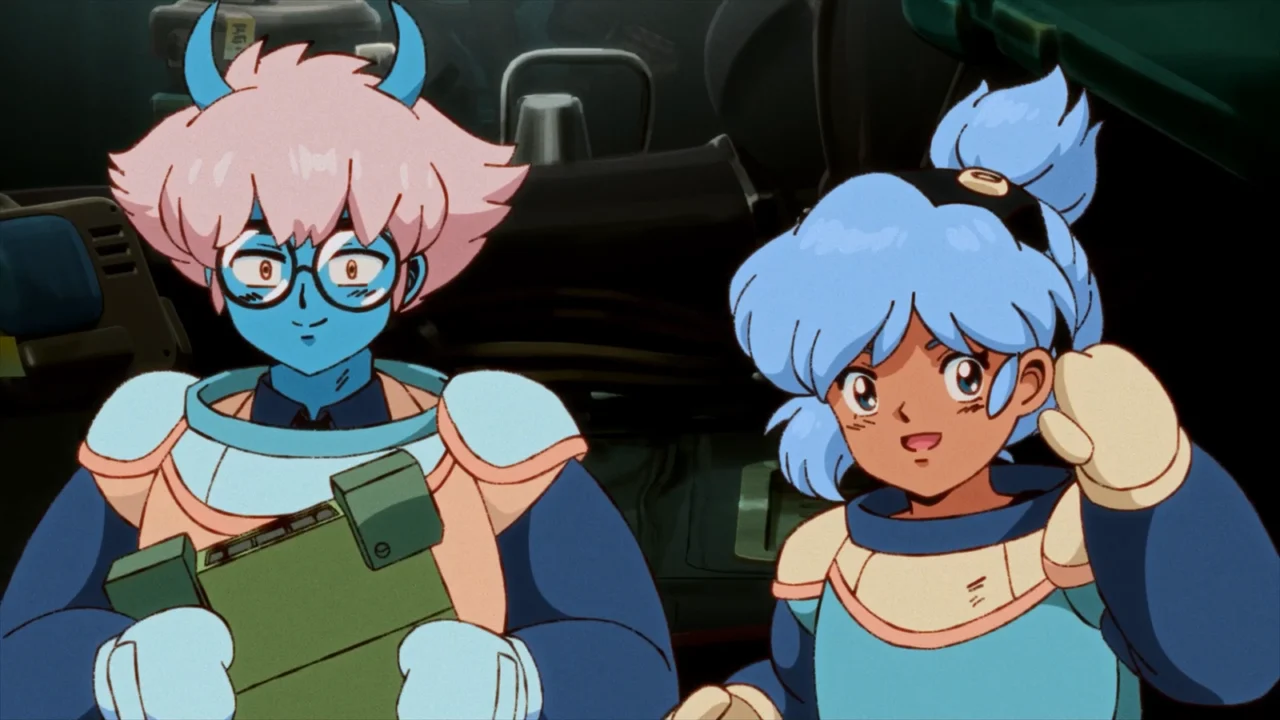
From the outset, Orbitals captivates players through its distinct artistic direction. Serving as a love letter to 1980s anime, it boasts washed-up pastel tones and a soft, dreamy presentation reminiscent of traditional animation cels transferred onto 16mm film and broadcast via vintage cathode-ray displays. While Shapefarm cites inspirations like Neon Genesis Evangelion and Cowboy Bebop, the game equally evokes classic Franco-Japanese co-productions such as Ulysses 31 and The Mysterious Cities of Gold—perhaps due to the seamless blend of European narrative direction and Japanese aesthetic sensibilities.
Dropping players directly into the action much like a mid-season anime episode, Orbitals establishes its premise without excessive exposition. Protagonists Maki and Omura are youthful inhabitants of a space station imperiled by an encroaching cosmic tempest. Having survived a similar spacetime fracture in their youth through consciousness uploads into instantly regenerating artificial bodies, the duo possesses an in-universe justification for their immediate respawns following failed challenges.
Driven by youthful exuberance and relative inexperience, Maki and Omura set out to safeguard their home by exploring unstable stellar ruins, scavenging artifacts, and restoring archaic machinery. Ultimately, the overarching plot functions primarily as a framework for classic video game objective hunts, which works entirely in the game’s favor. The narrative charm stems less from heavy-handed thematic messaging and more from the gradual, endearing development of its lovable cast.
 Image: Shapefarm/Kepler Interactive
Maki and Omura approach their perilous journey with an infectious, carefree optimism. Orbitals refuses to take itself too seriously, supported by energetic voice performances spanning English, Japanese, and additional languages. Visually, however, the characters truly shine. The deliberate animation style gives their 3D models the jittery, expressive quality of traditional 2D cels imbued with a delightful, clumsy grace—a technical marvel that simultaneously captures a deeply nostalgic tone while reinforcing the buoyant atmosphere.
Gameplay revolves around piloting a retro-futuristic vessel—with one player taking the helm and the other managing the gun turret—toward eccentric cosmic scrapyards. Once landed, players utilize a compact toolkit featuring a grappling hook, an energy laser, and a water hose to solve environmental puzzles and assist one another. Every sequence cleverly repurposes these instruments: alternating between the hose and laser to freeze platforms or manipulate the scale of snowballs, or utilizing the laser to sustain a malfunctioning robot escorting your partner across a chasm. The tools feel satisfyingly weighty, reflecting Shapefarm’s meticulous attention to tactile interaction and intuitive puzzle design.
Lundgren has noted that out of consideration for players’ limited free time, Shapefarm deliberately avoided making Orbitals excessively long or punishingly difficult—hence the instantaneous respawn system. Nevertheless, the adventure is far from toothless. Recognizing that healthy cooperative friction is essential for maintaining engagement, the developers integrate demanding platforming sequences and nuanced logic puzzles. The core satisfaction derives from syncing with your partner, as the game frequently stretches your coordination just far enough to make reuniting immensely rewarding.
 Image: Shapefarm/Kepler Interactive
This triumphant sensation of shared success is precisely what made It Takes Two such a phenomenon. Yet, it raises the question: why aren’t more studios catering to this demand? Naturally, cooperative games present an inherent logistical hurdle requiring a dedicated partner, making scheduling a challenge even among avid households. Opting for a single-player focus is undeniably safer, but designing exceptional co-op remains an intensely specialized and unforgiving discipline.
A cooperative game’s success relies entirely on spontaneous human interaction—the banter, collaborative problem-solving, and synchronized tests of skill. The magic materializes the moment two players fall into a seamless rhythm, whether through verbal communication or intuitive synergy. The repetitive loops and familiar pacing underpinning traditional single-player design simply won’t suffice here; co-op developers must introduce genuinely novel cooperative concepts every few minutes. Doing so requires an immense reservoir of creativity.
Orbitals possesses creativity in spades. It stands as a masterclass in pacing, deploying every design principle in the book to unite partners and sustain their engagement. Beneath its profoundly nostalgic veneer lies an experience of ceaseless innovation, making it perhaps the most inventive and delightful family-oriented action-adventure since Astro Bot. Shapefarm executes this vision with extraordinary charm and effortless grace. With two industry heavyweights championing this beloved yet underrepresented style of play, the question remains: who will step up next?
Orbitals releases exclusively for Nintendo Switch 2 on Sept. 3rd.
Source: Polygon
Related articles
 PlayStation Fans Urged to Boycott Turning On PS5
 Pre-orders for Warhammer: Necromunda Goliath and Escher Fighter Boxes Open September 5
 VeryCool Reveals The King of Fighters XIV Blue Mary Figure
 Rockstar Cut Planned Refrigerator Mechanic From GTA VI
 Sukuna promises something interesting on the first poster for Jujutsu Kaisen Season 4
 How Batman Comic Knightfall Anticipated Jujutsu Kaisen
 Xbox Reportedly Leaks October Game Pass Title From Konami
 Street Fighter Movie Director Discusses Tone of Upcoming Adaptation