
One Piece’s God Valley Flashback Proves You Shouldn’t Trust Legends

Spoilers for One Piece chapter #1164.
The maxim “history is written by the victors” recurs throughout Eiichiro Oda’s One Piece, and chapter #1164 brings that theme into sharp focus. Myths and official records often flatten complicated lives into caricatures: Oden isn’t merely a theatrical patriot, Kuma isn’t simply a cruel antagonist who tore the Straw Hats apart, and the Davy Jones legend carries degrees of meaning beyond a pirate’s tally of flags and followers.
Chapter #1164 — and the broader God Valley flashback — acts as a corrective, urging readers to resist snap judgments and to look for nuance beneath familiar narratives. What feels like a tidy, government-approved version of the past frequently conceals far messier, more humane truths.
 Image: Viz Media/Eiichiro Oda
The God Valley sequence ranks among One Piece’s most affecting flashbacks: not just for the spectacle of legendary figures at their prime, but because it shows them before myth swallowed their humanity. The version of history endorsed by the World Government — and amplified by later retellings — reveals only fragments. When you strip away those fragments, Roger, Xebec and even Garp appear as complex people shaped by circumstances rather than as one-dimensional archetypes.
Long before Roger earned the title Pirate King he was a restless, passionate adventurer. The epic voyages that define his legacy came after a formative, lesser-known journey: the first expedition that left deeper marks on his character than any crowning achievement. It was through these early trials — and through relationships like the one with Shakky — that he encountered the deeper rot within the world’s power structures.
In God Valley, Roger learns truths the Government would prefer buried: the “games” that amount to mass murder, the grotesque transformations of the Five Elders, and even the existence of Imu, the unseen authority at the top. Discovering a child tied to the God’s Knight on his ship forces Roger to confront the human cost of those secrets, and that confrontation likely helps steer his search for truth and purpose later in life.
 Image: Viz Media/ Eiichiro Oda
Much of what readers previously believed about Rocks D. Xebec came from Sengoku’s narrative — a version that echoed World Government talking points and painted Xebec as an obsessive would-be tyrant. Chapter #1164 complicates that image. Sengoku was not an eyewitness at God Valley; his account reflects the official script designed to justify what the World Government wanted the public to remember.
The flashback instead presents Xebec — whose full name appears to be Davy D. Xebec — as a man driven by conviction and by duty to his people. Whether motivated by revenge, justice, or the desire to protect his clan, he abandons grand ambitions when the lives of innocents are at stake. That devotion, tragically, leads to his enslavement by Imu. Stripped of autonomy, Xebec becomes a shadow of himself, begging Roger and Garp for release — a plea that reframes him from monster to pitiable victim in this chapter.
Some readers have theorized Xebec may yet survive beneath Imu’s control, perhaps even functioning as the Man Marked By Flames who ferries the World Government’s last Poneglyph into hiding. The manga leaves room for such possibilities, and this ambiguity only reinforces how history can be masked by power.
 Image: Viz Media/ Eiichiro Oda
Garp’s role in these pages is equally revelatory. Fans have long criticized him for choices both before and after the timeskip — from how he reacted to Ace’s fate to his actions at Hachinosu — prompting questions about his loyalties. The God Valley account reframes those judgments. When Garp first confronts the Elders’ true forms, he responds with immediate violence, not passive acceptance. His temporary alliance with Roger emerges not as complicity with a tyrant’s overthrow, but as an act of defiance against Imu’s calculated cruelty.
That clash with the World Government explains much about Garp’s current disposition: his animus toward Celestial Dragons, his reluctance to accept higher rank that would put him under their command, and the contradictions that have perplexed readers for years.
 Image: Viz Media/ Eiichiro Oda
Although the God Valley flashback is relayed through Loki — a present-day narrator who did not directly witness the events — the chapter treats his account as credible. The manga may later clarify why Loki’s memory or perspective is so reliable; his unexplained Devil Fruit and tragic past (including the fate of his father Harold, ruler of Elbaph, and the consequences of Domi Reversi) make him a character whose testimony carries heavy moral weight. Loki’s status as someone condemned by history makes him an apt vessel for revealing the suppressed truth.
Oda’s message is clear: accept histories with skepticism. Characters and eras that have been boxed into tidy legends usually contain contradictions, secrets and human imperfections. Even Luffy’s quest — once read simply as a desire to be the King of Pirates — has accumulated deeper resonances, and artifacts like the Gomu Gomu no Mi hold meanings far beyond their surface appearances. Across One Piece, what we are shown by official accounts often masks a far richer, darker reality.
Source: Polygon
Related articles
 Ryan Reynolds’ “Mayday” receives positive reviews from critics
 Michael Keaton to Direct Western Starring Morgan Freeman
 “Daddy’s Daughters” wedding sequel to be released in 2027
 Halle Berry and Colin Firth to Star in New Rom-Com
 Netflix Begins Filming New Dan Brown Adaptation
 Spider-Noir series canceled after first season
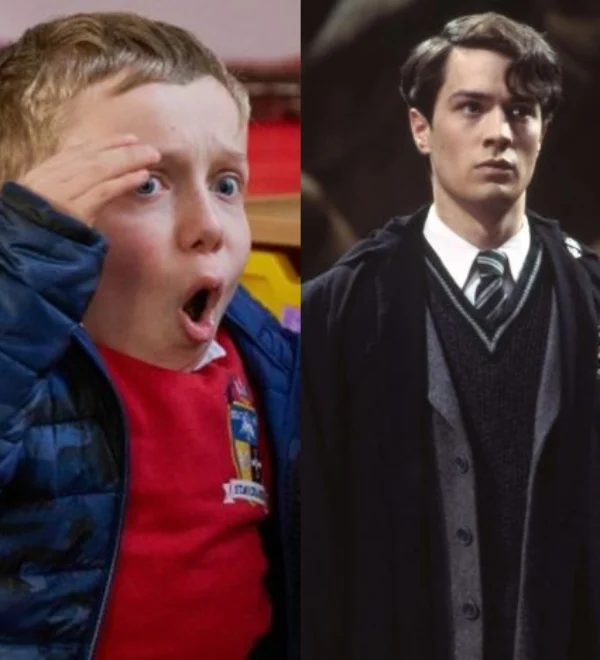 Actors cast as Dobby and Tom Riddle for Harry Potter season two
 International “Doker” Film Festival Kicks Off in Moscow