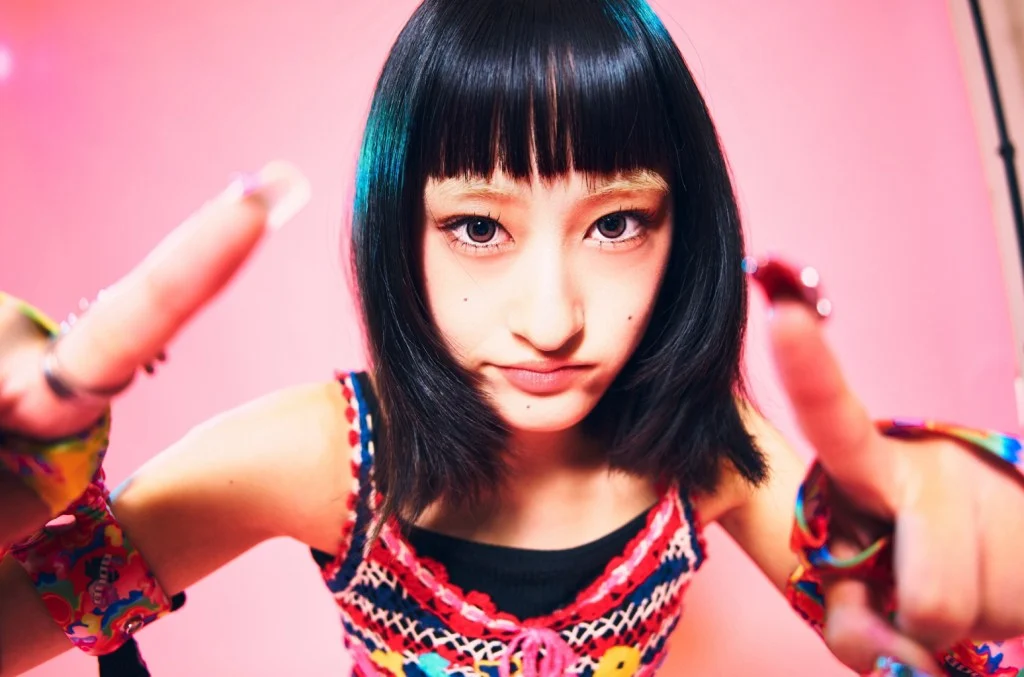
Next-Gen TikTok Pop Icon Sasane Talks Creative Roots & Playful Spirit: Billboard Japan Monthly Feature Interview
Sasane
Ayaka Horiuchi
Trending on Billboard
Billboard Japan recently sat down with Sasane as part of its monthly “MONTHLY FEATURE” series, which showcases visionary artists and boundary-pushing projects currently shaping the musical landscape. The meteoric 18-year-old rising star has captured international attention with her mesmerizing debut single, “mosi mosi?”
Since March 2025, Sasane has been sharing acoustic guitar performance videos on TikTok, rapidly amassing a devoted global following drawn to her striking visual identity and magnetic persona. Her breakout April release, “mosi mosi?”—instantly recognizable by its inviting opening inquiry, “Hello, hello, can you hear me?” and its wildly infectious chorus featuring the hook “Denpa, denpa no kai-denpa”—has blossomed into a full-scale cultural phenomenon. The track has surpassed 3 billion streams on TikTok and claimed the No. 1 spot on Billboard Japan’s JAPAN Heatseekers Songs chart for the week of June 10. She quickly maintained this unstoppable momentum by releasing her sophomore single, “otukare,” in July, which is already generating fervent online discussion.
From childhood dance training to formal design education in high school, Sasane has synthesized a diverse array of artistic influences. We spoke with the burgeoning pop auteur to uncover how these multifaceted creative threads ultimately converged into her distinctive musical universe.
You’ve explored a remarkably diverse spectrum of creative disciplines, ranging from dance to modeling.
My journey into dance began at the age of six, largely inspired by my mother. It was hip-hop, and I fell in love with it immediately. That experience planted the initial seed for wanting to project something from deep within and communicate my true self outwardly.
What specific aspects of dancing resonated with you the most?
I deeply cherished the ability to translate sound into physical movement and let my body react purely to instinct. I pursued it intensely until roughly my first year of junior high, even performing at intimate local showcases. Witnessing a genuine reaction from an audience brought me immense joy, which is why external connection has always remained central to my artistic philosophy.
Does dance represent your earliest foundational memory connected to music?
Without a doubt. I was obsessed with TLC, an artist introduction courtesy of my dance instructor. Their tracks possessed an incredible sense of playfulness that made moving to them profoundly fun.
Your online presence heavily features acoustic guitar cover performances on TikTok. When did you actually pick up the instrument?
Literally right around the time I began uploading videos.
Meaning around March 2025?
Exactly. I typically grow restless with hobbies quite easily, but I realized that as long as people were actively watching, I could sustain my motivation. Consequently, I started publishing videos partly as a disciplined way to practice.
Though it might be difficult to articulate, where do you draw the psychological line between losing interest and maintaining enthusiasm?
Hmm, I suppose it boils down to whether something continues to feel genuinely enjoyable. But as I mentioned before, audience engagement plays a monumental role in keeping me driven.
Does active communication via social media serve as a primary source of encouragement for you?
Definitely. Occasionally, supporters send me extraordinarily thoughtful, lengthy messages, and I find myself wondering, “Why would someone take the time to write all this for someone like me?” It touches my heart every single time.
I understand you formally studied design during your high school years.
Yes, I did. That background has proved invaluable for conceptualizing things like video backdrops and overall visual presentation. I have an abiding passion for collecting print magazines, and the physical collages I assemble from cutting them up actually serve as the backdrops for my performance videos. I always remain intentional about ensuring viewers can instantly identify my work purely through visual aesthetics.
What initially inspired you to pursue formal design studies?
I always loved sketching, but I viewed design as a discipline dedicated to responding directly to external needs and human utility. I figured that if I could master that problem-solving approach, I could effectively leverage my personal strengths.
What core lessons or techniques from that educational chapter have stayed with you?
Fundamentally, the process involves generating a massive volume of concepts—sometimes up to 50 iterations—before carefully selecting the most compelling one and discovering the right conceptual combination. I apply this exact methodology to my video content: brainstorm extensively, discard what falls flat, and relentlessly refine what works.
How do you ultimately determine which concepts deserve to survive the editing process?
It entirely depends on whether an idea genuinely sparks excitement within me.
How would you personally characterize your unique singing voice?
While I have always adored singing, I initially struggled to appreciate the sound of my own voice. Whenever I played back recordings, it invariably sounded significantly higher than I perceived it in real-time.
Meaning it felt somewhat disconnected from your self-image?
Precisely. However, as an audience began embracing it, I learned to accept it myself. It has transformed into an artistic asset I can proudly lean into, and nowadays, I genuinely relish the act of singing. When laying down tracks for “mosi mosi?”, I deliberately injected a bright, animated quality to emphasize the character of the delivery, sensing it would make the listening experience far more catchy.
The opening line, “Hello, hello, can you hear me?”, truly encapsulates that vibrant persona.
I re-recorded that specific segment an countless number of times! [Laughs]
Many of your TikTok covers purposefully begin with a spoken introductory remark prior to the musical performance.
I wanted an immediate psychological hook to instantly capture the listener’s attention. By dropping a spoken phrase related to the featured song, viewers would instantly recognize the track and lean in, which proved to be an exceptionally effective strategy.
You’ve interpreted an expansive variety of musical genres. When the time arrived to craft your own original material, what sonic direction did you wish to explore?
Covering HALCALI’s “Otsukare SUMMER” generated an overwhelming response from international listeners, convincing me that the Shibuya-kei aesthetic harmonized naturally with my vocal timbre. That served as a clear guiding reference for my initial direction.
“mosi mosi?” was brought to life alongside producer Tamico Mukoda. How would you describe your collaborative dynamic with her?
Her lexicon and choice of vocabulary are endlessly fascinating—that was the primary draw that made me eager to work with her. She effortlessly introduces phrasing I have never encountered anywhere else. She possesses a staggering depth of knowledge, and I look up to her immensely.
What does your creative workflow together typically resemble?
Essentially, I just talk at length about myself—mundane daily anecdotes and random observations from my life.
Which specific concepts surfaced during the conceptualization of “mosi mosi?”
“Space,” I believe. Ms. Mukoda remarked, “Sasane, you have kind of an extraterrestrial vibe,” which gradually evolved into the idea that crafting a denpa song would be an ideal fit.
“mosi mosi?” brilliantly incorporates those classic Shibuya-kei and eccentric denpa music sensibilities. What discussions shaped the underlying production?
My primary instruction was simply, “Please have absolute fun with it!” [Laughs] Additionally, I wanted to evoke a mood that felt simultaneously nostalgic yet refreshing. Upon hearing the finished product for the first time, I was profoundly moved—thinking, “Wow, this is the truest reflection of who I am,” lyrics included. The line “Even if the cat hates me, even if Mom scolds me” actually originated from a real-life anecdote I shared during our conversational sessions.
So the song is deeply rooted in authentic personal experiences.
Absolutely. I felt it was the most fitting foundation possible for my very first original release.
How did it feel witnessing the public reception once the track officially landed on TikTok?
Given that my history was strictly limited to cover videos, I fully anticipated significantly lower view counts than usual. On the night of its premiere, I was far too anxious to fall asleep, but the overwhelming reception exceeded all expectations and brought me profound happiness.
I thought it was brilliant how the video cleverly masquerades as a routine acoustic cover for the first few seconds.
Initially, I genuinely intended to kick it off as a traditional acoustic rendition, but I ultimately figured using the official studio track would create a stronger impact. Seeing overseas fans leaving comments like “Denpa, denpa” made me realize, “Wow, this is genuinely crossing borders!”
Had you already cultivated a strong international listenership prior to this release?
Quite a few supporters were tuning in from abroad. I always uploaded with the secret hope that audiences worldwide might discover my music, and even during my strictly cover-oriented days, I regularly received remarks noting, “It’s like she stepped straight out of an anime.”
You maintain a remarkably casual and consistent habit of replying directly to comments, don’t you?
Yes, that interaction matters deeply to me. I feel overwhelmingly grateful that people take the time to watch, which naturally leads me to reply as if we are close friends hanging out.
You recently delivered your maiden live performance at a high school in South Korea. What lasting impressions did that experience leave behind?
Despite the language barrier, the crowd sang along with astounding enthusiasm. They crafted handmade signs, showered me with thoughtful gifts, and established an undeniable sense of mutual connection. It was an unforgettable experience.
Was that your absolute first time performing live before an audience?
Yes, my very first time on stage. I am already eager to do it again! Although the nerves were paralyzing at the outset, my mantra throughout was simply, “Let’s focus on having fun and making sure everyone else shares that joy.”
On July 8, you unveiled your second single, “otukare,” which is similarly enjoying a viral trajectory.
I hold a deep fondness for the sentiment behind “Anma muri shinasan na” (“Don’t push yourself too hard”). I appreciate that expression because it avoids the typical demands to “keep striving” or push past one’s limits; instead, it offers genuine affirmation and emotional validation. I wanted to construct a song capable of delivering precisely that comforting message.
A phrase dedicated to honoring hidden effort and providing gentle solace.
During my high school commute home, I used to observe everyone packed onto the train—classmates, weary office workers, everyday people—who all appeared utterly exhausted. The core concept emerged directly from my silent wish to tell them “It’s okay” through a vibrant pop medium.
What were your initial impressions upon listening to the instrumental demo?
Every single section possessed a distinct sense of playfulness that immediately clicked with my sensibilities. The arrangement kept shifting dynamically. I wanted listeners to be thoroughly entertained without ever experiencing fatigue, a creative vision I had communicated beforehand.
What specific aspects did you prioritize inside the recording booth?
Recording “mosi mosi?” proved exceedingly challenging. While I desperately wanted to channel that radiant, high-energy persona, capturing the exact vocal color I envisioned required immense effort. Benefiting from that rigorous learning curve, I felt fully equipped to secure an exceptional vocal performance for “otukare.” This time around, the focus shifted toward wholesale emotional validation, allowing me to approach the delivery with a much softer, nurturing touch.
It sounds as though you discovered an entirely new dimension of your vocal expression.
I truly did. I feel like I finally comprehended how to navigate my own instrument in a meaningful way.
I imagine spending roughly a year continuously covering diverse musical styles forced you to confront your own voice head-on.
That is entirely true. Hearing followers leave suggestions like, “I think this specific song style would suit you,” prompted me to explore those recommendations, frequently leading to revelations like, “Oh, so this suits me as well.”
As you continue your musical journey moving forward, are there specific genres you hope to experiment with?
I listen to a substantial amount of R&B, though I often feel it doesn’t intuitively align with my vocal tone… Even so, as long as I preserve my passion for singing without sacrificing my core character, I trust audiences will connect with it. I intend to keep experimenting, having fun, and fiercely protecting that playful spirit.
Do you hold any overarching ambitions, goals, or dreams for the future?
I want to stage a live concert in outer space! I’m going to take everyone into the cosmos with me. [Laughs]
—This interview by Takuto Ueda originally appeared on Billboard Japan
Leave a Comment
Related articles
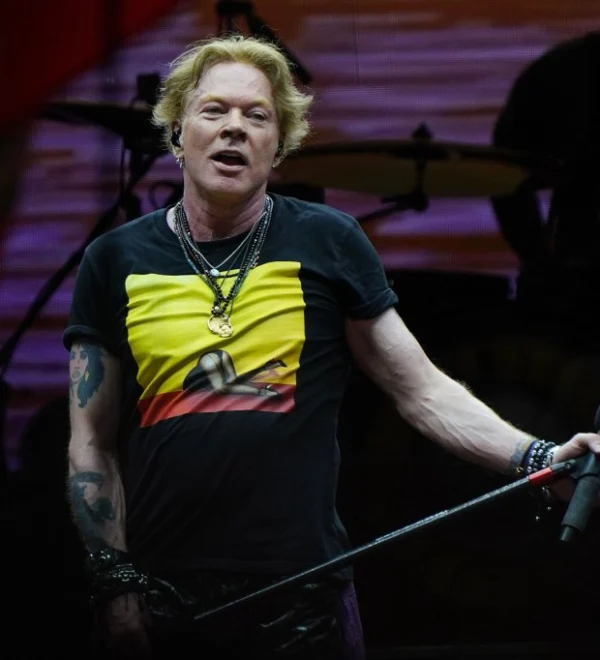 Axl Rose Opens Up About TMJ Struggle: ‘Feels Like My Jaw Is Going to Fall Off’
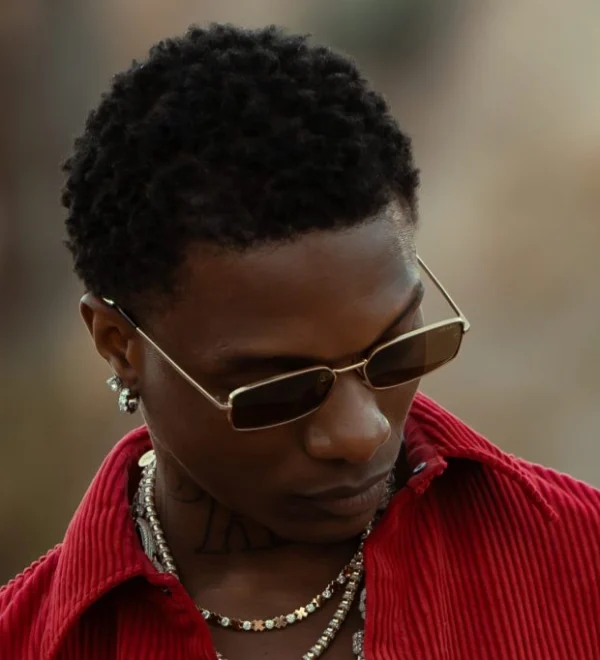 Wizkid to Headline Opening Night of Detty December Fest 2026
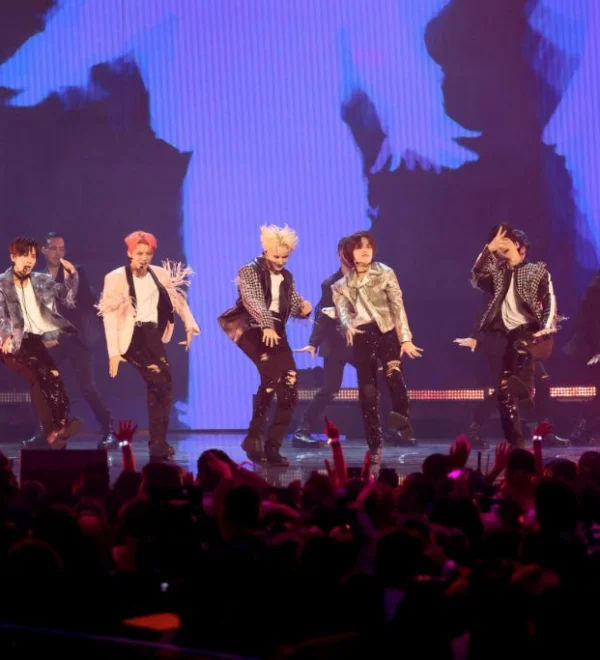 Lauryn Hill & Wyclef Jean, TOMORROW X TOGETHER, Lenny Kravitz & Lainey Wilson to Headline 2026 Global Citizen Festival
 Fatboy Slim’s ‘Better Living Through Chemistry’ Receives 30th Anniversary Release
 Taylor Swift’s ‘I Bet You Think About Me’ Removed from Trump’s TikTok Post
 RÜFÜS DU SOL Plan to Lay Low For ‘A Solid Amount of Time’
 Lady Gaga, Prince, Queen & More: Who Has the Best Billboard Hot 100 No. 2 Hit of All Time? Vote!
 Sara Ito on Self-Belief and Life as an L.A. Dancer: Billboard Japan Women in Music Interview