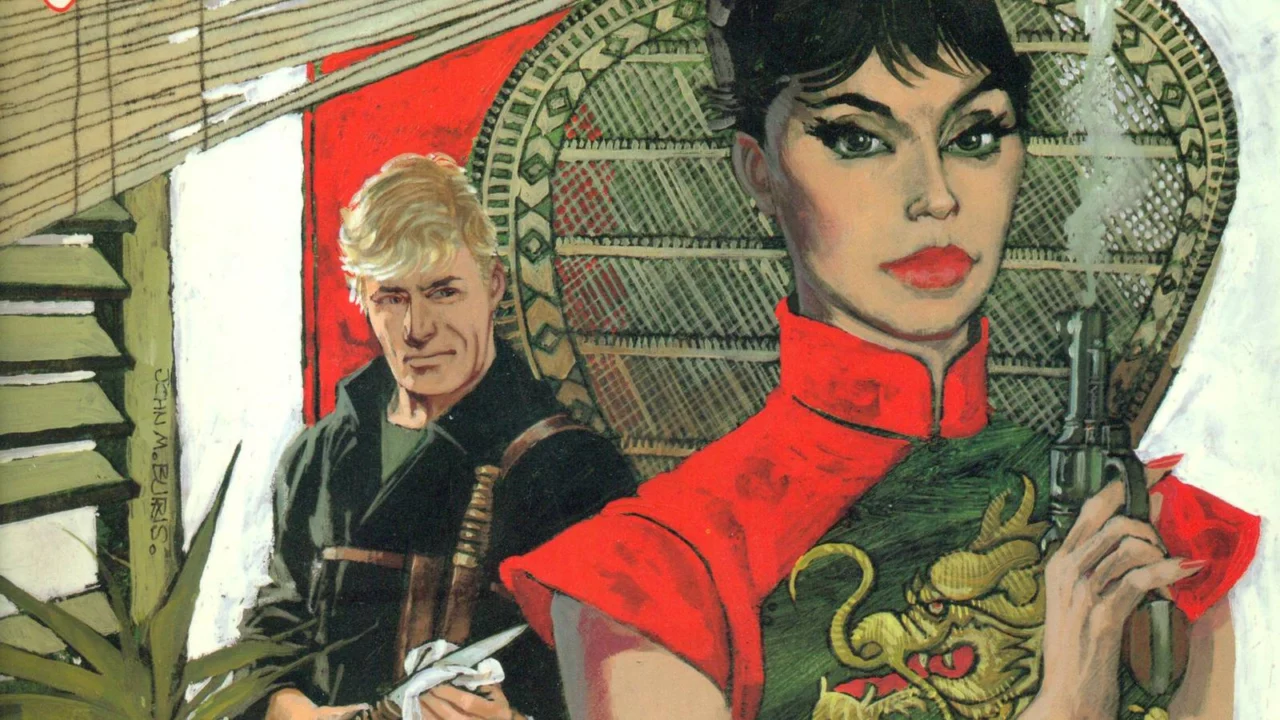
Modesty Blaise, the 1960s Action Comic Strip Few Americans Know, Merits a Revival
The internet has made it much easier to find obscure comics from around the world. Examples include bandes dessinées, science-fiction serials and stories buried in old magazine anthologies. For every comic translated for release outside its home country, such as Valerian or Yoko Tsuno, dozens more never are. Many are long out of print and survive online thanks to small communities of fan translators and preservationists. Finding a good one can feel like striking gold.
Newspaper comics face the toughest odds. People often treat them as disposable in ways they don’t treat graphic novels, and surprisingly few build an international audience. Andy Capp and Fred Basset are exceptions. Both are British strips that have substantially outlived their original creators. The British Dennis the Menace is not one of them. It debuted in Beano in 1951, five days after Hank Ketcham started a strip of the same name in America.
The British adventure comic Modesty Blaise was another strip that stayed mostly outside the American mainstream. Its creator, the late Peter O’Donnell, wrote it for a newspaper run that lasted from May 1963 to Feb. 2001. It still has a dedicated audience in much of the world more than 25 years after it ended. In the United States, though, American newspapers carried it only intermittently. The usual explanation is its frequent nude scenes, which made it too spicy for American readers. (Her name is Modesty, but her habits are another matter.) The Detroit Free Press was the one long-running exception, and even it censored a couple of strips.
Most of the strip’s few U.S. fans came to it through a line of novels written by O’Donnell or one of two film adaptations. The 1966 film Modesty Blaise starred Monica Vitti and Terence Stamp. It was a campy box-office bomb, but it still has a cult following. That following led Quentin Tarantino to executive-produce My Name is Modesty in 2004, a film that shares only the name.
If you’re too young or too American to have read the original strips, they’re classics of the format. Not every storyline has aged well, but Modesty Blaise is one of the great adventure comics of the 20th century.
I first read it thanks to those online preservationists. You don’t have to go that route, though. Titan Books has collected the entire original run in 27 paperback volumes released between 2004 and 2017. The volumes include commentary from O’Donnell and several looks behind the scenes of the strip. You may have to dig to find them all, but every volume is still in print at the time of writing. If you like spy movies, crime dramas or crime shows like Leverage, you should check out Modesty Blaise.
Magnets for trouble
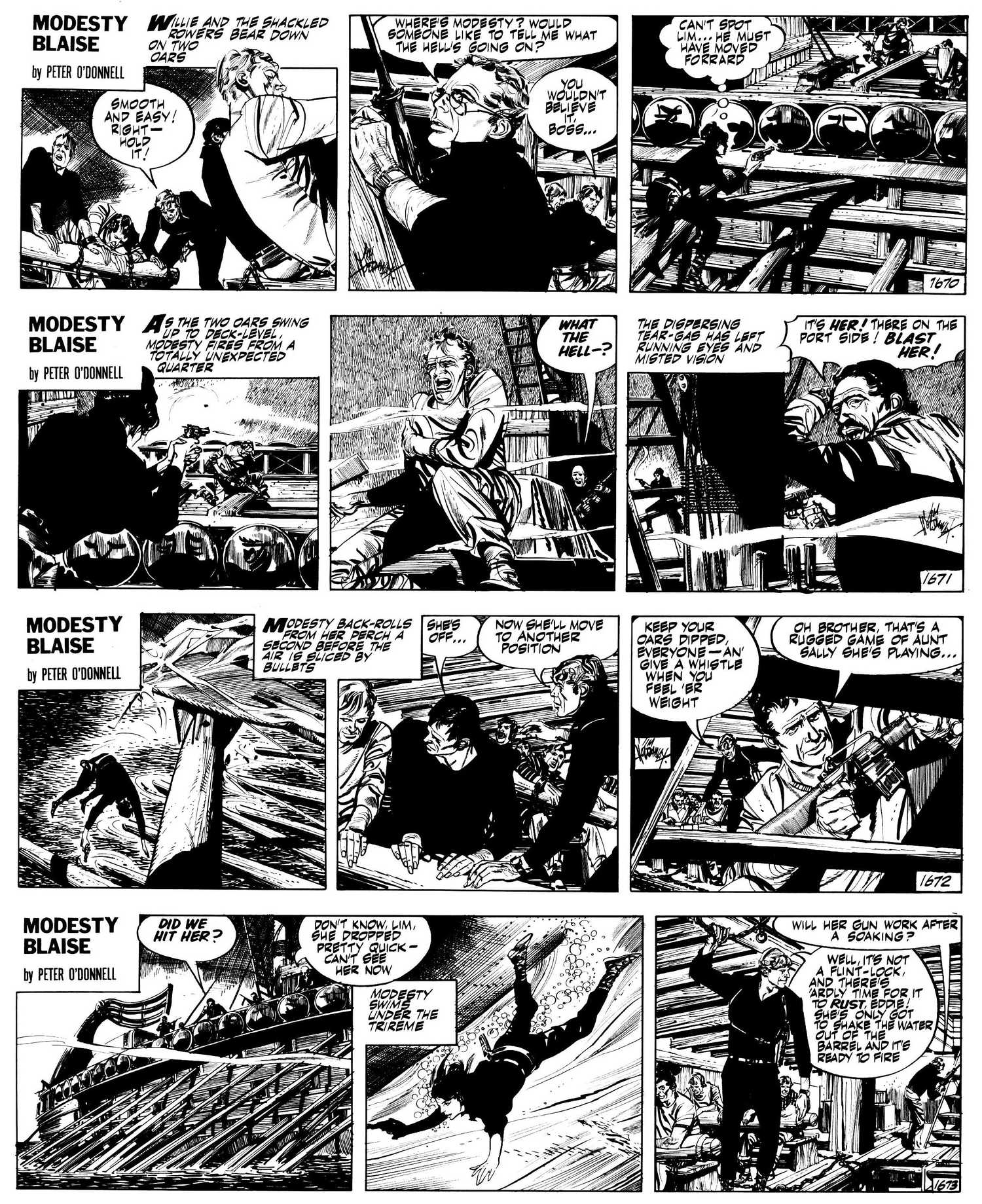
Modesty Blaise was “born walking” as an orphaned refugee in the Middle East after World War II. She knows nothing of her birth parents or her nationality. She eventually wandered into Tangier, took control of a local gang and built it into an international organization of anti-heroic criminals called the Network. Under Modesty, the Network thought nothing of grand larceny or corporate espionage. It also frequently crushed the drug dealers and human traffickers who operated in its territories.
After securing her own fortune, Modesty “acquired” UK citizenship and retired to London with her right-hand man, Willie Garvin. Both are widely traveled and wealthy, with years of training as thieves, spies and martial artists. Modesty is a crack shot, and Willie is an expert with throwing knives. British intelligence finds them irresistible and often hires them as freelance troubleshooters.
Their criminal pasts, unique skills and knack for danger also land them in trouble, both by choice and otherwise. Both have the pulp-fiction ability, embodied in modern work by Jack Reacher, to find an old friend or imperiled stranger wherever they go on Earth. My personal favorite example comes in “The Stone Age Caper.” Willie is lost in the middle of the outback and randomly encounters the one Aboriginal Australian he knows personally.
Early on, Modesty Blaise is a Cold War-era pulp action strip to its bones. It splits neatly into 95 individual storylines. Many pit Modesty and Willie against Communist organizations (“La Machine,” “Top Traitor,” “The Wicked Gnomes”). Other arcs involve small-time con artists (“The Girl From the Future,” “The Moon Man”), crime syndicates (“Death in Slow Motion,” “The Maori Contract”) or old rivals (“The Girl in the Iron Mask”). The stakes often stay low, and the strip benefits from it. Modesty is usually out for vengeance, justice or survival, not the fate of the Western world.
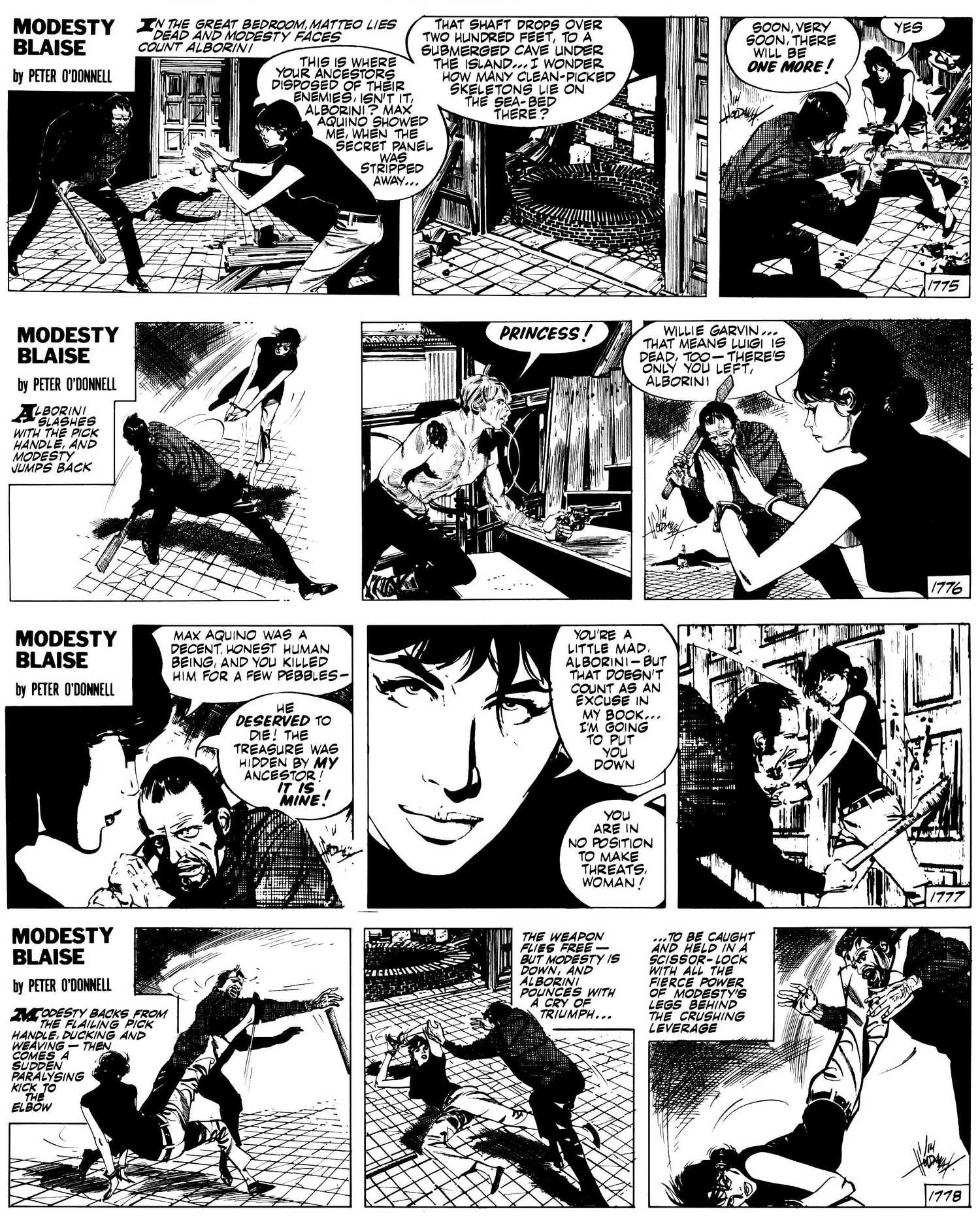
The strip’s original artist, Jim Holdaway, died suddenly in 1970. Spanish artist Enrique Badia Romero (Axa, Judge Dredd) illustrated much of the rest of the run. Other contributors included John Burns (2000 AD, Heavy Metal) and newspaper cartoonist Neville Colvin, who drew a couple of my favorite arcs, such as “The Balloonatic.” Private Eye‘s Pat Wright drew one and a half storylines in 1979.
Holdaway and Romero, the two best-known Modesty Blaise artists, had an incredible knack for economic storytelling. Both could do more with three panels than many later pencilers manage with a full page. Their work makes the strip a genuine thrill to read, because it fits surprisingly elaborate action scenes into an ordinary black-and-white comic strip. Add O’Donnell’s deft plotting and dialogue, and Modesty Blaise ranks among the best adventure serials of the late 20th century, on or off the comics page. Anyone learning to draw sequential art should study Holdaway and Romero.
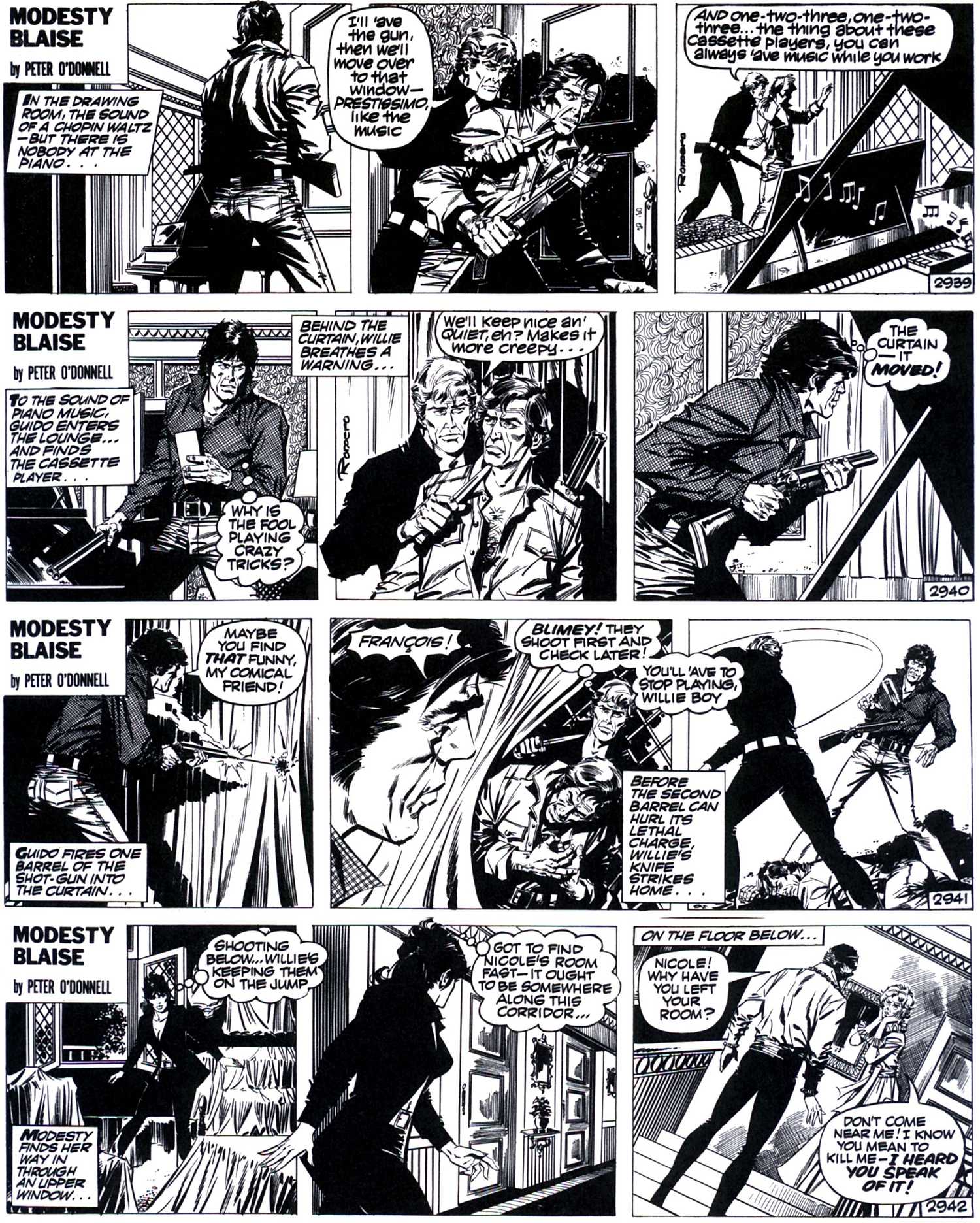
Not all of the strip has aged well. Sometimes that’s part of the fun of reading it in 2026, as when an obsolete device appears as a high-tech trump card. In “The Bluebeard Affair” (1972), Willie fools a couple of gunmen with a portable cassette player, which was new on the market at the time. Other stories make a big deal of ham radio, VCRs, Mace spray or the thermic lance.
At other times the strip is simply a product of its era. It was often ahead of the curve on issues like race, and both Modesty and Willie frequently stand against bigots on behalf of marginalized people. Some modern readers still find its outdated language controversial. As recently as 2020, a villain’s racism toward indigenous Australians in “The Stone Age Caper” (1971) led an Australian newspaper to pull reprints of Modesty Blaise.
Even with those caveats, Modesty Blaise deserves a place on the shelf of anyone who enjoys a good serial adventure. If you grew up in the United States, it’s one of the best comics you might never have heard of. Titan Books’ most recent collections are a high-quality way to catch up. Check it out.
Source: Polygon
Related articles
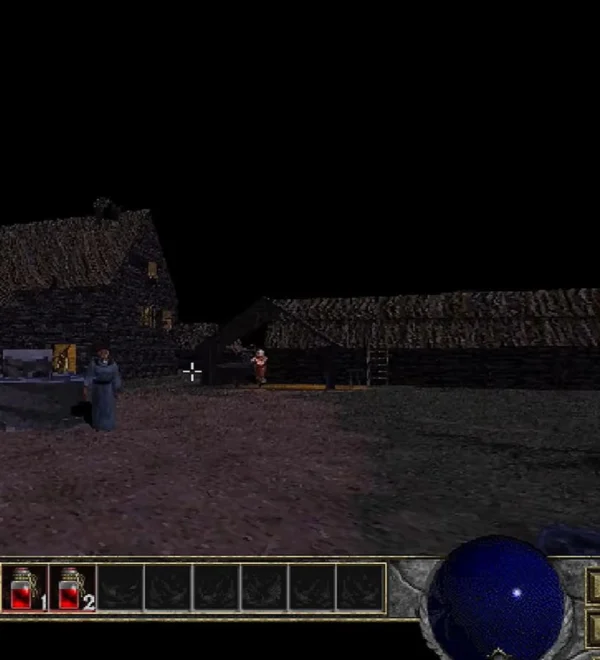 Modder Turns Diablo Into a 3D Shooter With Multiplayer and Scalable Interface
 Rockstar Co-Founder Says Bully and Red Dead Redemption Nearly Got Canceled During Difficult Development
 10 Nearly Flawless PS4 Games That Nobody Played
 Toxic Crusaders Gameplay Shown, Featuring Retro-Style Brawling
 Castlevania: Belmont’s Curse Launches on PC With Technical Issues
 GTA VI Suspected of Graphics Downgrade, Fans Offer Explanation
 Persona Creator Sums Up the Series in One Word and Explains What an Ideal RPG Should Be
 Quiet Express: Cabin 909 Is a Blue Prince-Style Mystery About a Train That Crashes Every 7 Days