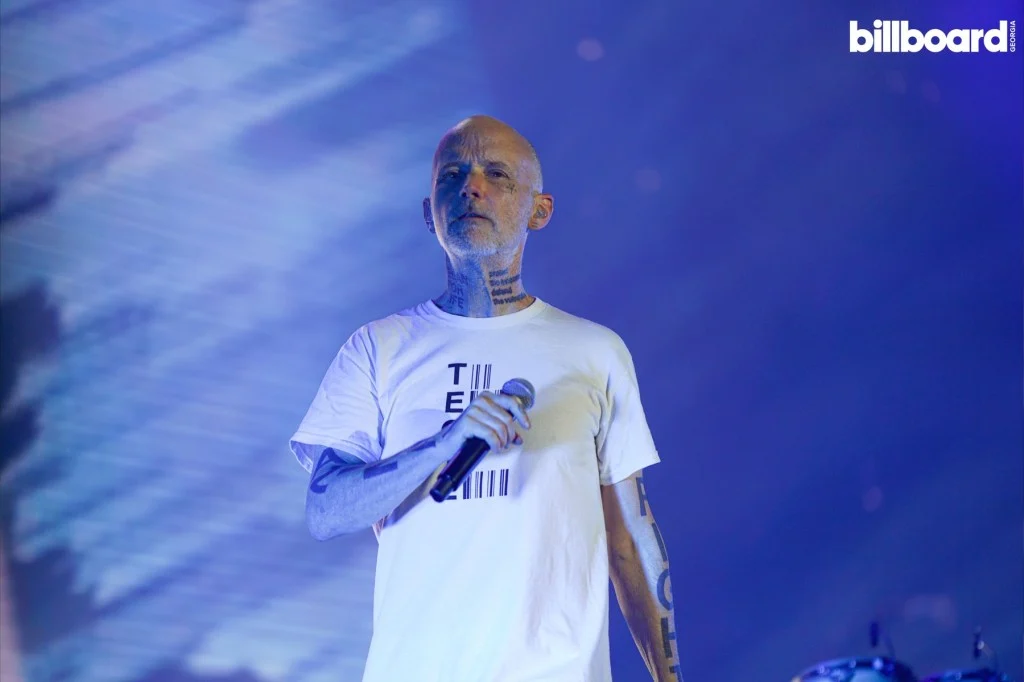
Moby Reflects on Music’s Universal and Personal Power During First Georgia Concert

On July 30, electronic music pioneer Moby made his historic debut in Georgia as part of his sweeping 2026 global tour. Hosted at the Rustavi International Motorpark just outside Tbilisi, the landmark concert was brought to life by local promoters Flitz Collective, with Billboard Georgia proudly acting as the exclusive primary media partner.
Throughout the rich tapestry of modern music history, few visionaries have fundamentally transformed the landscape. Moby stands brightly among these rare exceptions, instrumental in propelling electronic music from underground clubs into the global mainstream while infusing the genre with profound emotional resonance. He continually demonstrated that synthesized beats could achieve both massive commercial success and widespread international acclaim.
Moments before taking the stage, Moby sat down for an exclusive backstage interview with Billboard Georgia to discuss artistic integrity, environmental activism, and the evolving digital age. (Note: This conversation has been translated from the original Georgian.)
This marks your inaugural visit to Georgia. What are your prevailing thoughts and emotions as you prepare to connect with this audience?
I have only been here for a couple of days, yet I am completely captivated by the country. Tbilisi carries a distinctively European atmosphere, even though it sits thousands of miles away. What I find so intriguing about Georgia is how deeply drawn I am to it, despite not fully grasping its complexities yet. That sense of mystery makes the experience exceptionally compelling.
Looking back at your extensive career, what do you believe is the greatest illusion the music industry feeds to upcoming artists?
That is a profound question. The ultimate illusion, perhaps, is the temporary warmth you experience when you are young and successful. Many young talents assume that kindness from industry figures will endure even if their commercial relevance fades.
A lot of my peers who are young musicians, actors, or writers often remark on how wonderful their agents and record label executives are. My response is always, “Just wait a few years.” Should you experience a drought in success, that warmth tends to cool. I suppose that is simply the reality of the business. Unfortunately, many emerging artists mistake transactional professional relationships for genuine friendship, only to discover the harsh truth rather quickly.
Your dedication to activism is well-documented. What fundamental shift in human consciousness must occur for society to genuinely embrace animal rights?
From my perspective, it comes down to basic intellectual honesty and aligning our actions with our core values. Human beings are paradoxically illogical creatures.
If you were to randomly survey people on the street and ask three simple questions: “Do you appreciate animals?” The universal response would be yes. “Do you wish to inflict suffering or harm upon them?” Naturally, they would say absolutely not. “Do you practice a vegan lifestyle?” Most would answer in the negative. Pointing out the contradiction is simple: if you cherish animals and oppose cruelty, the rational conclusion is to abstain from consuming them or financing their slaughter.
Ultimately, this transcends conventional ethics; it is purely a matter of logic. Yet, our species behaves profoundly irrationally, particularly within Western societies. People obsess over wellness while actively degrading the environment. They profess absolute devotion to their children yet resist enacting sensible firearm regulations. We are deeply contradictory beings. My hope is that we either learn to govern ourselves through sound logic and construct a sustainable ethical framework, or we risk precipitating our own extinction as a species.
We find ourselves navigating an era defined by geopolitical conflict and shifting cultural values. In such turbulent times, what enduring purpose does music serve in society?
Music possesses a near-limitless capacity. It aids in sleep, accompanies dance, enhances worship, and deepens meditation. It fuels physical exertion while simultaneously offering solace. I feel incredibly privileged to work within a medium of such immense power. While I certainly do not claim that my own compositions carry such weight, music’s innate ability to reach everyone on an intimately personal level is profoundly moving. I am speaking generally, of course, about the universal force of melody and rhythm.
Your artistic journey has constantly pushed boundaries, challenging listeners with fresh perspectives. As we plunge deeper into the age of rapid technological advancement and artificial intelligence, how do you envision the future of music?
Allow me to use myself as an illustration. On occasion, I simply enjoy a well-crafted, generic pop track, indifferent to its origin. Artificial intelligence excels at producing precisely that. I firmly believe there is ample room for both worlds—room for automated pop creations alongside the poetic brilliance of Leonard Cohen. Just as an artist performing raw acoustic music with a guitar and cello coexists alongside avant-garde figures like Nick Cave—who stands as far from algorithmic creation as humanly possible. A single listener might passionately appreciate both extremes. I do not foresee Nick Cave putting artificial intelligence out of commission, nor do I believe AI will render artists like Nick Cave obsolete. Consider the visual arts: applying pigment to canvas might yield a commercial roadside billboard, or it might result in a priceless masterpiece. No one purchases a ticket to a concert hall merely to hear software compositions, but they will eagerly do so for an authentic artist like Nick Cave.
Moments after this profound discussion concluded, Moby stepped into the spotlight, igniting the roaring crowd with “Bodyrock,” the electrifying anthem from his landmark 1999 masterpiece album, Play.
The performance transcended mere nostalgia. Once again, Moby proved that his artistry rises far above transient industry trends and fleeting commercial standards. The evening served as a powerful reminder that his enduring legacy stems not merely from an extensive catalog of hits, but from an extraordinary capacity to remain vital across generations, leaving an indelible mark on every soul in attendance.
— This story was originally written by Nino Imerlishvili for Billboard Georgia.
Related articles
 Ed Sheeran Calls Situation in Gaza ‘Catastrophic and Unjustifiable’ at Philadelphia Tour Stop
 Céline Dion sings with a crowd of fans in Paris while standing atop a car
 Carrot Top Hospitalized After Reported Suicide Attempt and Cancels Weekend Shows
 Dropkick Murphys’ Ken Casey criticizes Ed Sheeran over treatment of Macklemore
 PSYCHIC FEVER Discuss New Album ‘DIFFERENT’ in Interview
 Vaundy Expands Live Audience Beyond Japan
 Travis Kelce Discusses Taylor Swift’s Football Knowledge
 CoComelon Announces New Lullabies Album Featuring Peaceful Versions of Farmer in the Dell and Other Nursery Rhymes