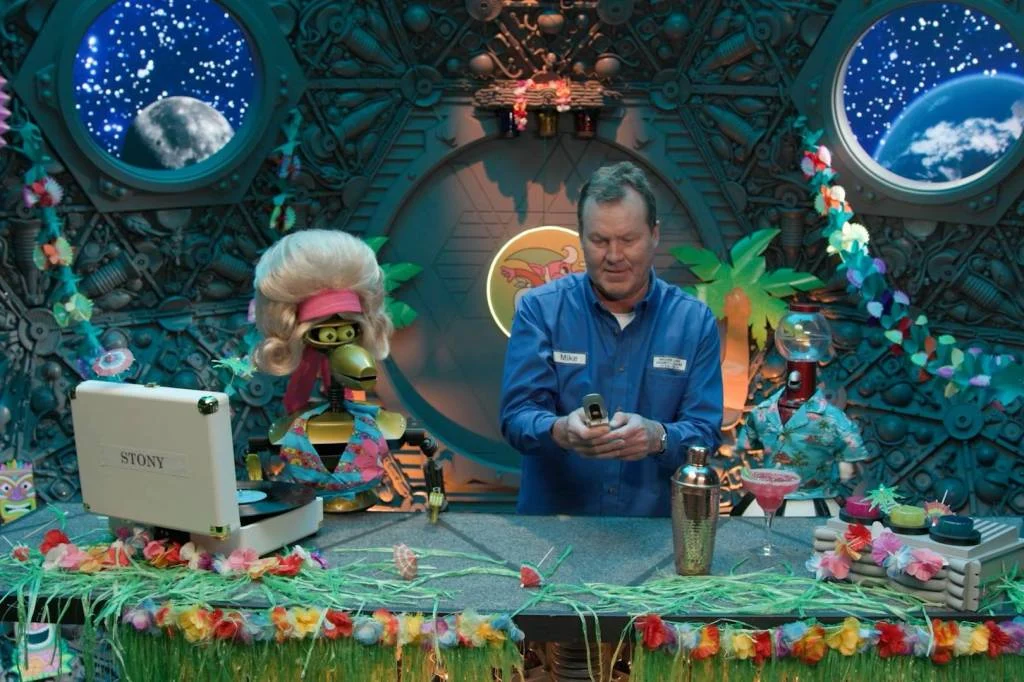
Mike, Kevin, and Bill Preview the Music of ‘MST3K: The RiffTrax Experiments’

Few television franchises have embarked on a journey as enduring, eccentric, and resilient as Mystery Science Theater 3000. Centered around an ordinary human and a peanut gallery of handcrafted puppet automatons enduring the dregs of cinema with razor-sharp wit, the series has practically achieved immortality.
Since its inception in 1988, MST3K has continually defied obsolescence. Traversing local Minneapolis UHF broadcasts, multiple cable networks, major streaming services, and multi-million-dollar crowdfunding campaigns, the show’s longevity is fueled by an ardent fanbase devoted to its delightfully erudite, esoteric brand of satire. Earlier this year, creator Joel Hodgson transferred stewardship of the IP to Radial Entertainment, beginning another new chapter for the franchise.
The appetite for this idiosyncratic universe remains ravenous. When RiffTrax—the long-running movie-mocking endeavor helmed by veteran MST3K alumni Michael J. Nelson, Kevin Murphy, and Bill Corbett—launched a crowdfunding campaign for Mystery Science Theater 3000: The RiffTrax Experiments, the audience responded enthusiastically. Seeking a modest $20,000 to produce four new installments utilizing classic practical effects aboard the Satellite of Love, the trio ultimately secured over $2.7 million in backer pledges.
With the initial episode arriving in select cinemas courtesy of Fathom Entertainment prior to its backer distribution, Nelson, Murphy, and Corbett sat down to reflect on the musical heritage of the show, their songwriting routines, Jonathan Coulton’s revamped theme song, and how their satirical melodies helped shape comedy history.
The Kickstarter response was staggering. How did it feel to see the project shatter its initial targets so rapidly?
Kevin Murphy: It was an overwhelming affirmation of our creative direction. The enthusiasm gave us immense momentum and allowed us total freedom to lean into the absurdity and pure joy of the process.
Mike, you penned countless musical interludes for the host segments during your tenure. What was that creative pipeline like? Did inspiration strike spontaneously, or was it purely assignment-driven?
Michael J. Nelson: My original workstation was quite literally a telephone switching utility closet tucked beside the soundstage. Space was scarce, so management essentially said, “Your keyboard fits in there; make it work.” The writing staff would pop by the door and casually request a tune. I was far from a legendary pop tunesmith, but I had to deliver.
Bill Corbett: You’re being modest. You’re our very own Neil Diamond in denim.
Nelson: Exactly. I’d hunker down inside this cramped three-by-three space, working through ideas while colleagues checked in every twenty minutes. It felt like being an old-fashioned song plugger tucked away in a cupboard.
Corbett: And usually performing without trousers, if memory serves.
Nelson: For reasons lost to time, yes! It was absurd. But that was the reality: sitting in a utility closet turning out ditties on demand before the afternoon read-through.
How long did it take to assemble a song from scratch under those constraints?
Nelson: The driving force was sheer deadline pressure. If rehearsal started at 3:00 PM, the tune had to be finalized by 2:55 PM. The staff would gather outside my closet door, I’d run through the draft, and we’d immediately evaluate whether it was ready for air.
Murphy: An unforgettable ritual.
Did those impromptu closet presentations receive enthusiastic praise?
Nelson: Most often, stunned silence. But television moves too fast for hesitation. If the bit was slated to shoot the next morning, perfection took a back seat to completion.
How did lyrical duties get delegated? Bill, what prompted you to write “The Canada Song”?
Corbett: During our brainstorming sessions using index cards on corkboards, we had a premise about an irrational, deeply dramatic resentment toward Canada, countered by Tom Servo coming to the nation’s defense. As the idea evolved, a musical treatment seemed far more comedic than standard banter. I approached Mike with the concept, requesting an upbeat, satirical anthem.
Murphy: [Begins humming a spirited melody]
Corbett: Mike and Kevin both possess an extraordinary ear for pastiche. We rarely needed intricate Sondheim-esque complexity, though they regularly delivered brilliant arrangements. Typically, comedy dictated the choice: if a narrative thread or a film element begged for a musical spotlight, we pursued it if resources and production schedules allowed.
Can audiences anticipate new musical performances in The RiffTrax Experiments?
Murphy: Absolutely. Musical numbers are firmly woven into these new episodes.
How did you approach crafting songs for these new installments? Was there pressure to match past legacy numbers?
Corbett: There wasn’t excessive anxiety because we retained full creative control. If a particular sequence is dense with dialogue or elaborate props, pivoting toward a musical segment creates an ideal comedic contrast. It draws on pure vaudevillian instincts.
Murphy: It functions like traditional Tin Pan Alley writing. Very often, a surreal cinematic scene will trigger an instant melodic reaction during screening sessions, and the lyrics naturally emerge from what we’re watching.
Kevin, Tom Servo’s spontaneous singing always felt like a pure, organic reflex. Was that mirrored in the writers’ room?
Murphy: Frequently. Low-budget films frequently feature bizarre, repetitious background cues that become inescapable earworms. Breaking into song was our natural defense mechanism.
Nelson: In fact, one of the feature films in this upcoming run inspired a musical set-piece precisely that way. It’s funny because back in the mid-1990s, when we pitched a song-heavy approach for the theatrical feature, studio executives immediately recoiled. They told us test audiences hated musical sequences and insisted on removing musical components entirely.
Murphy: Our original vision leaned heavily into song and dance.
Nelson: We positioned the puppets as a satirical extension of the Muppet tradition, and the studio reacted as though we were delivering bad news. They flatly rejected the concept.
Murphy: At the time, studio decision-makers were spooked by recent cinematic musical misfires, notably James L. Brooks’ troubled I’ll Do Anything.
Corbett: Film studios are notorious for chasing recent successes or fleeing the shadow of recent flops. Shortly after our experience, South Park: Bigger, Longer & Uncut premiered to tremendous acclaim precisely because of its lavish, irreverent musical numbers, altering studio attitudes overnight.
Murphy: Interestingly, Broadway composer Robert Lopez (The Book of Mormon, Avenue Q) once mentioned to me that he grew up appreciating the off-kilter musical parodies we incorporated into MST3K.
When adapting existing melodies for satirical purposes, how do intellectual property and licensing parameters apply?
Corbett: It falls firmly under fair use and parody doctrine. Artists like “Weird Al” Yankovic famously seek courtesy permissions from songwriters as a personal standard of etiquette. In our case, we typically avoid direct note-for-note parodies, opting instead for stylistic homages or brief, contextual musical references within the broader scope of fair use.
Nelson: Furthermore, when we license distribution rights for the films themselves, the underlying cues and incidental compositions are generally cleared concurrently, giving us the playground to riff.
The 1966 creature feature Sting of Death, showcased in this new run, features an odd track titled “Do the Jellyfish,” composed by Neil Sedaka early in his career. How do discoveries like that impact your riffing?
Corbett: Stumbling upon a track by a mainstream icon in a low-budget B-movie is pure gold. Long before his massive pop resurgence in the 1970s alongside artists like Elton John, Sedaka was crafting obscure teen pop tracks for independent cinema. Unearthing that history mid-production made the screening exceptionally delightful.
Nelson: We’ve had surprising revelations across our catalog. Early on, we didn’t realize legendary composer Elmer Bernstein scored 1953’s Robot Monster during the Hollywood blacklist era. We poked fun at the soundtrack in our first television season, entirely unaware of his genius pedigree—something we certainly recognized when revisiting the film in later years.
Corbett: Re-evaluating that score today highlights how much craft Bernstein invested into an otherwise preposterous production.
Murphy: The arrangement featured complex orchestral work and pioneering use of the theremin. Contrast that with 1958’s Daddy-O, where accordionist Dick Contino performed with his waistband pulled up to his chest, naturally inspiring our tribute tune, “Hike My Pants Up.”
Corbett: Other films, such as The Incredibly Strange Creatures…, provided fantastic musical backdrops that allowed us to layer extended comic bits right over the soundtrack.
Did your musical parodies ever attract backlash from the artists you satirized?
Nelson: Rarely directly. Years ago, we produced a sketch ribbing the Crash Test Dummies’ hit single “Mmm Mmm Mmm Mmm.” A mutual makeup artist later mentioned the band was perplexed by the sketch, thinking we harbored genuine malice toward them. Satire doesn’t imply hatred—it’s simply comedy—but intentions can occasionally get lost in translation.
Corbett: Following “The Canada Song,” an acquaintance from north of the border expressed mild dismay, failing to recognize the exaggerated silliness of the bit. What amused me most was that critics later assumed we were riffing on South Park’s “Blame Canada,” when our tune actually preceded the film by an entire year.
Singer-songwriter Jonathan Coulton re-recorded the iconic MST3K opening theme for these new episodes. How did that collaboration materialize?
Corbett: We’ve shared a close professional friendship with Jonathan for years through various live shows and events. When we approached him to tackle the theme, he immediately agreed. I made slight modifications to the lyrics to fit our format, and he approached the arrangement with incredible precision—balancing reverence for Charlie Erickson’s classic original with fresh melodic vitality. He also arranged an extraordinary new interpretation of the closing credits theme.
Murphy: Jonathan’s mastery of pop arrangement is unparalleled. His gift for memorable hooks made him the ideal choice.

What was your reaction upon seeing the newly filmed title sequence set to Coulton’s recording?
Corbett: It was deeply moving. It signaled that this revival had officially arrived. Jonathan captured the spirit without overcomplicating the arrangement, establishing the tone instantly.
Which musical storytellers and comedic songwriters have historically shaped your sensibilities?
Murphy: Loudon Wainwright III has always been a monumental influence for his razor-sharp lyricism and fearless vulnerability. John Prine, Steve Goodman, and classic satirists like Tom Lehrer and Allan Sherman laid the groundwork for sophisticated comedy set to music.
Nelson: My background combined a strict classical foundation—Mozart, Beethoven, Chopin—with power-pop masters like Marshall Crenshaw. Great songwriting, whether classical or satirical, requires tremendous craft.
Corbett: Coulton himself remains a stellar example of wit paired with intricate musicianship. Artists like Richard Thompson demonstrate how dark humor can thrive inside masterful instrumental work.
To conclude: How strictly do these new installments adhere to the narrative continuity established at the end of the show’s Sci-Fi Channel era?
Murphy: Fans can rest easy—we respect the heritage.
Nelson: We remained keenly aware of where the characters were left and where they find themselves today.
Corbett: At the same time, we avoid getting weighed down by exhaustive canon. The show has always proclaimed in its own theme song that viewers shouldn’t overthink the mechanics. We offer a respectful nod to the timeline, pick up the torch, and dive straight into the laughs.
Related articles
 Jamie T Drops Nostalgic New Single ‘3310’ and Announces New Album Release Date
 Music Among the Stars: How Artists Like Phoebe Bridgers Are Turning Planetariums into Concert Venues
 YEONJUN Headlines an Exclusive One-Night-Only Show at The Troubadour
 ‘The Light Surrounds You Now’: Solange Pays Heartfelt Tribute to Late ‘Bring It On’ Costar Hayden Panettiere
 Interview: miwa and hololive’s Koganei Niko on Their Collaborative Single “Seien” and the Power of Fan Cheers
 Beabadoobee, Jorja Smith, and Nemzzz to Headline Spotify’s New ‘Hometown’ Series
 Shakira Commits $1.25 Million to Rebuild Colombian Schools After Earthquake
 Beyond ‘Nashville’: 5 Things to Know About Hayden Panettiere’s Music Career