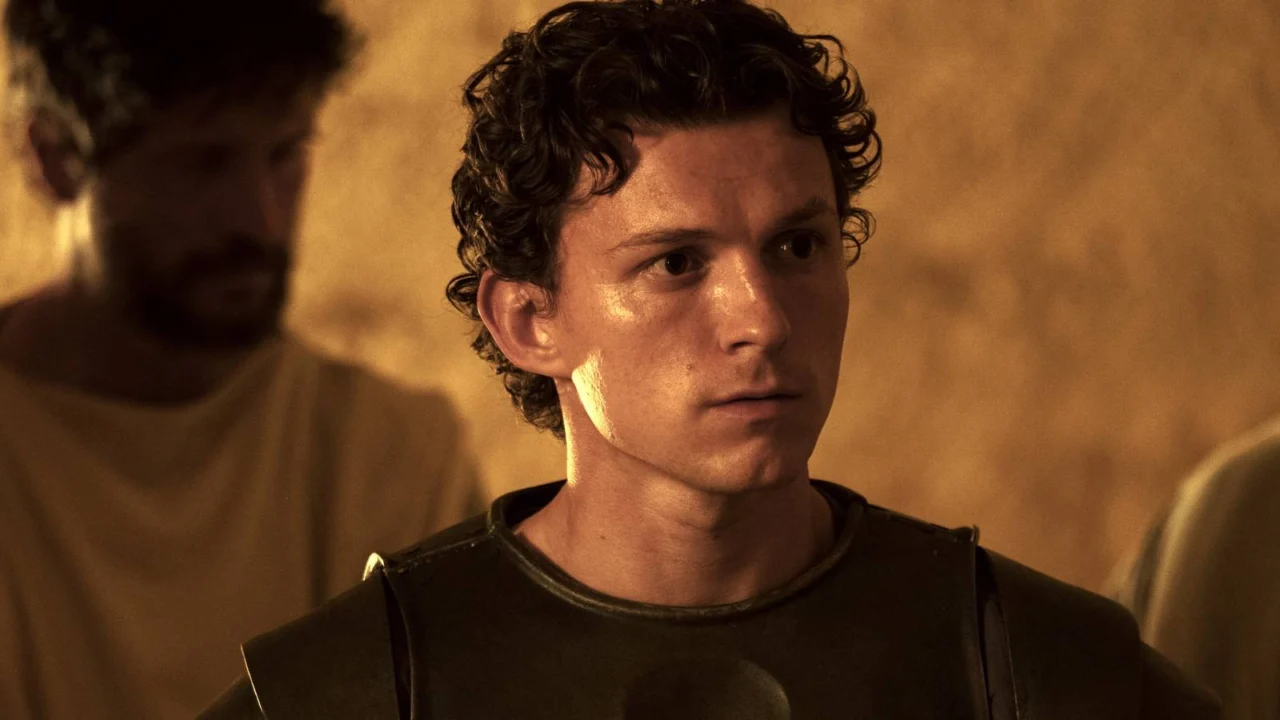
How Tom Holland Fought Marvel to Give Spider-Man the Christopher Nolan Treatment

Melinda Sue Gordon/Universal Pictures
While Marvel Studios maintains its status as the titan of Hollywood blockbusters—churning out massive events like Deadpool & Wolverine and the upcoming Avengers: Doomsday—its reputation has shifted. As the franchise ballooned into the most lucrative series in cinema, its operational structure evolved into a rigid, assembly-line model that often prioritizes rapid flexibility over authentic craftsmanship.
This reliance on digital shortcuts begs a compelling question: What might a Marvel epic achieve if it adopted the rigorous standards of a filmmaker like Christopher Nolan? Even Tom Holland, the face of the studio’s flagship hero, finds himself contemplating a departure from the status quo.
Unlike the modern Marvel workflow, which frequently leans on virtual production and post-production “fixes,” Nolan remains a steadfast champion of practical, in-camera spectacle. For his latest epic, The Odyssey, the production required its cast to endure intense, real-world conditions—including grueling daily climbs up Sicilian mountains—to ensure every frame felt tactile and earned. Nolan treats filmmaking as a high-stakes performance, expecting his cast to arrive fully prepared, having done the deep research necessary to inhabit their roles.
Matthew Modine, who has worked closely with the director, famously described Nolan’s onset presence as that of an “orchestra conductor.” He noted that Nolan surrounds himself with talent who understand their roles as deeply as he does, allowing him to harmonize their efforts into a singular vision.
For Holland, who plays Telemachus in The Odyssey, this experience was a revelation. After years of acting against blue screens, he was stunned to arrive in Morocco to find actual ships and legions of soldiers awaiting him. This immersion into physical filmmaking fundamentally altered his expectations of what a blockbuster should be.
Photo: Universal Pictures
Carrying that newfound philosophy back to Sony and Marvel, Holland has begun challenging the “figure it out on set” mentality. During the development of the next Spider-Man project, he has pushed for a more deliberate approach, arguing that the film must offer a compelling reason for its existence beyond mere brand momentum.
“We are not going to show up and just hope for the best. We need to define why we are making this film, beyond the fact that it’s a profitable franchise entry. Why does this story need to be told right now?”
By leveraging his influence to secure a six-month production delay, Holland effectively forced the studio to allow director Destin Daniel Cretton the necessary time to refine the script before cameras rolled. It is a rare act of pushback against a machine that has historically favored speed over substance.
Image: Marvel Studios/Sony Pictures
Whether this shift will result in long-term structural change remains to be seen. Marvel’s engine is massive, interconnected, and highly resistant to alteration. However, the fact that one of its biggest stars is openly advocating for Nolan-esque discipline suggests a growing appetite for a more thoughtful, curated approach to superhero filmmaking. If Kevin Feige and his team are listening, the future of the MCU may be far more interesting than we anticipated.
Source: Polygon
Related articles
 Free Demo for New Castlevania Game Belmont’s Curse Now Available
 JoyToy Announces New Warcraft Action Figure Line
 Pokémon’s 30th Anniversary TCG Is Getting A Massive New Release, But There’s A Catch
 CDPR Releases First Patch for The Witcher 3 Remaster to Align Console Version with PC
 PUBG: Black Budget Development Cancelled Before Release
 Former Halo Studios Art Director Claims Studio Is Headed by Convicted Criminal
 X-Men Star Discusses Approach to Playing MCU Professor X
 Kena: Scars of Kosmora Release Delayed to 2027