How Lost Changed Television With a Last-Minute Pilot Change
Every mystery box shares a single problem: Eventually, you must open it. The questions that keep audiences obsessing over a TV show week after week can lose their power the moment answers finally arrive. Explain too little, and viewers feel frustrated. Explain too much, and you risk deflating the entire story. There remains a third option, which is to answer questions with details generating even more questions. Instead of a mystery box, why not build a nesting doll of secrets?
Few television series understood or defined this kind of narrative tension better than Lost. Its near-perfect first season transformed a plane crash disaster into a sprawling character drama featuring a smoke monster, miraculous events, and sinister whispers in the jungle. The question consuming much of the season’s back half was rather simple: What lives inside the Hatch? The season 1 finale blew it wide open, but that moment merely started the true mysteries of Lost.
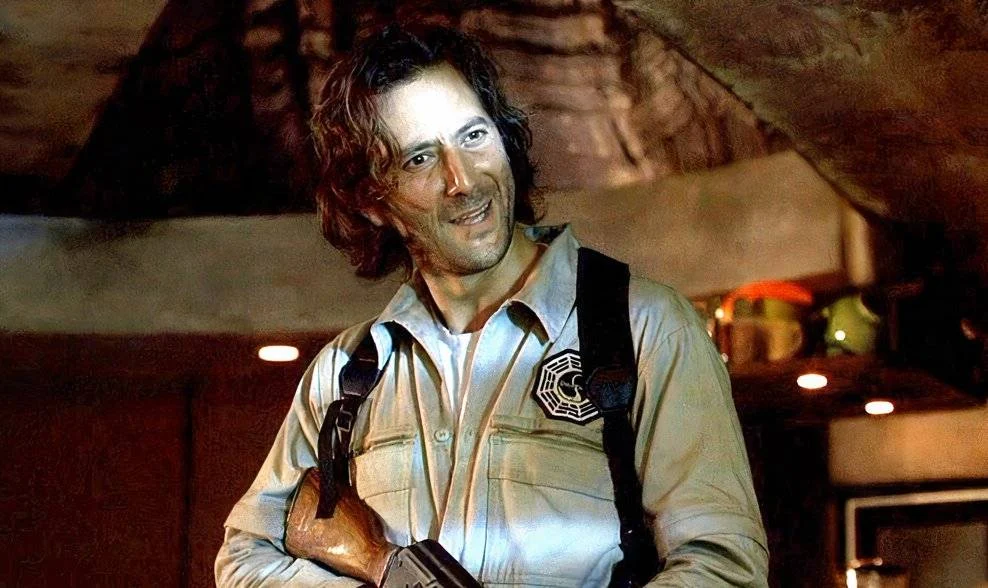
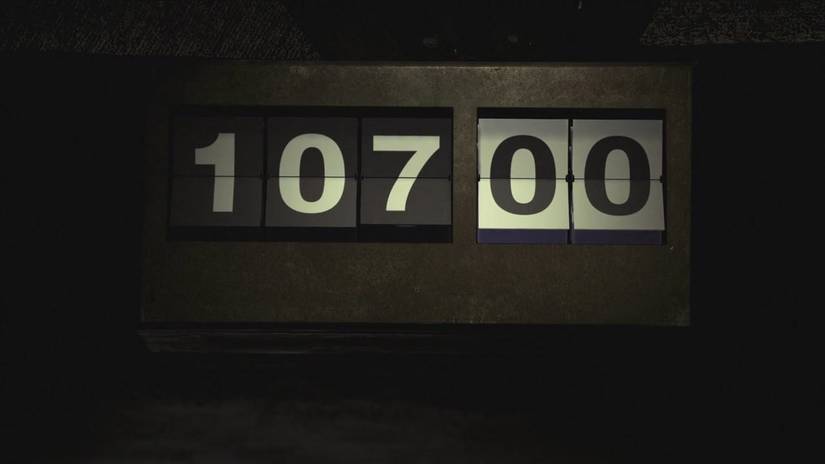
Season 2’s episode “Orientation” relies on heavy exposition to get to its point. Viewers already met Desmond, the mysterious man living in the underground facility played by Henry Ian Cusick. They learned that Desmond knows Jack, played by Matthew Fox, from a chance encounter before Oceanic Flight 815 crashed. They also saw the computer, the countdown clock, and the button Desmond believes will end the world if left unpressed every 108 minutes. “Orientation” has to explain these apocalyptic stakes without stripping the Hatch of the mystique that made everyone desperate to see it open.
The writers solved that challenge with a single bullet.
“Orientation” almost played out very differently
The most important early scene in “Orientation” is a confrontation between Jack, Locke, played by Terry O’Quinn, Kate, played by Evangeline Lilly, and Desmond inside the Hatch. After Desmond forces Locke to input the code into the computer at the end of the previous episode, Jack arrives with a gun. Kate then enters the scene and hits Desmond from behind, causing him to fire a stray bullet ricocheting directly into the computer.
Desmond panics and warns that everyone will die if the machine remains broken when the timer reaches zero, claiming it could destroy the world. Kate runs to find Sayid, played by Naveen Andrews, the only person capable of fixing the computer. Rather than dragging out the scene with survivors extracting information from Desmond at gunpoint, the details emerge at a breakneck pace while everyone races to fix the machine in time. Nobody, not even Desmond, truly understands why it matters so much.
According to Damon Lindelof on the DVD commentary for the season 4 episode “The Constant,” the writers worried the Hatch storyline required too much exposition and would drag down the episode. Shooting the computer created an immediate crisis. It allowed characters to receive new information on the fly, forcing them to figure out how the Hatch works while racing to save it rather than listening passively to Desmond.
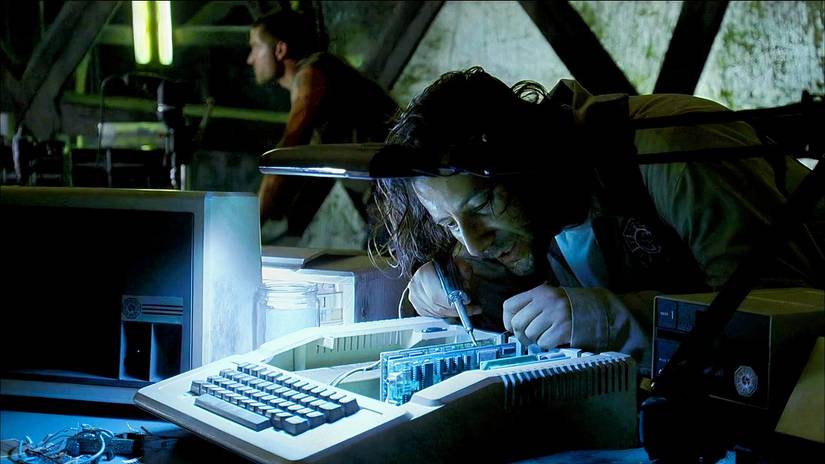
This proved to be an elegant solution to a major structural problem. The writers spent much of season 1 mythologizing the Hatch into a tantalizing mystery. Behind the curtain, the big reveal had to justify that buildup without losing its intrigue.
Even the episode’s largest exposition dump arrives in a form that generates more questions than answers. Desmond hands Jack and Locke an old film reel hidden behind a copy of Henry James’s The Turn of the Screw, a supernatural story blurring the lines between fact, fiction, and faith. This orientation video introduces Dr. Marvin Candle, played by François Chau. He explains that the DHARMA Initiative was founded in 1970 to conduct scientific research across six stations on the Island, focusing on meteorology, psychology, parapsychology, zoology, and electromagnetism. The hatch, known as the “Swan,” is a facility investigating electromagnetism. Following an unspecified incident, station inhabitants were required to enter a code into the computer every 108 minutes.
“Orientation” marks the turning point where Lost transforms from a tight survivalist story into a sprawling mystery. It delivers more concrete information about the Island than the series ever provided before, yet every detail inspires fresh questions. What was the strange incident? Where are the five other stations? What happened to DHARMA? Why is part of the film missing? Can viewers trust any of this information? Eagle-eyed viewers even asked why Dr. Candle appears to have a prosthetic arm.
The orientation film gives Jack, Locke, and the audience identical information, inviting everyone to debate its meaning. Jack remains a skeptic, suspecting the Swan might be an elaborate psychological experiment. Locke believes the warning must be taken literally. Neither man can prove his interpretation, leaving the potential cost of being wrong as the only certainty.
This is the mystery box working at its finest, because inside the box lie several more boxes, with no telling what waits inside those.
“Orientation” distills the meaning of Lost
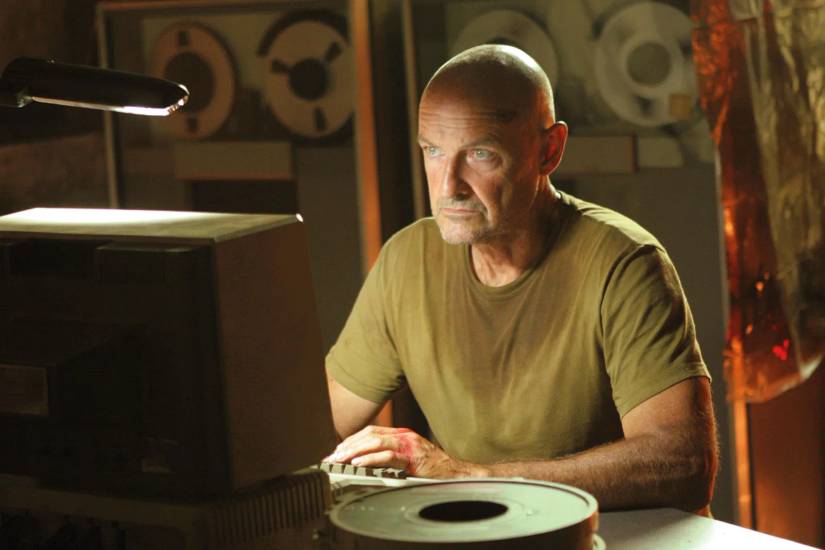
The core question of “Orientation” is deceptively simple: If someone claimed pressing a button would save the world without offering proof or explanation, would you press it?
Locke leaps at the chance. Flashbacks in the episode reveal that his previous inability to take such leaps ruined his relationships. Life on the island offers him a second chance, and he needs to believe it serves a purpose. The Swan and its calamitous button give his suffering greater purpose while convincing him he is special. It remains telling for the longer story of Lost that Locke insists Jack take a leap of faith and press the button at the end of the episode.
Jack refuses to accept anything he cannot test, explain, or control. Yet with alarms blaring and one second remaining on the Swan’s timer, he enters the numbers and presses the button. He acts without knowing whether it matters because he cannot accept the risk that it might.
This dynamic between Locke and Jack, paired with their dilemma in this episode, defines quintessential Lost. As the cosmic mystery deepens in later seasons, Locke’s faith proves conditional upon the validation he expects from it. True faith, however, never offers certainty. Jack’s arc provides the inverse: a man of science demands evidence, yet fights to do the right thing because he believes someone must. His faith contains no transaction, which remains entirely the point.
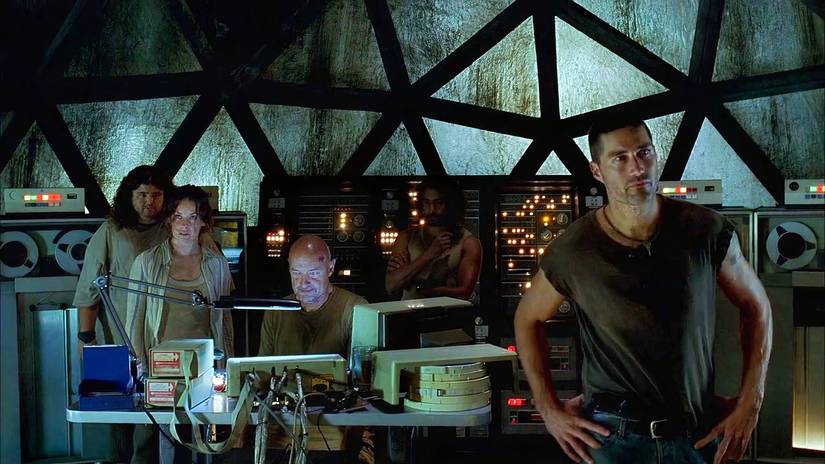
“Orientation” concludes with Jack taking his first leap of faith, pressing the button after Sayid fixes the computer. Why does Jack do it? He fears how terrible things might turn out if he refuses. Even while doubting its reality, he avoids the risk. The episode asks the audience to make a similar choice: believe that everything matters, even if it makes no sense right now and some of it never will.
Twenty-one years later, the bullet striking the computer did more than rescue the episode from an exposition trap. It gave Lost the exact mechanism needed to keep millions of viewers pressing the button every single week for seasons to come.
Source: Polygon
Related articles
 PS5 Players Report Losing Accounts to Scammers Bypassing PlayStation Security
 Analysts Estimate Wardogs Has Earned $100 Million on Steam
 Stephen Colbert Lord of the Rings Movie Still in Development
 Runtime for all eight episodes of Vision Quest finale revealed to exceed one hour
 Creators of The Apothecary Diaries Release Creditless Opening for Season 3
 Futurama Creator Discusses Show’s Future Beyond Season 14 Finale
 First viewers praise Dune: Part Three as potential Oscar competitor to The Odyssey
 Clayface Box Office May Trail Supergirl, But DC Studios Sees Upside