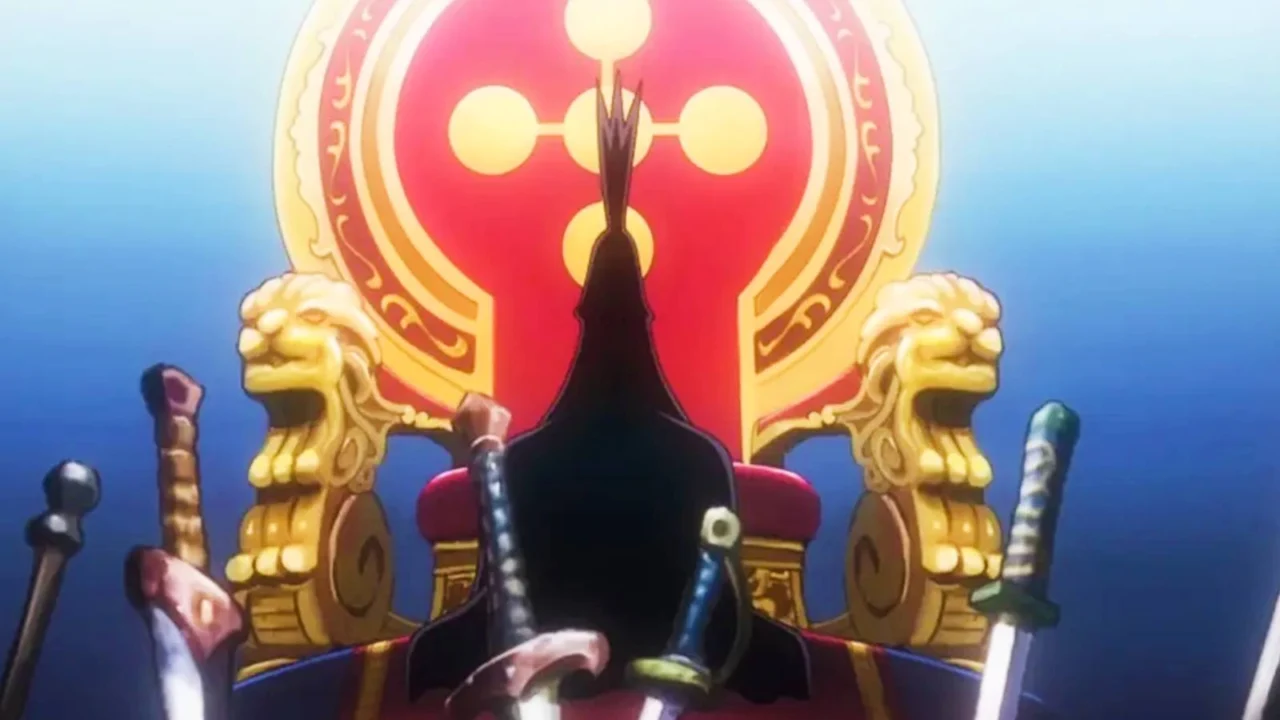
Hidden Detail in the Latest One Piece Chapter Reveals the Truth About Imu’s Powers

Nearly a decade since their mysterious introduction, One Piece has finally unmasked Imu, the clandestine sovereign of the World Government. Alongside this long-awaited visual reveal, the series has identified the specific Devil Fruit wielded by the figure poised to be the narrative’s ultimate adversary. This milestone stands as one of the most significant moments in the franchise’s history, rivaling the cultural impact of Luffy’s Gear 5 awakening. While the full extent of Imu’s capabilities remains shrouded in mystery, subtle clues in the latest chapter offer profound insights.
Eiichiro Oda, renowned for his expert pacing and narrative tension, reserved Imu’s full appearance for the climactic final panel of chapter 1179. In the preceding events, the Straw Hat crew successfully navigated the turmoil in Elbaph. This was largely due to the intervention of Prince Loki, whose awe-inspiring transformation via the Dragon-Dragon Fruit, Model: Nidhöggr—paired with the legendary weapon Ragnir—overwhelmed the Holy Knights. Observing these setbacks from Mary Geoise, Imu chooses to descend to the “lower world” to personally quell the insurrection. Thus, Saint Nerona Imu, the progenitor of the World Government, arrives on the shores of Elbaph.
Previously, Imu exerted influence by possessing the Holy Knight Gunko through a mystical “Covenant.” Realizing that proxy combat would not suffice against the combined might of Luffy and Loki, Imu takes direct action. The chapter highlights the Five Elders’ frantic pleas for their master to remain within Pangea Castle, alluding to a cryptic hazard. Upon reaching Elbaph, Imu is seen coughing up blood and collapsing to their knees, suggesting a debilitating physical vulnerability outside their celestial sanctuary. This suggests that Imu’s isolation may be a matter of survival rather than mere divine detachment.

The fandom is already dissecting every detail of Imu’s design. Their gender remains ambiguous; the revealed face possesses a blend of masculine bone structure with traditionally feminine long eyelashes and delicate eyes. Visual motifs, such as prominent horns and a spade-tipped tail, reinforce Imu’s role as the “Devil” within the world’s mythology. This is confirmed by the name of their power: Imu possesses the Akuma no Mi, literally translated as the “Devil’s Fruit.”
Linguistically, the Japanese text provides a fascinating hint. While the series typically uses kanji for “Devil Fruit,” Imu’s fruit uses katakana for “Devil.” Katakana often denotes foreign loanwords, implying that Imu embodies the Western, Abrahamic concept of the Devil—complete with occultist imagery, demonic possession, and ritualistic circles. This distinguishes Imu’s supernatural nature from the more traditional Japanese folklore that inspires other characters.
Adding a surreal layer to the horror, Imu’s presence distorts the environment of Elbaph. Nearby structures and vegetation spontaneously develop malevolent, grinning faces that sing an unsettling welcome. This serves as a dark mirror to Luffy’s Nika abilities, which similarly manipulate the surroundings but with a whimsical, liberating intent.

Defining Imu’s power as the literal “Devil’s Fruit” is a masterstroke of world-building. For decades, fans have theorized about the origins of these “treasures of the sea,” and it appears the answer is tied to the very entity sitting atop the Empty Throne.
Subscribe for elite One Piece theories and Imu analysis
Unlock exclusive insights into Imu’s origins and the endgame of the Final Saga. Subscribe for expert theory roundups and cultural deep-dives delivered straight to your inbox.
Speculation regarding Imu’s physical stature is also rampant. By comparing them to the architecture of Aurust Castle, some fans suggest Imu may be a giant, standing nearly as tall as Loki. Others have noted visual parallels to the Monkey King, Sun Wukong, or interpreted the concentric rings in their eyes as an homage to the Rinnegan from Masashi Kishimoto’s Naruto.
Regardless of the aesthetic inspirations, the narrative weight is undeniable. Luffy is on the verge of confronting the antithesis of his own freedom-loving nature. As the protagonist meets the ultimate tyrant, it is a bittersweet signal that One Piece has officially entered its final act. The era of speculation is ending, and the era of the final war has begun.
Source: Polygon
Related articles
 Reporter Claims to Have Seen GTA VI Ahead of Jason Schreier’s Major Article
 Sony Lawyers Target Hacked PS5 Consoles as Unofficial Game Store Shuts Down
 Battlefield 6 Accused of Using AI for Battle Pass Cosmetics
 Analysts Estimate Marvel’s Wolverine Revenue at Nearly $193 Million
 Xbox is paying players to launch Gears of War: E-Day
 Modern Warfare 4 Will Reportedly Not Include a Platinum Trophy on PlayStation
 Sony Pulls Its Own Games From PS Store in Select Regions
 Marvel Series VisionQuest Resolves Major MCU Canon Issues