Five Years Later: The DCEU’s Most Defining Failure Deserves a Second Chance

Half a decade ago, the DC Extended Universe—the publisher’s ambitious attempt to mirror the Marvel Cinematic Universe—found itself in a peculiar rhythm. It wasn’t exactly a winning streak; the franchise was grappling with underwhelming box office returns from the premature Justice League and the stylistically distinct Birds of Prey. While the latter earned critical praise, earlier financial giants like Batman v. Superman and Suicide Squad had been savaged by reviewers. Curiously, in its seven-year lifespan, the DCEU had never produced a direct, traditional sequel. When it finally did, the result felt like an omen of the end.
The absence of sequels was often viewed as a symptom of DC’s lack of direction. Had there been a genuine hunger for a linear Man of Steel follow-up, it surely would have materialized. Instead, studio anxiety led to the inclusion of Batman in what became the disjointed Batman v. Superman. Similarly, the 2016 Suicide Squad was succeeded by a Harley Quinn spin-off that felt more like a Guy Ritchie heist flick than a superhero blockbuster. These pivots away from traditional sequels highlighted internal struggles but also provided an unintended sense of novelty. Very few franchises reach eight films without a single “Part 2.”
Eventually, the studio returned to tradition for its most successful property: Wonder Woman. As the first undisputed triumph of the era, it paved the way for sequels to Aquaman and Shazam!, but Wonder Woman 1984 was the first to arrive. It was meant to be a crowning achievement, but it debuted on Christmas Day during the height of the pandemic, six months late and primarily on HBO Max.
 Image: Warner Bros.
Despite a few initial positive outliers, Wonder Woman 1984 was quickly branded a creative misfire. Although stars Gal Gadot and Chris Pine returned alongside director Patty Jenkins, audiences were put off by its excessive length, lack of kinetic action, and an oddly dated campiness. Looking back, it felt like the final blow for the original DCEU: if they couldn’t succeed with a sequel to their most beloved property, perhaps the entire foundation needed to be dismantled.
While the film’s reception was undoubtedly colored by the isolation and bitterness of the pandemic era, its failure effectively poisoned the well for future DCEU sequels. In the years that followed, DC’s strongest performer was ironically Black Adam, while the Aquaman sequel struggled to find its footing. James Gunn’s The Suicide Squad, though critically superior, also suffered commercially, highlighting a general fatigue with the universe’s existing trajectory.
But financial statistics only tell part of the story. Wonder Woman 1984 remains a fascinating anomaly—a traditional sequel that manages to feel entirely distinct from its predecessor and every other entry in the series, all while paying homage to its comic book roots.
 Image: Warner Bros.
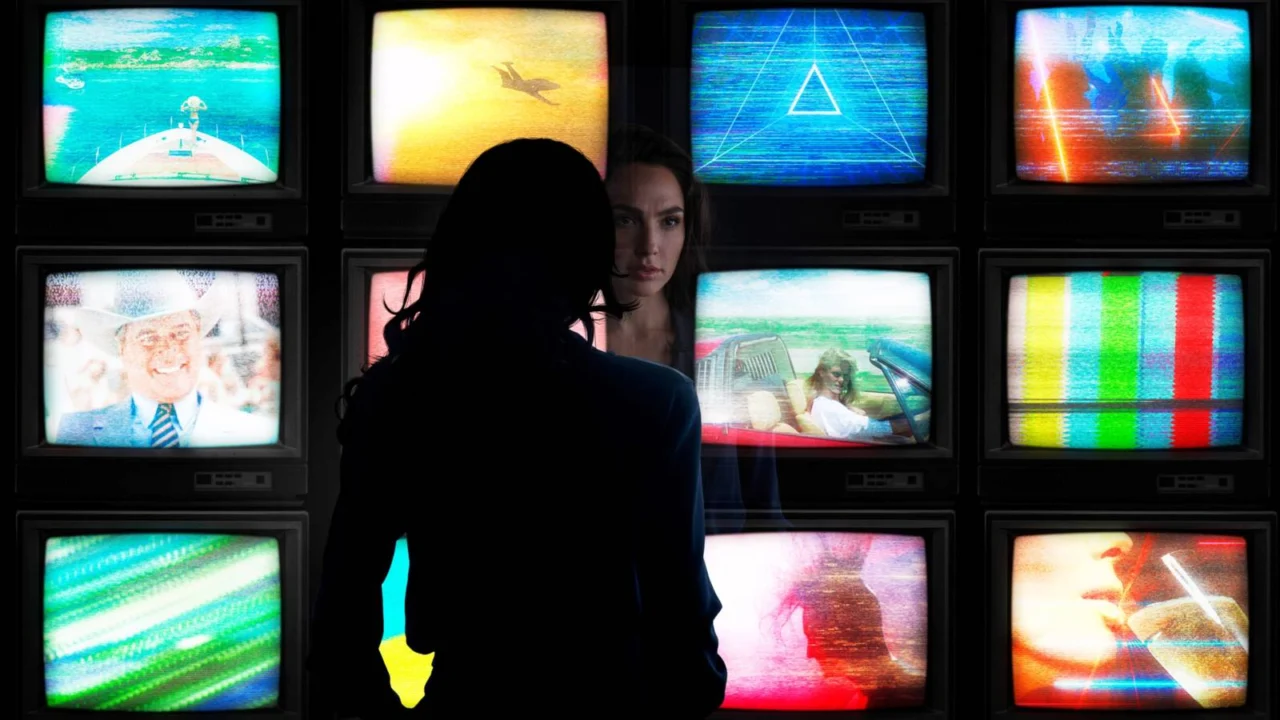
In a landscape where desaturated visuals have become the norm, Wonder Woman 1984 is undeniably vibrant. Its colors pop with a saturation rarely seen in modern blockbusters; the skies are a piercing blue, and Diana’s armor gleams with a brilliance that was purposely muted in the first film’s gritty WWI setting. Shot partially on film, the movie possesses a texture that feels authentic to its era without leaning too heavily into neon 1980s clichés. The action, while sparse, is staged with clarity, favoring physical choreography over the excessive digital doubles found in many contemporary peers.
Tonally, WW84 serves as a spiritual successor to the Richard Donner Superman films. It captures a specific brand of earnest optimism that feels almost radical today. Jenkins isn’t afraid of the “magic wishing stone” premise, embracing the inherent silliness of the plot with a sincerity that avoids the cynical self-awareness of most superhero media. The opening sequence, featuring a young Diana in an Amazonian competition, is a visual marvel that practically screams for the largest screen possible.
However, that same wishing stone leads to the film’s most problematic narrative choice. To bring back Steve Trevor (Pine), the story resurrects his consciousness within the body of a random stranger. While the audience sees Pine, the ethical implications of Diana essentially commandeering a living man’s body are glossed over in a way that remains deeply unsettling. It’s a “comic-booky” solution to a character death that the film treats with an odd lack of gravity.
 Image: Warner Bros.
Despite these flaws, the film’s exploration of collective greed and human frailty through Maxwell Lord (Pedro Pascal) is unexpectedly poignant. Rather than facing a generic world-ending beam of light, the climax centers on the consequences of unchecked desire. While The Flash attempted to bridge the gap to James Gunn’s new DC vision with meta-commentary, WW84 feels more aligned with that new direction through its sheer, unbridled heart. It rejects the “more is better” mentality of modern fandom, delivering a message about the cost of shortcuts and selfish wishes.
Ultimately, Wonder Woman 1984 is a kitschy, polarizing, yet bold piece of filmmaking. The final confrontation, where Diana chooses empathy over combat, is undeniably sappy, yet it captures the zeitgeist of the 1980s while reflecting our own modern anxieties. Five years later, it stands as a testament to sequels that dare to be different, even when that difference leads to disaster. It remains a more vital, memorable experiment than much of the assembly-line content currently dominating the genre.
Source: Polygon
Related articles
 Ori Creator Evaluates Media Scores and Notes Discrepancies With Player Opinions
 Saros to Receive Free Expansion with New Modes and Secrets
 Bodycam 0.8 Locked & Loaded adds Trenches map and 400 weapon attachments
 Ghost of Yotei Reportedly Preparing Large DLC with New Story and Most Wanted Mode
 Square Enix Announces Final Fantasy VII Remake Collector’s Edition Including Three Games and Large Figure
 Star Wars New Jedi Order Movie Moves Forward After Years of Silence
 How Onimusha: Way Of The Sword’s Easy Mode Expertly Teaches Parrying To Those Who Hate Parrying
 Cosplayer portrays Lady Dimitrescu from Resident Evil Village