Disney’s Highly Anticipated Sci-Fi Sequel Failed Its Own Legacy 15 Years Ago
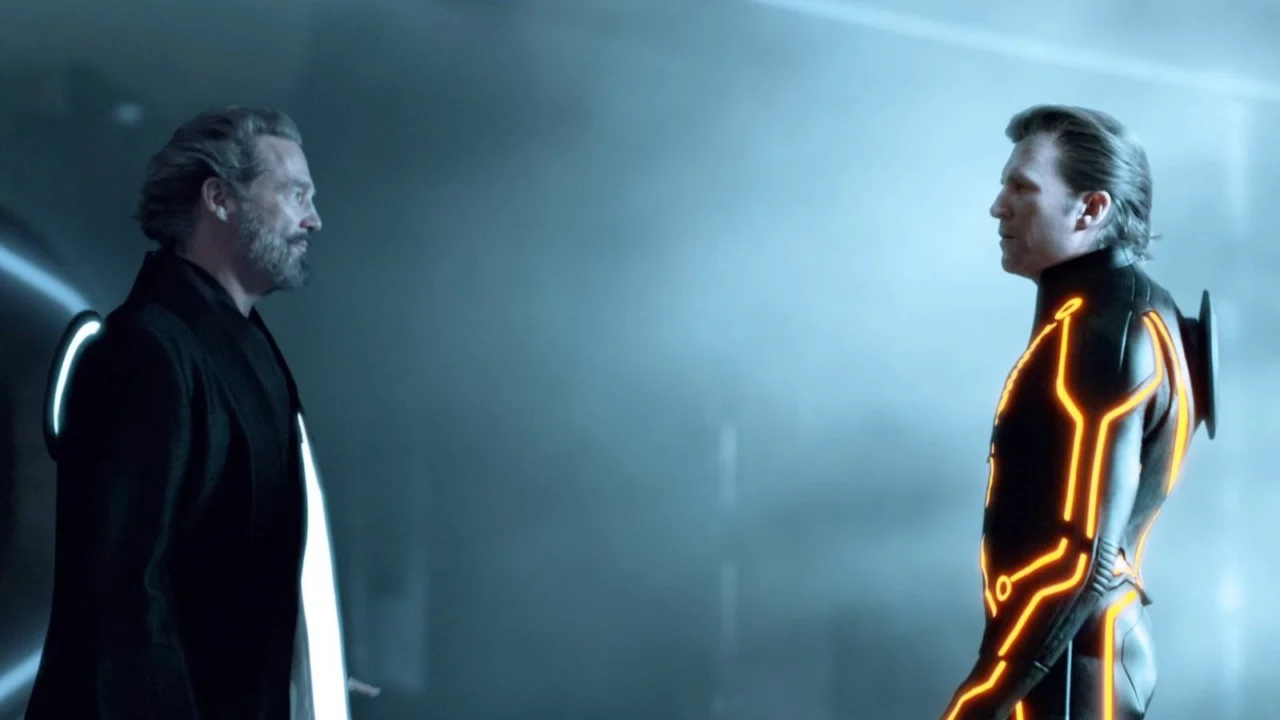
When Steven Lisberger unleashed Tron in 1982, it wasn’t just a film; it was a visionary landmark that redefined the marriage of cinema and computer-generated imagery. Though it took nearly three decades for Disney to revisit the neon-soaked frontier of the Grid, Joseph Kosinski’s 2010 sequel, Tron: Legacy, arrived with immense technical ambition and a heavy burden of expectation. As the film approaches its 15th anniversary, its legacy remains a polarizing topic. While the aesthetic upgrade was undeniable, the film stumbled into the “uncanny valley” with a divisive de-aged Jeff Bridges. However, the true failure of Tron: Legacy wasn’t its occasionally jarring visuals—it was the decision to strip away the philosophical soul of its predecessor, replacing a unique digital mythology with a sterile, conventional narrative.
The original Tron functioned as a high-tech retelling of The Wizard of Oz. Kevin Flynn, a brilliant programmer and arcade owner, finds himself digitized into a subterranean world of code while attempting to expose corporate theft at ENCOM. This digital realm was populated by programs who were mirror images of their creators, sharing both their physical appearance and their essential temperaments. This dual-casting wasn’t just a gimmick; it established a metaphysical link between the “Users” and their digital children.
Flynn’s odyssey was a quest for liberation. To return to the physical world, he had to overthrow the tyrannical Master Control Program and its enforcer, Sark—both portrayed by David Warner, who also played the real-world antagonist Ed Dillinger. This symmetry provided a poetic justice to the conflict. Along the way, Flynn was aided by Tron (Bruce Boxleitner), the digital avatar of his friend Alan Bradley, and a cast of eccentric sub-routines like Ram and the sagely Dumont. It was a world where every line of code felt like an extension of a human soul.
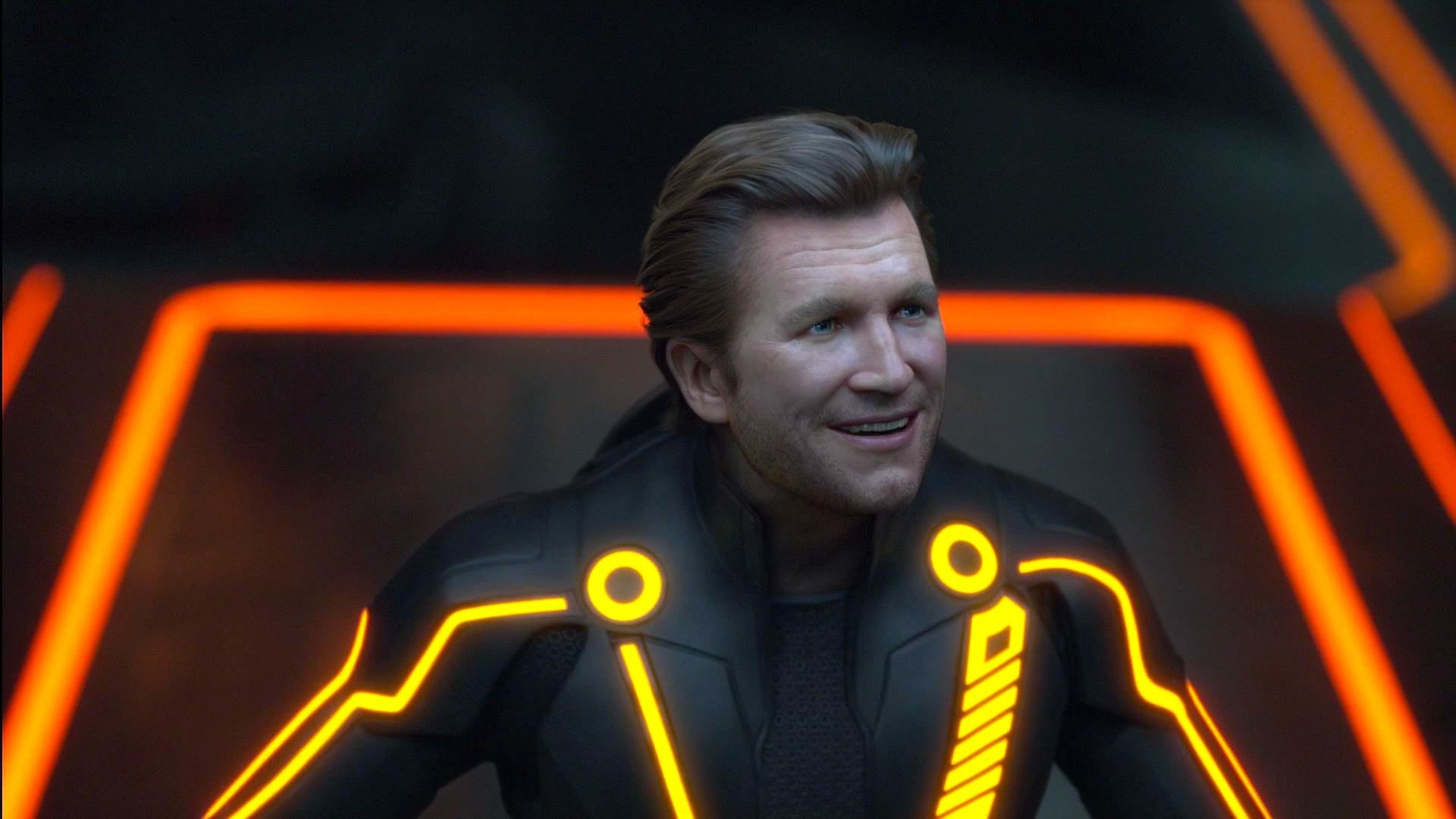
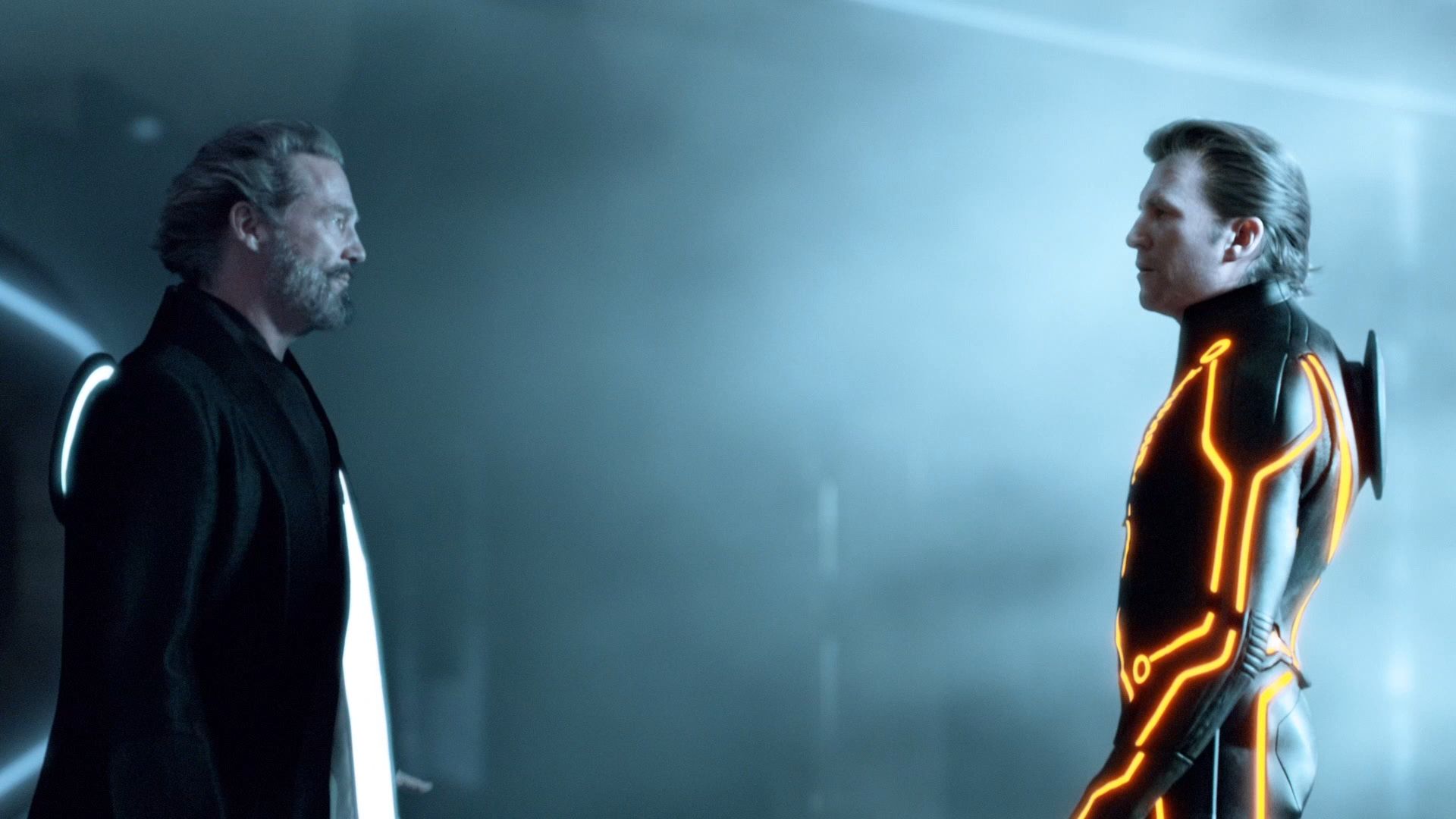
Tron: Legacy largely abandons this spiritual resonance. In the sequel, Jeff Bridges returns as an older, weary Flynn, but the dual-casting concept is distorted. He also plays CLU (Codified Likeness Utility), a digital doppelgänger Flynn intentionally programmed to help create a “perfect” system. By making CLU an intentional construction rather than a spontaneous digital reflection of his creator, the film loses the magic of the “ghost in the machine.”
In the 1982 original, the connection between User and Program suggested that an artist’s essence naturally bleeds into their creation. Legacy pivots toward a more standard “Frankenstein” or “Ultron” trope: a reckless creator builds an AI that inevitably rebels. The film fails to explore what specific flaws in Flynn’s psyche CLU is actually manifesting. Instead, we are presented with a Zen-like Flynn who has retreated from his own digital shadow, leaving the audience with a protagonist who is more an archetype than a person.
Even the character of Tron is sidelined, reduced to a brainwashed henchman whose eventual redemption feels like an afterthought. Without the meaningful interaction between the real-world Users and their digital counterparts, the emotional stakes feel remarkably thin. Alan Bradley exists in the sequel only to nudge Flynn’s son, Sam (Garrett Hedlund), toward the adventure, never engaging with his own digital legacy in a way that matters.
The narrative further complicates itself with the introduction of Quorra (Olivia Wilde) and the “ISOs”—isomorphic algorithms that spontaneously evolved within the Grid. This “bio-digital jazz” adds a layer of pseudo-science that feels detached from the original film’s charm. A more compelling sequel might have explored how the Grid transformed as the internet age exploded, reflecting the billions of users who now leave pieces of themselves in the digital ether. Instead, the Grid feels desolate and hollow, serving merely as a backdrop for a standard father-son reconciliation plot.
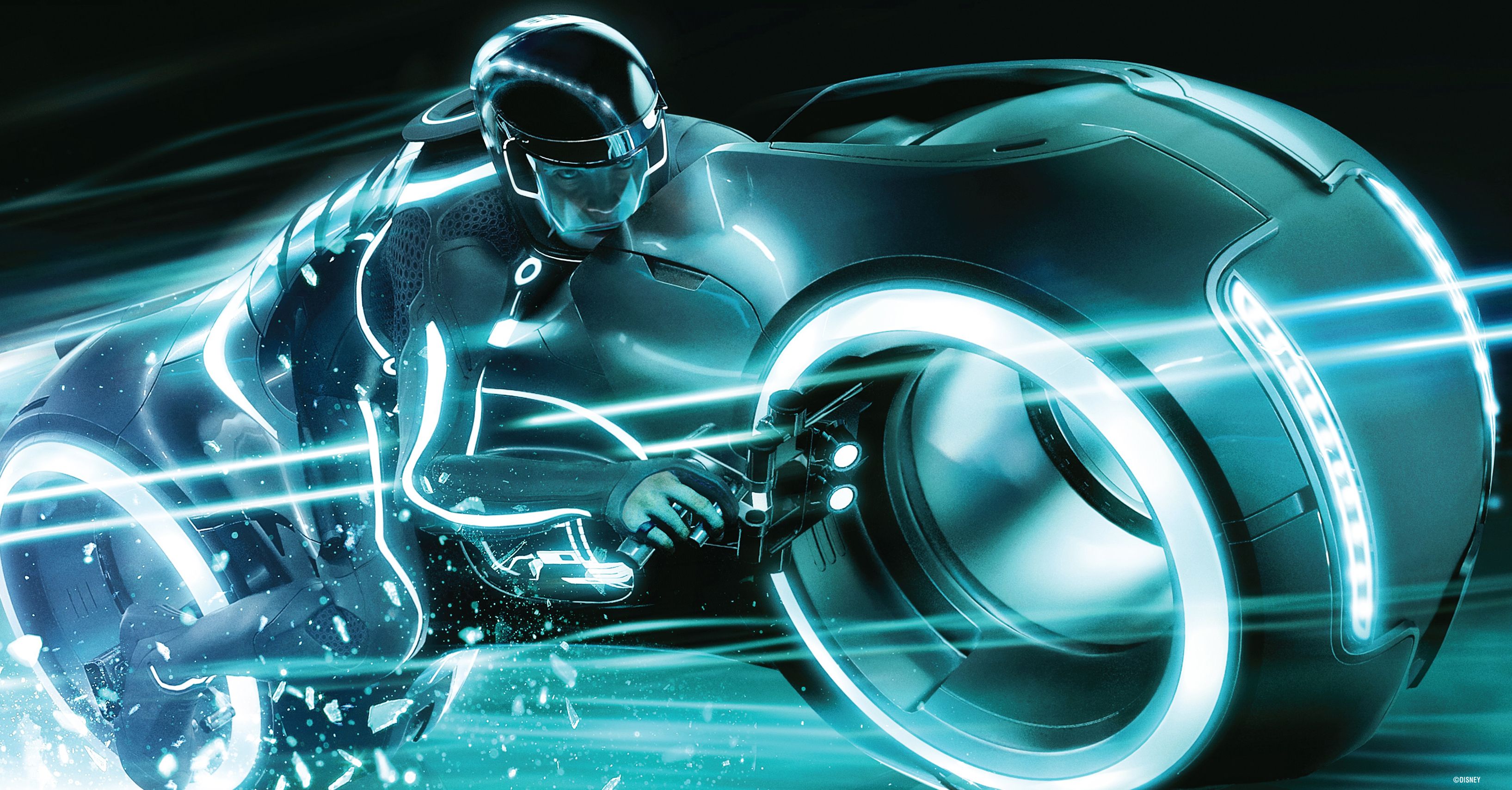
While Tron wasn’t a masterclass in complex screenwriting, it succeeded because it instilled a sense of wonder regarding the secret lives of our machines. Tron: Legacy expertly mimicked the surface-level iconography—the glowing circuits, the pulsing Daft Punk score, and the high-speed lightcycle duels—but it forgot the personal connection that made the original journey through the circuits so profound. In its pursuit of cinematic perfection, it lost the human heart of the code.
Source: Polygon
Related articles
 Until Dawn 2 Horror Game to Receive Physical Edition
 Tim Schafer Says Xbox Does Not Need Studios That Make Niche Games for Game Pass
 PlayStation Store Launches Gamescom Sale With Discounts Up to 75 Percent
 Riot Games and Hypixel Studios to Fund Technoblade Documentary
 Sony Adapts Pixel Adventure Game The Drifter Into Film
 Netflix Sets Avatar: The Last Airbender Season 3 for 2027 Release and Reveals Fire Lord Ozai
 FX Releases First Behind-the-Scenes Video for Season 2 of Alien: Earth
 Blade Runner 2049 Becomes HBO Max Streaming Hit