Did Fire Emblem Fans Just Crack Fortune’s Weave’s Biggest Mystery?
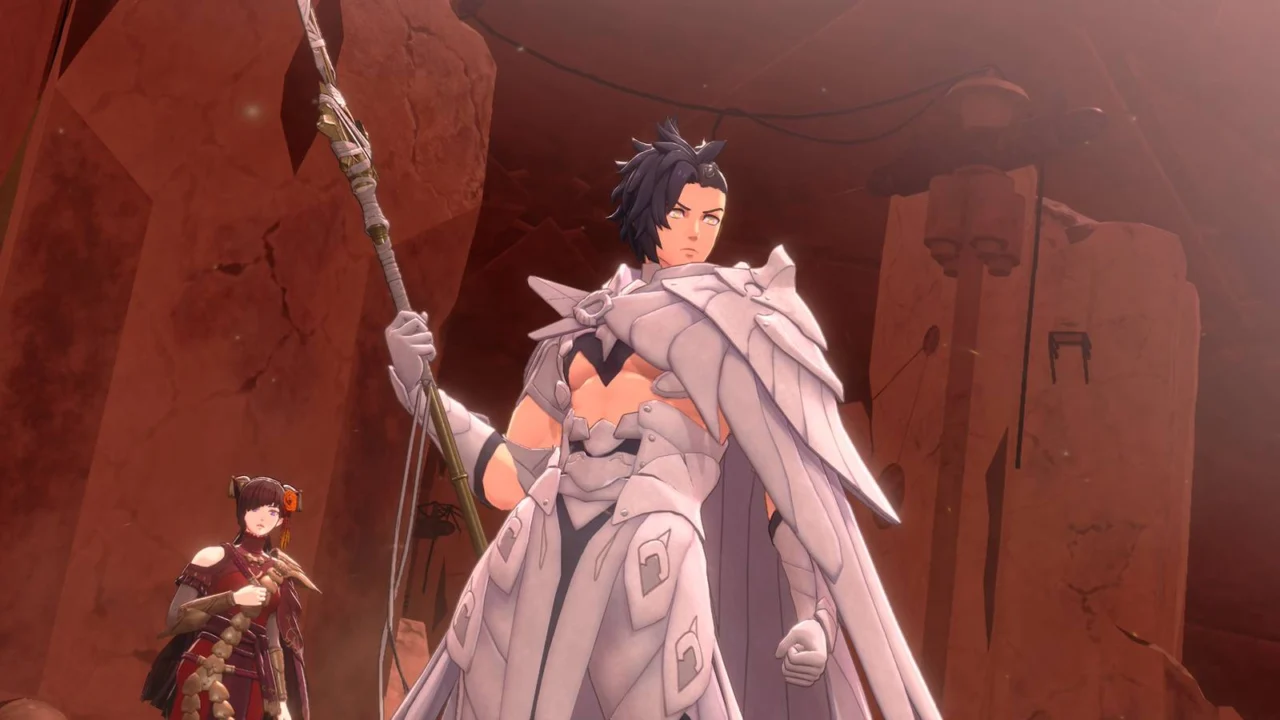
The protagonist of Fire Emblem: Fortune’s Weave—Eshmel, or whatever moniker you choose to assign them—bears a striking resemblance to Byleth from Three Houses. They maintain a stoic silence, harbor an extraneous soul within their vessel, and despite ostensibly lacking a defined persona, somehow function as the absolute linchpin of the empire. While the narrative never explicitly reveals Eshmel’s true background, observant players have pieced together a compelling theory regarding their authentic identity—and it is hard not to find it persuasive.
This piece contains spoilers for Parts 2 and 3 of Fortune’s Weave.
At the dawn of Fortune’s Weave, you actively sculpt Eshmel into existence. Fortuna and the chieftain of Kunlun village harness ancient transcendental technology to forge a Mediator—an ostensibly flawless entity engineered to guide the populace. The provenance of Mediator souls remains vague, and whether they possess genuine souls at all is up for debate. (An expansion focusing on Anatolia’s route is desperately needed!) Regardless, Fortuna plucks an arbitrary soul from the ether for Eshmel, claiming it is uniquely suited to make amends and restore illumination to Dagda. While these remarks initially seem cryptic, as you navigate the shifting destinies of the Flame Lords, you continually cross paths with individuals profoundly burdened by past transgressions.
Ultimately, Fortune’s Weave never explicitly divulges Eshmel’s former identity. To the ravaged denizens of Dagda, they are merely the Herald of the Pale Raven, a prophetic figure spearheading the resistance against Balor and the netherworld. Nevertheless, a robust fan theory circulating across Reddit and GameFAQs posits a fascinating possibility regarding Eshmel’s past life. If you have explored Cai’s route or completed Anna’s paralogue, you may have already noticed the subtle parallels.
During Anna’s paralogue, she fights by your side as an elephant rider, accompanied by Solel—a representative of the Trident, a divine class seemingly exclusive to Solel’s lineage. Within Dagda’s pantheon, the only other deity designated as a Trident is Aurora, Solel’s daughter. Moreover, the singular other entity in Dagda to embark upon life as a Trident is Eshmel. Utilizing Solel in combat during this paralogue reveals further behavioral echoes, most notably a fighting stance nearly indistinguishable from Eshmel’s. Admittedly, shared combat animations are common across Fortune’s Weave classes, though Solel’s animations diverge entirely from Aurora’s.
A far more compelling piece of physical evidence lies in Eshmel’s spear. Stripping away its weathered bandages and restoring it reveals a weapon identical to Solel’s lance. Furthermore, during Part 3, you can enlist Credna to remove these bindings, prompting him to openly remark upon the weapon’s uncanny familiarity.
Lore implications strengthen this hypothesis further. Fortuna establishes that Nabatean souls—the progeny and descendants of Sothis—bypass the conventional cycle of mortality and reincarnation, remaining tethered instead to Sothis herself. As demonstrated in Three Houses, Sothis and her lineage excel at depositing ancient souls into unexpected vessels. As for what specific actions Solel might need to atone for, one need only look at the narrative arcs of the Flame Lords. Each route chronicles Solel’s distinct failures and systemic shortcomings: his domestic fractures in Cai’s route, his political mismanagement in Dietrich’s, his ethical lapses in Theodora’s, and his struggles with righteous governance in Leda’s.
Get Polygon’s Wishlister newsletter
A weekly cheat sheet to what you’ll eventually love to play. No buying, no commitment — just saving for later.
Free. Unsubscribe anytime.
As previously explored in discussions surrounding Fortune’s Weave‘s political landscape, Solel remained largely indifferent when his father orchestrated the massacre of 100,000 people, only stirring into action once his own family came under direct threat. He stubbornly preserves the status quo, allowing the Order of Mithras to operate with impunity despite its dubious origins and its destructive influence on Dagda’s collective psyche. Connecting Solel to Eshmel instantly clarifies the unusual structural choices in Anna’s paralogue—particularly why she remains unrecruitable. The emotional weight of that sequence hits harder once you realize Solel finally recognizes the Order’s deceit too late, discovering that their tendrils run far deeper than anticipated. Facing impending doom of his own making, his past apathy leaves him utterly powerless to intervene. If this connection holds true, it represents an absolute masterclass in narrative execution.
Perhaps future expansions will explicitly confirm that Eshmel is indeed Solel reincarnated. Part of me remains divided on whether these lingering enigmas deserve definitive answers or if they are better left shrouded in ambiguity. Regardless, until official word arrives from Nintendo, the evidence points compellingly toward them being one and the same.
Not just an easy trope this time
Source: Polygon
Related articles
 Neighbor War Action Game Released on Steam and Made Free
 American Truck Simulator Adds New Gameplay Type in DLC After 10 Years
 Cliff Bleszinski Comments on Controversy Over Gears of War E-Day Developers
 Activision removes AI decompiler for Call of Duty: Modern Warfare 2
 GTA III and Resident Evil 4 Ported to 2007 Nokia N95 Phone
 Skyrim Developers Surprised by Players Abandoning Main Quest for Open World
 Ridley Scott’s Hannibal Streaming Free on YouTube
 Love and Deepspace Developers Release Poisonous Cocktail Recipes for Fans