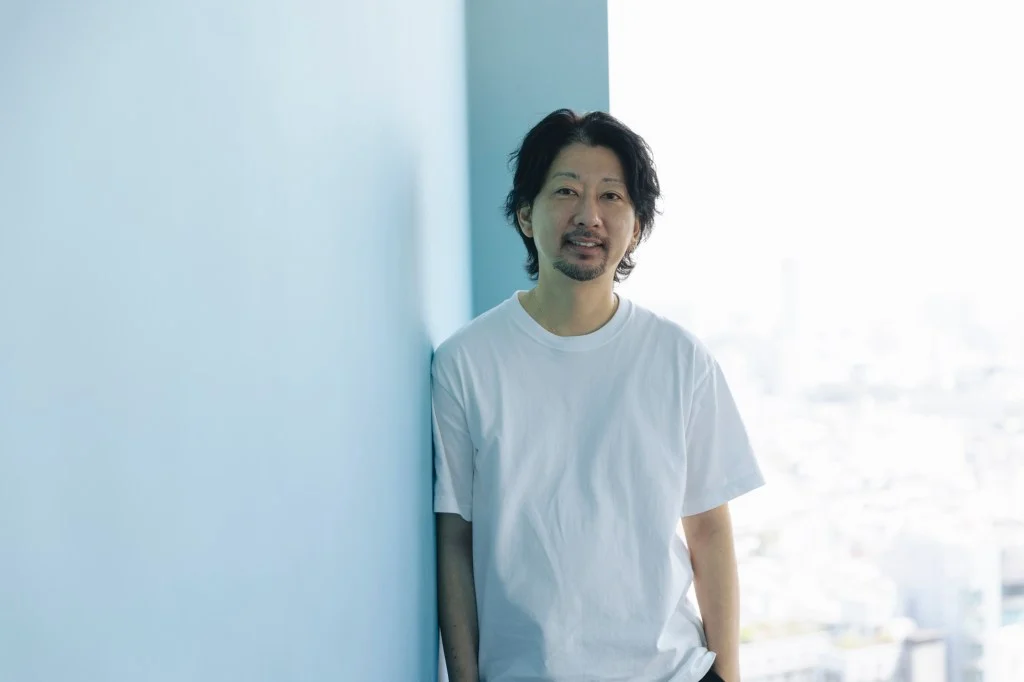
Cloud Nine’s Takuya Chigira on Ado’s WME Deal, J-Pop Event Zipangu, and Taking Japanese Artists Global
Breaking Boundaries: Cloud Nine CEO Takuya Chigira on Ado’s Global Trajectory, the Zipangu Experiment, and the Future of Japanese Music

In 2025, over half a million international fans turned out for Ado’s monumental second world tour, “Hibana,” powered by Crunchyroll. Building on that momentum, management company Cloud Nine orchestrated Zipangu in Los Angeles—the largest standalone festival dedicated entirely to Japanese talent ever staged outside of Japan.
Why would an agency head champion a massive overseas venture that bypassed immediate profitability? In an in-depth conversation, Cloud Nine President Takuya Chigira shares his perspective on the structural vulnerabilities of the domestic market, the looming threat of an overseas talent drain, and what it takes to build sustainable global infrastructure for Japanese artists.
Igniting Ambition in Los Angeles
Billboard: Zipangu made its debut in Los Angeles this past May. Looking back, what is your assessment of the festival?
Takuya Chigira: Our primary objective with Zipangu was never driven by commercial margins or personal ambition; it was about catalyzing Japanese artists to take risks overseas. If the participating acts walked away thinking, “We need to launch a North American tour” or “We belong on international stages,” then the project achieved its core mission.
Strictly speaking from a business standpoint, headlining Ado solo at a larger venue would have cost roughly one-fifth of the budget. However, industry hesitation remains palpable—even CEIPA’s matsuri ’25 capped attendance around 7,000 despite featuring three premier headliners. Until someone establishes proof of concept and demonstrates what is viable at scale, local promoters will remain skeptical and artists will stay put. With Ado on our roster, we had the leverage and momentum to lead by example.
Our internal team was phenomenal throughout the process. We had never mounted a domestic festival before, yet our very first undertaking was an overseas production in Los Angeles. Remarkably, it was executed by an agile group of fewer than ten people—with essentially five or six staff members running the entire on-the-ground operation alongside their daily responsibilities.
“Until someone establishes proof of concept and demonstrates what is viable at scale, local promoters will remain skeptical and artists will stay put.”
Streaming data in the Los Angeles metro area revealed that the eight featured performers experienced an average streaming surge of 2.4 times following the event compared to the week prior.
Chigira: Every act delivered an electrifying set. Seeing that artistic dedication translate directly into tangible metrics is deeply gratifying.
What did the audience demographic look like on site?
Chigira: Roughly 30 percent were broad enthusiasts of contemporary Japanese culture rather than devotees of any single act—people who love anime, gaming, cuisine, and aesthetic trends. There is a remarkably passionate, receptive global audience waiting if you make the effort to engage them.
Navigating the Friction of Global Production
What operational hurdles became apparent when mounting a full-scale event overseas?
Chigira: Navigating Ado’s world tour demystified international operations for us. Visa processing protocols vary drastically per jurisdiction, as do local withholding tax regulations. Even basic technical setups—such as wiring four stage monitors or soundboard communication protocols—vary across regions. Once you execute in practice, the learning curve flattens. We internalized key lessons in Los Angeles that will inform our approach elsewhere. Our goal is to cultivate an entire generation of domestic industry professionals who intuitively understand global logistical standards.
Those nuances can only be mastered through direct field experience.
Chigira: Precisely. Local crews consider baseline operational norms self-evident, so they rarely explain them unprompted. They will walk you through exceptional scenarios but assume standard processes are understood. During the world tour, we occasionally stepped straight into discrepancies between their baseline assumptions and ours. The moment you work through those moments, both sides align. That experiential knowledge is invaluable, and we want to keep creating opportunities for our staff to acquire it.
What does the roadmap look like for Zipangu going forward?
Chigira: As an engine for generating new demand, our goal is to host Zipangu in Los Angeles every May. Concurrently, we are exploring autumn iterations—around September or October—in international markets where Japanese pop culture already enjoys substantial, proven engagement.
Strategic Alliances and Redefining Industry Benchmarks
Ado recently formalized international representation with WME (William Morris Endeavor). What are the strategic expectations behind this partnership?
Chigira: While we maintain a North American outpost, the majority of our workforce operates from Tokyo. Partnering with WME allows us to bridge structural resource gaps and expand our footprint where our domestic team cannot directly reach. Ado secured the No. 94 position on Billboard’s global touring revenue ranking in 2025; our objective now is to steadily ascend that list.
The Recording Academy recently announced the addition of a ‘Best Asia Pop Music Performance’ Grammy category. Do unified regional categories elevate Japanese music?
Chigira: While it provides broader institutional visibility for Asian music as a collective entity, our perspective is nuanced. Our ambition has always been to compete at the highest tier, not merely to secure regional honors. Segregating Asian repertoire carries the inherent risk of marginalizing artists into siloed categories rather than competing directly for flagship recognition.
Meaning your focus remains set on General Field categories like Record or Album of the Year?
Chigira: Absolutely. That being said, accolades are never our primary objective. Receiving an award is a gratifying milestone along the journey, but our core mission is driving the culture forward. External accolades will never dictate our artistic priorities.
Confronting Structural Complacency at Home
You entered the music sector at age 30 with outside business experience. Where do you identify the primary vulnerabilities within Japan’s domestic music apparatus?
Chigira: Traditional industry practices remain largely antiquated. The landscape relies overwhelmingly on gut instinct and relational networking over analytical rigor.
To an extent, that is understandable—artistic breakthroughs cannot always be manufactured purely through data. However, the overreliance on subjective intuition compromises scalability and repeatability. Compounding that, capital efficiency across the domestic sector remains remarkably low.
Following Zipangu, we were approached with numerous cross-border collaboration and investment proposals. The fastest institutions to mobilize were overwhelmingly foreign entities—primarily from South Korea and North America. Music catalogs are premium intellectual property. While non-music sectors are aggressively pursuing IP acquisition, Japan’s domestic music establishment still struggles to fully commercialize, scale, and maximize the global value of its creative assets.
“Music catalogs are premium intellectual property… but Japan’s domestic music establishment still struggles to fully commercialize and scale its creative assets.”
What are the fundamental roadblocks to scaling Japanese music internationally?
Chigira: I don’t believe an Asian artist performing primarily in Japanese has fully penetrated the pinnacle of mainstream global pop yet. It is unrealistic to expect Japanese-language music to instantly dominate the global epicenter. Nevertheless, there remains a glaring disparity between the elite technical execution of Japanese performers and their global commercial capture. We have immense room to scale our numbers upward, even if we operate within distinct market lanes.
For artists, the motive is simple: wanting their creative voice to cross oceans. However, because Japan represents the second-largest music economy in the world, artists can achieve substantial financial prosperity without ever crossing a border. Domestic comfort often breeds international complacency.
The sheer size of the domestic market has historically encouraged an insular mindset.
Chigira: Exactly. But digital distribution and social networks have completely reshaped the aspirations of the younger demographic. Growing up, the pinnacle of success meant headlining Nippon Budokan or Saitama Super Arena. Today’s generation watches arena tours in Seoul, Los Angeles, and London in real time; their ambitions are inherently international.
When those aspiring talents enter the industry, management agencies have a duty to provide the infrastructure to realize those visions. If domestic management cannot offer viable pathways to the global arena, our premier talent will inevitably sign with entertainment agencies based in South Korea or the United States. That brain drain poses an existential challenge to our creative ecosystem.
The Cost of Global Ambition
For established acts who already enjoy domestic superstardom, restarting as an unproven newcomer abroad involves significant friction.
Chigira: At home, a top-tier artist enjoys seamless logistics, dedicated road crews, high-end hospitality, and pristine venue acoustics. Venturing abroad often means returning to grassroots realities: self-navigated transportation, rudimentary sound setups, speaker bleed, and small stages. Re-embracing a beginner’s mindset requires immense mental resilience.
Restarting that journey incurs heavy stress and initial financial losses compared to secure domestic touring. Without deep conviction from both the artist and their immediate management team, sustaining that effort is nearly impossible.
Yet Cloud Nine remains committed to pushing those frontiers.
Chigira: Our drive stems from an urgent desire to prevent Japan’s creative capital from being drained away. Ado is not driven by financial gain; she is deeply motivated by a mission to introduce Japanese music and the Vocaloid cultural heritage to global audiences. That shared vision sustains our demanding global schedule.
Japan needs an ecosystem of agencies equipped to guide talent across international borders. If other domestic management teams share that vision and want to expand internationally, Cloud Nine is prepared to share knowledge and build alongside them. Elevating the entire landscape is our ultimate goal.
Related articles
 Stella Lefty Unveils 2027 ‘Long Way Home’ Headlining Tour, Including Boston Stop
 BLACKPINK’s Lisa and Jisoo Announce New Solo Projects Just Hours Apart
 Dr. Dre Reveals His True Thoughts on AI in Music
 Drake Sparks Collab Rumors After Surprise Appearance at Ella Langley’s Show
 Olivia Rodrigo Releases ‘Handmaid’s Tale’-Inspired CD Single ‘Serena Joy’ at Indie Record Stores
 Motown Songwriter Janie Bradford, Co-Writer of ‘Money (That’s What I Want),’ Dies at 87
 BigXthaPlug Hit With Drug and Gun Charges One Year After Prior Arrest
 City Pop Waves: How Japan’s Retro Sound Continues to Captivate London