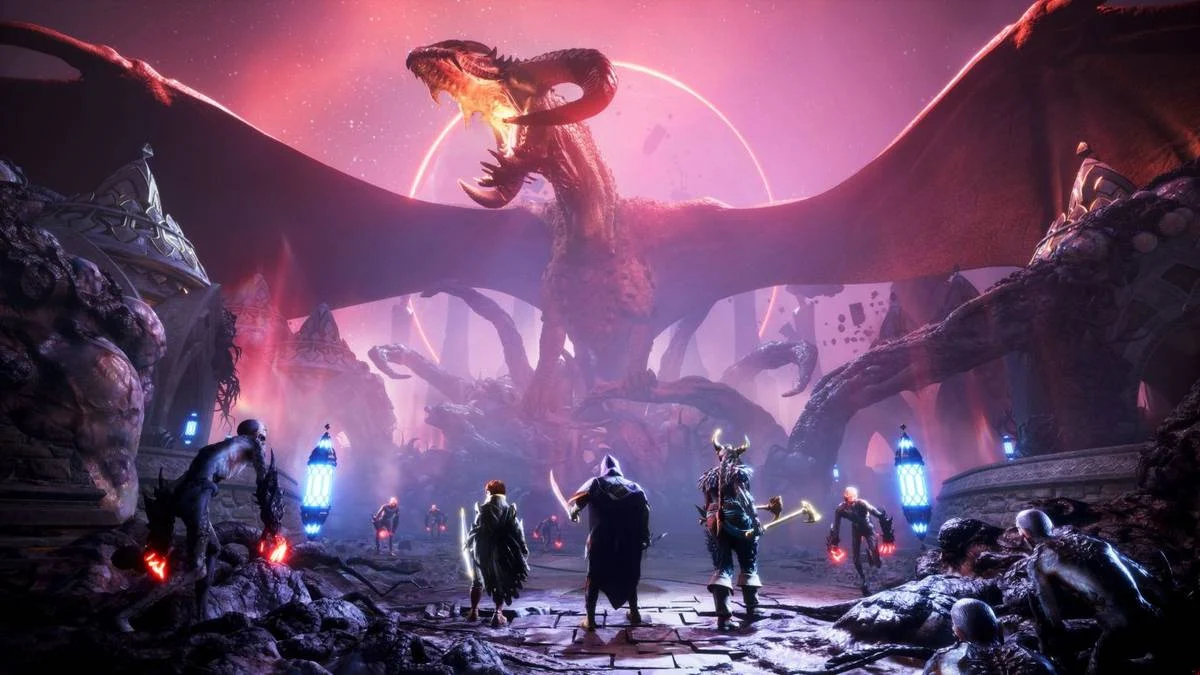
Can We Finally Agree That Dragon Age: The Veilguard Was Actually Terrific?
Dragon Age: The Veilguard is now BioWare’s final game. EA announced on Wednesday that the studio will close its doors after thirty years. The 2024 action-RPG sparked endless debate online, and it now serves as the studio’s farewell. It never should have ended this way. BioWare deserved the chance to finish the projects already underway, including a new Mass Effect. Few of us get to choose our own ending, though, so The Veilguard will have to stand as BioWare’s last word. It is, at the very least, a formidable legacy.
A former Veilguard writer captured that legacy neatly in a Bluesky post. They shared a line from Rook, the game’s protagonist: “We will always be grateful for those whose stories brought us where we are today. And those whose stories will live on with us forever.”
At nearly every turn, Dragon Age: The Veilguard fell prey to a monstrous blend of the games industry’s worst afflictions. Corporate meddling was one. Executives who believed they knew better than the people actually building the game overruled the creatives. Another was the distorted outrage economy, where agitators trade in bad-faith arguments for profit. The third was today’s crowded marketplace. Breaking through gets harder every year, even for a studio with thirty years of landmark releases behind it.
Worst of all, the game endured a remarkably turbulent development. Kotaku reported that BioWare scrapped an early prototype of the fourth Dragon Age internally in 2017, then restarted the project the following year. At EA’s urging, the studio then worked live-service elements into the game, hoping to generate recurring revenue the way sports franchises do. Every previous Dragon Age had been a story-driven single-player experience. In 2021, Bloomberg reported that EA and BioWare had reversed course sharply. They rebooted the project and stripped out every live-service feature. That decision was reportedly inspired by the success of Star Wars Jedi: Fallen Order, another narrative-driven single-player game published by EA.
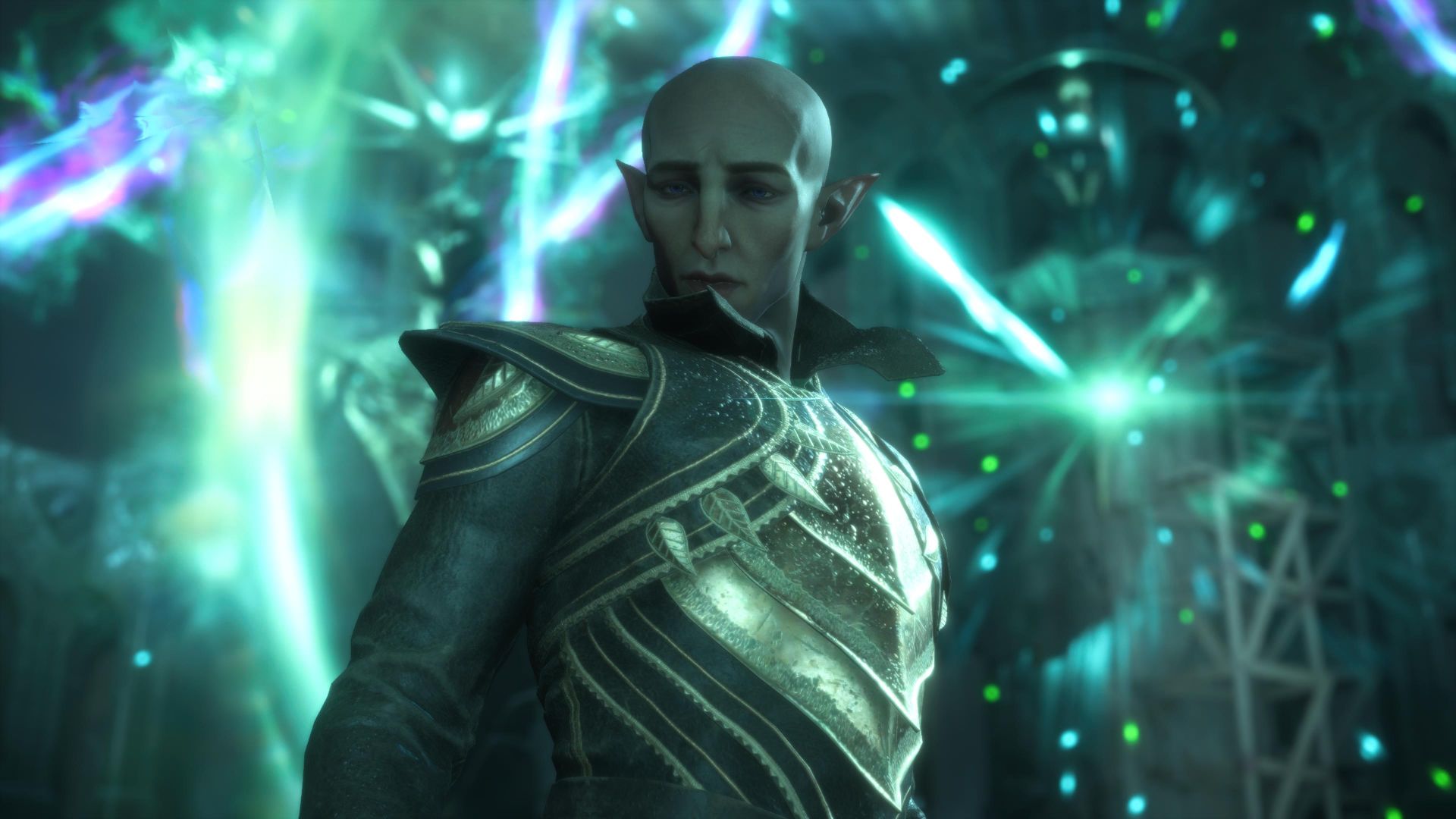
Criticism dogged the game almost from its 2022 reveal, when it was still called Dragon Age: Dreadwolf. Some fans mocked the revised art style, which swapped a muddy photorealism for a cartoonish look reminiscent of Fortnite. Others doubted that a whole game could revolve around the Dreadwolf himself. Solas is an elven mage from 2014’s Dragon Age: Inquisition, and his intricate worldview and haughty manner had long divided the fanbase.
The ugliest pre-release backlash came when the game introduced Taash, a nonbinary Qunari, as a recruitable companion. (The Qunari are a Dragon Age race of towering, horned humanoids.) I’m paraphrasing, but the outcry from a certain circle of influencers boiled down to this: “This character is nonbinary, I’m angry, and you should be too.” Twitter had introduced revenue sharing for viral posts in 2023.
Some of these complaints were dressed up as concern for the lore. In the Dragon Age setting, Qunari society adheres strictly to conservative doctrine, so a Qunari coming out as nonbinary supposedly made no sense. Anyone who played the finished game would have found that Taash’s storyline confronts exactly that tension. Kotaku deserves credit here. Its blistering retrospective on EA’s mismanagement of BioWare noted that those critics were almost certainly never going to play The Veilguard anyway.
When it launched, the reception was tepid. Reviews were good without being glowing, and the game currently holds an 82 on Metacritic for PlayStation 5, its most-reviewed platform. Sales also fell short of ambitions. Roughly 1.5 million people played in the first two months, about half of what EA had projected. At that year’s Game Awards, the game was almost entirely overlooked, even though it ticked many of the usual boxes for a nominee.
The smear campaign likely explains part of that muted response. But The Veilguard also arrived in one of the most crowded years for big games in memory, which all but ruled out a breakout. 2024 gave us Astro Bot, Palworld, Metaphor ReFantazio, Final Fantasy 7 Rebirth, Dragon’s Dogma 2, Tactical Breach Wizards, The Legend of Zelda: Echoes of Wisdom, the early access launch of Hades 2, and the Elden Ring expansion. Balatro was also swallowing every spare hour that players had. What chance did a 65-hour RPG with merely decent reviews have?
That makes it all the more remarkable that Dragon Age: The Veilguard turned out to be a genuinely excellent game. The odds were against it in every way: a chaotic production, shortsighted corporate interference, barely coherent public fury, and a packed release calendar.
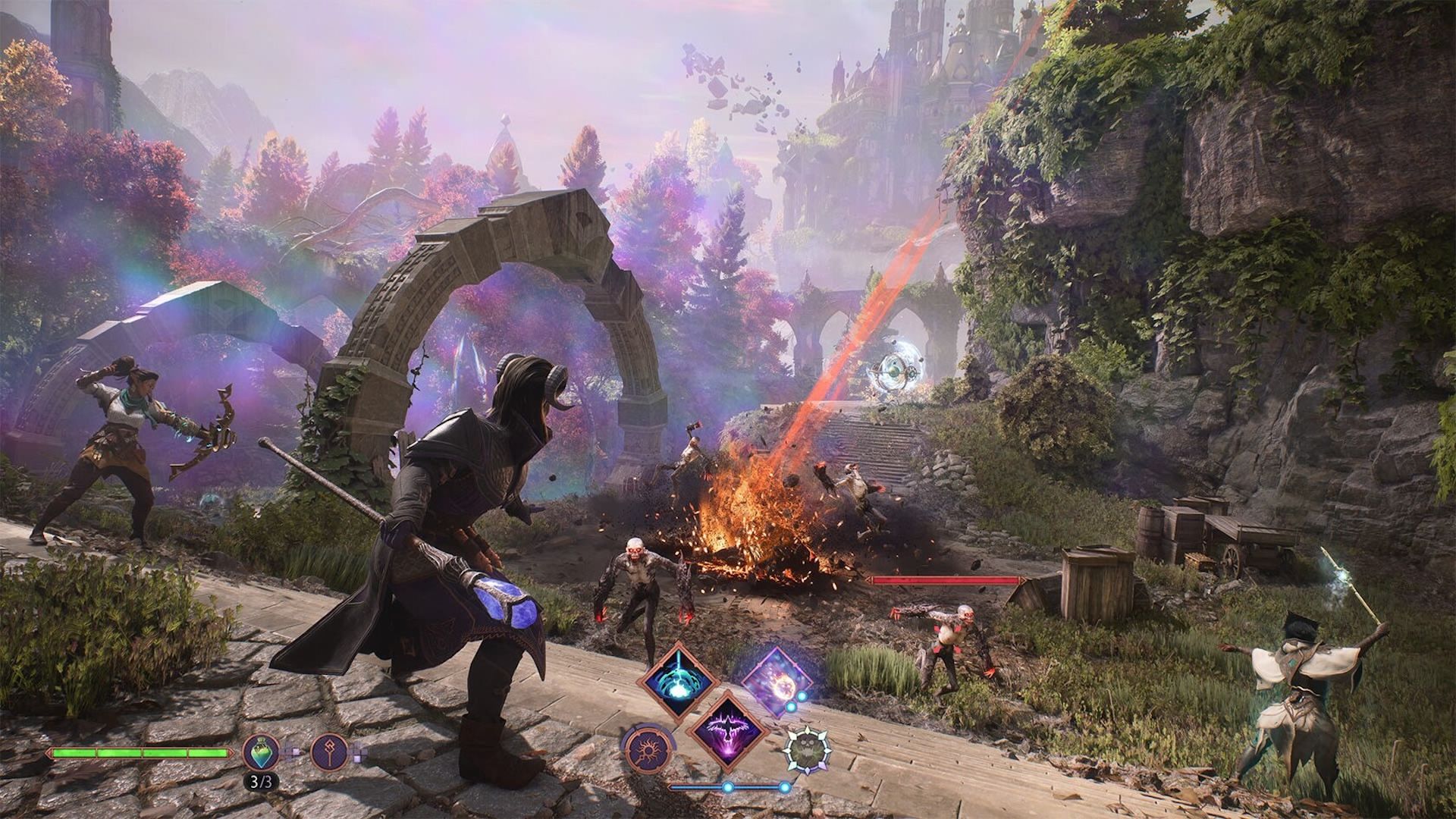
I’m hardly a Dragon Age devotee. I dabbled in the first game and skipped the second. I got 50 hours into Inquisition before discovering I had nearly 50 more to go, and I gave up. Even so, The Veilguard felt like a natural way back into the series. I knew little of the canon, but the world and story lean on familiar fantasy conventions, so I grasped the stakes right away. The fluid action combat was far easier to pick up than the turn-based toolbars of the earlier games. It revolves around assembling builds from three cooldown-based abilities. Some critics said the combat system smelled of live-service design, and I can’t really argue. But without knowing how the game was made, I never would have noticed.
The Veilguard also took a bold creative gamble. It was deliberately not an open-world game, which makes it a rare exception among fantasy RPGs in the age of Skyrim. Instead, the world is built from roughly half a dozen regions that you revisit and explore repeatedly. Certain paths are blocked at first. As you recruit companions and unlock new abilities, you can backtrack and open them up, a bit like a Metroidvania with an RPG party. By the end, the locations felt like well-worn neighborhoods, far more familiar than a sprawling “if you can see that mountain, you can climb it” map. The game offers more evidence that tight, densely designed environments can be more rewarding to explore than vast, repetitive open worlds.
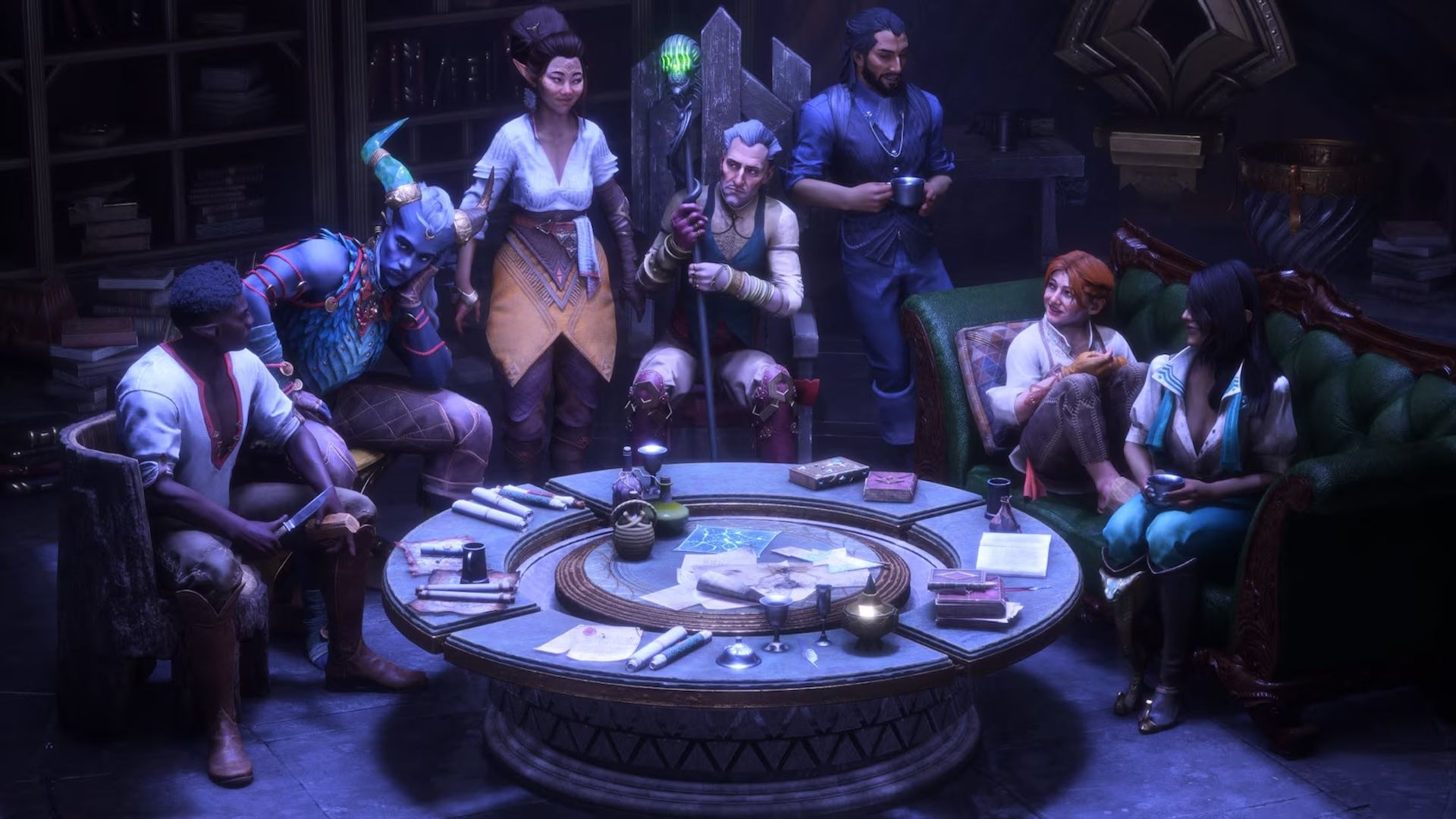
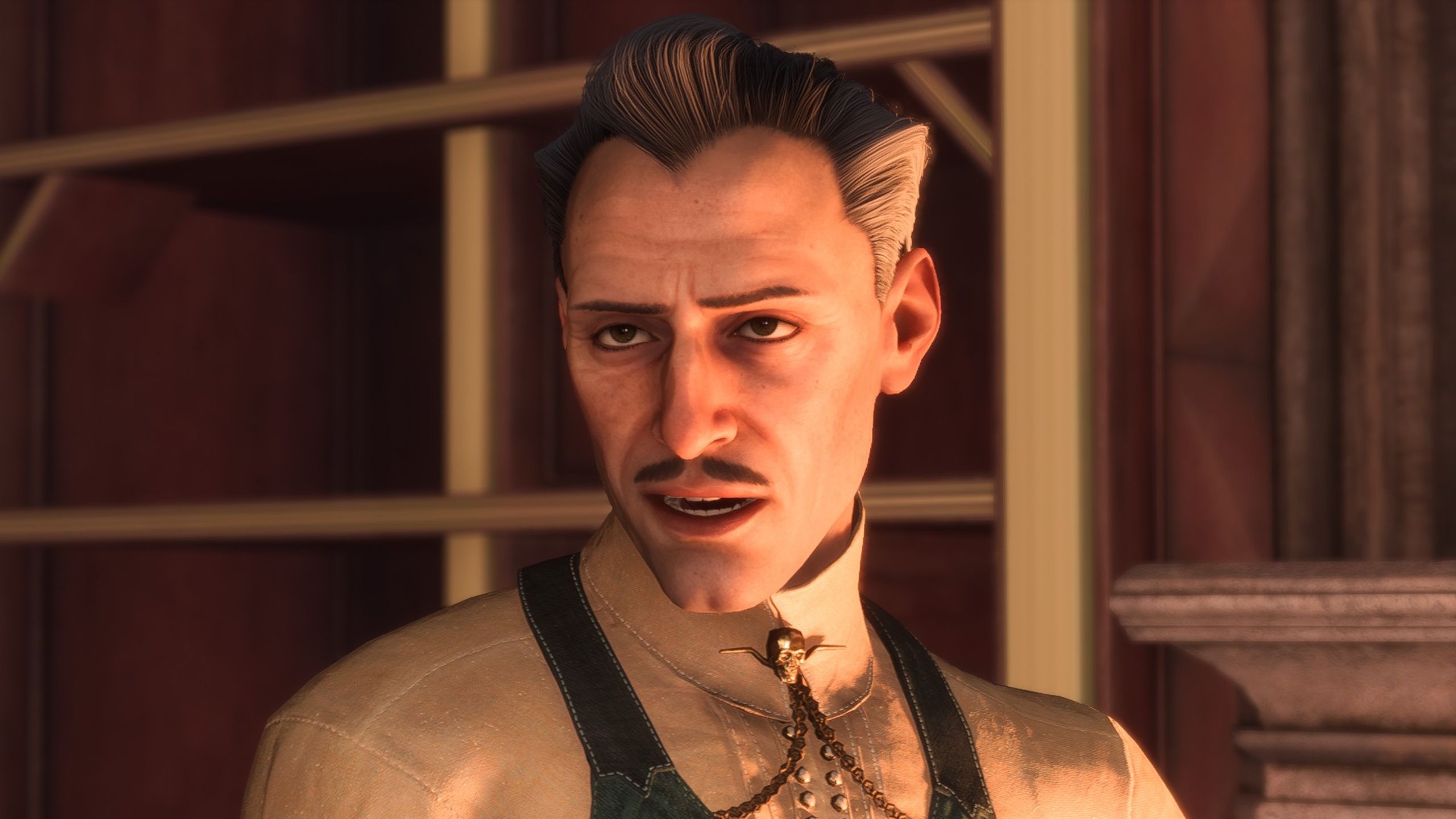
As with every BioWare RPG, though, the highest praise belongs to the motley band of heroes at its heart. That starts with Rook, a snarky, roguish protagonist who had a distinct personality of their own. Players could also choose from four voice options, one of them the inimitable Erika Ishii. Then there’s Emmerich, the prim underworld scholar torn between devoting his life to research and to friendship. There’s Lucanis, my beloved Lucanis, an Italian vampire assassin reluctant to take over the family business, which happens to be the mafia. There’s Neve, the sophisticated mage investigator, and Davrin, the monster hunter who ends up caring for a baby griffon. All seven companions were compelling and memorable. Each faced a moral crossroads at the end of their questline, with no obviously correct choice. At bottom, The Veilguard is a set of intimate portraits of people who found one another under enormous pressure. Together they pulled off a string of miracles against impossible odds.
Dragon Age: The Veilguard should never have been BioWare’s last game. If you haven’t played it, it’s worth your time. It’s a terrific action-RPG, and it also shows what this enormously talented studio could accomplish in punishing circumstances. It leaves you wondering what BioWare might have made in a kinder world, one that kept the suits out of the kitchen and let the cooks cook.
Source: Polygon
Related articles
 Made in Abyss Sequel Announced on Premiere Day of New Film
 Final Fantasy Resonance’s Denuvo Protection Cracked Within a Day
 Tim Sweeney Again Criticizes Valve Over Steam Rules Requiring Disclosure of AI Use
 Psychological Thriller Movies You Can Stream for Free Online
 Heroes Is Now Free to Stream 20 Years After Its Premiere
 Half-Life 2 RTX Update Adds Improved Frame Generation and ARM Support
 Spike’s “Buffy” Quote Still Ranks Among TV’s Best Lines 23 Years Later
 Paul Atreides’ Best Dune Line Remains Sci-Fi’s Coldest Quote 61 Years On