Battlestar Galactica Season 3 Episode Exodus Marks 20th Anniversary
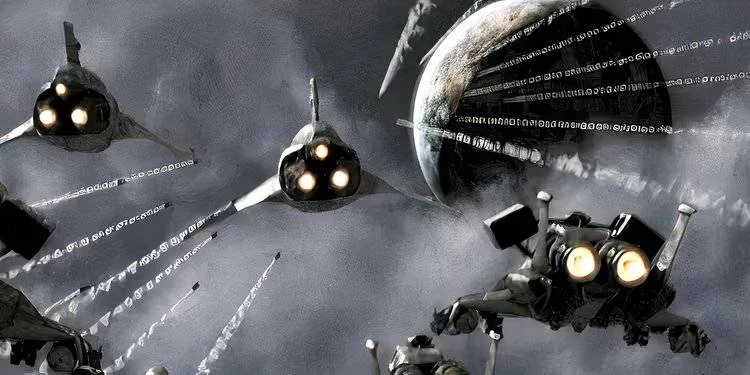
To liberate the humans trapped under Cylon occupation, Admiral William Adama (Edward James Olmos) jumps the titular Battlestar Galactica directly into the atmosphere of New Caprica. The warship plummets toward the settlement and deploys Viper fighter jets amidst the chaos before jumping back into space moments before it would have crashed, likely obliterating the planet on impact.
Two decades later, this spectacle from Battlestar Galactica season 3’s “Exodus, Part 2” remains unforgettable sci-fi TV. It is dazzling and horrifying, and still one of the coolest things ever broadcast on science-fiction television. From a tactical standpoint, the “Adama Maneuver” is absolutely bonkers and one of the riskiest spaceship tactics, perhaps ever (sorry, Vice-Admiral Holdo). What if the ship had gotten torn apart from ripping through the atmosphere? What if the FTL drive malfunctioned or didn’t activate in time? Somehow, it is also not even the most visually impressive sequence in the episode.
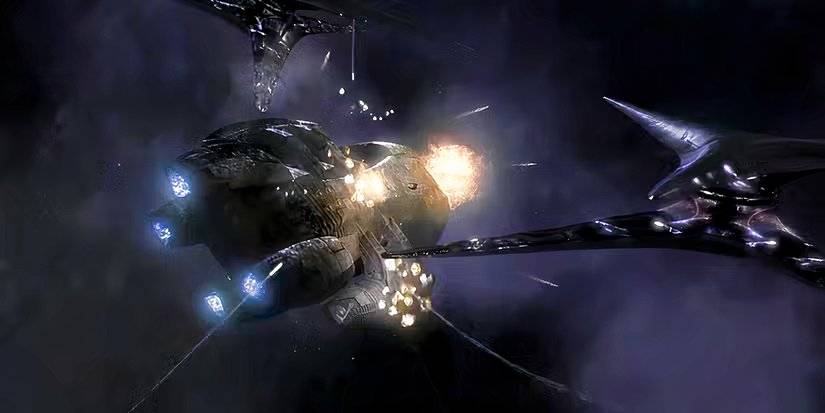
Minutes later, while the Galactica is damaged and surrounded by enemy ships, Lee Adama (Jamie Bamber) arrives aboard the Pegasus. He buys his father enough time to escape, evacuates his own crew, and transforms the most advanced remaining warship into an enormous battering ram. Pegasus tears through one Cylon basestar, explodes, and sends a flaming flight pod spinning into another. It is both a spectacular death scene and the decisive blow in the battle to liberate New Caprica.
In one extended sequence, “Exodus, Part 2” ends the most frustrating period in Battlestar Galactica’s story, reunites its scattered cast, and restores the series’ core premise: one battered battlestar protecting the remnants of humanity as they search for Earth. No one is able to recover from the trauma that easily, perhaps least of all the visual-effects artists who were forced to destroy the Pegasus.

The Adama Maneuver was only the beginning
“Exodus” was initially conceived as a single episode, written by Bradley Thompson and David Weddle and directed by Félix Enríquez Alcalá. But the rescue of New Caprica eventually became too large for one hour. Against the backdrop of this militarized occupation, there was also the resistance’s ongoing ground operations, Sharon Agathon’s (Grace Park) infiltration of the Cylon compound, Kara Thrace’s (Katee Sackhoff) imprisonment by Leoben Conoy (Callum Keith Rennie), and Ellen Tigh’s (Kate Vernon) betrayal, which led to her being poisoned before her execution. And most of that happened in the first part of “Exodus.” There was simply too much story happening.
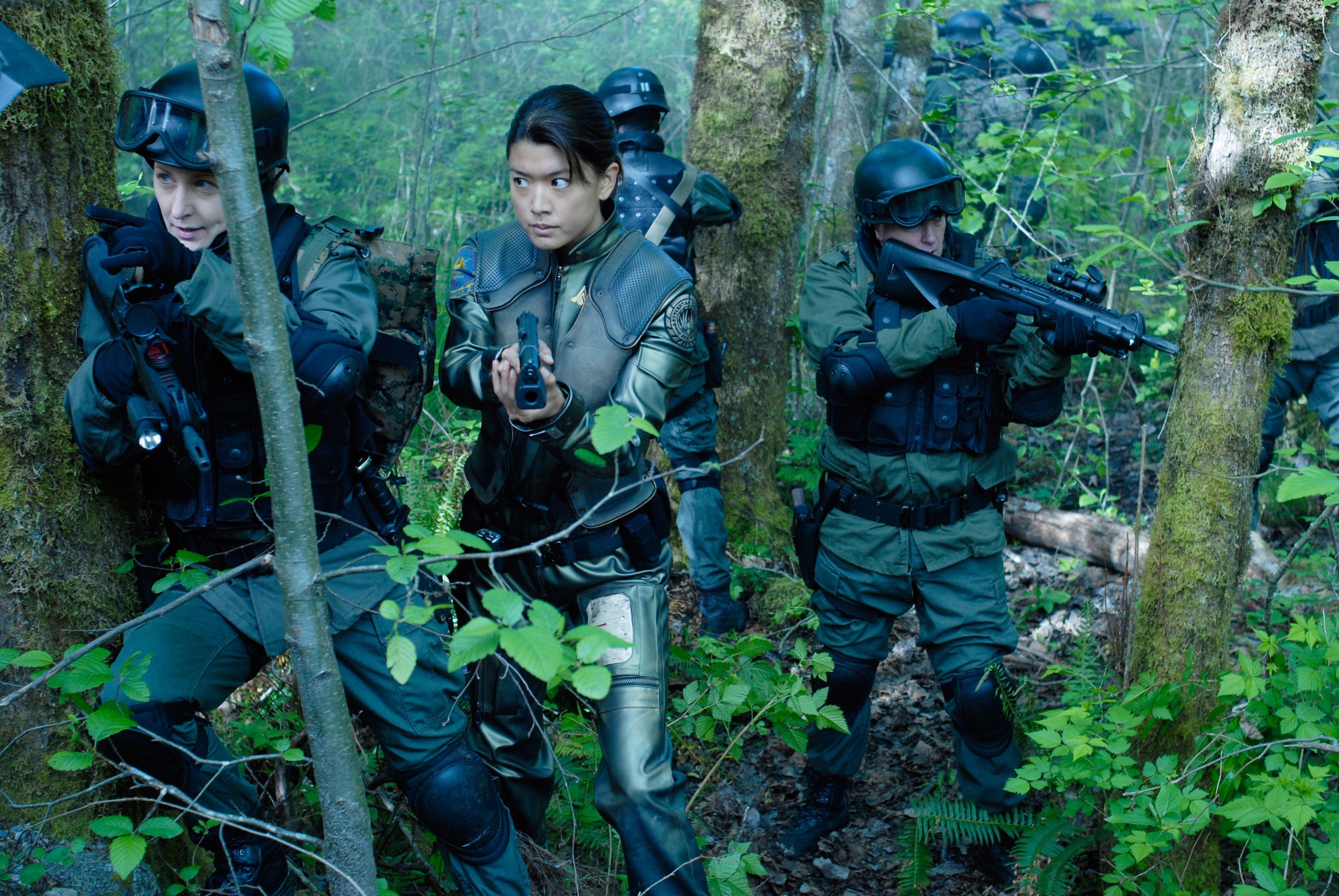
According to Moore, who talked about the production on a series of podcast episodes released alongside the show, splitting “Exodus” into two episodes also helped the production absorb the considerable cost of the New Caprica storyline. The opening of season 3 required new sets, location shooting, large numbers of extras, and significantly more visual effects than an ordinary episode. By turning the material into a two-parter, the producers were able to stretch that expensive infrastructure across another hour of television.
That history helps explain the rhythm of “Exodus.” Part 1 is full of tension as it essentially tightens the spring. Sharon retrieves the launch keys for the civilian ships. The resistance prepares for its uprising. Adama orders Lee to protect the civilian fleet and continue the search for Earth if Galactica doesn’t return within 18 hours. Samuel Anders (Michael Trucco) discovers that Ellen betrayed the resistance to save her husband, Saul Tigh (Michael Hogan). Then Part 2 releases all that tension almost all at once.
Saul poisons Ellen rather than surrender her to the resistance for execution. The uprising begins. Laura Roslin (Mary McDonnell) retakes Colonial One. Anders rescues Kara from Leoben’s apartment. The civilian ships begin to launch. That is when Galactica falls out of the sky.
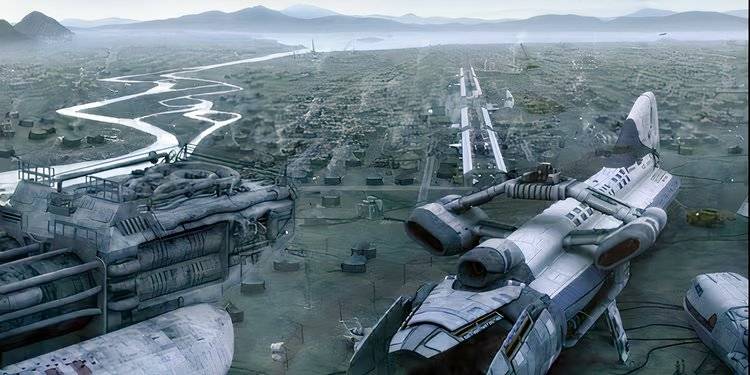
During his podcast commentary, Moore watched the sequence and remarked that the episode had better win the Emmy for visual effects. Less than a year later, it did. “Exodus, Part 2” won the 2007 Emmy for Outstanding Special Visual Effects for a Series, along with the Visual Effects Society award for Outstanding Visual Effects in a Broadcast Series. The episode also received Emmy nominations for its direction and sound editing. But the episode still had a larger spectacle in reserve.
Why Battlestar Galactica had to destroy its best ship
Once Galactica jumps out of New Caprica’s atmosphere, Adama discovers that four Cylon basestars are waiting for him. Already damaged by the free fall, the ship has little chance of survival. As he often does when facing certain death, Adama quietly tells his crew that it has been an honor to serve with them.
Except Lee disobeys a direct order and jumps the Pegasus in to assist. Pegasus immediately destroys one basestar and draws enough fire to allow Galactica to escape. Lee orders the crew to abandon ship, sets its weapons to fire automatically, and pauses on the empty bridge to offer his command one final “Thank you.” Then he and the dwindling crew set it on a direct collision course with the enemy ships.
Destroying Pegasus had always been part of the general plan for the New Caprica storyline, even if the writers changed the circumstances across various drafts. At one point, the creative team considered destroying Galactica instead and moving the military crew onto the newer, better Pegasus. But that would have meant abandoning the title of the series.
The Pegasus sets occupied valuable studio space, and maintaining two capital ships forced the production to divide its personnel and background performers between separate locations. The creative team also wanted to build new Cylon basestar interiors for the stories that followed. There just wasn’t enough room to do it all.
The visual-effects team nevertheless became attached to the ship. When its artists learned that Pegasus was scheduled for destruction, they hung a large “SAVE THE PEGASUS” banner outside their workspace, directly across from Moore’s office. Moore noted that the gesture was very funny and endearing, but they destroyed the Pegasus anyway.
The ship’s destruction became an enormous undertaking for Atmosphere Visual Effects. Lead compositor Brenda Campbell later recalled that the climactic sequence contained roughly 250 to 300 elements in each compositing flow, spread across approximately 10 shots. Because its ships, explosions, weapons fire, and debris interacted so extensively, much of the work couldn’t be simplified through pre-compositing. Campbell had about a week and a half to finish it.
The scale extended into the background. Some battle shots featured hundreds of individually animated Cylon Raiders that hadn’t even appeared in the original previsualization. The artists then added camera movement, flares, and the unusually heavy layer of grain that helped Battlestar Galactica’s digital effects match the show’s handheld, documentary-inspired photography.
The collision destroys the first basestar outright. Then one of Pegasus’ burning flight pods breaks away, careens through the battle, and strikes another. Humanity may have lost the Pegasus, but at least it took out three Cylon basestars in the process.
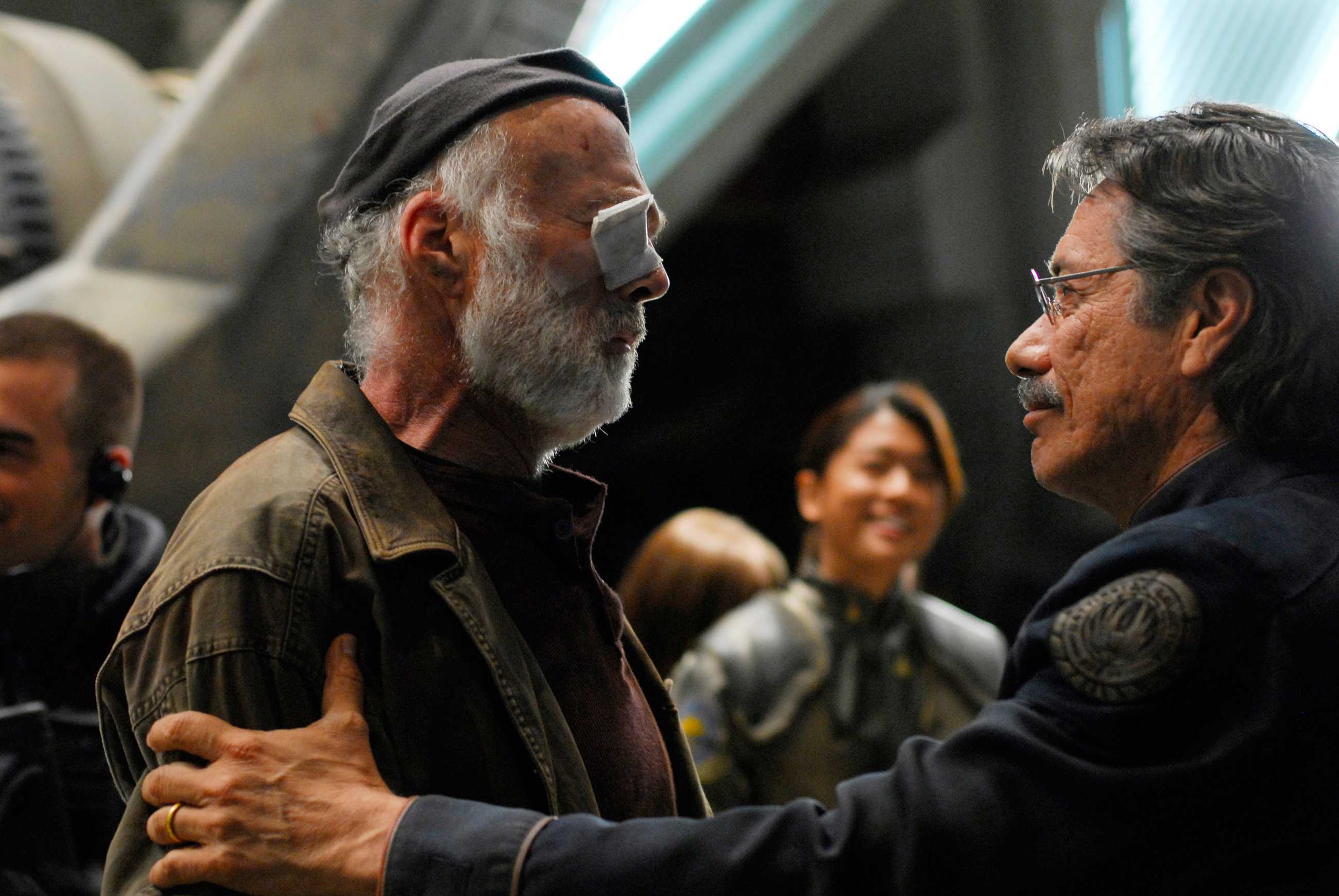
In a way, “Exodus” delivers a satisfying reset to the show’s original structure. After spending four episodes grounded on New Caprica, Battlestar Galactica resumes its familiar format of a scrappy military ship on the run. But its characters return to that version of normalcy carrying more trauma than ever before. The occupation is over, but the damage it caused has barely begun to reveal itself.
That is what separates “Exodus” from an impressive hour of action television. It delivers the enormous catharsis its story demands, but it never pretends that liberation alone is a simple fix for anything. The heroes escape, but they cannot return to who they were before New Caprica. Neither can the fleet, as humanity is free again, but it has sacrificed its most powerful warship to get there.
Twenty years later, it is easy to understand why the visual-effects artists wanted to save Pegasus and why the writers knew they could not. The Adama Maneuver may be the image everyone remembers, but the destruction of Pegasus gives “Exodus” its emotional climax. If the artists could not save their favorite ship, they could at least give it a death spectacular enough to ensure nobody would ever forget it.
Battlestar Galactica is available to stream for free on Pluto TV.
Source: Polygon
Related articles
 Valve’s User Agreement Allows the Company to Revoke Unused Steam Wallet Funds After Six Months
 Valve Approves Fan-Made Left 4 Dead 2 Outbreak 64-Bit Port on CS:GO Engine
 FromSoftware Fans Criticize Bloodborne PC Port Over AI Use
 Modders Release Gameplay Trailer for Cyberpunk 2077 Cooperative Modification
 Six Darkly Funny Far Side Comics Starring the Devil
 Insider Claims Resident Evil Code Veronica Will Get Separate Ways-Style DLC
 Developers Fall Into Debt Amid Rising Popularity of “Teach Your Sister How to Drive” Simulator Demo
 Arc Raiders Creator Admits Fan Divide Risk Over Requested Game Modes