A Knight of the Seven Kingdoms Fixes the Flawed Message of the Game of Thrones Finale

During the polarizing conclusion of Game of Thrones, Tyrion Lannister (Peter Dinklage) delivers a monologue regarding the true foundation of leadership in Westeros. “What unites people?” he posits. “Armies? Gold? Flags? Stories.” He contends that a compelling narrative is an unstoppable force, eventually arguing that Bran the Broken (Isaac Hempstead Wright) possesses the most worthy tale to justify his kingship. However, the logic—that a mystical odyssey and a fall from a tower made Bran the ideal ruler—felt unearned to many, cementing the episode’s place among television’s most maligned finales.
While Tyrion’s sudden fixation on folklore felt like a narrative reach in the original series, A Knight of the Seven Kingdoms showrunner Ira Parker validates the concept by threading it throughout the show’s debut season. Rather than using the importance of legacy as a last-minute thematic band-aid, Knight of the Seven Kingdoms establishes the weight of one’s story as its central thesis from the very beginning.
[Note: The following contains significant plot spoilers for the first season of A Knight of the Seven Kingdoms.]Given that George R.R. Martin has yet to conclude his epic saga, showrunners David Benioff and D.B. Weiss were forced to improvise well before the eighth season. Tyrion’s monologue may have felt clunky, but it indicated a fundamental understanding of Martin’s fascinations. Decades before A Game of Thrones hit shelves, Martin co-authored Windhaven, a sci-fi tale where a cultural uprising is sparked entirely through the power of shared song and story.
This theme is revitalized in the 1998 novella The Hedge Knight, which Parker has adapted with surprising fidelity. For Ser Duncan the Tall (Peter Claffey), the legacy of his mentor, Ser Arlan of Pennytree (Danny Webb), is his only path to social mobility. Dunk’s transition from the squalor of Flea Bottom to the ranks of chivalry rests entirely on his ability to spin a convincing narrative about being Arlan’s rightful successor, using a handful of horses and a borrowed sword to seek his fortune.
 Photo: Steffan Hill/HBO
Dunk spends much of the early episodes hoping that someone of high standing will validate his story by remembering Pennytree. Yet, he discovers that Arlan’s life—while honorable—was too modest to leave a lasting mark on history, save for the memories of Dunk and the exceptionally observant Prince Baelor Targaryen (Bertie Carvel).
Contrastingly, more dangerous stories loom over the Ashford Tourney. Dunk finds himself in peril after defending Tanselle (Tanzyn Crawford), a puppeteer whose performance about a knight slaying a dragon draws the murderous wrath of Prince Aerion Targaryen (Finn Bennett). While Aerion’s viciousness is undeniable, his paranoia is politically sound: in an era where the Targaryen dragons are extinct and the dynasty is fractured by rebellion, a story portraying the royal symbol as a beast to be vanquished is a revolutionary act.
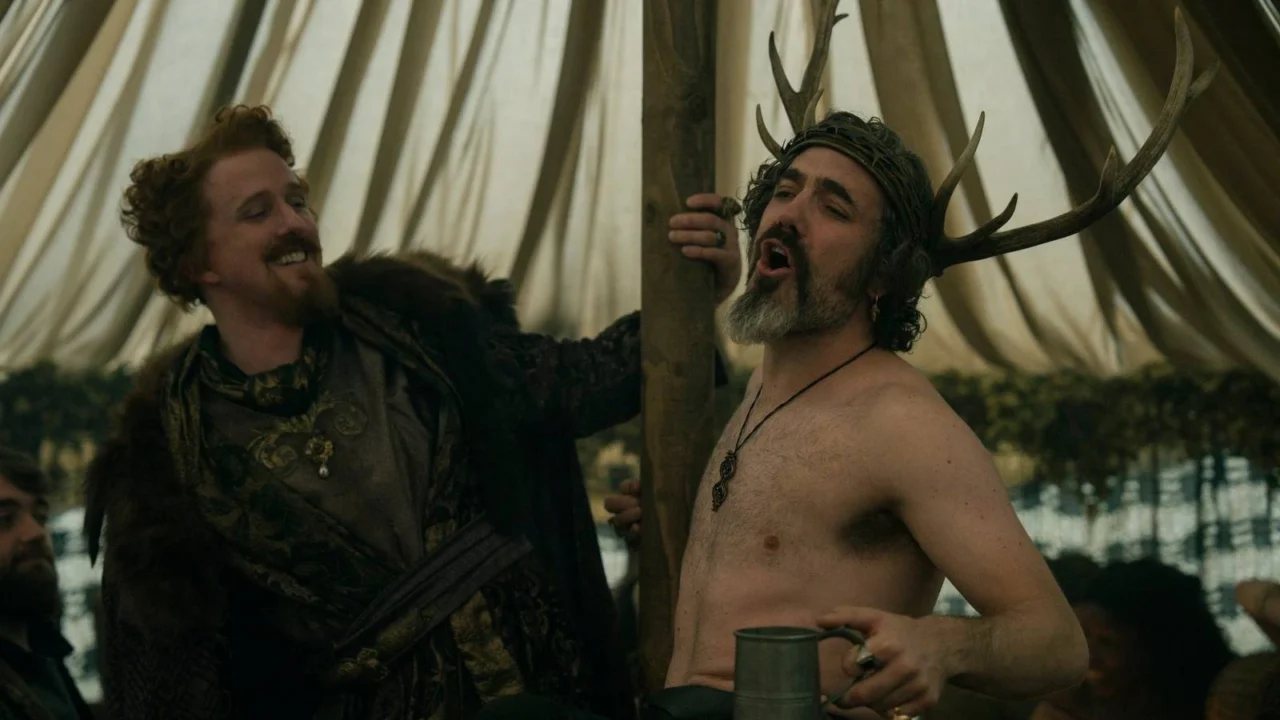
This obsession with legacy even permeates the show’s lighter moments. Egg (Dexter Sol Ansell) uses song to teach Dunk the history of the Blackfyre Rebellion, while Lord Lyonel Baratheon lightens the mood with bawdy tavern tunes. These moments lead Dunk to reflect on whether the subjects of these songs—like the legendary “Alice with Three Fingers”—ever truly existed. He concludes that her physical reality is secondary to the endurance of her tale; in Westeros, the story is what truly abides.
 Photo: Steffan Hill/HBO
The season finale centers on the grim aftermath of the Trial of the Seven. Dunk is exonerated, but at the cost of Prince Baelor’s life. Prince Maekar (Sam Spruell), haunted by the accidental killing of his brother, warns Dunk that the world will weave a bitter narrative around them both. He fears that for every future hardship in the realm, the people will whisper that a “good” prince was traded for a “common” knight. Dunk, however, remains resolute, believing he can eventually rewrite that destiny through his actions.
Despite being offered a place of honor at Storm’s End by Lyonel Baratheon (Daniel Ings) or a position at Summerhall, Dunk chooses to continue his journey as a wanderer. He rejects the comfort of a pre-written life in favor of the uncertain road, taking Egg with him into the heart of the Seven Kingdoms.
A Knight of the Seven Kingdoms functions on a more intimate scale than its predecessor, focusing on a few days in a single location rather than a sprawling global war. Yet, it manages to demonstrate how a solitary, common-born man can inadvertently tilt the scales of history. While Game of Thrones was a study of power and betrayal that occasionally fumbled its thematic landing, this new series is an earnest exploration of how legends are forged—proving that stories can indeed frighten kings, inspire commoners, and turn simple men into icons.
Source: Polygon
Related articles
 Fatekeeper Becomes a Steam Hit With 500,000 Sales From a 13-Person Team
 RTX 4070 Runs Bloodborne in PS4 Emulator, and Fans Show Sony What Players Want
 Enthusiast Ports GTA IV to PS5, With Part of the Work Done by AI
 The Video Games and More You Should Play This Weekend – October 23, 2026
 Resonance: A Plague Tale Legacy Fell Short of Publisher’s Expectations
 Sony Pulls Its Last UHD Blu-ray Player From Sale in Japan
 Players Launch Petition Hoping to Save Mass Effect 5
 Assassin’s Creed Black Flag Resynced Developers Confirm New Mode