55 Years Later, This Iconic Director’s Perfect Sci-Fi Thriller Is More Relevant Than Ever

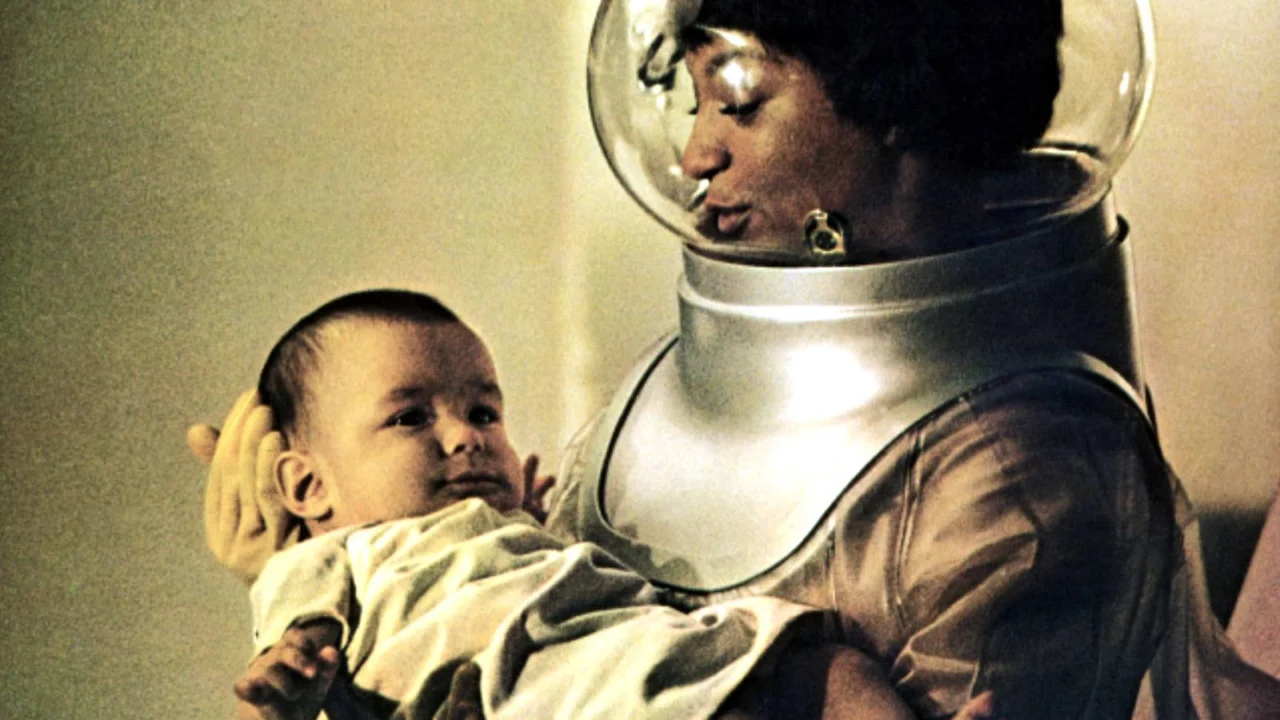
Following the monumental triumph of The Sound of Music (1965), director Robert Wise embarked on an impressively versatile creative streak. Between the gritty realism of The Sand Pebbles (1966) and the theatrical flair of Star! (1968), he delivered a masterclass in speculative tension. His seminal sci-fi thriller, The Andromeda Strain, arrived in theaters 55 years ago on March 12, 1971, eventually securing two Academy Award nominations.
As an exacting adaptation of Michael Crichton’s debut bestseller, the film showcases Wise’s legendary ability to ground high-concept premises in believable detail. Nelson Gidding’s sophisticated screenplay preserves the novel’s intellectual rigor, refusing to simplify the dense scientific jargon that defines this cautionary tale. It stands as the foundational “biological disaster” film, possessing a chilling foresight that resonates deeply within our modern, post-pandemic landscape.
 Image: Universal Pictures
The film opens with an ominous hook: a government satellite has crash-landed near the isolated town of Piedmont, New Mexico. Originally launched to collect extraterrestrial microorganisms, the probe returns with a lethal, unearthly cargo. When a military recovery team arrives, they find the residents dead and their radio transmissions cut short by a final, terrified scream. To combat this invisible adversary, the government assembles a team of elite specialists who quickly identify the organism as a virulent, rapidly mutating alien pathogen. The narrative transforms into a desperate race against the clock to contain the infection before it breaches the facility.
Gidding’s script masterfully heightens the sense of claustrophobia by confining the action to “Wildfire,” a multi-tiered subterranean laboratory. Team leader Jeremy Stone (Arthur Hill), surgeon Mark Hall (James Olson), and researchers Charles Dutton (David Wayne) and Ruth Leavitt (Kate Reid) subject the “Andromeda” organism to rigorous scrutiny. Using electron microscopes and animal testing, they document its terrifying biological behavior with clinical detachment.
Wise avoids the melodramatic tropes often found in Hollywood science fiction. There are no grandstanding heroes here; instead, we see pragmatic, highly skilled professionals working under an agonizing margin of error. By emphasizing the meticulous, often tedious reality of scientific inquiry, The Andromeda Strain builds an atmosphere of mounting dread that remains palpable until the final frame.
 Image: Universal Pictures
As the researchers peel back the layers of the mystery, they encounter baffling anomalies. Only an elderly alcoholic and an infant survived the initial outbreak, defying the team’s observation that Andromeda typically causes instantaneous blood crystallization. Adding to the pressure is a nuclear self-destruct mechanism designed to incinerate the facility in case of a breach. Control of the shutdown key is granted to Dr. Hall based on the “Odd Man Hypothesis”—a Crichton-invented theory suggesting that unmarried men are less prone to emotional hesitation during existential crises.
Hall himself remains skeptical of this inherently biased assumption. As the crisis peaks, Stone confesses that the hypothesis was merely a convenient bureaucratic fiction to place scientists in high-stakes moral positions that the military preferred to avoid. This revelation casts a dark shadow over the proceedings, particularly when the pathogen mutates into a form that would actually thrive on the energy of a nuclear blast.
Ultimately, Hall is forced to disarm the system against nearly impossible odds. He does so not because he lacks emotion, but because he recognizes the catastrophic failure of the authorities above him. The film highlights the terrifying fragility of human systems, where a government pledged to protect the public often becomes the primary source of its peril.
 Image: Universal Pictures
Though the immediate threat is neutralized by the conclusion of Wise’s thriller, the victory feels hollow and temporary. The film suggests that human history is a cycle of arrogance and error, implying that such a pathogen will inevitably return. This sense of impending doom is underscored by a computer algorithm’s failure to keep pace with the mutations, culminating in a haunting “601 error” code. When our most sophisticated technology fails to comprehend a biological threat, survival becomes a matter of sheer luck rather than intellect.
The Andromeda Strain delivers a gripping experience without resorting to cheap thrills or overblown action. The horror is found in the sterile environment of the lab and the rhythmic, unfeeling bleeps of scientific monitors. It is a testament to Robert Wise’s directorial range, serving as a chilling reminder that the natural world—and the universe beyond—cannot be controlled by human hubris.
The Andromeda Strain is currently available for streaming on Prime Video.
Source: Polygon
Related articles
 Ghost of Yotei Nearly Matches Ghost of Tsushima in Revenue Despite Fewer Copies Sold
 Shrek 2 Remastered Listed in Microsoft Store With Details on Improvements and Co-Op
 Analogue Revives Its Flawless SNES and Sega Genesis Replacements
 Model Shows Off Lady Dimitrescu Cosplay From Resident Evil Village
 Ken Kutaragi, Known as Father of PlayStation, Says Supporting Discs Indefinitely Isn’t Economically Viable
 Eight Best Vampire Books Not Written by Anne Rice, Ranked by Polygon
 Netflix’s Dealies Will Be a Workplace Comedy Series From Joe Bennet
 No Rest for the Wicked Delayed to March 2027, Developers Promise Twice as Much Content