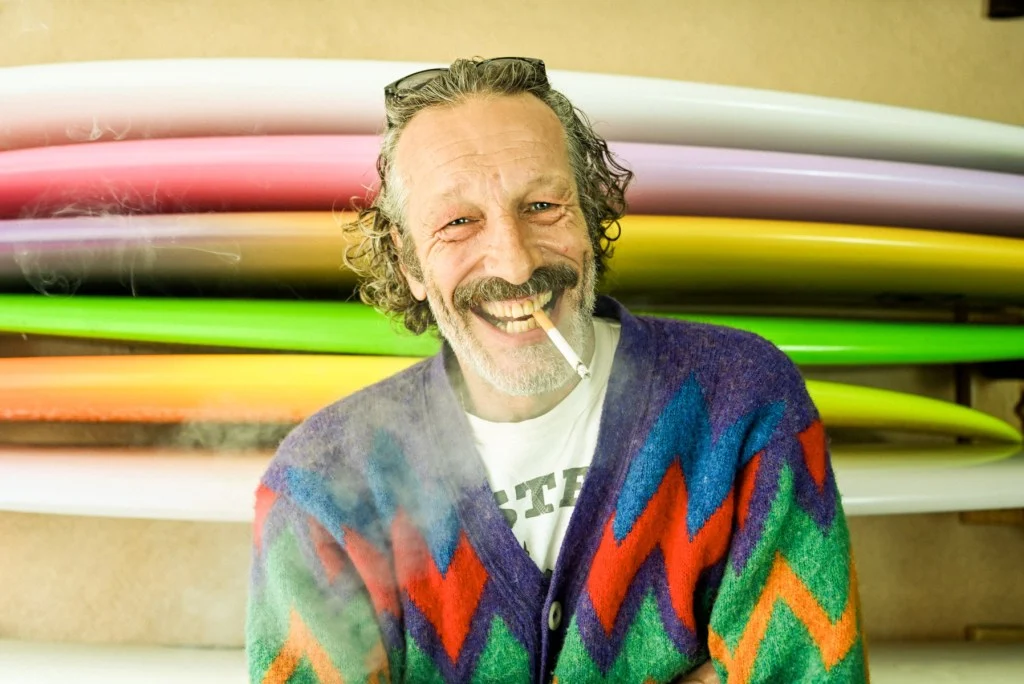
20 Questions With DJ Harvey: ‘Once My Rent’s Paid and I Can Eat Sushi, I Stop Working’
20 Inquiries: DJ Harvey on Dance Floor Transcendence, Nostalgia Traps, and the Art of Keeping It Real

Regarded universally as a master selector and subcultural titan, DJ Harvey commands attention whenever he evaluates the state of electronic music. So when he asserts that nightlife is experiencing its finest era yet, people listen—even if he readily confesses that, outside of performing, you will rarely catch him anywhere near a nightclub.
At 65 years old, Harvey Bassett has spent over four decades orchestrating sonic journeys across international dance floors. His stylistic versatility seamlessly bridges vintage disco, raw house, deep funk, and industrial techno, rendering him equally captivating in subterranean spaces like Berghain or sprawling festival stages like Coachella. Unapologetically himself—frequently working the decks shirtless, sunglasses firmly in place, cigarette burning—Harvey embodies an authenticity rarely found in an increasingly commercialized industry. He remains indifferent to status and refuses to spend his existence simply chasing bank balance milestones.
This August, Harvey delivers his sole performance in the United Kingdom this year: an exclusive retrospective night reviving Ministry of Sound’s foundational ’90s party, Rulin. Taking over the iconic main room, The Box, from open to close, he clarifies that while there may be a touch of reminiscence, it will not simply be a paint-by-numbers tribute set. The curated event also welcomes luminaries such as DJ Paulette, Don Letts, Heidi Lawden, and Lovefingers. His itinerary follows with headlining performances across North America, including New York’s Knockdown Center, Southern California’s Head Trip festival, and Miami’s III Points.
Speaking from his residence in West Los Angeles just before heading to Europe for an eclipse-aligned residency in Ibiza, Harvey reflects on British grit, the illusion of musical golden eras, and timeless life advice.
1. Where are you currently based, and what surrounds you?
I’m relaxing at home in Southern California with a powerful fan keeping the heat away, looking straight at a massive modern hotel structure that cropped up and ruined my view of the Pacific. Visually, it resembles a concrete detention center.
Aside from that architectural eyesore, California living is extraordinary. I could set up anywhere on the planet, but this is paradise to me. It’s just unfortunate that someone without an eye for design managed to construct something so sterile between my porch and Marina del Rey.
2. What path did your parents take professionally, and how did they view your musical journey?
My father was a technician with Philips. He actually set up the solid-state audio infrastructure at London’s Lyceum Theatre for the 1968 Miss World pageant. That vintage gear eventually migrated into our home, giving me incredible hardware to experiment with as a kid. My mother juggled numerous responsibilities while raising three children, doing everything from office administration to purely holding the household together. Her presence felt almost magical.
3. What was your inaugural splurge once DJing provided steady income?
Wardrobe pieces, without question. I’ve always appreciated style. A classic, well-crafted leather jacket was usually my go-to indulgence.
4. You frequently get labeled an icon or a living legend. How does that sit with you?
Labels like that exist in other people’s minds. At my core, I’m an entertainer. If the crowd leaves having had a transcendent time, my job is done. History is full of people who became legendary for questionable reasons. If those tags help pack out a venue, though, I won’t complain.
5. What fuels your enduring passion for this craft after decades behind the decks?
Music is an infinite universe. There is always new sonic territory to explore, meaning the medium never grows stale. Complement that with the raw, collective euphoria of a reactive crowd, and the experience remains unmatched. It’s pure, shared joy.
6. Did you ever seriously consider pursuing a different vocation?
Only during the first few moments after waking up every day—mostly because I loathe early mornings. Beyond that, no. This has always felt less like a career and more like a true calling.
7. Ahead of your Ministry of Sound marathon, what uniquely defines British audiences?
The bleakness they endure daily. Hardship always acts as a catalyst for relentless celebration.
8. Does that imply the depth of UK underground music culture stems from everyday struggles?
Undoubtedly. For the last six decades, Britain has been an astonishing creative incubator largely because life there can be tough. Growing up, the weather was grim, prospects were scarce, and socio-political anxiety was everywhere. In response, you retreated inside, designed your own gear, and crafted revolutionary sounds. Turning adversity into vibrant cultural movements is uniquely British.

9. You openly reject the idea that underground music peaked decades ago. What excites you about today’s landscape?
Virtually everything. Access is wider, attendance is massive, and creativity flourishes everywhere. The ecosystem is vibrant and thriving.
10. Why is romanticizing the past so prevalent among dance music veterans?
It usually comes down to bitterness. You won’t hear an active, fulfilled artist whining that the golden days are behind us. Too many older figures turn into talking heads lamenting what once was, simply because they are no longer relevant to the modern floor.
11. Does the disconnect stem from younger generations engaging with sound differently?
The youth aren’t spending their nights comparing eras—they are out living their lives. It’s typically aging veterans seeking attention who push the narrative that current nightlife lacks substance. It’s an easy crutch when gigs dry up.
12. Could iconic periods—like early-90s Manchester—truly outshine the modern era?
Not inherently. Those moments were special to the people who were 19 at the time. When you age, nostalgia blurs perspective. Telling an energetic 20-year-old today that they missed out on the real movement is condescending and absurd. Every generation deserves to create its own peak experiences.
13. Which recent DJ set left a strong impression on you?
I don’t go out to watch other performers. Loud environments, sensory overstimulation, and massive crowds are things I encounter exclusively on the clock.
14. Doesn’t that seem paradoxical for someone who shapes nightlife?
Nightclubs are my workplace, not my leisure space. I usually catch the final track of the previous selector and the intro of the next before heading back to rest. If I do venture out socially, it’s specifically for trusted selectors like Victor Rodriguez and Chris Bowen at Bears in Space.
15. What occupies your thoughts during a marathon performance?
Logistical realities—like locating the nearest exit—along with pure curation instincts: assessing the room’s energy and finding the exact next track to maintain the vibration.
16. Is there any genre or record you would outright refuse to spin?
None. Given the right context, time, and atmosphere, almost any record can become the absolute high point of the night.
17. What stands as your greatest achievement thus far?
Having sustained a continuous, independent existence entirely through my art for four decades. Reaching this stage of life while simply living on my own terms feels like the ultimate validation.
18. What was your most pivotal career move?
I don’t approach life with a corporate mindset. Once basic necessities and great food are secured, I prioritize leisure and peace over accumulating excess wealth. Endless wealth acquisition without purpose seems exhausting.
19. Who served as your foundational influence, and what core wisdom did they pass down?
My mother offered the most durable guidance. After going through profound personal tragedies, she explored various belief systems and philosophies. In the end, her conclusion was wonderfully straightforward: treat people with kindness and act with integrity. If higher spiritual truths exist, you’ve led a decent life; if they don’t, you’ve still made the world around you slightly better.
20. What single sentiment would you offer your younger self?
Keep your composure; everything unfolds as it should.
Related articles
 Yungblud Crowd-Surfs in Wheelchair at Concert Despite Broken Leg
 ‘I’m Just Thriving’: Bunnie Xo Embraces ‘Baddie Bunnie Summer’ Following Jelly Roll Split
 ‘KPop Demon Hunters’ Saja Boys Stars Andrew Choi and Neckwav to Make Live UK Debut in London
 Bad Bunny’s Viral Super Bowl Bushes Return in NFL’s New ‘Celly’ Dance Promo
 Lin-Manuel Miranda, Hillary Clinton, and Paul Rudd Join Forces for Democracy Karaoke Fundraiser
 Post Malone Announces Engagement to Christy Lee
 American Ballet Theatre to Honor Cynthia Erivo at 2026 Fall Gala
 Niall Horan Invites Fans to Help Curate His ‘Dinner Party’ Tour Setlist