10 Game Cancellations That Are Still Devastating Years Later
Reflecting on legendary video games that vanished before seeing the light of day is a bittersweet pastime. While most cancellations fade into the background of industry history as mere inevitabilities, others leave behind a lingering sense of unfulfilled promise.
Some of these scrapped projects might have buckled under astronomical hype and ultimately disappointed fans, much like Duke Nukem Forever. Conversely, others possessed the raw ingredients to become generational masterpieces if only they had received adequate time and support. Existing in a perpetual state of industry folklore, here are 10 canceled titles that continue to sting years later, leaving us to wonder what could have been.
1
StarCraft: Ghost
Developer: Nihilistic Software
For eager enthusiasts craving a tactical shooter firmly rooted in the iconic StarCraft universe, the wait spanned over a decade before quiet resignation finally set in regarding StarCraft: Ghost. Initially unveiled in 2002, the ambitious project endured years of turbulent development cycles before being shelved indefinitely in 2006. Rapidly shifting technological landscapes and internal studio restructuring plagued the title throughout its lifespan. While post-mortems cite numerous compounding issues, the decisive nail in the coffin was arguably the astronomical, unstoppable dominance of World of Warcraft. Shifting company assets toward an unprecedented golden goose made corporate sense, yet the loss of a gritty StarCraft tactical spin-off remains a bitter pill to swallow.
2
Dead Space 4
Developer: Visceral Games
Electronic Arts never officially acknowledged the existence of Dead Space 4, leaving its brief inception to be confirmed years later through developer retrospectives. Pre-production began in earnest shortly after the release of Dead Space 3 in early 2013. Disappointing commercial performance relative to corporate expectations, however, painted a grim picture for the series. Anticipating the writing on the wall, publisher leadership redirected Visceral Games toward alternative assignments. Consequently, work on the fourth installment evaporated almost as quickly as it started, long before any structural prototypes materialized. Visceral itself was ultimately shuttered in 2017, and with the critically acclaimed modern remake failing to ignite broader mainstream interest, Isaac Clarke’s terrifying journey appears permanently grounded.
3
Fable Legends
Developer: Lionhead Studios
Video game history is littered with cautionary tales of titles reaching the precipice of completion only to be abruptly canceled. Fable Legends stands as a prime example—a multiplayer cooperative action-RPG actively gearing up for an open beta when Microsoft pulled the plug in 2016. First revealed at Gamescom 2013, the game spent roughly four years in production following the departure of co-founder Peter Molyneux and the wrapping of Fable: The Journey. Tasked with highlighting the graphical capabilities of the Xbox One, the shift toward a live-service framework felt unnatural for a studio historically celebrated for single-player triumphs. Microsoft poured immense financial backing into the vision, but when the plug was finally pulled in 2016, it unfortunately spelled the end for Lionhead Studios as well.
4
The California Raisins: The Grape Escape
Developer: Radiance Interactive Designs
The California Raisins: The Grape Escape advanced further down the production pipeline than almost any typical unreleased title, practically reaching the threshold of manufacturing before vanishing. Archival gaming magazines occasionally feature period advertisements showcasing the sunglasses-wearing dried fruit mascot navigating a sprawling vineyard. Yet, marketing efforts evaporated abruptly overnight. Contributing factors likely included the fading cultural footprint of the raisin phenomenon coupled with Capcom shifting priorities toward heavier hitters—such as launching Mega Man 3 and Gargoyle’s Quest in North America alongside bustling arcade schedules, not to mention the looming dawn of the Super Nintendo. Fortunately for retro enthusiasts, a surviving prototype cartridge eventually surfaced online, allowing modern players to finally experience a quirky piece of lost gaming history.
5
Star Wars Battlefront 3
Developer: Free Radical Design
When Free Radical Design took over the reins from Pandemic Studios in 2006 to develop Star Wars Battlefront 3, expectations skyrocketed. Hopes were abruptly crushed in late 2008 when LucasArts pulled the plug on the venture. Reports indicated that the development team had brought the build remarkably close to an alpha-complete state before publisher disputes permanently derailed the project. Years later, a leaked Xbox 360 prototype offered a tantalizing glimpse into what could have been, followed by the miraculous emergence of a fully playable Wii build in late 2024. While these discoveries finally revealed the scale of the missed opportunity, they could not restore the 16-year vacuum left in its wake.
6
Scalebound
Developer: PlatinumGames
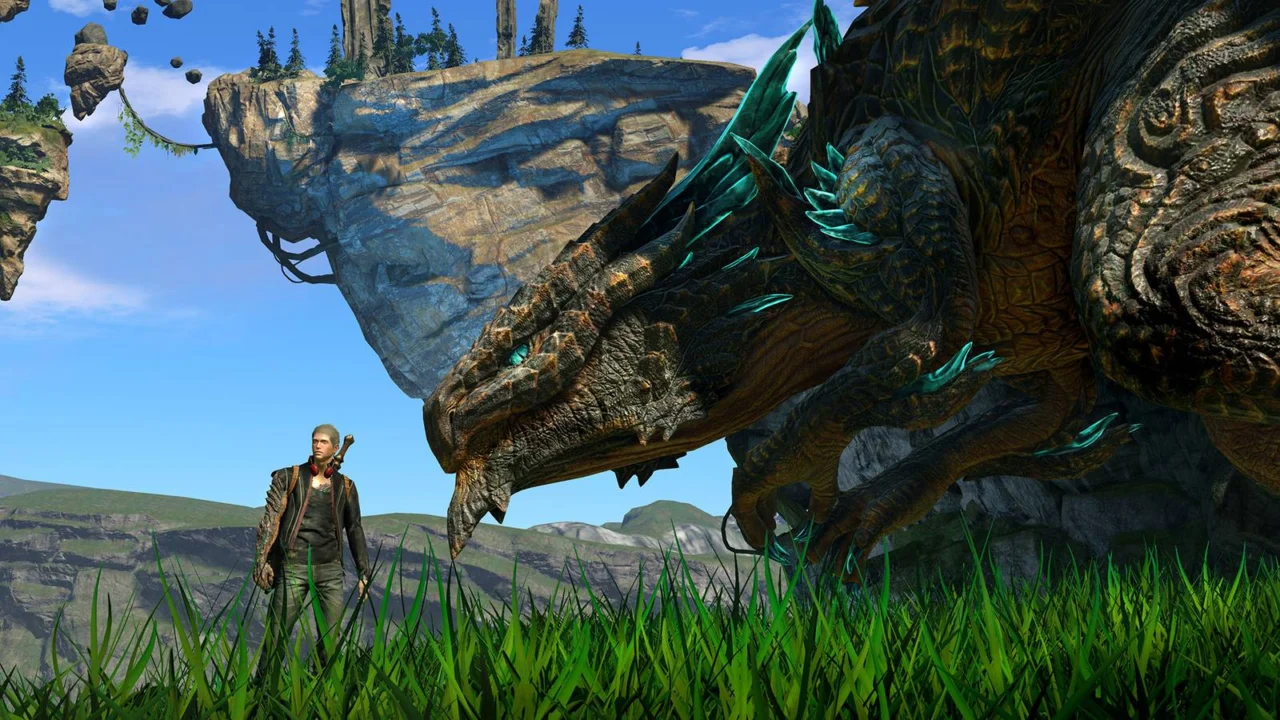
Advanced game engines are designed to streamline development pipelines, yet they can occasionally become bottlenecks. While Unreal Engine 4 birthed countless masterworks, PlatinumGames struggled immensely while wrestling with the software, ultimately failing to deliver Scalebound to Microsoft. Initially showcased with heavy fanfare at E3 2014, the ambitious action title missed its initial 2016 target window before being canceled outright due to unstable performance milestones. Perhaps led by visionary director Hideki Kamiya of Bayonetta fame, the team simply aimed higher than existing technology and resource limits allowed. Whatever the underlying friction, the grand fantasy epic of a rebellious youth bonded to a massive dragon remains an unfulfilled dream.
7
Star Wars 1313
Developer: LucasArts
There appears to be a tragic curse lingering over the galaxy far, far away, claiming yet another high-profile project for this list. Star Wars 1313 was envisioned as a gritty, cinematic action-adventure centered around everyone’s favorite bounty hunter, Boba Fett. Developed internally at LucasArts for approximately three years, the game suffered a fatal blow when Disney acquired the parent company in late 2012. Unwilling to finance a costly, ongoing development cycle so soon after a multi-billion dollar acquisition, the new leadership scrapped the initiative within months. Aside from Ubisoft’s recent venture, Star Wars Outlaws, fans have largely been left longing for this specific flavor of criminal underworld storytelling.
8
Sleeping Dogs 2
Developer: United Front Games
While clearing the milestone of selling one million units is cause for celebration for many publishers, Square Enix historically held loftier ambitions. Despite delivering an immersive open-world sandbox that rivaled contemporary heavyweights like Ubisoft’s Watch Dogs, the original Sleeping Dogs (formerly born as Activision’s True Crime: Hong Kong) failed to hit strict internal revenue projections. Regardless, United Front Games drafted comprehensive plans for a sequel incorporating cooperative multiplayer and deeper narrative mechanics. Square Enix ultimately rejected the pitch, steering the studio instead toward Triad Wars—a spin-off that floundered during closed beta before meeting a swift cancellation. For both the developer and the franchise, these back-to-back cancellations marked the tragic final curtain.
9
Silent Hills
Developer: Konami
Owning a functioning PlayStation 4 with the legendary horror teaser P.T. still installed serves as a badge of honor among modern collectors. Initially revealed in August 2014, the interactive demo represented a dream collaboration between industry auteur Hideo Kojima and cinematic horror maestro Guillermo del Toro, starring actor Norman Reedus. The powerhouse trio intended to resurrect Konami’s dormant psychological horror franchise. Barely eight months later, internal fallout led Konami to scrap the full game, prompting Kojima’s departure to establish Kojima Productions (ultimately reuniting with Reedus for Death Stranding). While Capcom later revitalized Resident Evil with a first-person perspective heavily inspired by P.T., Konami has finally begun breathing new life into Silent Hill, with promising titles like Silent Hill: Townfall on the horizon.
10
Mega Man Legends 3
Developer: Capcom
Though the Mega Man Legends sub-series was never a mainstream juggernaut, it cultivated a fiercely passionate community that Capcom initially aimed to reward. Announced as a marquee Nintendo 3DS title in September 2010, Mega Man Legends 3 heavily embraced community-driven development, allowing fans to vote on narrative arcs, character designs, and mechanics. When Capcom canceled the project in July 2011—shortly following series creator Keiji Inafune’s departure—the blow felt intensely personal. A playable introductory demo showcasing a fresh protagonist was tragically shelved right before release. While the 3DS ultimately rebounded to achieve historic hardware success, the commercial turnaround arrived too late to save Capcom’s niche sequel. Consequently, the infamous cliffhanger ending of Mega Man Legends 2 remains permanently unresolved, leaving fans to pin their hopes on future franchise revivals.
Resident Evil 2 director thinks there’s a chance his canceled Xbox-exclusive will still happen
Hideki Kamiya hasn’t given up on Scalebound
Source: Polygon
Related articles
 Insider Details Major Microsoft Changes Following Player Requests
 Hideo Kojima Criticizes DLSS, Says AI Does Not Understand Author’s Intent
 GTA VI Rival Paradise MIA for 18 Months Following Controversy
 PS5 Pro Operated for a Year Inside a Cardboard Box in User Experiment
 Star Citizen Sees Drop in Revenue and New Player Inflow, Analyst Reports
 2K Warns Players As One of the Best Basketball Simulators Is Removed From Steam and Other Stores
 Fans Release Remaster of Canceled Borderlands Online After 11 Years
 Roman Smirnov Demonstrates Improved Destruction System in The Finals Ahead of Major Update